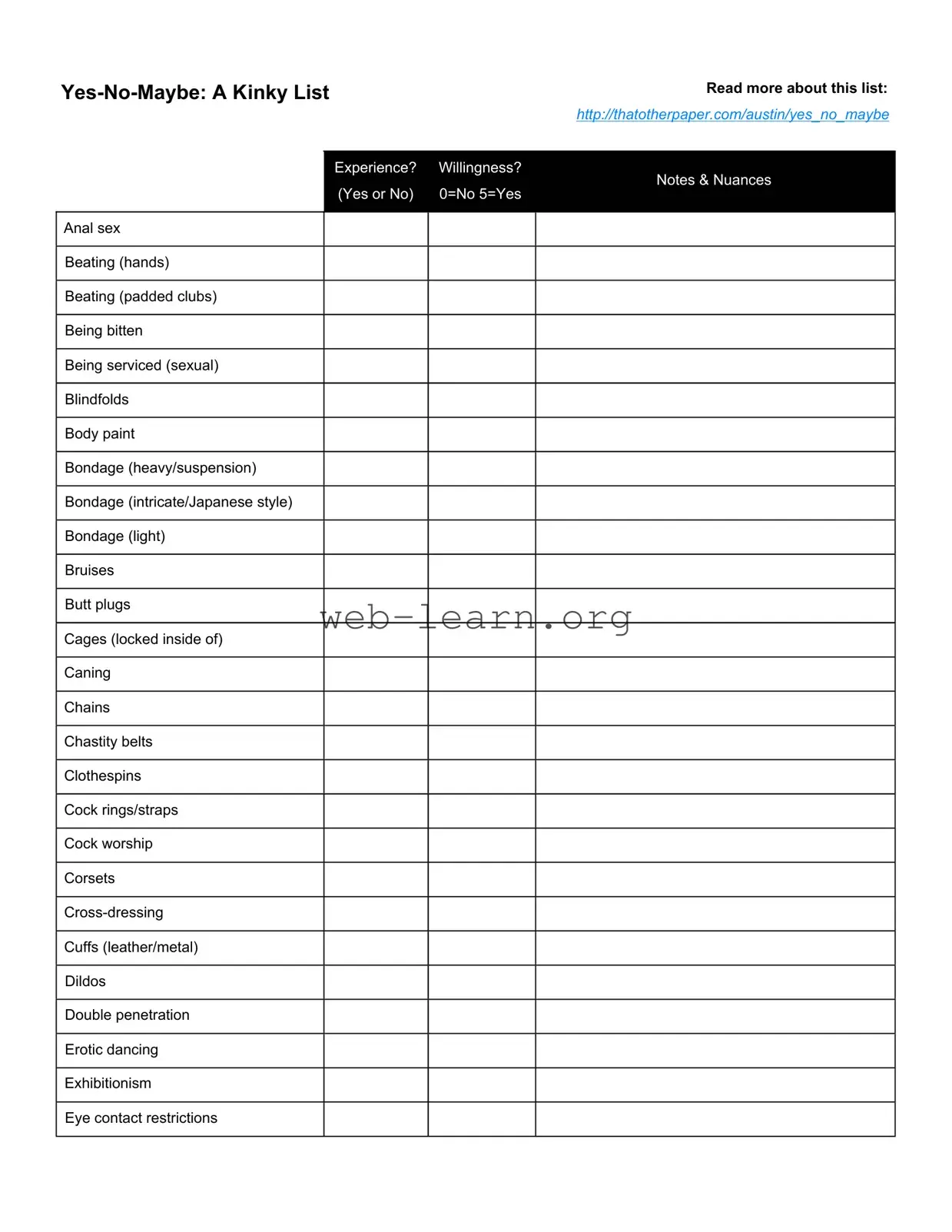
The Yes No Maybe List form serves as a comprehensive tool for individuals exploring their sexual preferences and boundaries within the realm of kink and BDSM. This form facilitates open communication between partners by allowing them to indicate their level of interest and comfort regarding various activities. Each activity is rated on a scale from 0 to 5, where 0 signifies a complete lack of interest and 5 indicates enthusiastic willingness. The form covers a wide array of activities, including anal sex, bondage, spanking, and more unconventional practices like food play and outdoor sex. In addition to the numerical ratings, users can provide notes and nuances to clarify their preferences, ensuring that both parties have a clear understanding of each other’s desires and limits. The structured approach of the Yes No Maybe List encourages honest dialogue, helping partners navigate their experiences safely and consensually.
Read more about this list:
http://thatotherpaper.com/austin/yes_no_maybe
Experience? Willingness?
Notes & Nuances
(Yes or No) 0=No 5=Yes
Anal sex
Beating (hands)
Beating (padded clubs)
Being bitten
Being serviced (sexual)
Blindfolds
Body paint
Bondage (heavy/suspension)
Bondage (intricate/Japanese style)
Bondage (light)
Bruises
Butt plugs
Cages (locked inside of)
Caning
Chains
Chastity belts
Clothespins
Cock rings/straps
Cock worship
Corsets
Cuffs (leather/metal)
Dildos
Double penetration
Erotic dancing
Exhibitionism
Eye contact restrictions
Experience? Willingness?
Notes & Nuances
(Yes or No) 0=No 5=Yes
Face slapping
Fisting
Flogging
Following orders
Food play (cucumbers, sorbet...)
Foot worship
Gags (cloth/tape)
Genital sex
Hair pulling
Hairbrush spankings
Hand jobs (giving)
Hand jobs (receiving)
Head (giving)
Head (receiving)
High heels
Hot waxing
Ice cubes
Kneeling
Leather clothing
Leather restraints
Lingerie (wearing)
Manacles & Irons
Manicures (giving)
Manicures (receiving)
Marks (giving)
Marks (receiving)
Massage (giving)
Massage (receiving)
Modeling for erotic photos
Experience? Willingness?
Notes & Nuances
(Yes or No) 0=No 5=Yes
Nipple play/"torture"
Oral/anal play (rimming)
Orgasm denial
Outdoor sex
Pain (mild to severe)
Phone sex
Pinching
Play Kidnapping
Punishment Scene
Pussy/cock whipping/spanking
Riding crops
Rubber/latex clothing
Saran wrapping
Scenes (prison, religious, etc.)
Scratching (giving)
Scratching (receiving)
Serving as a maid/butler
Shaving
Shoe/boot worship
Slutty clothing (private or public)
Spanking
Spreader bars
Standing in corner
Stocks
Swallowing semen
Swapping (with one other couple)
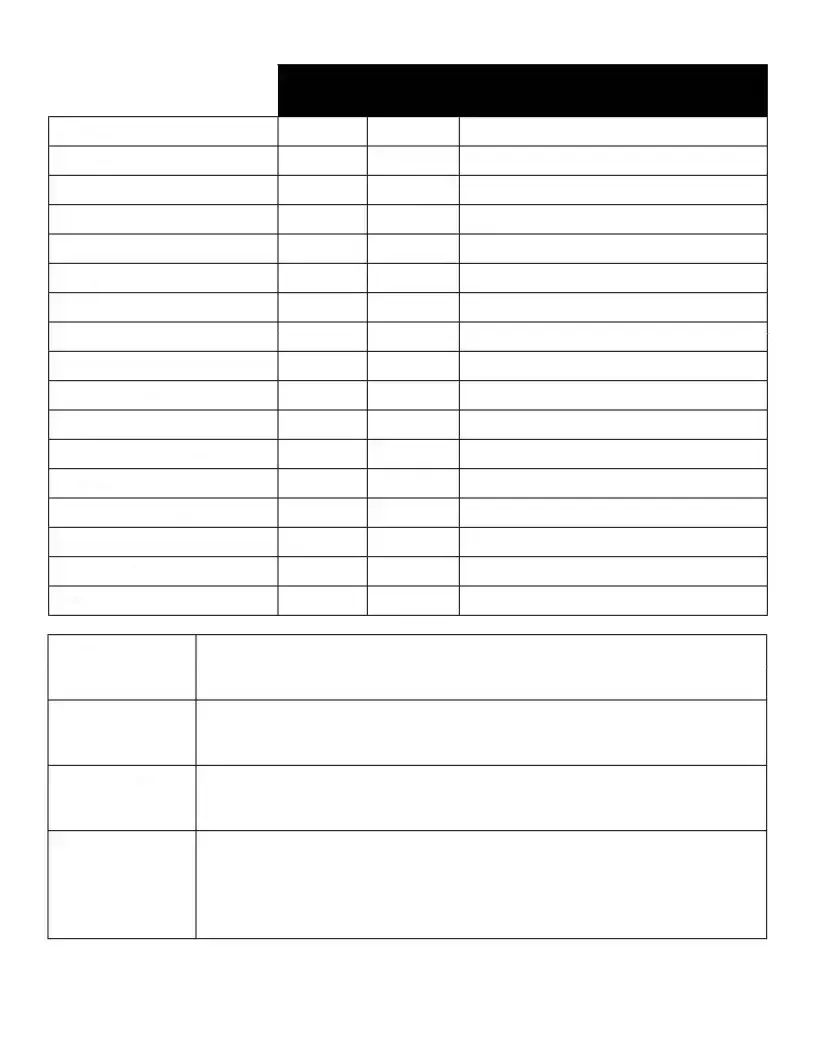
Experience? Willingness?
Notes & Nuances
(Yes or No) 0=No 5=Yes
Swinging (multiple couples)
Tattooing
Teasing
TENS Unit (electrical toy)
Thumbcuffs (metal)
Tickling
Triple Penetration
Uniforms
Vibrator on genitals
Video (recordings of you)
Video (watching others)
Violet Wand (electrical toy)
Voyeurism (watching others)
Wearing symbolic jewelry
Whips
Wooden paddles
Wrestling
Allergies
Medical conditions
Aftercare issues
Other fun stuff/ideas
| Fact Name | Description |
|---|---|
| Purpose | The Yes No Maybe List is designed to facilitate open communication about sexual preferences and boundaries between partners. |
| Format | This form typically uses a simple scale from 0 to 5, where 0 indicates no interest and 5 indicates strong willingness. |
| Content Variety | The list includes a wide range of activities, from light play to more intense experiences, allowing for diverse preferences. |
| Experience and Willingness | Participants indicate their experience and willingness for each activity, providing clarity on comfort levels. |
| Notes Section | A section for notes allows users to elaborate on their preferences or any nuances related to specific activities. |
| Confidentiality | It is essential to keep the completed forms confidential to respect the privacy of all parties involved. |
| Legal Considerations | While the form itself is not legally binding, it can support discussions about consent and safety, important under laws governing sexual activity. |
| State-Specific Forms | Some states may have specific laws regarding consent and sexual activities; individuals should be aware of these when using the form. |
| Aftercare Importance | Aftercare is highlighted in the form, emphasizing the need for emotional and physical support following any intense experiences. |
| Resource Link | The form includes a link for further reading, providing additional context and guidance for users. |
Once you have your Yes No Maybe List form ready, you’ll want to fill it out thoughtfully. This form is designed to help you express your preferences and boundaries clearly. Take your time to consider each item, and remember that honesty is key. The next steps will guide you through the process of completing the form effectively.
What is the Yes No Maybe List form?
The Yes No Maybe List is a tool designed for individuals exploring their sexual preferences and boundaries. It provides a structured way to communicate interests and limits regarding various activities, particularly in the context of kink and BDSM. Participants can indicate their level of experience and willingness for each activity on a scale from 0 (No) to 5 (Yes), along with any additional notes or nuances they wish to share.
How do I use the Yes No Maybe List?
To use the Yes No Maybe List, individuals should first review the activities listed. Each person should then indicate their comfort level for each activity by assigning a number from 0 to 5. After completing the list, participants can discuss their responses with their partners to ensure mutual understanding and consent. This open dialogue fosters a safe environment for exploring desires and boundaries.
Who should use the Yes No Maybe List?
The Yes No Maybe List is suitable for anyone interested in exploring their sexual preferences, whether they are new to kink or have extensive experience. It can be particularly useful for couples, groups, or individuals looking to enhance communication around sexual interests. Importantly, it promotes a culture of consent and respect among all participants.
What if I am unsure about certain activities?
Feeling unsure about specific activities is completely normal. The Yes No Maybe List allows for nuanced responses, so you can indicate a middle ground by selecting a number between 0 and 5. Additionally, you can use the notes section to express any uncertainties or specific conditions under which you might be open to trying an activity. This flexibility encourages honest communication and exploration at your own pace.
Can I change my answers later?
Absolutely. Preferences and comfort levels can evolve over time. It is encouraged to revisit the Yes No Maybe List periodically, especially after trying new experiences. Open communication with partners about any changes in feelings or interests is essential for maintaining a healthy and respectful relationship.
Is the Yes No Maybe List confidential?
Confidentiality largely depends on how the list is shared. If you are using the list with a partner, it is essential to discuss and agree on privacy expectations. If you are part of a larger group, it’s wise to ensure that everyone understands the importance of discretion. The goal is to create a safe space where individuals feel comfortable expressing their preferences without fear of judgment.
What should I do if my partner has different preferences?
Differences in preferences are common and can be an opportunity for growth and understanding. Engaging in open and respectful discussions about each person's desires and limits is crucial. Consider negotiating activities that align with both partners’ interests. If significant differences arise, it may be necessary to reevaluate compatibility in certain areas while still maintaining a supportive relationship.
When individuals approach the Yes No Maybe List form, it is essential to understand the nuances involved in filling it out. One common mistake is failing to provide clear answers. Respondents might mark a "Yes" or "No" without elaborating on their feelings or experiences related to specific activities. This lack of detail can lead to misunderstandings about preferences and boundaries, which are crucial for effective communication.
Another frequent error is not considering personal comfort levels. Some may feel pressured to respond affirmatively to certain activities simply because they are popular or widely accepted. This pressure can result in marking "Yes" when the true feeling is closer to "Maybe" or even "No." It is vital for individuals to reflect on their own desires and limits rather than conforming to external expectations.
Additionally, neglecting to review the entire list before answering is a mistake many make. Some may rush through the form, missing out on activities they might find intriguing or have strong opinions about. Taking the time to read each item thoughtfully can lead to a more accurate representation of one’s interests.
People often overlook the importance of using the notes section effectively. This space provides an opportunity to clarify responses and share specific preferences or experiences. Without utilizing this section, individuals may miss the chance to communicate important nuances, leaving their partners in the dark about their desires.
Another common pitfall is misunderstanding the scoring system. The form uses a scale from 0 to 5, where 0 indicates a firm "No" and 5 signifies a strong "Yes." Some respondents may misinterpret this scale, leading to inconsistent answers. Understanding how to use this scoring system accurately is crucial for clear communication.
Furthermore, failing to discuss the form with partners beforehand can lead to complications. Open discussions about preferences and boundaries can foster a safe environment, allowing individuals to feel more comfortable expressing their true feelings. Without this dialogue, misunderstandings may arise, causing discomfort or conflict.
Another mistake is not considering past experiences. Some may fill out the form based solely on hypothetical scenarios rather than reflecting on their actual experiences. This approach can lead to unrealistic expectations or misaligned interests. It is beneficial to draw from personal history when answering the form.
Individuals sometimes forget to update their responses over time. Preferences can change as people grow and evolve. Regularly revisiting the form ensures that it accurately reflects current desires and boundaries, promoting healthier communication in relationships.
Moreover, some may neglect to seek clarification on any terms or activities they do not understand. The form includes a wide range of activities, and it is perfectly acceptable to ask questions about unfamiliar terms. Ignoring this can lead to confusion and misinterpretation of one’s own preferences.
Lastly, many people do not take the time to think about aftercare needs. Aftercare is an essential aspect of engaging in any activity listed on the form, particularly those that may be intense or emotionally charged. Addressing aftercare preferences ensures that all parties feel safe and cared for, enhancing the overall experience.
The Yes No Maybe List form is a valuable tool for individuals exploring their preferences in intimate relationships. It allows for open communication about desires and boundaries. Alongside this form, several other documents can enhance the experience and provide clarity. Below is a list of related forms and documents that are commonly used.
Utilizing these documents alongside the Yes No Maybe List form can significantly enhance communication and understanding in intimate relationships. They promote a culture of consent and safety, allowing individuals to explore their desires with confidence.
When filling out the Yes No Maybe List form, it’s important to approach the task thoughtfully. Here are some guidelines to help you navigate the process effectively.
By following these do's and don'ts, you can create a more meaningful and respectful dialogue about your interests and boundaries.
Misconceptions about the Yes No Maybe List form can lead to misunderstandings about its purpose and use. Here are five common misconceptions:
Here are key takeaways for effectively filling out and using the Yes No Maybe List form: