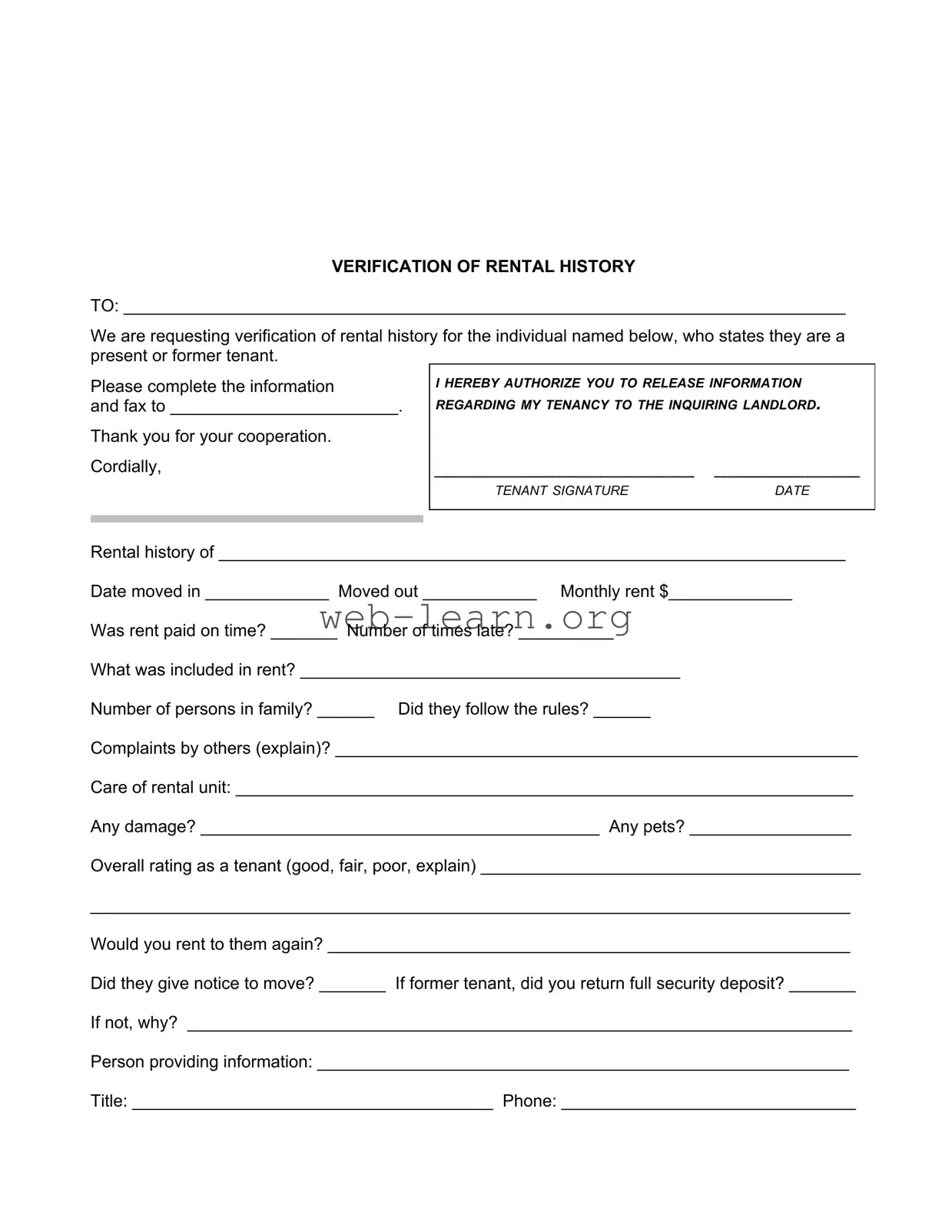
The Verification Rental form serves as a crucial tool for landlords seeking to assess the rental history of potential tenants. This document facilitates communication between current or former landlords and the inquiring party, ensuring that accurate information is shared. It includes essential details such as the tenant's move-in and move-out dates, monthly rent amounts, and payment history. Landlords are asked whether the tenant paid rent on time and how many times they were late. Additionally, the form inquires about the condition of the rental unit, any complaints from neighbors, and the tenant's adherence to rules. It also requests information on the number of occupants and whether any pets were present. The overall rating of the tenant's behavior and care for the property is crucial, as is the question of whether the landlord would rent to them again. Furthermore, the form prompts landlords to confirm if proper notice was given before moving out and the status of the security deposit. This comprehensive overview allows prospective landlords to make informed decisions based on verified rental history.
VERIFICATION OF RENTAL HISTORY
TO: ____________________________________________________________________________
We are requesting verification of rental history for the individual named below, who states they are a present or former tenant.
Please complete the information |
|
I HEREBY AUTHORIZE YOU TO RELEASE INFORMATION |
|
|
|
|
|
and fax to ________________________. |
|
REGARDING MY TENANCY TO THE INQUIRING LANDLORD. |
|
Thank you for your cooperation. |
|
|
|
Cordially, |
|
_________________________ |
______________ |
|
|
TENANT SIGNATURE |
DATE |
|
|
|
|
|
|
|
|
|
|
|
|
Rental history of __________________________________________________________________
Date moved in _____________ Moved out ____________ Monthly rent $_____________
Was rent paid on time? _______ Number of times late? __________
What was included in rent? ________________________________________
Number of persons in family? ______ Did they follow the rules? ______
Complaints by others (explain)? _______________________________________________________
Care of rental unit: _________________________________________________________________
Any damage? __________________________________________ Any pets? _________________
Overall rating as a tenant (good, fair, poor, explain) ________________________________________
________________________________________________________________________________
Would you rent to them again? _______________________________________________________
Did they give notice to move? _______ If former tenant, did you return full security deposit? _______
If not, why? ______________________________________________________________________
Person providing information: ________________________________________________________
Title: ______________________________________ Phone: _______________________________
| Fact Name | Fact Description |
|---|---|
| Purpose | The Verification of Rental History form is used to confirm a tenant's rental history for a prospective landlord. |
| Authorization | The tenant must authorize the release of their rental information to the inquiring landlord. |
| Tenant Information | The form requires the tenant's name and details about their tenancy, including dates of residence. |
| Payment History | It asks whether rent was paid on time and how many times it was late. |
| Inclusions | The form requests information about what was included in the rent, such as utilities or amenities. |
| Family Size | The number of persons living in the rental unit must be provided. |
| Rule Compliance | Landlords are asked if the tenant followed the rules and if there were any complaints from others. |
| Care of Unit | The form inquires about the care of the rental unit and any damages that may have occurred. |
| Security Deposit | If the tenant is a former tenant, the form asks if the full security deposit was returned and reasons if it was not. |
| Governing Law | State-specific laws may govern the use of this form, including tenant privacy and information release regulations. |
Completing the Verification Rental form is essential for confirming a tenant's rental history. This process involves providing detailed information about the tenant's past rental experiences. Follow these steps to ensure the form is filled out accurately and completely.
What is the purpose of the Verification Rental form?
The Verification Rental form is designed to gather detailed information about a tenant's rental history. Landlords or property managers use this form to verify the claims made by prospective tenants regarding their previous rental experiences. It helps ensure that the new tenant is reliable and responsible.
Who fills out the Verification Rental form?
The form is typically filled out by the previous landlord or property manager. They provide important information about the tenant's rental history, including payment habits, adherence to rules, and overall behavior during their tenancy.
What information is requested on the form?
The form requests various details, including:
How is the information submitted?
The completed form should be faxed or sent to the inquiring landlord as indicated on the form. It is important for the previous landlord to ensure that all information is accurate and thorough to provide a clear picture of the tenant’s history.
What should a tenant do if they notice inaccuracies in their rental history?
If a tenant believes there are inaccuracies in their rental history, they should contact the previous landlord or property manager directly. It is advisable to discuss any discrepancies and request corrections if necessary. Clear communication can often resolve misunderstandings.
Is the Verification Rental form legally binding?
The Verification Rental form itself is not a legally binding document. However, the information provided can significantly impact a tenant's ability to secure a new rental. Therefore, it is crucial for all parties involved to provide truthful and accurate information.
How can a tenant prepare for the verification process?
Tenants can prepare by ensuring they have all relevant details about their rental history at hand. This includes dates of tenancy, payment records, and any communication with previous landlords. Being proactive can help facilitate a smoother verification process.
What if a tenant has no rental history?
If a tenant has no previous rental history, they can provide alternative references. This might include personal references, proof of employment, or even a letter of recommendation from a previous landlord if they have lived in a family home. Being transparent about their situation can help potential landlords feel more comfortable.
Filling out the Verification Rental form can be straightforward, but many make common mistakes that can delay the process. One frequent error is failing to provide complete tenant information. It’s essential to fill in the tenant's name and address clearly. Incomplete details can lead to confusion and may result in a lack of verification.
Another mistake is neglecting to sign and date the form. The tenant's signature is crucial for authorizing the release of information. Without it, the landlord may refuse to share any details about the rental history. Additionally, omitting the date can create uncertainty about when the request was made.
Many individuals also forget to specify the fax number or email address where the completed form should be sent. This oversight can lead to delays in processing the request, as the verifying party will not know where to send the information.
Providing inaccurate dates of tenancy is another common error. It’s vital to ensure that the move-in and move-out dates are correct. Incorrect dates can lead to misunderstandings about the duration of the tenancy and can affect the overall assessment of the tenant's history.
Some people fail to answer all questions thoroughly. For instance, when asked about the number of times rent was late, it’s important to provide an accurate count. Leaving this blank or providing vague answers can raise red flags for potential landlords.
Another mistake involves not including details about the rental unit's condition. Describing care of the unit and any damages is essential. A vague response may not accurately reflect the tenant's responsibility or the state of the property.
Many forget to mention any pets, even if they were allowed. This information can be crucial for landlords considering future tenants. Failing to disclose pet ownership may lead to issues down the line if the landlord discovers this information later.
It’s also important to provide a clear overall rating as a tenant. Using terms like "good," "fair," or "poor" without explanation can leave landlords confused. Providing a brief rationale can help clarify the rating and give a fuller picture of the tenant's history.
Another common oversight is not addressing whether the tenant gave proper notice to move. This information is vital for landlords to assess the tenant's reliability. A simple “yes” or “no” is not enough; context is key.
Lastly, failing to provide the contact information of the person completing the verification can hinder the process. Landlords may need to follow up for clarification. Ensuring that the title and phone number are included allows for smoother communication.
When applying for a rental property, several forms and documents may accompany the Verification of Rental History form. These documents help landlords assess the applicant's suitability and reliability as a tenant. Below is a list of commonly used forms that can provide additional insights into an applicant's rental history and financial stability.
Gathering these documents can streamline the rental application process. Each piece of information contributes to a clearer picture of the applicant's history and reliability as a tenant. Being prepared with these forms not only aids landlords in their decision-making but also helps applicants present themselves in the best possible light.
The Verification Rental form serves a specific purpose in confirming a tenant's rental history. Several other documents share similar functions. Here’s a breakdown of five documents that are comparable:
When filling out the Verification Rental form, it’s important to follow certain guidelines to ensure accuracy and clarity. Here’s a list of things you should and shouldn’t do:
Misconceptions about the Verification Rental form can lead to confusion for both tenants and landlords. Understanding these myths is crucial for a smooth rental process. Here are nine common misconceptions:
By debunking these misconceptions, both tenants and landlords can navigate the rental process with greater clarity and confidence.
When filling out and utilizing the Verification Rental form, it is essential to keep the following key takeaways in mind: