The Venue Rental Agreement form serves as a crucial document for both venue owners and renters, outlining the terms and conditions of the rental arrangement. This form typically includes essential details such as the rental period, fees, and payment schedules, ensuring clarity for both parties. It addresses the responsibilities of the renter, including adherence to venue rules and regulations, as well as the obligations of the venue owner, such as providing the space in a suitable condition. Additionally, the agreement often covers cancellation policies, liability issues, and any required insurance, safeguarding the interests of both parties. By clearly defining these aspects, the Venue Rental Agreement helps prevent misunderstandings and provides a framework for a successful event. Understanding this document is vital for anyone looking to rent a venue, as it lays the groundwork for a smooth transaction and a positive experience.
Venue Rental Agreement
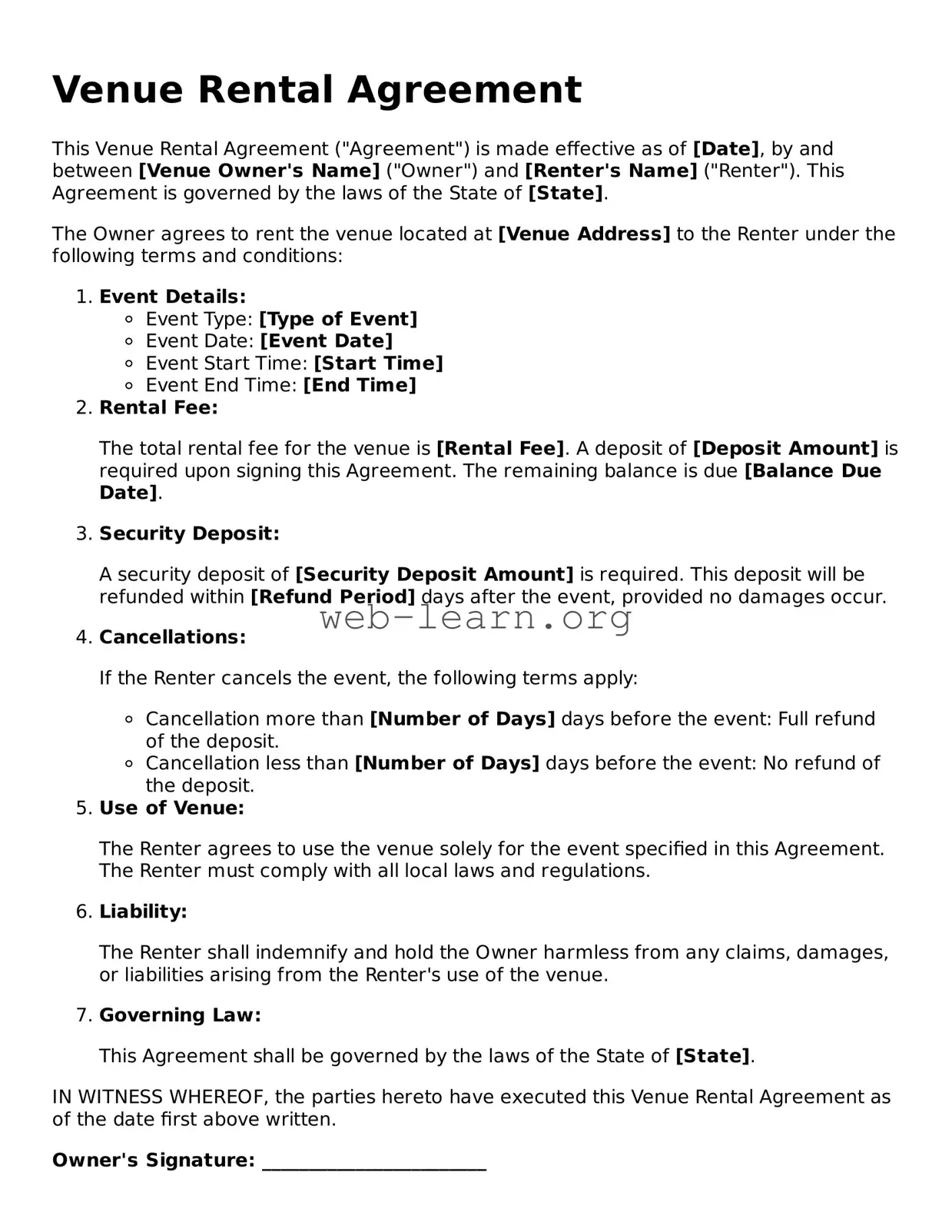
This Venue Rental Agreement ("Agreement") is made effective as of [Date], by and between [Venue Owner's Name] ("Owner") and [Renter's Name] ("Renter"). This Agreement is governed by the laws of the State of [State].
The Owner agrees to rent the venue located at [Venue Address] to the Renter under the following terms and conditions:
The total rental fee for the venue is [Rental Fee]. A deposit of [Deposit Amount] is required upon signing this Agreement. The remaining balance is due [Balance Due Date].
A security deposit of [Security Deposit Amount] is required. This deposit will be refunded within [Refund Period] days after the event, provided no damages occur.
If the Renter cancels the event, the following terms apply:
The Renter agrees to use the venue solely for the event specified in this Agreement. The Renter must comply with all local laws and regulations.
The Renter shall indemnify and hold the Owner harmless from any claims, damages, or liabilities arising from the Renter's use of the venue.
This Agreement shall be governed by the laws of the State of [State].
IN WITNESS WHEREOF, the parties hereto have executed this Venue Rental Agreement as of the date first above written.
Owner's Signature: ________________________
Renter's Signature: ________________________
| Fact Name | Description |
|---|---|
| Definition | A Venue Rental Agreement is a contract between a venue owner and a renter outlining the terms for using the space for an event. |
| Purpose | This agreement ensures both parties understand their rights and obligations, helping to prevent disputes. |
| Key Components | Typically includes details such as rental fees, security deposits, cancellation policies, and liability clauses. |
| State-Specific Forms | Different states may have specific requirements for venue rental agreements. For example, California law requires certain disclosures. |
| Governing Law | The governing law of the agreement is often the state where the venue is located, which can affect enforceability. |
| Duration | The agreement specifies the duration of the rental, including setup and breakdown times, to avoid conflicts. |
| Amendments | Any changes to the agreement must be made in writing and signed by both parties to be legally binding. |
Filling out the Venue Rental Agreement form is a straightforward process that ensures all necessary details are captured for your rental needs. Once you have completed the form, it will be submitted for review, and you will receive confirmation regarding your rental request.
A Venue Rental Agreement is a legal document that outlines the terms and conditions under which a venue can be rented for an event. This agreement typically includes details such as the rental fee, deposit requirements, duration of the rental, and any rules or restrictions that apply to the use of the venue.
Having a Venue Rental Agreement protects both the venue owner and the renter. It ensures that both parties understand their rights and responsibilities. This agreement helps to prevent misunderstandings by clearly outlining what is expected from each party, including payment terms, cancellation policies, and liability issues.
When reviewing a Venue Rental Agreement, pay attention to the following key elements:
Yes, changes can often be made to a Venue Rental Agreement, but they typically need to be agreed upon by both parties. If you want to modify any terms, such as the rental date or fee, it’s best to discuss these changes with the venue owner and document them in writing. This ensures that both parties are on the same page and protects everyone involved.
If you need to cancel your event, refer to the cancellation policy outlined in the Venue Rental Agreement. This policy will specify any deadlines for cancellation and whether you will receive a refund of your deposit or rental fee. It’s essential to communicate with the venue owner as soon as possible to discuss your options.
In the event that something goes wrong during your event, such as property damage or an injury, the Venue Rental Agreement typically outlines the liability responsibilities. It’s important to have insurance coverage for your event to protect yourself from potential claims. Always report any incidents to the venue owner immediately and document the situation as thoroughly as possible.
Filling out a Venue Rental Agreement form can seem straightforward, but many people make common mistakes that can lead to misunderstandings or even disputes later on. One frequent error is not reading the entire document before signing. This can result in overlooking important clauses or conditions. Always take the time to review the agreement thoroughly. It’s crucial to understand what you are agreeing to, including any cancellation policies or fees.
Another mistake is providing incorrect or incomplete information. This can include misspelling names, using the wrong dates, or failing to include necessary details about the event. Such errors can create confusion and may even lead to issues on the day of the event. Double-check all entries for accuracy before submitting the form.
People often forget to clarify the rental terms. This includes the start and end times of the rental, as well as any setup or cleanup times. Failing to specify these details can lead to unexpected charges or scheduling conflicts. Make sure to clearly outline your needs in the agreement.
Lastly, many overlook the importance of communication with the venue management. Not discussing specific requirements or preferences can lead to disappointment. Whether it’s about seating arrangements, equipment needs, or catering options, make sure to communicate openly. This can help ensure that your event runs smoothly and meets your expectations.
When renting a venue, several other forms and documents may be necessary to ensure a smooth process. Each document serves a specific purpose, helping both parties understand their rights and responsibilities. Here’s a list of common forms used alongside the Venue Rental Agreement.
Having these documents in place can help avoid misunderstandings and ensure a successful event. Each form plays a crucial role in the overall planning and execution of the venue rental process.
Lease Agreement: Similar to a Venue Rental Agreement, a lease agreement outlines the terms under which one party rents property from another. Both documents specify the duration of the rental, payment terms, and responsibilities of each party.
Event Contract: An event contract is used to formalize the details of an event, including location, date, and services provided. Like a Venue Rental Agreement, it includes provisions for cancellations and liabilities.
Service Agreement: A service agreement details the services to be provided by one party to another. Both this and the Venue Rental Agreement clarify expectations, deliverables, and payment arrangements.
Rental Agreement for Equipment: This document governs the rental of equipment, similar to how a Venue Rental Agreement governs the rental of a venue. Both agreements typically outline rental periods, payment terms, and responsibilities for damage or loss.
Facility Use Agreement: This agreement allows individuals or organizations to use a facility for specific purposes. It shares similarities with the Venue Rental Agreement in terms of usage rights, rules, and obligations of the parties involved.
When filling out a Venue Rental Agreement form, it’s important to be thorough and accurate. Here are five things you should and shouldn't do:
When it comes to renting a venue, many people have misconceptions about the Venue Rental Agreement form. Understanding these misunderstandings can help avoid issues down the line. Here are nine common misconceptions:
Understanding these misconceptions can help ensure a smoother rental experience. Always read the Venue Rental Agreement carefully and ask questions if anything is unclear.
Filling out and using the Venue Rental Agreement form is essential for both the venue owner and the renter. Here are key takeaways to consider:
Following these guidelines can help ensure a successful rental experience for everyone involved.
Parking Agreement Contract - It may address the rights of the landlord in case of non-payment.
Written Notice of Not Renewing Lease - This notice is typically issued in writing for legal purposes.