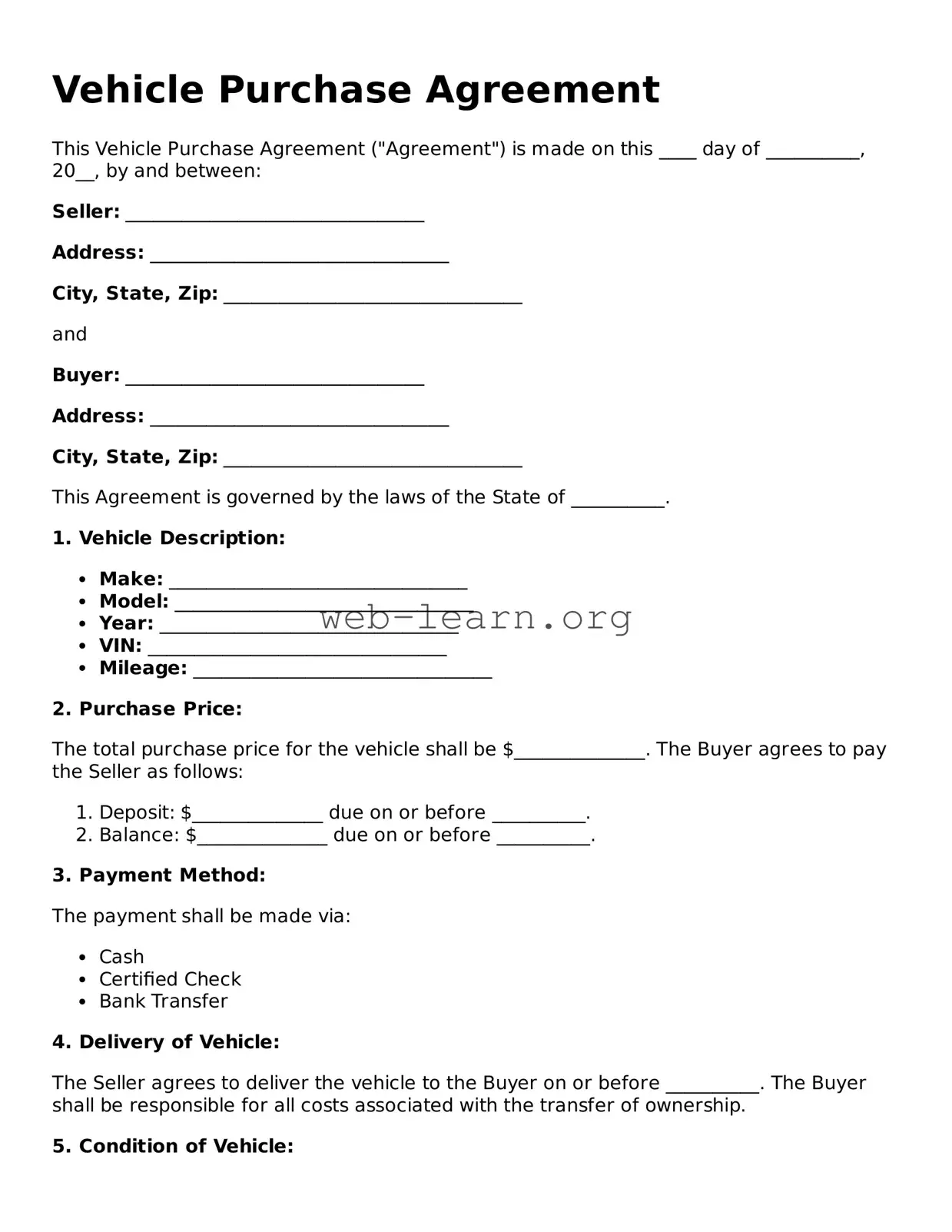
The Vehicle Purchase Agreement form serves as a crucial document in the process of buying a vehicle, outlining the terms and conditions agreed upon by both the buyer and the seller. This form typically includes essential details such as the vehicle's make, model, year, and Vehicle Identification Number (VIN), ensuring that both parties are clear about the specific car being sold. Additionally, it specifies the purchase price, payment method, and any financing arrangements, which helps prevent misunderstandings later on. The agreement may also address warranties, disclosures about the vehicle's condition, and any contingencies that could affect the sale. By detailing the responsibilities of each party, the form aims to protect both the buyer and the seller, fostering transparency and trust throughout the transaction. Understanding the components of this agreement is vital for anyone involved in a vehicle purchase, as it lays the foundation for a smooth and legally sound exchange.
Vehicle Purchase Agreement
This Vehicle Purchase Agreement ("Agreement") is made on this ____ day of __________, 20__, by and between:
Seller: ________________________________
Address: ________________________________
City, State, Zip: ________________________________
and
Buyer: ________________________________
Address: ________________________________
City, State, Zip: ________________________________
This Agreement is governed by the laws of the State of __________.
1. Vehicle Description:
2. Purchase Price:
The total purchase price for the vehicle shall be $______________. The Buyer agrees to pay the Seller as follows:
3. Payment Method:
The payment shall be made via:
4. Delivery of Vehicle:
The Seller agrees to deliver the vehicle to the Buyer on or before __________. The Buyer shall be responsible for all costs associated with the transfer of ownership.
5. Condition of Vehicle:
The vehicle is sold "as-is," with no warranties expressed or implied by the Seller. The Buyer acknowledges having inspected the vehicle and accepts its current condition.
6. Signatures:
By signing below, both parties agree to the terms outlined in this Vehicle Purchase Agreement.
Seller's Signature: ________________________________
Date: ________________________________
Buyer's Signature: ________________________________
Date: ________________________________
| Fact Name | Description |
|---|---|
| Purpose | A Vehicle Purchase Agreement outlines the terms of sale between a buyer and a seller for a vehicle. |
| Components | This agreement typically includes details like the vehicle's make, model, VIN, purchase price, and payment terms. |
| Signatures | Both the buyer and seller must sign the agreement to make it legally binding. |
| State-Specific Forms | Some states may have specific requirements or forms, such as California's Vehicle Purchase Agreement governed by California Civil Code. |
| Disclosure Requirements | Sellers may need to disclose any known defects or issues with the vehicle, depending on state laws. |
| Return Policy | The agreement may specify the conditions under which a buyer can return the vehicle after purchase. |
Completing the Vehicle Purchase Agreement form is an important step in finalizing your vehicle purchase. After filling out the form, it will be submitted to the relevant parties for review and signature. Ensure that all information is accurate to avoid any delays in the transaction process.
What is a Vehicle Purchase Agreement?
A Vehicle Purchase Agreement is a legal document that outlines the terms and conditions of a vehicle sale between a buyer and a seller. It includes details such as the purchase price, vehicle identification number (VIN), and any warranties or conditions related to the sale.
Why is it important to have a Vehicle Purchase Agreement?
This agreement protects both parties involved in the transaction. It provides clear documentation of the sale, which can help prevent disputes. If issues arise later, having a signed agreement can serve as evidence of the terms agreed upon.
What key elements should be included in the agreement?
Can the Vehicle Purchase Agreement be modified?
Yes, the agreement can be modified if both parties agree to the changes. It is essential to document any modifications in writing and have both parties sign the updated agreement to ensure clarity and enforceability.
What happens if one party does not fulfill their obligations?
If one party fails to meet the terms of the agreement, the other party may have legal grounds to seek a remedy. This could involve pursuing damages or specific performance, depending on the circumstances and the terms outlined in the agreement.
Is it necessary to have a lawyer review the Vehicle Purchase Agreement?
While it is not strictly necessary, having a lawyer review the agreement can be beneficial. A legal professional can help identify any potential issues and ensure that the document complies with state laws, providing peace of mind for both parties.
Filling out a Vehicle Purchase Agreement can be a straightforward process, but it’s easy to make mistakes that could lead to complications later on. One common error is not reading the entire document before signing. Many people rush through the agreement, assuming they understand the terms. However, overlooking important details can lead to misunderstandings about financing, warranties, or additional fees.
Another frequent mistake is failing to verify the accuracy of the information provided. Buyers often assume that the dealership has entered everything correctly. It's essential to double-check the vehicle identification number (VIN), purchase price, and any trade-in values. A simple typo can cause significant issues down the line, especially when it comes to registration or insurance.
Many individuals also neglect to ask questions about unclear terms. If something in the agreement doesn’t make sense, it’s crucial to seek clarification. Ignoring confusing language can lead to accepting terms that may not be favorable. Knowledge is power, and understanding every part of the agreement helps ensure a smoother transaction.
Additionally, some buyers forget to review financing options thoroughly. The agreement often includes various financing terms, and it’s easy to overlook interest rates or payment schedules. Not taking the time to compare these options can result in higher costs over the life of the loan. Always consider shopping around for the best financing deal before signing.
Another mistake is not considering the total cost of ownership. Buyers often focus solely on the purchase price and overlook ongoing expenses like insurance, maintenance, and fuel. Understanding these costs can help in making a more informed decision about whether the vehicle fits within a budget.
Lastly, some people fail to keep a copy of the signed agreement. After the transaction, it’s important to have documentation for future reference. This agreement serves as proof of the terms agreed upon and can be invaluable if disputes arise later. Always ask for a copy and store it in a safe place.
When engaging in the purchase of a vehicle, several additional documents often accompany the Vehicle Purchase Agreement. These documents help clarify the terms of the sale, protect the interests of both parties, and ensure a smooth transaction. Below is a list of commonly used forms and documents in conjunction with a Vehicle Purchase Agreement.
These documents are essential to ensure that the vehicle purchase process is transparent and legally binding. Each form plays a specific role, safeguarding the rights and responsibilities of both the buyer and seller. Familiarity with these documents can lead to a more efficient and secure transaction.
Bill of Sale: This document serves as proof of the transfer of ownership from the seller to the buyer. It includes details about the vehicle, such as the make, model, and VIN, similar to a Vehicle Purchase Agreement.
Purchase Order: A purchase order outlines the specifics of a transaction, including the item being bought and the agreed-upon price. Like a Vehicle Purchase Agreement, it formalizes the buyer's intent to purchase.
Lease Agreement: This document details the terms under which a vehicle is leased, including payment amounts and duration. Both agreements establish financial obligations and rights related to the vehicle.
Financing Agreement: A financing agreement outlines the terms of a loan used to purchase a vehicle. It includes payment schedules and interest rates, similar to the financial terms found in a Vehicle Purchase Agreement.
Title Transfer Document: This document is necessary for transferring the vehicle title from the seller to the buyer. It ensures that ownership is legally recognized, akin to the ownership transfer noted in a Vehicle Purchase Agreement.
Warranty Document: This outlines the terms of any warranties provided with the vehicle. It complements the Vehicle Purchase Agreement by detailing protections for the buyer post-purchase.
Inspection Report: An inspection report provides details about the condition of the vehicle prior to purchase. It can be referenced in the Vehicle Purchase Agreement to confirm the vehicle's state at the time of sale.
Service Records: These documents detail the maintenance history of the vehicle. They can be important for buyers to review and are often referenced in the Vehicle Purchase Agreement.
Insurance Policy: An insurance policy outlines coverage for the vehicle. While separate from the purchase agreement, it is essential for protecting the buyer's investment once the vehicle is acquired.
Trade-In Agreement: This document details the terms of a vehicle trade-in during a purchase. It works in conjunction with a Vehicle Purchase Agreement to account for the value of the trade-in against the purchase price.
When filling out the Vehicle Purchase Agreement form, it is important to be thorough and accurate. Below are some guidelines to help you navigate this process.
Things You Should Do:
Things You Shouldn't Do:
Following these guidelines will help ensure a smooth transaction and protect your interests.
Many people believe that this agreement is merely a formality and does not hold significant importance. In reality, it is a legally binding document that outlines the terms of the sale, protecting both the buyer and the seller.
Some think that the Vehicle Purchase Agreement primarily serves the seller's interests. However, it also safeguards the buyer by detailing the vehicle's condition, price, and any warranties, ensuring they are aware of what they are purchasing.
While verbal agreements can be made, they are often difficult to enforce. A written Vehicle Purchase Agreement provides clear evidence of the agreed-upon terms, making it easier to resolve disputes if they arise.
People often assume that all Vehicle Purchase Agreements are identical. In truth, these agreements can vary significantly depending on the seller, the type of vehicle, and the specific terms negotiated between the parties.
Some buyers feel confident in signing without reading the document. This can lead to misunderstandings about the terms. It is crucial to read and understand every part of the agreement before signing.
While it is true that changes to a signed agreement can be complicated, it is not impossible. Both parties can negotiate modifications before finalizing the deal, as long as all changes are documented and agreed upon.
Many believe that this agreement is only necessary for new vehicle purchases. In fact, it is equally important for used vehicles, as it helps clarify the condition and history of the car being sold.
Some buyers overlook the fine print, thinking it contains unimportant details. However, this section often includes critical information about warranties, fees, and other obligations that could affect the buyer's rights.
While both documents are essential in a vehicle sale, they serve different purposes. The Vehicle Purchase Agreement outlines the sale terms, while the title transfer officially changes ownership of the vehicle.
Even when purchasing from a friend or family member, having a Vehicle Purchase Agreement is wise. It helps prevent misunderstandings and provides a clear record of the transaction, protecting both parties.
When filling out and using the Vehicle Purchase Agreement form, it's important to keep several key points in mind. Here are some essential takeaways to ensure a smooth transaction:
Taking these steps can help ensure that the vehicle purchase process is clear and fair for everyone involved.