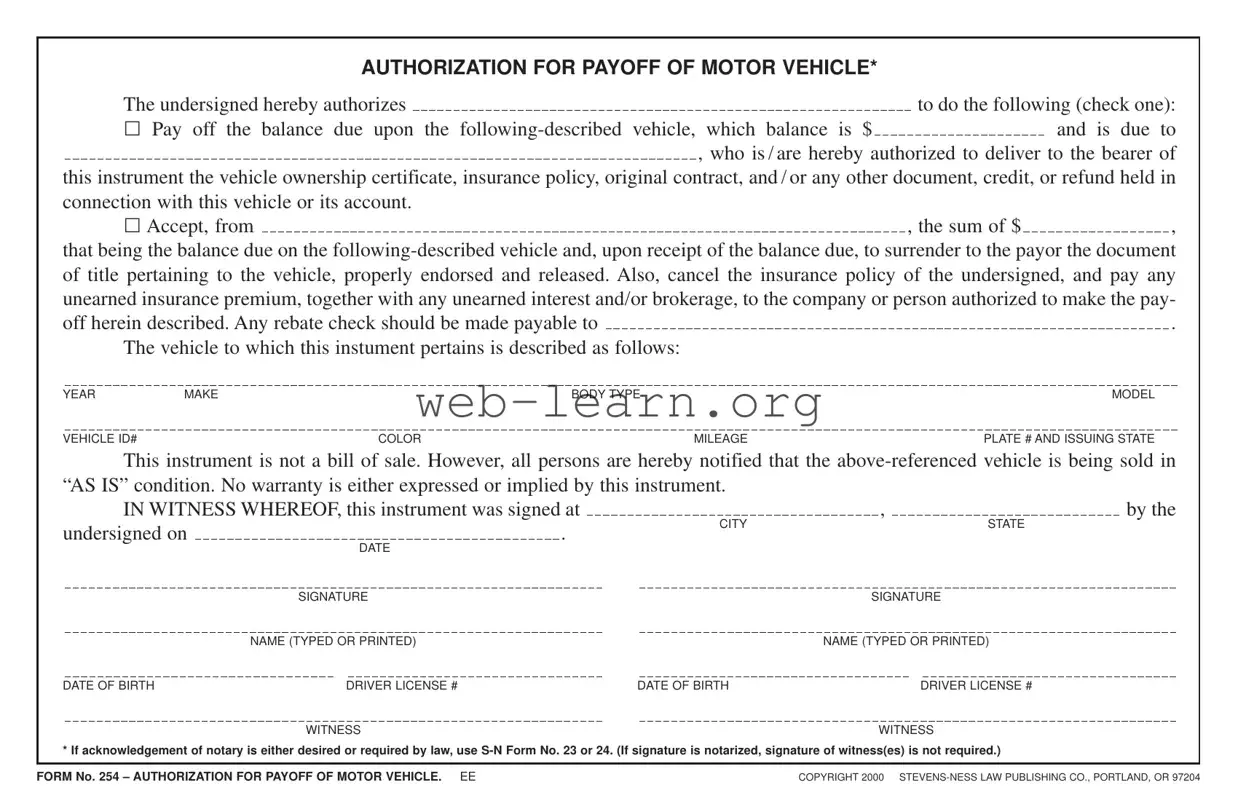
The Vehicle Payoff Authorization form serves as a crucial document in the process of settling the outstanding balance on a motor vehicle. This form allows the vehicle owner to authorize a third party to either pay off the remaining balance due on the vehicle or accept payment from a specified individual. Essential details about the vehicle, such as its year, make, model, vehicle identification number (VIN), and color, are included to ensure clarity and prevent any disputes. The form outlines the responsibilities of the authorized party, which may include delivering the vehicle ownership certificate, insurance policy, and other pertinent documents upon receipt of payment. Additionally, it stipulates that the vehicle is being sold "AS IS," indicating that no warranties are provided. The form also addresses the cancellation of the insurance policy and the handling of any unearned premiums. By signing this document, the parties involved acknowledge the terms and conditions of the transaction, ensuring a smooth and legally compliant payoff process.
|
|
|
|
|
AUTHORIZATION FOR PAYOFF OF MOTOR VEHICLE* |
|
|
|
|
|
|
||||||||||||||||||
|
|
The undersigned hereby authorizes |
|
|
|
|
|
|
|
|
|
|
|
|
|
to do the following (check one): |
|||||||||||||
|
|
A Pay |
off the balance due upon the |
balance is $ |
and is due to |
||||||||||||||||||||||||
|
|
|
|
|
|
|
|
|
|
|
|
, who is / are hereby authorized to deliver to the bearer of |
|||||||||||||||||
|
|
|
|
|
|
|
|
|
|
|
|
||||||||||||||||||
this instrument the vehicle ownership certificate, insurance policy, original contract, and / or any other document, credit, or refund held in |
|||||||||||||||||||||||||||||
connection with this vehicle or its account. |
|
|
|
|
|
|
|
|
|
|
|
|
|
|
|
|
|
|
|
|
|
|
|
|
|||||
|
|
A Accept, from |
|
|
|
|
|
|
|
|
|
|
|
|
, the sum of $ |
|
|
|
|
, |
|||||||||
|
|
|
|
|
|
|
|
|
|
|
|
|
|
|
|
||||||||||||||
that being the balance due on the |
|||||||||||||||||||||||||||||
of title pertaining to the vehicle, properly endorsed and released. Also, cancel the insurance policy of the undersigned, and pay any |
|||||||||||||||||||||||||||||
unearned insurance premium, together with any unearned interest and/or brokerage, to the company or person authorized to make the pay- |
|||||||||||||||||||||||||||||
off herein described. Any rebate check should be made payable to |
|
|
|
|
|
|
|
|
|
|
|
|
|
. |
|||||||||||||||
|
|
The vehicle to which this instument pertains is described as follows: |
|
|
|
|
|
|
|
|
|
|
|
|
|
|
|
|
|
|
|
||||||||
YEAR |
MAKE |
BODY TYPE |
|
|
|
|
|
|
|
|
|
|
|
|
|
MODEL |
|||||||||||||
VEHICLE ID# |
|
|
COLOR |
|
|
|
|
|
MILEAGE |
|
|
|
|
|
|
|
|
PLATE # AND ISSUING STATE |
|||||||||||
|
|
This instrument is not a bill of sale. However, all persons are hereby notified that the |
|||||||||||||||||||||||||||
“AS IS” condition. No warranty is either expressed or implied by this instrument. |
|
|
|
|
|
|
|
|
|
|
|
|
|
|
|
|
|
||||||||||||
|
|
IN WITNESS WHEREOF, this instrument was signed at |
|
|
|
CITY |
|
|
, |
|
|
|
|
|
STATE |
|
|
by the |
|||||||||||
|
|
|
|
|
|
|
|
|
|
|
|||||||||||||||||||
undersigned on |
. |
|
|
|
|
|
|
|
|
|
|
|
|
|
|
|
|
|
|
|
|||||||||
|
|
|
|
|
|
|
|
|
|
|
|
|
|
|
|
|
|
|
|
|
|
|
|||||||
|
|
|
|
|
DATE |
|
|
|
|
|
|
|
|
|
|
|
|
|
|
|
|
|
|
|
|
|
|
|
|
|
|
|
SIGNATURE |
|
|
|
|
|
|
|
SIGNATURE |
|
|
|
|
|
|
||||||||||||
|
|
|
NAME (TYPED OR PRINTED) |
|
|
|
|
|
|
|
NAME (TYPED OR PRINTED) |
|
|
|
|
|
|
||||||||||||
|
|
|
|
|
|
|
|
|
|
|
|
|
|
|
|
|
|
|
|
|
|
|
|
|
|
|
|
|
|
DATE OF BIRTH |
|
|
DRIVER LICENSE # |
|
|
DATE OF BIRTH |
|
|
|
|
|
|
DRIVER LICENSE # |
|
|
|
|
|
|
||||||||||
|
|
|
WITNESS |
|
|
|
|
|
|
|
|
|
WITNESS |
|
|
|
|
|
|
||||||||||
* If acknowledgement of notary is either desired or required by law, use |
|
|
|
|
|
|
|||||||||||||||||||||||
|
|
|
|
|
|||||||||||||||||||||||||
FORM No. 254 – AUTHORIZATION FOR PAYOFF OF MOTOR VEHICLE. |
EE |
|
|
COPYRIGHT 2000 |
|||||||||||||||||||||||||
| Fact Name | Details |
|---|---|
| Purpose | The Vehicle Payoff Authorization form allows a vehicle owner to authorize a third party to pay off the remaining balance on their vehicle loan. |
| Authorization Types | Users can choose to either authorize a payoff of the balance or accept a sum in exchange for the vehicle title. |
| Document Transfer | Upon payoff, the authorized party must deliver essential documents, including the vehicle ownership certificate and insurance policy. |
| Condition of Sale | The vehicle is sold "AS IS," meaning no warranties are provided, either expressed or implied. |
| State-Specific Laws | Each state may have different laws governing vehicle payoff transactions; it's essential to check local regulations. |
| Witness Requirement | A witness is typically required unless the signature is notarized, in which case a witness is not necessary. |
| Notary Acknowledgment | If desired or required, a notary acknowledgment can be included using S-N Form No. 23 or 24. |
| Information Needed | Details such as the vehicle's year, make, model, and VIN are crucial for accurately completing the form. |
| Form Version | This form is designated as FORM No. 254 and is copyrighted by Stevens-Ness Law Publishing Co. |
Completing the Vehicle Payoff Authorization form requires attention to detail. This document facilitates the process of paying off a vehicle loan and transferring ownership. After filling out the form, it will be submitted to the relevant parties to ensure that the transaction proceeds smoothly.
What is a Vehicle Payoff Authorization form?
The Vehicle Payoff Authorization form is a document that allows an individual to authorize a third party to pay off the remaining balance on a vehicle loan. This form is essential for ensuring that the correct parties are involved in the transaction and that the ownership of the vehicle can be transferred smoothly.
Who needs to fill out this form?
This form should be filled out by the current owner of the vehicle who wishes to authorize another party—such as a dealership or a financial institution—to pay off the loan on their behalf. It is crucial for anyone looking to sell or transfer ownership of their vehicle while still having an outstanding loan.
What information is required on the form?
To complete the Vehicle Payoff Authorization form, you will need to provide:
What happens after the form is signed?
Once the form is signed, the authorized party can proceed with the payoff process. This includes paying the lender the outstanding balance and receiving the necessary documents to transfer ownership. It is important to ensure that all parties involved understand their responsibilities after signing the form.
Is this form a bill of sale?
No, the Vehicle Payoff Authorization form is not a bill of sale. Instead, it serves as an authorization for the payoff of the vehicle loan. The actual transfer of ownership will require a separate bill of sale or title transfer document.
What does “AS IS” condition mean?
The form states that the vehicle is being sold in “AS IS” condition, which means that the seller does not provide any warranties or guarantees regarding the vehicle's condition. Buyers should be aware that they are accepting the vehicle with all existing faults and defects.
Do I need a witness or notary for this form?
A witness is not required if the signature is notarized. However, if you prefer or if local laws require it, you can have a witness sign the form. Notarization can add an extra layer of authenticity and security to the transaction.
What should I do if I have more questions?
If you have further questions about the Vehicle Payoff Authorization form or the process involved, consider consulting with a legal professional or a financial advisor. They can provide personalized guidance based on your specific situation and needs.
Filling out the Vehicle Payoff Authorization form can seem straightforward, but there are common mistakes that individuals often make. These errors can lead to delays or complications in the vehicle payoff process. Understanding these pitfalls is essential for ensuring a smooth transaction.
One frequent mistake is leaving the balance due section incomplete. This section requires the exact amount owed on the vehicle. If this information is missing, the lender may not process the payoff request. Always double-check that this figure is accurate and clearly written.
Another common error involves neglecting to specify the correct recipient for the payment. The form asks for the name of the entity or individual to whom the balance is owed. Failing to provide this information can result in confusion and delays. Make sure to include the full name of the lender or financial institution.
Individuals sometimes forget to provide detailed vehicle information. The form requires specifics such as the year, make, model, and Vehicle Identification Number (VIN). Incomplete or incorrect vehicle details can cause significant issues. Ensure that all information is filled out accurately to avoid complications.
Additionally, people may overlook the need for signatures. The form must be signed by all parties involved in the transaction. Missing signatures can render the form invalid, leading to further delays. It is crucial to ensure that everyone required to sign does so before submitting the form.
Finally, individuals often neglect to consider the insurance cancellation aspect of the form. The authorization includes a request to cancel the insurance policy associated with the vehicle. Not addressing this can lead to unnecessary charges or complications with the insurance provider. Review this section carefully to ensure it aligns with your intentions.
When dealing with the Vehicle Payoff Authorization form, several other documents may be necessary to ensure a smooth transaction. These documents help clarify the terms and provide necessary information for all parties involved. Below is a list of commonly used forms that accompany the Vehicle Payoff Authorization.
Having these documents ready can help prevent delays and misunderstandings during the vehicle payoff process. Ensure that all necessary forms are completed accurately to facilitate a smooth transfer of ownership.
The Vehicle Payoff Authorization form serves a specific purpose in the process of settling the financial obligations related to a motor vehicle. Several other documents share similarities with this form, each playing a crucial role in vehicle transactions. Here’s a look at five such documents:
When filling out the Vehicle Payoff Authorization form, it’s essential to be careful and thorough. Here’s a list of things you should and shouldn’t do to ensure the process goes smoothly.
Understanding the Vehicle Payoff Authorization form is crucial for anyone involved in the process of paying off a vehicle. Here are seven common misconceptions about this form:
Clearing up these misconceptions can help streamline the vehicle payoff process and ensure that all parties are on the same page. It is important to read the form carefully and understand its implications.
Here are some key takeaways regarding the Vehicle Payoff Authorization form:
Understanding these points will help ensure the form is filled out correctly and used effectively.