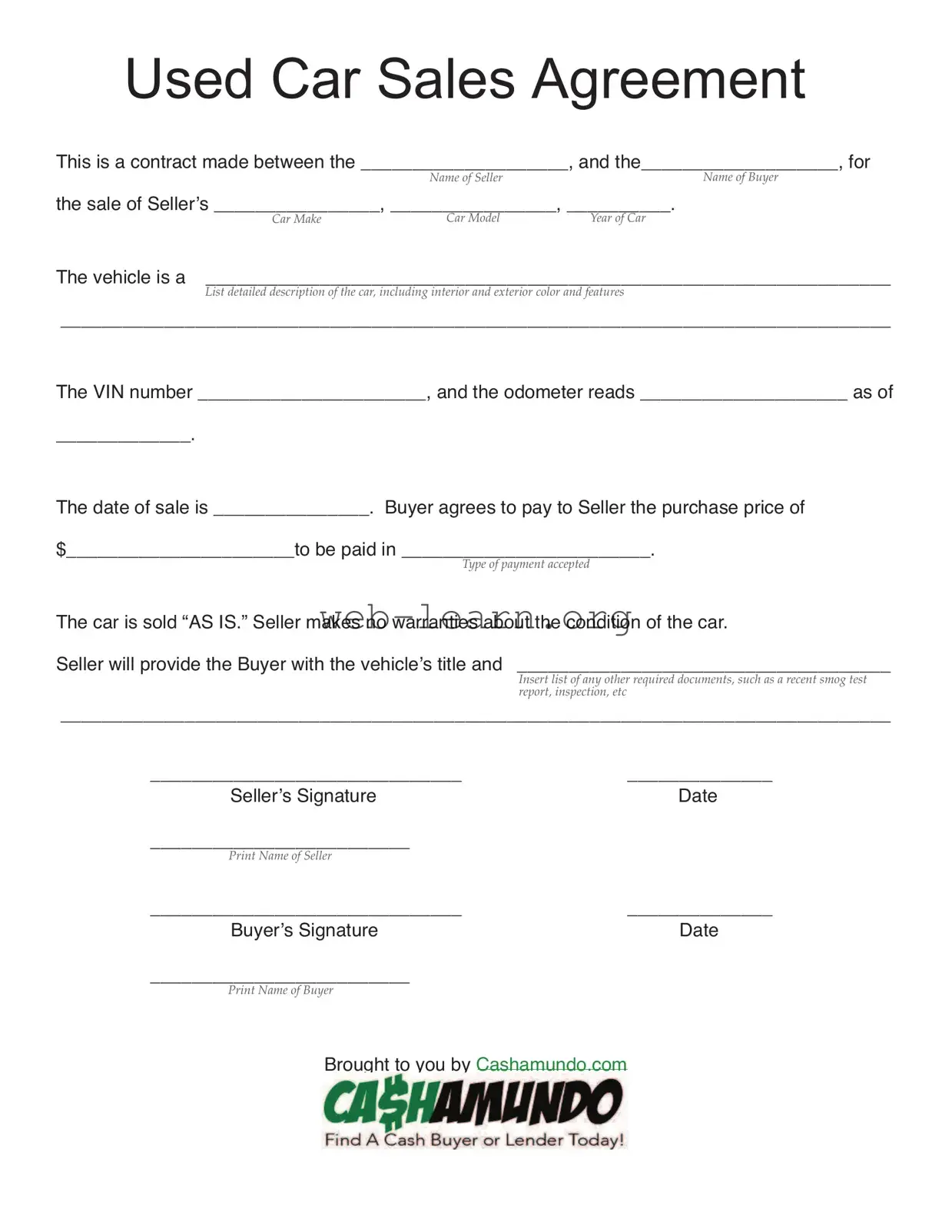
The Used Car Agreement form serves as a vital document in the process of buying and selling a vehicle. This contract outlines the essential details of the transaction between the seller and the buyer. It specifies the names of both parties involved, along with a description of the vehicle being sold, including its make, model, year, and unique features. The form also includes the vehicle identification number (VIN) and the current odometer reading, which provides transparency regarding the car's mileage. The date of sale is clearly stated, and the buyer agrees to a specified purchase price, along with the method of payment. Importantly, the agreement stipulates that the car is sold "AS IS," meaning the seller does not guarantee the vehicle's condition, thus placing the onus on the buyer to assess the car's quality. To complete the transaction, the seller is responsible for providing the buyer with the vehicle's title and any additional required documents, such as a recent smog test report or inspection certificate. This form is designed to protect both parties by ensuring that all necessary information is documented and agreed upon, fostering a clear understanding of the terms of the sale.

Used Car Sales Agreement
This is a contract made between the ____________________, and the___________________, for
the sale of Seller’s ________________, ________________, __________.
Car MakeCar ModelYear of Car
The vehicle is a __________________________________________________________________
List detailed description of the car, including interior and exterior color and features
________________________________________________________________________________
The VIN number ______________________, and the odometer reads ____________________ as of
_____________.
The date of sale is _______________. Buyer agrees to pay to Seller the purchase price of
$______________________to be paid in ________________________.
Type of payment accepted
The car is sold “AS IS.” Seller makes no warranties about the condition of the car.
Seller will provide the Buyer with the vehicle’s title and ____________________________________
Insert list of any other required documents, such as a recent smog test report, inspection, etc
________________________________________________________________________________
______________________________ |
______________ |
Seller’s Signature |
Date |
_________________________ |
|
Print Name of Seller |
|
______________________________ |
______________ |
Buyer’s Signature |
Date |
_________________________ |
|
Print Name of Buyer |
|
Brought to you by Cashamundo.com
| Fact Name | Description |
|---|---|
| Name of Parties | The agreement identifies the seller and the buyer, ensuring both parties are clearly defined. |
| Vehicle Details | The form requires specific information about the vehicle, including make, model, year, and VIN number. |
| Payment Terms | Buyers must agree to the purchase price and the method of payment, which can vary. |
| AS IS Clause | The car is sold "AS IS," meaning the seller does not provide any warranties regarding the vehicle's condition. |
| Governing Law | The agreement is subject to the laws of the state in which the transaction occurs, which may vary by state. |
Filling out the Used Car Agreement form is a straightforward process that requires attention to detail. This contract is essential for both the seller and the buyer to ensure a smooth transaction. Once completed, both parties will have a clear understanding of the sale's terms and conditions.
What is the purpose of the Used Car Agreement form?
The Used Car Agreement form serves as a legal document that outlines the terms of the sale between the seller and the buyer of a used vehicle. It includes essential details such as the names of both parties, a description of the car, the purchase price, and payment terms. This form helps protect both the buyer and seller by clearly defining their rights and responsibilities in the transaction.
What information is required to complete the form?
To fill out the Used Car Agreement form, you need to provide:
What does "AS IS" mean in the context of this agreement?
The term "AS IS" indicates that the car is sold in its current condition without any guarantees or warranties from the seller regarding its performance or quality. Buyers should understand that they accept the vehicle with all its existing faults, whether visible or hidden. It is advisable for buyers to thoroughly inspect the car before finalizing the purchase.
What documents should the seller provide to the buyer?
The seller is responsible for providing the buyer with the vehicle's title, which proves ownership. Additionally, any other required documents should also be included. These may consist of:
How can both parties ensure the agreement is valid?
To ensure the Used Car Agreement is valid, both parties must sign and date the document. This signifies their acceptance of the terms outlined in the agreement. It is also advisable to keep a copy of the signed agreement for personal records. This documentation can be helpful in case of any disputes or misunderstandings in the future.
Filling out a Used Car Agreement form can seem straightforward, but many people make common mistakes that can lead to complications down the road. Understanding these pitfalls can save you time, money, and frustration.
One frequent mistake is not providing complete information. Buyers and sellers often leave sections blank, particularly when it comes to the vehicle description. It's crucial to fill in details such as the car make, model, year, and a thorough description of the vehicle's condition. A detailed description helps prevent misunderstandings later on.
Another common error is overlooking the VIN number. The Vehicle Identification Number is a unique identifier for every car. Failing to include this number can create confusion about the vehicle being sold. Make sure to double-check that the VIN matches the one on the car and the title.
People also tend to ignore the odometer reading. This figure is essential for establishing the vehicle's mileage and condition. Leaving it blank can raise questions about the car's history. Always ensure that the odometer reading is accurate and recorded on the form.
Additionally, not specifying the payment method can lead to misunderstandings. Whether it’s cash, check, or another form of payment, clearly stating how the buyer will pay is vital. This helps both parties understand the transaction and avoid disputes later.
Another mistake involves neglecting to mention the “AS IS” clause. This clause indicates that the seller is not responsible for any repairs or issues after the sale. If this isn't clearly stated, buyers may assume they have some recourse if problems arise, leading to potential legal issues.
Some individuals forget to include additional required documents in the agreement. Depending on your state, you may need to provide a smog test report, inspection records, or other paperwork. Not listing these documents can delay the sale or cause complications when transferring ownership.
Finally, failing to sign and date the agreement is a critical oversight. Both the seller and buyer must sign and date the document to make it legally binding. Without signatures, the agreement may not hold up in case of a dispute.
By being aware of these common mistakes, you can ensure a smoother transaction when filling out a Used Car Agreement form. Taking the time to carefully complete the document can save both parties from potential headaches in the future.
When purchasing a used car, having the right documentation is essential for a smooth transaction. In addition to the Used Car Agreement form, several other forms and documents play a crucial role in ensuring that both the buyer and seller are protected and informed. Below is a list of important documents that are often used alongside the Used Car Agreement.
Having these documents in hand not only facilitates a smoother transaction but also provides reassurance to both parties involved. Proper documentation helps prevent misunderstandings and legal issues down the road, ensuring that your used car purchase is a positive experience.
When filling out the Used Car Agreement form, it is important to approach the task with care and attention to detail. Here are ten guidelines to help ensure the process goes smoothly.
By following these guidelines, both the seller and buyer can ensure that the Used Car Agreement is filled out correctly, leading to a successful transaction.
Misconceptions about the Used Car Agreement form can lead to confusion and potential disputes between buyers and sellers. Here are five common misconceptions:
When it comes to buying or selling a used car, having a clear agreement is essential. Here are some key takeaways about filling out and using the Used Car Agreement form:
By following these guidelines, both buyers and sellers can navigate the used car transaction process with greater confidence and clarity.