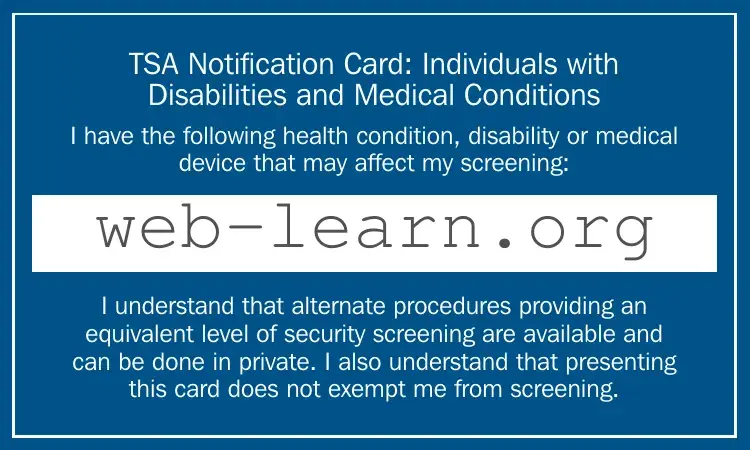
The TSA Notification Card serves as a vital tool for individuals with disabilities or medical conditions who may require specific accommodations during airport security screening. This card allows travelers to communicate their unique needs, such as health conditions or the presence of medical devices, which might affect the screening process. It is important to note that while the card facilitates alternative procedures that maintain security standards, it does not exempt individuals from undergoing screening altogether. The TSA encourages travelers to reach out for assistance by contacting TSA Cares, which provides support and information on available resources. This service operates on weekdays and weekends, offering help in multiple languages. For those needing further assistance, the option to request a Passenger Support Specialist at the checkpoint is available, ensuring that travelers receive the necessary support during their journey. Understanding these aspects can significantly enhance the travel experience for individuals with specific health needs.

TSA Notification Card: Individuals with Disabilities and Medical Conditions
I have the following health condition, disability or medical
device that may affect my screening:
I understand that alternate procedures providing an equivalent level of security screening are available and can be done in private. I also understand that presenting this card does not exempt me from screening.

Information • Assistance Requests • Compliments • Complaints
TSA Cares
Weekdays: 8 a.m. to 11 p.m. ET
Weekends/Holidays: 9 a.m. to 8 p.m. ET
Hablamos Español
Automated information offered in 12 languages
Call 72 hours prior to traveling to request the assistance of a
Passenger Support Specialist (PSS) at the checkpoint. If a PSS is not available, you may ask for a Supervisory TSA Officer at the checkpoint.
| Fact Name | Details |
|---|---|
| Purpose | The TSA Notification Card is designed for individuals with disabilities and medical conditions to communicate their needs during security screening. |
| Health Conditions | Individuals can indicate specific health conditions, disabilities, or medical devices that may affect their screening process. |
| Alternate Procedures | Cardholders are informed that alternate procedures are available, ensuring an equivalent level of security screening while maintaining privacy. |
| Screening Requirement | Presenting the TSA Notification Card does not exempt individuals from the screening process; it merely facilitates accommodations. |
| Contact Information | For assistance, individuals can reach TSA Cares at 1-855-787-2227 or via email at [email protected]. |
| Availability | TSA Cares operates weekdays from 8 a.m. to 11 p.m. ET and weekends/holidays from 9 a.m. to 8 p.m. ET. |
| Language Support | Automated information is available in 12 languages, ensuring accessibility for non-English speakers. |
| Passenger Support Specialist | Travelers are encouraged to call 72 hours prior to their flight to request the assistance of a Passenger Support Specialist at the checkpoint. |
| Supervisory Assistance | If a Passenger Support Specialist is unavailable, individuals can request a Supervisory TSA Officer for additional support. |
After completing the TSA Notification Card form, you will have the opportunity to communicate any health conditions or disabilities that may impact your screening process. This card ensures that you receive appropriate assistance while maintaining security protocols.
What is the TSA Notification Card?
The TSA Notification Card is a tool designed for individuals with disabilities or medical conditions. It informs TSA personnel about specific health conditions, disabilities, or medical devices that may affect the screening process. This card helps ensure that travelers receive appropriate assistance during security screening.
Who should use the TSA Notification Card?
This card is intended for individuals who have health conditions, disabilities, or medical devices that could impact their experience at security checkpoints. If you require special accommodations or have concerns about the screening process, consider using this card.
Does presenting the TSA Notification Card exempt me from screening?
No, presenting the TSA Notification Card does not exempt you from the screening process. All travelers must undergo security screening to maintain safety at airports. However, the card helps inform TSA personnel of your specific needs and may lead to alternative screening procedures.
What should I do if I need assistance at the checkpoint?
If you require assistance, it is advisable to call TSA Cares at 1-855-787-2227 at least 72 hours before your travel date. You can request the assistance of a Passenger Support Specialist (PSS) at the checkpoint. If a PSS is unavailable, you can ask for a Supervisory TSA Officer for help.
What are the hours of operation for TSA Cares?
TSA Cares operates weekdays from 8 a.m. to 11 p.m. ET and weekends/holidays from 9 a.m. to 8 p.m. ET. You can reach out during these hours for assistance with your travel needs.
Can I communicate with TSA Cares in languages other than English?
Yes, TSA Cares offers automated information in 12 languages. This ensures that individuals who speak different languages can access the information they need regarding their travel and screening process.
How can I provide feedback to TSA?
If you have compliments or complaints regarding your experience, you can reach out to TSA through their contact center. You can call 1-855-787-2227 or email [email protected] to share your feedback.
What if I have a specific medical device?
If you have a medical device, such as a pacemaker or prosthetic limb, it is important to inform TSA personnel during screening. The TSA Notification Card can help communicate this information effectively. You may also request alternative screening procedures if necessary.
Is there a way to ensure a smoother screening process?
To ensure a smoother experience, consider arriving at the airport early. Being proactive by using the TSA Notification Card and contacting TSA Cares in advance can help address your specific needs and reduce potential stress during the screening process.
Filling out the TSA Notification Card form can be a straightforward process, but many individuals make common mistakes that can lead to unnecessary complications. One frequent error occurs when people fail to clearly state their specific health conditions, disabilities, or medical devices. This section is crucial as it informs the TSA agents about any special considerations that need to be taken into account during the screening process. A vague or incomplete description may result in confusion or delays at the checkpoint.
Another common mistake is neglecting to sign and date the form. While it may seem like a minor detail, the signature serves as an acknowledgment of understanding the TSA's policies regarding screening procedures. Without a signature, the form may be considered invalid, which could lead to complications during the travel experience. It is essential to ensure that all required fields, including the signature and date, are filled out completely before submitting the card.
Many individuals also overlook the importance of submitting the form in advance. The TSA recommends calling at least 72 hours prior to traveling to request assistance from a Passenger Support Specialist. Failing to do so can result in a lack of necessary support at the checkpoint, potentially leading to a stressful experience. Early submission allows TSA personnel to prepare for the specific needs of the traveler, ensuring a smoother process.
Lastly, some people mistakenly believe that presenting the TSA Notification Card exempts them from screening altogether. This is a misconception. While the card does indicate that the individual may require special accommodations, it does not eliminate the need for security screening. It is vital to understand that all travelers must go through the screening process, even when they possess the notification card. Clear communication and understanding of the TSA's procedures can significantly enhance the travel experience for individuals with disabilities and medical conditions.
The TSA Notification Card is a valuable tool for individuals with disabilities and medical conditions. However, it is often used in conjunction with other important documents that help ensure a smooth travel experience. Below are some of these documents, each serving a specific purpose.
Using these documents alongside the TSA Notification Card can enhance the travel experience for individuals with disabilities and medical conditions. It is advisable to prepare and carry these forms to ensure a smoother process at security checkpoints.
The TSA Notification Card is designed to assist individuals with disabilities and medical conditions during the screening process. Several other documents serve similar purposes in various contexts. Here are five such documents:
When filling out the TSA Notification Card form, it's important to follow certain guidelines to ensure a smooth process. Here’s a list of things you should and shouldn’t do:
Following these guidelines can help ensure that your screening experience is as smooth as possible. Remember, the TSA is there to assist you, so don’t hesitate to reach out if you need support.
There are several misconceptions regarding the TSA Notification Card form. Understanding these can help individuals with disabilities and medical conditions navigate the security screening process more effectively.
This is not true. Presenting the TSA Notification Card does not exempt anyone from the screening process. All travelers must undergo security screening, although alternate procedures may be available.
While the card indicates a need for assistance, it does not guarantee that a Passenger Support Specialist (PSS) will be available at all times. It is advisable to call ahead to request assistance.
The TSA Notification Card is for anyone with any health condition, disability, or medical device that may affect screening. It is not limited to visible disabilities.
While it is helpful to have the card completed before arriving at the airport, it is not mandatory. Travelers can fill it out on-site if necessary.
Having the TSA Notification Card does not guarantee a faster screening process. However, it may help facilitate communication with TSA officers about specific needs.
The TSA Notification Card is a useful tool for individuals with disabilities and medical conditions. Here are some key takeaways to consider when filling out and using the form:
Being informed about the TSA Notification Card can enhance your travel experience and ensure that your needs are met during security screening.