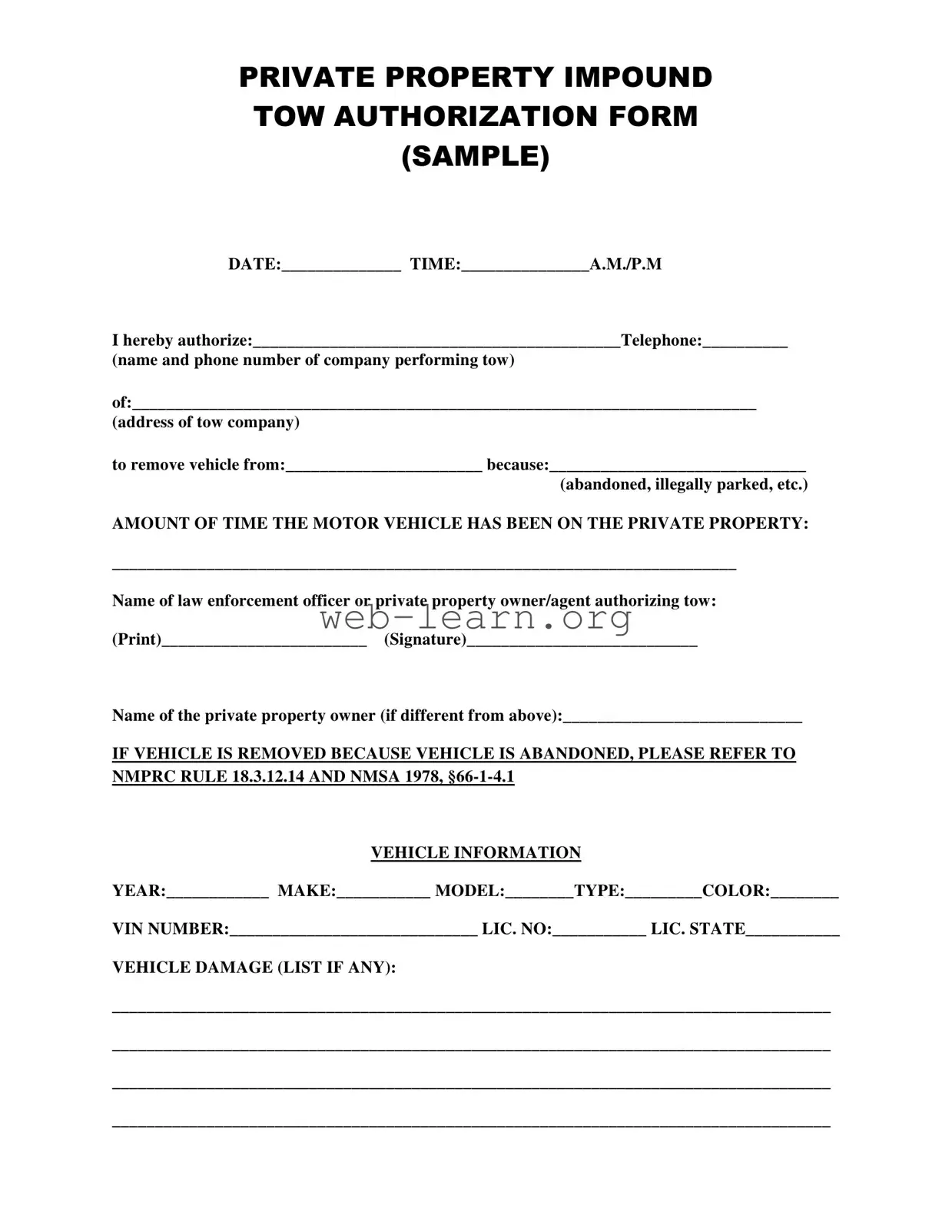
The Tow Authorization form serves as a critical document in the process of vehicle removal from private property. It empowers property owners or their agents to formally authorize a towing company to remove a vehicle that may be abandoned or parked illegally. This form captures essential details, including the date and time of authorization, the name and contact information of the towing company, and the specific location from which the vehicle will be towed. Additionally, it requires the property owner or authorized agent to specify the reason for the tow, whether it be due to abandonment or illegal parking, and to indicate how long the vehicle has been on the property. The form also collects vital information about the vehicle itself, such as its make, model, color, and license plate details, ensuring that the towing company can accurately identify the vehicle in question. Furthermore, if the vehicle is deemed abandoned, the form references relevant state regulations that guide the towing process. This comprehensive approach not only facilitates the towing process but also helps protect the rights of all parties involved, ensuring that the removal of vehicles is conducted in a lawful and organized manner.
PRIVATE PROPERTY IMPOUND TOW AUTHORIZATION FORM (SAMPLE)
DATE:______________ TIME:_______________A.M./P.M
Ihereby authorize:___________________________________________Telephone:__________
(name and phone number of company performing tow)
of:_________________________________________________________________________
(address of tow company)
to remove vehicle from:_______________________ because:______________________________
(abandoned, illegally parked, etc.)
AMOUNT OF TIME THE MOTOR VEHICLE HAS BEEN ON THE PRIVATE PROPERTY:
_________________________________________________________________________
Name of law enforcement officer or private property owner/agent authorizing tow:
(Print)________________________ (Signature)___________________________
Name of the private property owner (if different from above):____________________________
IF VEHICLE IS REMOVED BECAUSE VEHICLE IS ABANDONED, PLEASE REFER TO NMPRC RULE 18.3.12.14 AND NMSA 1978,
VEHICLE INFORMATION
YEAR:____________ MAKE:___________ MODEL:________TYPE:_________COLOR:________
VIN NUMBER:_____________________________ LIC. NO:___________ LIC. STATE___________
VEHICLE DAMAGE (LIST IF ANY):
____________________________________________________________________________________
____________________________________________________________________________________
____________________________________________________________________________________
____________________________________________________________________________________
| Fact Name | Description |
|---|---|
| Date and Time | The form requires the date and time of the tow authorization to be filled out, ensuring accurate record-keeping. |
| Towing Company Information | Details about the towing company, including name and contact number, must be provided for accountability. |
| Reason for Tow | The form requires a specific reason for the tow, such as abandonment or illegal parking, to justify the action. |
| Duration on Property | The amount of time the vehicle has been on private property must be documented, which can be relevant for legal purposes. |
| Authorization Signature | The form must be signed by a law enforcement officer or the property owner/agent, confirming the authorization of the tow. |
| Governing Law | If the vehicle is removed due to abandonment, the form references NMPRC Rule 18.3.12.14 and NMSA 1978, §66-1-4.1 as applicable laws. |
Filling out the Tow Authorization form is a straightforward process. This form is essential for authorizing a towing company to remove a vehicle from private property. Ensure you have all the necessary information ready before you begin. Follow these steps carefully to complete the form accurately.
What is the purpose of the Tow Authorization form?
The Tow Authorization form allows property owners or authorized agents to legally authorize a towing company to remove a vehicle from private property. This is typically used when a vehicle is abandoned or parked illegally.
Who can fill out the Tow Authorization form?
The form can be filled out by the property owner or an authorized agent. It's important that the person signing the form has the authority to make decisions regarding the property.
What information is required on the form?
Key information includes:
How long must a vehicle be on private property before it can be towed?
The form requires you to specify the amount of time the vehicle has been on the property. Local laws may dictate a minimum time frame, so it's essential to check regulations in your area.
What if the vehicle is abandoned?
If the vehicle is considered abandoned, you should refer to specific regulations, such as NMPRC Rule 18.3.12.14 and NMSA 1978, §66-1-4.1. These rules outline the procedures for handling abandoned vehicles.
Do I need to notify law enforcement before towing?
In some jurisdictions, it may be required to notify law enforcement before towing a vehicle. Always check local laws to ensure compliance with any notification requirements.
What happens if the vehicle is damaged during the tow?
If there is any damage to the vehicle during the towing process, it should be documented on the form. This information can be crucial for liability purposes and to address any disputes that may arise.
Is there a fee for towing a vehicle?
Yes, towing companies typically charge a fee for their services. The amount can vary based on the company and the circumstances surrounding the tow. It’s advisable to confirm the fee structure with the towing company beforehand.
Can I contest a tow if I believe it was unjustified?
If you believe the tow was unjustified, you may have the right to contest it. This usually involves contacting the towing company and possibly filing a complaint with local authorities. Documentation, such as the Tow Authorization form, will be important in this process.
Filling out the Tow Authorization form can seem straightforward, but many people make common mistakes that can complicate the towing process. One frequent error is leaving the date and time fields blank. These details are crucial for establishing the timeline of the vehicle's unauthorized presence on private property. Without them, the authorization may be questioned.
Another mistake is failing to provide complete contact information for the towing company. The form requires the name and telephone number of the company performing the tow. Omitting this information can lead to delays or confusion when the tow is initiated. It’s important to ensure that all details are accurate and legible.
Many people also overlook the section where they must specify the reason for the tow. Whether the vehicle is abandoned or illegally parked, this information is essential. A vague or missing reason can result in disputes later on, potentially complicating the towing process.
Another common oversight is neglecting to indicate how long the vehicle has been on the property. This section is vital for establishing that the vehicle has been there long enough to warrant towing. A lack of clarity here may lead to questions about the legality of the tow.
Some individuals mistakenly sign the form without printing their name first. The printed name is necessary for identification purposes, especially if the situation escalates. Always ensure that both your printed name and signature are included.
Additionally, people often forget to fill out the section regarding the vehicle information. This includes details like the year, make, model, color, VIN number, and license plate information. Incomplete vehicle information can hinder the towing process and create confusion about which vehicle is being towed.
It’s also important to note any existing damage to the vehicle. If there are any pre-existing issues, they should be documented on the form. Failing to do so can lead to disputes about responsibility for any damage that may occur during the towing process.
Lastly, some individuals do not check the legal references mentioned in the form, such as NMPRC Rule 18.3.12.14 and NMSA 1978, §66-1-4.1. Understanding these regulations can provide clarity on the towing process and help avoid potential legal issues. Being informed is a crucial step in ensuring that the authorization is valid and enforceable.
The Tow Authorization form is a critical document used in the process of authorizing the removal of a vehicle from private property. Several other forms and documents often accompany this authorization to ensure compliance with legal requirements and to facilitate the towing process. Below is a list of commonly used documents in conjunction with the Tow Authorization form.
These documents play an essential role in the towing process, providing necessary information and legal backing for the actions taken. Proper documentation helps to protect the rights of all parties involved and ensures adherence to relevant laws and regulations.
The Tow Authorization form serves a specific purpose in the context of vehicle towing from private property. However, it shares similarities with several other legal documents that also authorize actions regarding vehicles or property. Below are seven documents that are comparable to the Tow Authorization form, along with explanations of their similarities.
When filling out the Tow Authorization form, it is essential to follow specific guidelines to ensure the process is smooth and compliant. Here are five things to do and five things to avoid:
Misconceptions about the Tow Authorization form can lead to confusion and unintended consequences. Here are seven common misunderstandings:
Filling out the Tow Authorization form is a straightforward process. Here are some key takeaways to keep in mind:
By following these guidelines, you can effectively complete the Tow Authorization form and facilitate a smooth towing process.