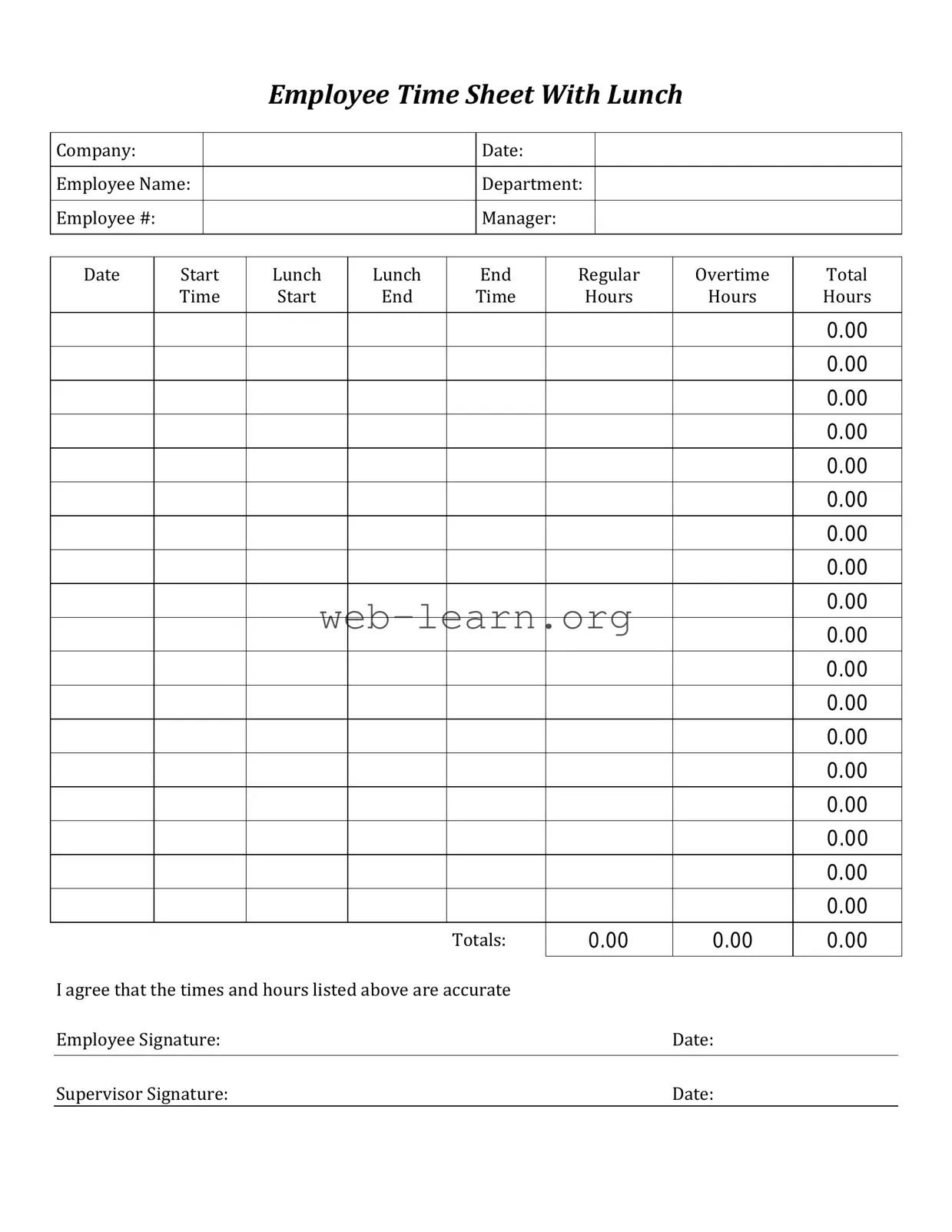
In the world of work, keeping track of hours can be crucial for both employees and employers. A Time Card form serves as a practical tool to document the hours worked by an employee during a specific pay period. This form typically includes essential details such as the employee's name, job title, and the dates of the workweek. It also allows for the recording of daily hours, breaks taken, and total hours worked, making it easier to calculate wages accurately. By providing a clear and organized way to track time, the Time Card form helps ensure that employees are compensated fairly while also assisting employers in maintaining compliance with labor laws. Furthermore, it can serve as a reference in case of disputes regarding hours worked, making it an invaluable asset in any workplace.

Employee Time Sheet With Lunch
Company:
Employee Name:
Employee #:
Date:
Department:
Manager:
Date |
Start |
Lunch |
Lunch |
End |
Regular |
Overtime |
Total |
|
Time |
Start |
End |
Time |
Hours |
Hours |
Hours |
|
|
|
|
|
|
|
|
|
|
|
|
|
|
|
0.00 |
|
|
|
|
|
|
|
|
|
|
|
|
|
|
|
0.00 |
|
|
|
|
|
|
|
|
|
|
|
|
|
|
|
0.00 |
|
|
|
|
|
|
|
|
|
|
|
|
|
|
|
0.00 |
|
|
|
|
|
|
|
|
|
|
|
|
|
|
|
0.00 |
|
|
|
|
|
|
|
|
|
|
|
|
|
|
|
0.00 |
|
|
|
|
|
|
|
|
|
|
|
|
|
|
|
0.00 |
|
|
|
|
|
|
|
|
|
|
|
|
|
|
|
0.00 |
|
|
|
|
|
|
|
|
|
|
|
|
|
|
|
0.00 |
|
|
|
|
|
|
|
|
|
|
|
|
|
|
|
0.00 |
|
|
|
|
|
|
|
|
|
|
|
|
|
|
|
0.00 |
|
|
|
|
|
|
|
|
|
|
|
|
|
|
|
0.00 |
|
|
|
|
|
|
|
|
|
|
|
|
|
|
|
0.00 |
|
|
|
|
|
|
|
|
|
|
|
|
|
|
|
0.00 |
|
|
|
|
|
|
|
|
|
|
|
|
|
|
|
0.00 |
|
|
|
|
|
|
|
|
|
|
|
|
|
|
|
0.00 |
|
|
|
|
|
|
|
|
|
|
|
|
|
|
|
0.00 |
|
|
|
|
|
|
|
|
|
|
|
|
|
|
|
0.00 |
|
|
|
|
|
|
|
|
|
|
|
|
Totals: |
0.00 |
0.00 |
0.00 |
|
|
|
|
|
|
|
|
I agree that the times and hours listed above are accurate |
|
Employee Signature: |
Date: |
|
|
Supervisor Signature: |
Date: |
|
|
| Fact Name | Details |
|---|---|
| Purpose | The Time Card form tracks hours worked by employees, ensuring accurate payroll processing. |
| Components | Typically includes employee name, date, hours worked, and any overtime or leave taken. |
| Submission Frequency | Employees usually submit the Time Card weekly, bi-weekly, or monthly, depending on company policy. |
| Record Keeping | Employers must retain Time Card records for a specified period, often three years, to comply with labor laws. |
| State-Specific Forms | Some states may have specific Time Card requirements. For example, California requires compliance with the Fair Labor Standards Act. |
| Overtime Calculation | Time Cards must accurately reflect overtime hours, which are typically paid at a higher rate than regular hours. |
| Employee Responsibility | It is the employee's duty to fill out the Time Card accurately and submit it on time. |
| Employer Review | Employers are responsible for reviewing Time Cards for accuracy and addressing any discrepancies promptly. |
| Digital Options | Many companies now use digital Time Card systems, allowing for easier tracking and management of hours worked. |
Filling out the Time Card form is a straightforward process. After completing the form, it will need to be submitted to your supervisor for approval. Make sure to double-check your entries for accuracy before submission.
What is a Time Card form?
A Time Card form is a document used by employees to record the hours they have worked during a specific pay period. This form helps ensure accurate tracking of work hours, which is essential for payroll processing. By submitting a completed Time Card, employees confirm their attendance and the time spent on various tasks or projects.
How do I fill out the Time Card form?
To complete the Time Card form, follow these steps:
What should I do if I make a mistake on my Time Card?
If you notice an error after submitting your Time Card, it is important to address it promptly. You should notify your supervisor or the payroll department as soon as possible. Depending on your company's policy, you may be required to submit a corrected Time Card or provide a written explanation of the mistake.
When is the Time Card due?
The due date for submitting your Time Card typically aligns with your company's payroll schedule. Most employers require Time Cards to be submitted by the end of each pay period, which could be weekly, bi-weekly, or monthly. Check with your HR department for specific deadlines to avoid any delays in payment.
What happens if I forget to submit my Time Card?
Failing to submit your Time Card on time may result in delayed payment for your hours worked. If you forget to submit it, contact your supervisor immediately. They may allow you to submit a late Time Card, but this is subject to company policy. Consistent failure to submit on time could lead to further consequences, so it’s essential to stay organized.
Can I submit my Time Card electronically?
Many companies have transitioned to electronic Time Card submissions for efficiency. If your employer offers this option, you will likely need to log into a specific system or software to enter your hours. Check with your HR department to see if electronic submissions are available and to receive instructions on how to use the system.
Who should I contact if I have questions about my Time Card?
If you have questions or concerns regarding your Time Card, the first point of contact should be your supervisor. They can provide guidance on filling out the form and clarify any company policies. For more specific payroll inquiries, reach out to the payroll or human resources department. They can assist with any issues related to payment or discrepancies in hours recorded.
Filling out a Time Card form may seem straightforward, but many individuals encounter common pitfalls that can lead to errors. One frequent mistake is failing to accurately record hours worked. Employees might forget to include overtime or may miscalculate their total hours. This can result in incorrect paychecks, which can be frustrating for both the employee and the employer.
Another common error involves neglecting to specify the correct dates. Time Cards should clearly indicate the beginning and end of the pay period. When individuals overlook this detail, it can create confusion and lead to delays in processing payroll. Accurate date entry is essential for maintaining proper records and ensuring timely payment.
Inconsistent formatting is also a significant issue. Some individuals may use different methods for recording time, such as writing hours in decimal format one week and in hours and minutes the next. This inconsistency can complicate the payroll process and may cause discrepancies in how hours are calculated. A uniform approach is crucial for clarity and accuracy.
Additionally, many people forget to sign their Time Card. A signature serves as a verification of the hours worked and indicates that the employee agrees with the recorded information. Without a signature, the Time Card may be considered incomplete, which can result in delays or disputes regarding payment.
Another mistake involves not keeping a personal record of hours worked. Relying solely on the Time Card can be risky, especially if errors occur during the entry process. Maintaining a personal log can help employees verify their hours and ensure that they are accurately compensated for their time.
Lastly, some individuals fail to submit their Time Cards on time. Late submissions can disrupt the payroll cycle and may lead to delayed payments. It is essential for employees to be aware of submission deadlines and to plan accordingly to avoid any financial inconveniences.
The Time Card form is an essential document for tracking employee hours worked, but it is often accompanied by several other forms and documents that play a critical role in payroll and human resources management. Below is a list of these documents, each serving a specific purpose in the overall process.
Each of these documents plays a vital role in ensuring that payroll processes run smoothly and that employee records are accurate and up to date. Understanding their purpose can help streamline administrative tasks and improve overall efficiency in the workplace.
When filling out a Time Card form, it's important to ensure accuracy and clarity. Below is a list of things you should and shouldn't do to help you complete the form correctly.
By following these tips, you can help ensure that your Time Card is processed smoothly and accurately.
Understanding the Time Card form is essential for accurate tracking of work hours and payroll. However, several misconceptions can lead to confusion. Here are five common misconceptions:
Some employees believe that filling out a Time Card is not mandatory. In reality, accurately completing a Time Card is crucial for payroll processing and ensuring employees are compensated for their work.
There is a misconception that only hourly employees are required to submit Time Cards. However, salaried employees may also need to track their hours for various reasons, including project management and compliance.
While the primary purpose of a Time Card is to record hours worked, it can also serve to document overtime, breaks, and absences. This information is vital for accurate payroll and adherence to labor laws.
Some individuals think that submitting a Time Card after the deadline is inconsequential. However, late submissions can disrupt payroll processes and may lead to delayed payments or discrepancies.
There is a belief that all Time Cards function identically across different organizations. In truth, each company may have specific requirements and formats for Time Cards, making it essential to understand your employer's expectations.
By addressing these misconceptions, employees can better navigate the Time Card process, ensuring accurate records and timely compensation.
When filling out and using the Time Card form, several key points should be kept in mind to ensure accuracy and compliance. Here are the essential takeaways: