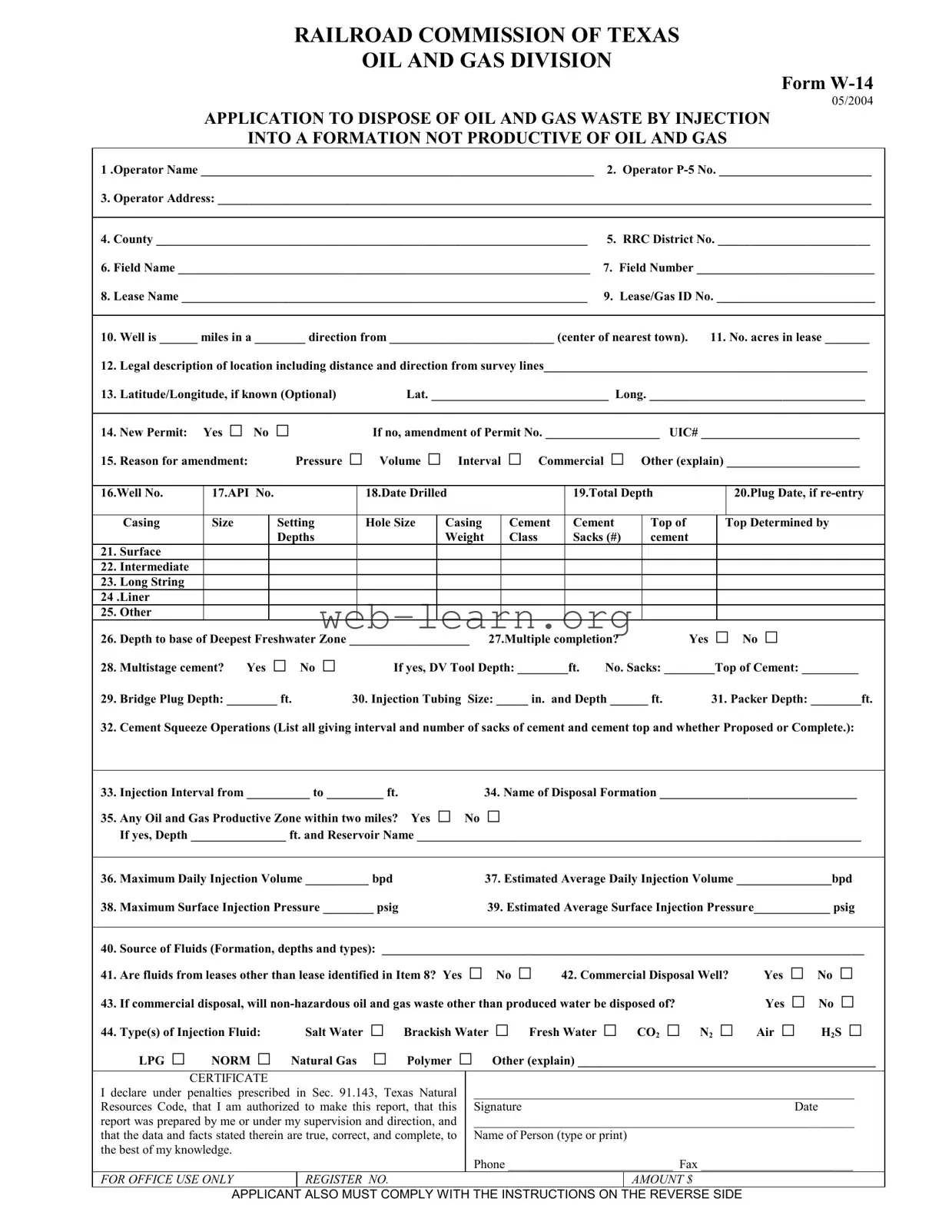
The Texas W-14 form serves as a critical application for entities seeking to dispose of oil and gas waste through injection into formations that are not productive of oil and gas. This form is administered by the Railroad Commission of Texas and is essential for ensuring compliance with state regulations regarding waste management in the oil and gas industry. It requires detailed information about the operator, including their name, address, and P-5 number, along with specific data about the well and the disposal formation. The form prompts operators to provide particulars such as the legal description of the location, the depth of the well, and the type of injection fluid to be used. Additionally, it addresses the need for a permit, whether new or an amendment to an existing one, and requires operators to state the reason for any amendments. Furthermore, the form mandates the disclosure of the maximum daily injection volume and the estimated average surface injection pressure, which are crucial for assessing the environmental impact of the proposed disposal activities. Operators must also submit supporting documentation, including maps, notification records to affected parties, and technical information that may assist in the review process. Overall, the Texas W-14 form plays a vital role in regulating the safe and responsible disposal of oil and gas waste, thereby protecting both the environment and public health.

RAILROAD COMMISSION OF TEXAS
OIL AND GAS DIVISION
Form
05/2004
APPLICATION TO DISPOSE OF OIL AND GAS WASTE BY INJECTION
INTO A FORMATION NOT PRODUCTIVE OF OIL AND GAS
1 .Operator Name ______________________________________________________________ 2. Operator
3. Operator Address: _______________________________________________________________________________________________________
4. County ____________________________________________________________________ |
5. RRC District No. ________________________ |
|||||||||||||||||||||||||
6. Field Name _________________________________________________________________ |
7. Field Number ____________________________ |
|||||||||||||||||||||||||
8. Lease Name ________________________________________________________________ |
9. Lease/Gas ID No. _________________________ |
|||||||||||||||||||||||||
|
|
|
|
|
|
|
|
|
|
|
|
|
|
|
||||||||||||
10. |
Well is ______ miles in a ________ direction from __________________________ (center of nearest town). |
11. No. acres in lease _______ |
||||||||||||||||||||||||
12. |
Legal description of location including distance and direction from survey lines___________________________________________________ |
|||||||||||||||||||||||||
13. |
Latitude/Longitude, if known (Optional) |
|
|
Lat. ____________________________ Long. __________________________________ |
||||||||||||||||||||||
|
|
|
|
|
|
|
|
|
|
|
|
|
|
|
|
|
|
|
|
|||||||
14. |
New Permit: |
|
Yes |
|
No |
|
|
|
|
If no, amendment of Permit No. __________________ UIC# _________________________ |
||||||||||||||||
15. |
Reason for amendment: |
|
|
Pressure |
|
|
Volume |
Interval |
Commercial |
Other (explain) _____________________ |
||||||||||||||||
|
|
|
|
|
|
|
|
|
|
|
|
|
|
|
|
|
|
|
|
|
|
|||||
16.Well No. |
|
17.API |
No. |
|
|
|
|
18.Date Drilled |
|
|
|
|
19.Total Depth |
|
|
|
20.Plug Date, if |
|||||||||
|
|
|
|
|
|
|
|
|
|
|
|
|
|
|
|
|
|
|
|
|
|
|
|
|||
|
Casing |
|
Size |
|
|
|
Setting |
|
|
Hole Size |
Casing |
|
Cement |
|
Cement |
|
Top of |
|
Top Determined by |
|||||||
|
|
|
|
|
|
|
Depths |
|
|
|
Weight |
|
Class |
|
Sacks (#) |
|
cement |
|
|
|
|
|
||||
21. |
Surface |
|
|
|
|
|
|
|
|
|
|
|
|
|
|
|
|
|
|
|
|
|
|
|
|
|
22. |
Intermediate |
|
|
|
|
|
|
|
|
|
|
|
|
|
|
|
|
|
|
|
|
|
|
|
|
|
23. |
Long String |
|
|
|
|
|
|
|
|
|
|
|
|
|
|
|
|
|
|
|
|
|
|
|
|
|
24 .Liner |
|
|
|
|
|
|
|
|
|
|
|
|
|
|
|
|
|
|
|
|
|
|
|
|
|
|
25. |
Other |
|
|
|
|
|
|
|
|
|
|
|
|
|
|
|
|
|
|
|
|
|
|
|
|
|
26. |
Depth to base of Deepest Freshwater Zone ___________________ |
27.Multiple completion? |
|
|
Yes |
No |
|
|||||||||||||||||||
28. |
Multistage cement? |
Yes |
|
No |
|
|
If yes, DV Tool Depth: ________ft. |
No. Sacks: ________Top of Cement: _________ |
||||||||||||||||||
29. |
Bridge Plug Depth: ________ ft. |
30. Injection Tubing |
Size: _____ in. and Depth ______ ft. |
31. Packer Depth: ________ft. |
||||||||||||||||||||||
32. |
Cement Squeeze Operations (List all giving interval and number of sacks of cement and cement top and whether Proposed or Complete.): |
|||||||||||||||||||||||||
|
|
|
|
|
|
|||||||||||||||||||||
33. |
Injection Interval from __________ to _________ ft. |
|
34. Name of Disposal Formation _______________________________ |
|||||||||||||||||||||||
35. |
Any Oil and Gas Productive Zone within two miles? Yes |
|
No |
|
|
|
|
|
|
|
|
|
|
|
|
|
||||||||||
|
If yes, Depth _______________ ft. and Reservoir Name ______________________________________________________________________ |
|||||||||||||||||||||||||
|
|
|
|
|
|
|||||||||||||||||||||
36. |
Maximum Daily Injection Volume __________ bpd |
|
37. Estimated Average Daily Injection Volume _______________bpd |
|||||||||||||||||||||||
38. |
Maximum Surface Injection Pressure ________ psig |
|
39. Estimated Average Surface Injection Pressure____________ psig |
|||||||||||||||||||||||
|
|
|
|
|
||||||||||||||||||||||
40. |
Source of Fluids (Formation, depths and types): ____________________________________________________________________________ |
|||||||||||||||||||||||||
41. |
Are fluids from leases other than lease identified in Item 8? Yes |
|
No |
42. Commercial Disposal Well? |
Yes |
No |
||||||||||||||||||||
43. |
If commercial disposal, will |
|
|
|
Yes |
No |
||||||||||||||||||||
44. |
Type(s) of Injection Fluid: |
|
Salt Water |
Brackish Water |
|
Fresh Water |
|
|
CO2 |
N2 |
Air |
H2S |
||||||||||||||
|
LPG |
|
NORM |
|
|
Natural Gas |
Polymer |
|
Other (explain) _______________________________________________ |
|||||||||||||||||
|
|
|
|
|
|
|
|
|
|
|
|
|
|
|
|
|
|
|
|
|
|
|
||||
|
|
CERTIFICATE |
|
|
|
|
|
|
|
|
|
|
|
|
|
|
|
|
|
|
|
|
||||
I declare under penalties prescribed in Sec. 91.143, Texas Natural |
____________________________________________________________ |
|||||||||||||||||||||||||
Resources Code, that I am authorized to make this report, that this |
Signature |
|
|
|
|
|
|
|
|
|
|
Date |
||||||||||||||
report was prepared by me or under my supervision and direction, and |
____________________________________________________________ |
|||||||||||||||||||||||||
that the data and facts stated therein are true, correct, and complete, to |
Name of Person (type or print) |
|
|
|
|
|
|
|
||||||||||||||||||
the best of my knowledge. |
|
|
|
|
|
|
|
|
|
|
|
|
|
|
|
|
|
|
|
|
|
|
|
|||
|
|
|
|
|
|
|
|
|
|
|
|
|
Phone __________________________ Fax ________________________ |
|||||||||||||
FOR OFFICE USE ONLY |
|
|
|
|
REGISTER NO. |
|
|
|
|
|
|
|
|
AMOUNT $ |
|
|
||||||||||
|
|
|
|
|
|
|
|
|
|
|
|
|
|
|
|
|
|
|
|
|
|
|
|
|
|
|
APPLICANT ALSO MUST COMPLY WITH THE INSTRUCTIONS ON THE REVERSE SIDE
05/2004
FORM
1.File the original application, including all attachments, with Environmental Services, Railroad Commission of Texas, P.O. Box 12967, Austin, Texas
2.Include with the original application a
3.Provide the current field name (Item 6) and field number (Item 7) designated in Commission records for an existing well. If the application is for a new well, provide the nearest producing field name and number.
4.Check in Item 14 the appropriate box for a new permit or an amendment of an existing permit. If an amendment, check the applicable boxes in Item 15 to indicate the reason for amendment and provide a brief explanation if “other” is checked.
5.If the application is for a new permit, attach a complete electrical log of the well or the log of a nearby well.
6.Attach a letter from the Texas Commission on Environmental Quality (TCEQ) or its predecessor or successor agency stating that the well will not endanger usable quality water strata and that the formation or stratum to be used for disposal does not contain usable quality water. To obtain the TCEQ letter, submit two copies of the Form
7.Attach a map showing the location of all wells of public record within
8.Attach a table of all wells of public record that penetrate the disposal interval and that are within
9.Attach a list of the names and mailing or physical addresses of affected persons who were notified of the application and when the notification was mailed or delivered. Include a signed statement attesting to the notification of the listed affected persons. Notice shall be provided by sending or delivering a copy of the front and back of the application to the surface owner of record of the surface tract where the well is located, each Commission- designated operator of any well located within
10.Attach an affidavit of publication signed by the publisher that the notice of publication has been published in a newspaper of general circulation in the county where the disposal well will be located. Attach a newspaper clipping of the published notice. If the application is for a commercial disposal well, that fact must be stated in the published notice. NOTE: If the application is for an amendment, notification by publication is required only if the amendment is for disposal interval or for commercial status.
11.Attach any other technical information that you believe will facilitate the review of the application. Such information may include a cement bond log, a cementing record, or a well bore sketch.
Additional information is available in the Underground Injection Control Manual, which is available on the Railroad Commission’s website: www.rrc.state.tx.us
No public hearing will be held on this application unless an affected person or local government protests the application, or the Commission administratively denies the application. Any protest shall be in writing and contain (1) the name, mailing address, and phone number of the person making the protest; and (2) a brief description of how the protestant would be adversely affected by the activity sought to be permitted. If the Commission or its delegate determines that a valid protest has been received, or that a public hearing is in the public interest, a hearing will be held upon written request by the applicant. The permit may be administratively issued in a minimum of 15 days after receipt of the application, published notice, or notification of affected persons, whichever is later, if no protest is received.
| Fact Name | Description |
|---|---|
| Purpose | The Texas W-14 form is used to apply for the disposal of oil and gas waste by injection into formations that are not productive of oil and gas. |
| Governing Law | This form is governed by the Texas Natural Resources Code, specifically Section 91.143, which outlines the requirements for waste disposal applications. |
| Filing Requirements | Applicants must file the original application with the Railroad Commission of Texas and include a non-refundable fee of $100, along with additional fees if applicable. |
| Environmental Considerations | A letter from the Texas Commission on Environmental Quality (TCEQ) is required to ensure that the disposal well will not endanger usable quality water strata. |
| Public Notification | Applicants must notify affected persons and provide evidence of notification, including mailing addresses and dates, as part of the application process. |
Filling out the Texas W-14 form is an important step in the process of applying to dispose of oil and gas waste by injection. After completing the form, it will need to be submitted along with any required attachments and fees to the appropriate offices. Following these steps carefully will help ensure that the application is processed smoothly.
After completing the form, ensure to gather all necessary attachments and submit the application as instructed. This includes paying the required fees and providing any additional documentation that may be necessary for your specific application type.
The Texas W-14 form is an application used to dispose of oil and gas waste by injecting it into a formation that is not productive of oil and gas. This process is regulated by the Railroad Commission of Texas to ensure environmental safety and compliance with state laws.
Operators of oil and gas wells who wish to dispose of waste through injection must complete this form. This includes both new permit applications and amendments to existing permits. The operator must provide specific details about the well, the disposal formation, and the nature of the waste.
The form requires various pieces of information, including:
All information must be accurate and complete to avoid delays in processing the application.
A non-refundable fee of $100 is required when submitting the original application. If requesting an exception to Statewide Rule 9(9), an additional fee of $150 must be included. These fees are necessary for processing the application and ensuring compliance with state regulations.
After submission, it is important to monitor the application status. If no protests are received, the permit may be administratively issued within 15 days. In the event of a protest, a public hearing may be held. Additionally, ensure that all required notifications and publications are completed as outlined in the instructions to avoid complications.
Filling out the Texas W-14 form is a crucial step for operators looking to dispose of oil and gas waste by injection. However, many individuals make common mistakes that can delay the application process or lead to outright rejection. One significant error occurs when operators fail to provide complete and accurate information. Each section of the form requires specific details, such as the operator name, address, and the legal description of the location. Omitting any of these essential elements can lead to confusion and may result in the application being returned for corrections.
Another frequent mistake is neglecting to check the appropriate box in Item 14 regarding whether the application is for a new permit or an amendment. If an operator mistakenly indicates that they are applying for a new permit when they are actually seeking an amendment, this can complicate the review process. Additionally, the reasons for the amendment must be clearly stated in Item 15. Failing to provide a brief explanation when “other” is checked can leave reviewers in the dark about the intended changes.
Operators often overlook the importance of including the required attachments. For instance, a complete electrical log of the well or a nearby well must accompany new permit applications. Similarly, a letter from the Texas Commission on Environmental Quality (TCEQ) confirming that the well will not endanger usable quality water is essential. Missing these documents can lead to delays, as the application may be deemed incomplete and returned for additional information.
Lastly, many applicants fail to notify affected persons as required. The form specifies that operators must provide a list of those notified about the application, including surface owners and nearby operators. A signed statement attesting to this notification is also necessary. Skipping this step can lead to protests from affected parties, which can further complicate and prolong the approval process. Taking the time to carefully review the form and ensuring all necessary steps are followed can greatly enhance the chances of a successful application.
When dealing with the Texas W-14 form, several other documents and forms are often necessary to ensure compliance with regulations surrounding the disposal of oil and gas waste. Each of these documents serves a specific purpose in the application process, and understanding their roles can significantly streamline your efforts. Below is a list of key forms and documents that are commonly used in conjunction with the Texas W-14 form.
Being prepared with these documents not only enhances the chances of a smooth application process but also ensures compliance with state regulations. Each document plays a vital role in the overall assessment of the proposed disposal well and its potential impact on the environment and surrounding community. Take the time to gather and review these materials carefully to avoid unnecessary delays.
When filling out the Texas W-14 form, attention to detail is crucial. Here are five essential actions to take and avoid:
This is not entirely accurate. While the form is often used for new permits, it can also be utilized for amending existing permits. If you already have a disposal well and need to make changes, the W-14 allows for that flexibility.
Many believe that submitting the W-14 form will automatically lead to approval. However, the process includes a review period, during which the Railroad Commission of Texas assesses the application. Approval can take time, especially if there are protests or required public hearings.
This is a common misunderstanding. Each well has specific characteristics and requirements that dictate the appropriate disposal formation. The W-14 form requires detailed information about the proposed formation to ensure it is suitable for the type of waste being injected.
In reality, several supporting documents are necessary for a complete application. This includes maps, letters from the Texas Commission on Environmental Quality, and sometimes technical information about the well. Failing to provide these can delay the application process.
Filling out the Texas W-14 form is essential for those looking to dispose of oil and gas waste through injection. Here are some key takeaways: