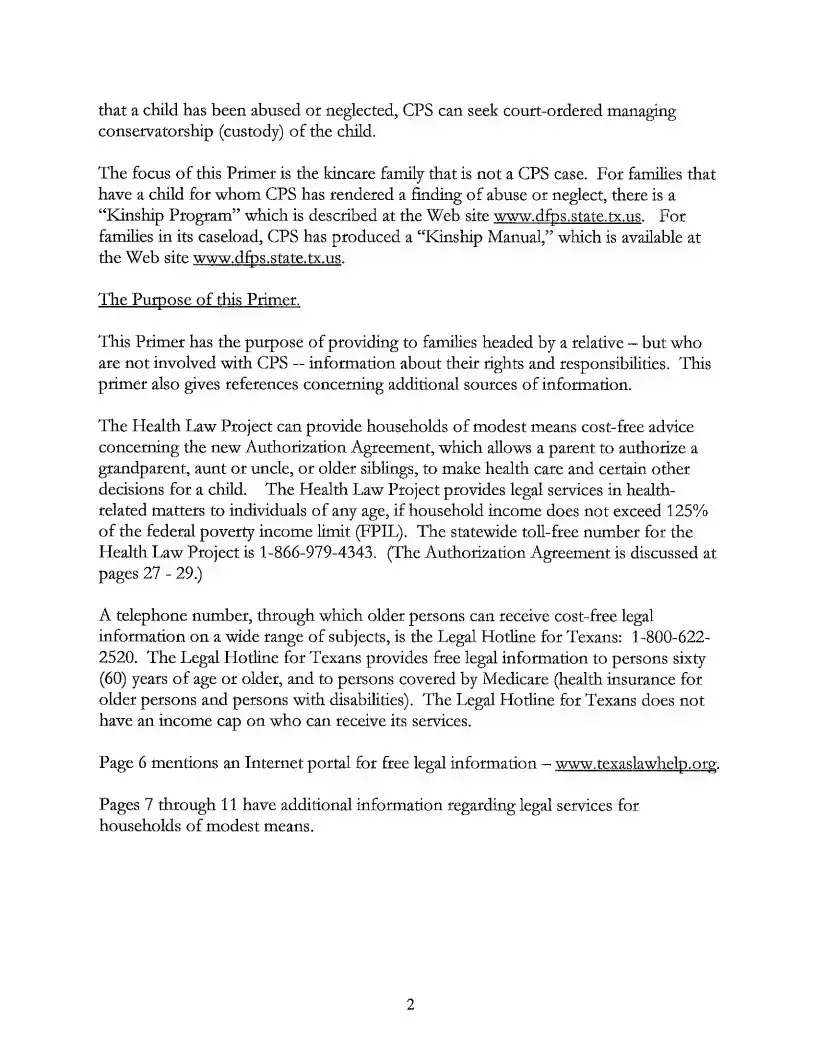
The Texas Kincare Primer form serves as an essential resource for families navigating the complexities of kincare, where relatives step in to care for children when parents are unable to do so. This form, developed by the Texas Kincare Taskforce in collaboration with the Texas Legal Services Center and the Texas Department of Aging and Disability Services, provides vital information to support relatives who take on caregiving roles. It outlines the various circumstances that may lead to kincare arrangements, such as parental absence due to illness, incarceration, or other challenges. The Primer includes a comprehensive overview of the documents needed to access services, as well as public benefits available to kincare families at both the state and federal levels. Additionally, it highlights critical resources such as tax credits, medical treatment consent, and educational enrollment agreements. With an estimated 600,000 children in Texas being raised by relatives, this Primer addresses the urgent need for accessible information and support for those stepping into these pivotal roles. By offering guidance on legal resources and local assistance programs, the Texas Kincare Primer aims to empower families and ensure that children receive the care they need in a stable and nurturing environment.

| Fact Name | Description |
|---|---|
| Definition of Kincare | Kincare refers to the situation where a minor child is cared for by a relative, such as a grandparent, aunt, or older sibling, instead of their biological parents. |
| Governing Laws | The Texas Kincare Primer is governed by Texas Family Code and related state laws that support relative caregiving. |
| Statistics | Over 600,000 children in Texas are raised by relatives each year, with many not under the supervision of Child Protective Services. |
| Resources Available | The Texas Kincare Primer provides access to resources like TexasLawHelp.org and the Grandparents Raising Grandkids website for legal and support information. |
Completing the Texas Kincare Primer form is a straightforward process that requires careful attention to detail. After filling out the form, you will be equipped with important information and resources to support your role as a caregiver. Follow the steps outlined below to ensure that you provide accurate and complete information.
What is Kincare?
Kincare refers to the situation where a minor child is cared for by a relative rather than their biological parents. This could be a grandparent, aunt, uncle, older sibling, or another family member. The parents may live in the same home or be absent for various reasons, such as illness, incarceration, or even tragic circumstances like the death of the parents.
Why was the Texas Kincare Primer created?
The Texas Kincare Primer was developed to provide resources and information to relative caregivers. It aims to support those stepping into parental roles due to unique circumstances, helping them navigate the challenges they may face while raising children.
What types of documents might I need as a Kincare provider?
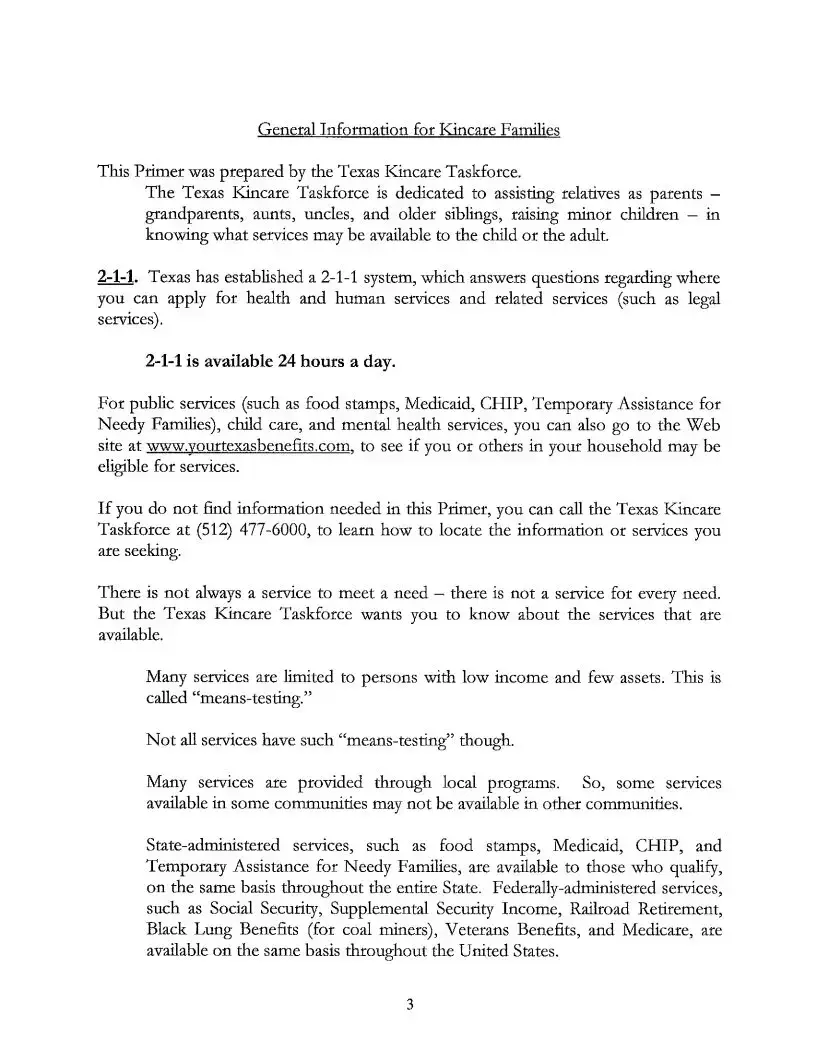
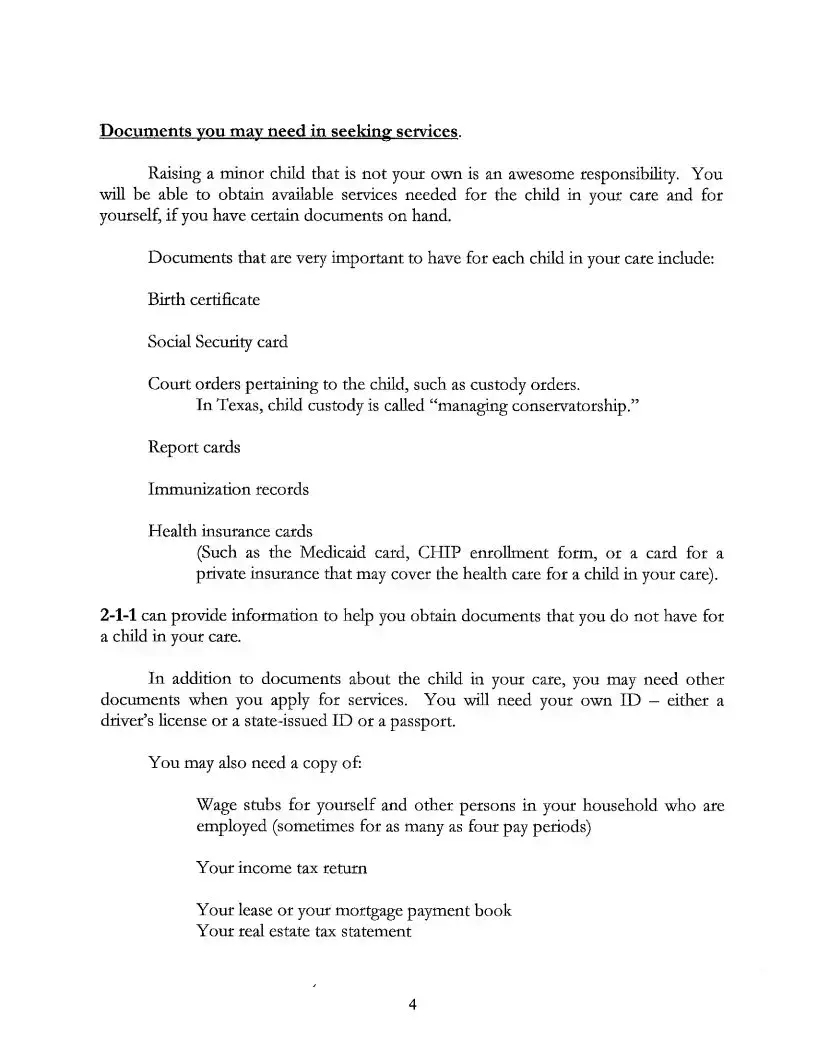
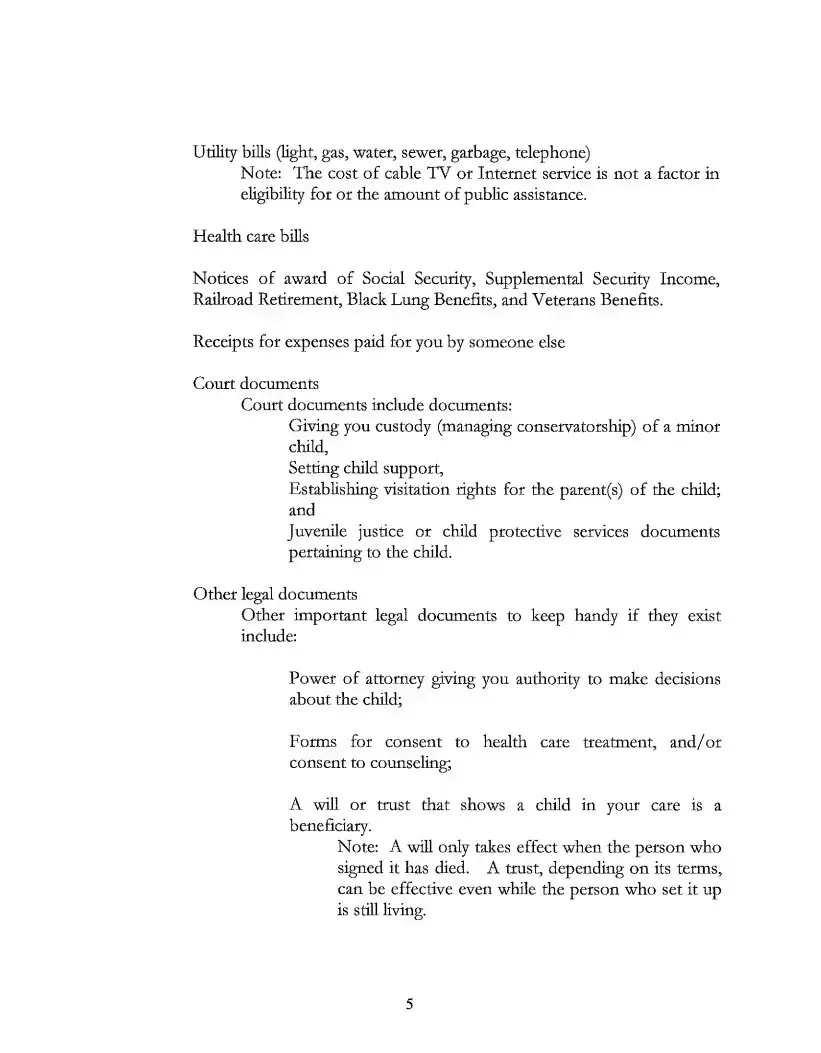
As a Kincare provider, you may need several important documents, including:
These documents help ensure that you can make necessary decisions for the child’s well-being and education.
How can I access legal resources related to Kincare?
Legal resources for Kincare families can be found on TexasLawHelp.org. This website offers a wealth of information on legal issues that may arise, including custody, guardianship, and public benefits.
What public benefits are available for Kincare families?
Kincare families in Texas may be eligible for various public benefits. These include:
These programs can provide financial assistance, healthcare, and other essential services to support the family.
What is the “Sandwich Generation”?
The “Sandwich Generation” refers to adults who are simultaneously caring for their own children and aging relatives. Kincare providers often find themselves in this situation, balancing the needs of both generations while managing their own lives.
Are there resources available for Kincare families in Texas?
Yes, there are numerous resources available. Websites like Grandparents Raising Grandkids provide valuable information on legal resources, support groups, and educational materials tailored for Kincare families.
What should I do if I need support as a Kincare provider?
Seeking support is crucial. You can connect with local support groups, community organizations, and online forums dedicated to Kincare. These resources offer emotional support, practical advice, and a sense of community among those in similar situations.
How many children in Texas are raised by relative caregivers?
In Texas, it’s estimated that over 600,000 children are cared for by relatives who are not their parents at some point during the year. This highlights the significant role that relatives play in the lives of many children across the state.
What are some challenges Kincare families face?
Kincare families often encounter challenges such as navigating legal issues, accessing healthcare, and managing financial responsibilities. Additionally, emotional stress can arise from balancing caregiving with personal obligations. Understanding these challenges can help in finding the right support and resources.
Filling out the Texas Kincare Primer form can be a straightforward process, but many people make mistakes that can delay their application or create confusion. One common error is failing to provide complete and accurate information. When details are missing or incorrect, it can lead to processing delays. Always double-check each section of the form to ensure that all required fields are filled out correctly.
Another mistake often made is overlooking the importance of supporting documents. Applicants may forget to include necessary documentation, such as proof of relationship to the child or evidence of guardianship. Without these documents, the application may not be considered valid. It’s essential to gather all required papers before submitting the form to avoid unnecessary setbacks.
Many people also struggle with understanding the specific terminology used in the form. Misinterpretations can lead to incorrect answers. To avoid this, take the time to read through the instructions carefully. If any terms are unclear, seek assistance from a knowledgeable source, such as a legal aid office or a community organization that specializes in kincare.
Finally, individuals often underestimate the significance of deadlines. Missing a submission date can result in the loss of benefits or services. Keeping a calendar or setting reminders can help ensure that all submissions are made on time. By being aware of these common pitfalls, applicants can improve their chances of a smooth and successful experience with the Texas Kincare Primer form.
When navigating the complexities of kincare in Texas, several additional forms and documents can be essential. These documents help ensure that relative caregivers have the necessary authority and access to resources for the children in their care. Below is a list of important forms often used alongside the Texas Kincare Primer form.
Having these documents in place can greatly ease the responsibilities of relative caregivers. They provide the necessary legal backing and access to essential services, ensuring that the well-being of the child remains the top priority. Understanding and utilizing these forms can empower caregivers in their important role.
When filling out the Texas Kincare Primer form, it is important to follow certain guidelines to ensure accuracy and completeness. Here are some dos and don'ts:
Here are seven common misconceptions about the Texas Kincare Primer form:
Filling out and using the Texas Kincare Primer form is a vital step for families involved in kincare. Here are some key takeaways to keep in mind:
By understanding these key points, kincare families can better navigate the complexities of their unique situations and access the support they need.