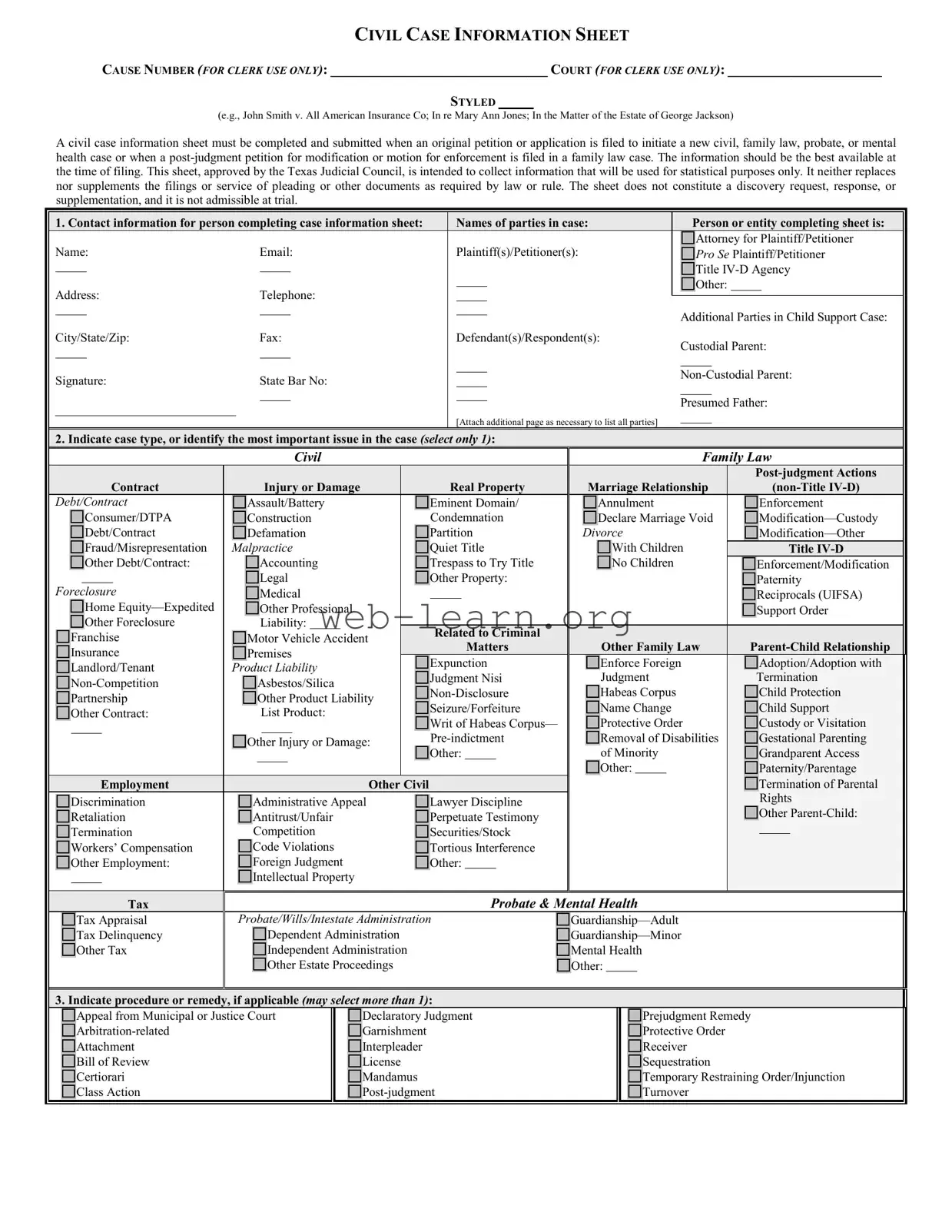
Understanding the Texas Civil Case Information Sheet is crucial for anyone involved in initiating a civil, family law, probate, or mental health case in Texas. This essential document must be completed and submitted alongside an original petition or application, or even when filing a post-judgment petition for modification in family law cases. The form collects vital information that serves statistical purposes for the Texas Judicial Council, ensuring that the data is accurate and relevant at the time of filing. It includes sections for contact information of the person completing the sheet, the names of all parties involved, and the type of case being filed. Whether you are dealing with issues related to family law, contracts, or probate, the form guides you through identifying the most significant issues at hand. Additionally, it allows for the indication of specific procedures or remedies applicable to your case, such as appeals or protective orders. Remember, while this form is a necessary part of the filing process, it does not replace the need for detailed legal documents or pleadings, nor is it admissible in court. Therefore, completing it accurately and thoroughly is essential to ensure a smooth legal process.
CIVIL CASE INFORMATION SHEET
CAUSE NUMBER (FOR CLERK USE ONLY): _______________________________ COURT (FOR CLERK USE ONLY): ______________________
STYLED
(e.g., John Smith v. All American Insurance Co; In re Mary Ann Jones; In the Matter of the Estate of George Jackson)
A civil case information sheet must be completed and submitted when an original petition or application is filed to initiate a new civil, family law, probate, or mental health case or when a
|
|
|
|
|
|
|
|
|
|
|
|
|
|
|
|
|
|
|
|
|
|
|
|
|
|
|
|
|
|
|
|
|
|
|
|
|
|
|
|
|
|
|
|
|
|
|
|
|
|
|
|
|
|
|
|
|
1. Contact information for person completing case information sheet: |
|
|
Names of parties in case: |
|
Person or entity completing sheet is: |
|
||||||||||||||||||||||||||||||||||||||||||||||
|
|
|
|
|
|
|
|
|
|
|
|
|
|
|
|
|
|
|
|
|
|
|
|
|
|
|
|
|
|
|
|
|
|
|
|
|
|
|
|
|
|
|
Attorney for Plaintiff/Petitioner |
|
||||||||||
|
|
Name: |
|
|
|
|
Email: |
|
|
Plaintiff(s)/Petitioner(s): |
|
|
Pro Se Plaintiff/Petitioner |
|
||||||||||||||||||||||||||||||||||||||||
|
|
|
|
|
|
|
|
|
|
|
|
|
|
|
|
|
|
|
|
|
|
|
|
|
|
|
|
|
|
|
|
|
|
|
|
|
|
|
|
|
|
|
Title |
|
||||||||||
|
|
|
|
|
|
|
|
|
|
|
|
|
|
|
|
|
|
|
|
|
|
|
|
|
|
|
|
|
|
|
|
|
|
|
|
|
|
|
|
|
|
|
||||||||||||
|
|
Address: |
|
|
|
|
Telephone: |
|
|
|
|
|
|
|
|
|
|
|
|
|
|
|
|
|
|
|
Other: |
|
|
|
|
|
|
|
|
|
|
|||||||||||||||||
|
|
|
|
|
|
|
|
|
|
|
|
|
|
|
|
|
|
|
|
|
|
|
|
|
|
|
|
|
|
|
|
|
|
|||||||||||||||||||||
|
|
|
|
|
|
|
|
|
|
|
|
|
|
|
|
|
|
|
|
|
|
|
|
|
|
|
|
|
|
|
|
|
|
|
|
|
||||||||||||||||||
|
|
|
|
|
|
|
|
|
|
|
|
|
|
|
|
|
|
|
|
|
|
|
|
Additional Parties in Child Support Case: |
|
|||||||||||||||||||||||||||||
|
|
|
|
|
|
|
|
|
|
|
|
|
|
|
|
|
|
|
|
|
|
|
|
|
|
|
|
|
|
|
|
|
|
|
|
|
|
|
|
|
|
|
||||||||||||
|
|
City/State/Zip: |
|
|
|
|
Fax: |
|
|
Defendant(s)/Respondent(s): |
|
|||||||||||||||||||||||||||||||||||||||||||
|
|
|
|
|
|
|
|
Custodial Parent: |
|
|||||||||||||||||||||||||||||||||||||||||||||
|
|
|
|
|
|
|
|
|
|
|
|
|
|
|
|
|
|
|
|
|
|
|
|
|
|
|
|
|
|
|
|
|
|
|
|
|
|
|
|
|
|
|
||||||||||||
|
|
|
|
|
|
|
|
|
|
|
|
|
|
|
|
|
|
|
|
|
|
|
|
|
|
|
|
|
|
|
|
|
|
|
|
|
|
|
|
|
|
|
|
|
|
|
|
|
|
|
|
|
|
|
|
|
|
|
|
|
|
|
|
|
|
|
|
|
|
|
|
|
|
|
|
|
|
|
|
|
|
|
|
|
|
|
|
|
|
|
|
|
|
|
|
|
|
|
|
|
|
|
|
|
|
|
|
||
|
|
Signature: |
|
|
|
|
State Bar No: |
|
|
|
|
|
|
|
|
|
|
|
|
|
|
|
|
|
|
|
||||||||||||||||||||||||||||
|
|
|
|
|
|
|
|
|
|
|
|
|
|
|
|
|
|
|
|
|
|
|
|
|
||||||||||||||||||||||||||||||
|
|
|
|
|
|
|
|
|
|
|
|
|
|
|
|
|
|
|
|
|
|
|
|
|
|
|
|
|
|
|
|
|
|
|
|
|
||||||||||||||||||
|
|
|
|
|
|
|
|
|
|
|
|
|
|
|
|
|
|
|
|
|
|
|
|
|
|
|
|
|
|
|
|
|
|
|
|
|
|
|
|
|
|
|
|
|
|
|
|
|
|
|
|
|
||
|
_____________________________ |
|
|
|
|
|
|
|
|
|
|
|
|
|
|
|
|
|
|
|
|
|
|
|
|
|
|
|
|
|
Presumed Father: |
|
||||||||||||||||||||||
|
|
|
|
|
|
|
|
|
|
|
|
|
|
|
|
|
|
|
|
|
|
|
|
|
|
|
|
|
|
|
||||||||||||||||||||||||
|
|
|
|
|
|
|
|
|
|
|
|
|
|
|
|
|
|
|
|
|
|
|
|
|
|
|
|
|
|
|
|
|
|
|
|
|
|
|
|
|
|
|
||||||||||||
|
|
|
|
|
|
|
|
|
|
|
|
|
|
|
|
|
|
|
|
|
|
|
|
|
|
[Attach additional page as necessary to list all parties] |
|
|
|
|
|
|
|
|
|
|
|
|
|
|||||||||||||||
|
|
|
|
|
|
|
|
|
|
|
|
|
|
|
|
|
|
|
|
|
|
|
|
|
|
|
|
|
|
|
|
|
|
|
|
|
|
|
||||||||||||||||
|
|
2. Indicate case type, or identify the most important issue in the case (select only 1): |
|
|
|
|
|
|
|
|
|
|
|
|
|
|
|
|
|
|
|
|
|
|
||||||||||||||||||||||||||||||
|
|
|
|
|
|
|
|
|
|
|
|
|
|
|
|
|
|
|
Civil |
|
|
|
|
|
|
|
|
|
|
|
|
|
|
|
|
|
|
|
Family Law |
|
||||||||||||||
|
|
|
|
|
|
|
|
|
|
|
|
|
|
|
|
|
|
|
|
|
|
|
|
|
|
|
|
|
|
|
|
|
|
|
|
|
|
|
|
|
|
|
|
|
|
|
|
|
||||||
|
|
|
|
|
|
|
|
Contract |
|
|
|
|
|
Injury or Damage |
|
|
|
Real Property |
|
Marriage Relationship |
|
|
|
|
|
|
|
|
||||||||||||||||||||||||||
|
|
Debt/Contract |
|
|
Assault/Battery |
|
|
Eminent Domain/ |
|
|
Annulment |
|
|
|
|
|
|
|
Enforcement |
|
||||||||||||||||||||||||||||||||||
|
|
|
|
|
|
Consumer/DTPA |
|
|
|
|
|
|
|
|
|
|
|
|
Condemnation |
|
|
Declare Marriage Void |
|
|
|
|
|
|||||||||||||||||||||||||||
|
|
|
|
|
|
|
|
Construction |
|
|
|
|
|
|
|
|
|
|||||||||||||||||||||||||||||||||||||
|
|
|
|
|
|
Debt/Contract |
|
|
Defamation |
|
|
Partition |
|
Divorce |
|
|
|
|
|
|
|
|
||||||||||||||||||||||||||||||||
|
|
|
|
|
|
Fraud/Misrepresentation |
|
|
|
|
|
|
|
|
|
|
|
|
|
Quiet Title |
|
|
|
|
With Children |
|
|
|
|
|
|
|
|
|
|
|||||||||||||||||||
|
|
|
|
|
|
|
Malpractice |
|
|
|
|
|
|
|
|
|
|
|
|
Title |
|
|||||||||||||||||||||||||||||||||
|
|
|
|
|
|
Other Debt/Contract: |
|
|
|
|
Accounting |
|
|
Trespass to Try Title |
|
|
|
|
No Children |
|
|
|
|
|
|
Enforcement/Modification |
|
|||||||||||||||||||||||||||
|
|
|
|
|
|
|
|
|
|
|
|
|
|
|
Legal |
|
|
Other Property: |
|
|
|
|
|
|
|
|
|
|
|
|
|
|
|
|
|
|
||||||||||||||||||
|
|
|
|
|
|
|
|
|
|
|
|
|
|
|
|
|
|
|
|
|
|
|
|
|
|
|
|
|
|
|
|
Paternity |
|
|||||||||||||||||||||
|
|
Foreclosure |
|
|
|
|
|
|
|
|
|
|
|
|
|
|
|
|
|
|
||||||||||||||||||||||||||||||||||
|
|
|
|
|
|
Medical |
|
|
|
|
|
|
|
|
|
|
|
|
|
|
|
|
|
|
|
|
|
|
|
|
|
|
|
|
|
|||||||||||||||||||
|
|
|
|
|
|
|
|
|
|
|
|
|
|
|
|
|
|
|
|
|
|
|
|
|
|
|
|
|
|
|
Reciprocals (UIFSA) |
|
||||||||||||||||||||||
|
|
|
|
|
|
Home |
|
|
|
|
Other Professional |
|
|
|
|
|
|
|
|
|
|
|
|
|
|
|
|
|
|
|
|
|
|
|
|
|
Support Order |
|
||||||||||||||||
|
|
|
|
|
|
Other Foreclosure |
|
|
|
|
Liability: |
|
|
|
|
|
|
|
|
|
|
|
|
|
|
|
|
|
|
|
|
|
|
|
|
|
|
|
|
|
|
|
|
|
|
|
||||||||
|
|
|
|
|
|
|
|
|
|
|
|
|
|
|
|
|
|
|
|
|
|
|
|
Related to Criminal |
|
|
|
|
|
|
|
|
|
|
|
|
|
|
|
|
|
|
|
|
|
|
|
|||||||
|
|
|
|
Franchise |
|
|
Motor Vehicle Accident |
|
|
|
|
|
|
|
|
|
|
|
|
|
|
|
|
|
|
|
|
|
|
|
|
|||||||||||||||||||||||
|
|
|
|
|
|
|
|
|
|
|
|
Matters |
|
|
|
Other Family Law |
|
|
|
|||||||||||||||||||||||||||||||||||
|
|
|
|
|
|
|
|
|
|
|
|
|
|
|
|
|
|
|||||||||||||||||||||||||||||||||||||
|
|
|
|
Insurance |
|
|
Premises |
|
|
|
|
|
|
|
|
|
|
|
|
|||||||||||||||||||||||||||||||||||
|
|
|
|
|
|
|
|
Expunction |
|
|
Enforce Foreign |
|
|
|
|
Adoption/Adoption with |
|
|
||||||||||||||||||||||||||||||||||||
|
|
|
|
Landlord/Tenant |
|
Product Liability |
|
|
|
|
|
|
|
|
|
|
||||||||||||||||||||||||||||||||||||||
|
|
|
|
|
|
|
Judgment Nisi |
|
|
Judgment |
|
|
|
|
|
Termination |
|
|
||||||||||||||||||||||||||||||||||||
|
|
|
|
|
|
|
|
Asbestos/Silica |
|
|
|
|
|
|
|
|
|
|
|
|||||||||||||||||||||||||||||||||||
|
|
|
|
|
|
|
|
|
|
|
|
Habeas Corpus |
|
|
|
|
|
|
|
Child Protection |
|
|
||||||||||||||||||||||||||||||||
|
|
|
|
Partnership |
|
|
|
|
Other Product Liability |
|
|
|
|
|
|
|
|
|
|
|
|
|
||||||||||||||||||||||||||||||||
|
|
|
|
|
|
|
|
|
|
Seizure/Forfeiture |
|
|
Name Change |
|
|
|
|
|
|
|
Child Support |
|
|
|||||||||||||||||||||||||||||||
|
|
|
|
Other Contract: |
|
|
|
|
List Product: |
|
|
|
|
|
|
|
|
|
|
|
|
|
||||||||||||||||||||||||||||||||
|
|
|
|
|
|
|
|
|
|
Writ of Habeas Corpus— |
|
|
Protective Order |
|
|
|
|
Custody or Visitation |
|
|
||||||||||||||||||||||||||||||||||
|
|
|
|
|
|
|
|
|
|
|
|
|
|
|
|
|
|
|
|
|
|
|
|
|
|
|
|
|
|
|
|
|||||||||||||||||||||||
|
|
|
|
|
|
|
|
|
|
|
|
|
|
|
|
|
|
|
|
|
|
|
|
|
|
Removal of Disabilities |
|
|
|
|
Gestational Parenting |
|
|
|||||||||||||||||||||
|
|
|
|
|
|
|
|
|
|
|
|
|
Other Injury or Damage: |
|
|
|
|
|
|
|
|
|
|
|||||||||||||||||||||||||||||||
|
|
|
|
|
|
|
|
|
|
|
|
|
|
|
|
|
|
|
|
|
|
|
|
Other: |
|
|
of Minority |
|
|
|
|
|
|
|
Grandparent Access |
|
|
|||||||||||||||||
|
|
|
|
|
|
|
|
|
|
|
|
|
|
|
|
|
|
|
|
|
|
|
|
|
|
|
|
|
|
|
|
|
|
|
Other: |
|
|
|
|
|
|
|
Paternity/Parentage |
|
|
|||||||||
|
|
|
|
|
|
|
|
|
|
|
|
|
|
|
|
|
|
|
|
|
|
|
|
|
|
|
|
|
|
|
|
|
|
|
|
|
|
|
|
|
|
|
|
|
|
|
|
|
Termination of Parental |
|
|
|||
|
|
|
|
|
|
|
Employment |
|
|
|
|
|
|
|
|
|
|
|
Other Civil |
|
|
|
|
|
|
|
|
|
|
|
|
|
|
|
|
|
|
|
|
|
|
|
|
|
|
|
||||||||
|
|
|
|
Discrimination |
|
|
|
Administrative Appeal |
|
Lawyer Discipline |
|
|
|
|
|
|
|
|
|
|
|
|
|
|
|
|
|
Rights |
|
|
||||||||||||||||||||||||
|
|
|
|
Retaliation |
|
|
|
Antitrust/Unfair |
|
Perpetuate Testimony |
|
|
|
|
|
|
|
|
|
|
|
|
|
|
|
|
Other |
|
|
|||||||||||||||||||||||||
|
|
|
|
Termination |
|
|
|
Competition |
|
Securities/Stock |
|
|
|
|
|
|
|
|
|
|
|
|
|
|
|
|
|
|
|
|
|
|
||||||||||||||||||||||
|
|
|
|
|
|
|
|
|
|
|
|
|
|
|
|
|
|
|
|
|
|
|
|
|
|
|
|
|||||||||||||||||||||||||||
|
|
|
|
|
|
|
|
|
|
|
|
|
|
|
|
|
|
|
|
|
|
|
|
|
|
|
|
|||||||||||||||||||||||||||
|
|
|
|
Workers’ Compensation |
|
|
|
Code Violations |
|
Tortious Interference |
|
|
|
|
|
|
|
|
|
|
|
|
|
|
|
|
|
|
|
|
|
|
||||||||||||||||||||||
|
|
|
|
Other Employment: |
|
|
|
Foreign Judgment |
|
Other: |
|
|
|
|
|
|
|
|
|
|
|
|
|
|
|
|
|
|
|
|
|
|
|
|
||||||||||||||||||||
|
|
|
|
|
|
|
|
|
|
|
|
|
|
Intellectual Property |
|
|
|
|
|
|
|
|
|
|
|
|
|
|
|
|
|
|
|
|
|
|
|
|
|
|
|
|
|
|
|
|||||||||
|
|
|
|
|
|
|
|
|
|
|
|
|
|
|
|
|
|
|
|
|
|
|
|
|
|
|
|
|
|
|
|
|
|
|
|
|
|
|
|
|
|
|
|
|
|
|
|
|
|
|
|
|
|
|
|
|
|
|
|
|
|
|
|
Tax |
|
|
|
|
|
|
|
|
|
|
|
|
|
|
|
|
|
|
|
Probate & Mental Health |
|
|
|
|
|
|
|
|
|
|
|
|
|
||||||||||||
|
|
|
|
|
Tax Appraisal |
|
|
Probate/Wills/Intestate Administration |
|
|
|
|
|
|
|
|
|
|
|
|
|
|
||||||||||||||||||||||||||||||||
|
|
|
|
|
Tax Delinquency |
|
|
|
|
|
Dependent Administration |
|
|
|
|
|
|
|
|
|
|
|
|
|
|
|
|
|
|
|
||||||||||||||||||||||||
|
|
|
|
|
Other Tax |
|
|
|
|
|
Independent Administration |
|
|
|
|
|
|
|
|
|
Mental Health |
|
|
|
|
|
|
|
|
|
|
|
|
|
||||||||||||||||||||
|
|
|
|
|
|
|
|
|
|
|
|
|
|
|
|
Other Estate Proceedings |
|
|
|
|
|
|
|
|
|
Other: |
|
|
|
|
|
|
|
|
|
|
|
|
|
|||||||||||||||
|
|
|
|
|
|
|
|
|
|
|
|
|
|
|
|
|
|
|
|
|
|
|
|
|
|
|
|
|
|
|
|
|
|
|
|
|
|
|
|
|
|
|
|
|
|
|
|
|
|
|
|
|
|
|
|
|
|
|
|
|
|
|
|
|
|
|
|
|
|
|
|
|
|
|
|
|
|
|
|
|
|
|
|
|
|
|
|
|
|
|
|
|
|
|
|
|
|
|
|
|
|
|
|
|
|
|
|
|
|
3. Indicate procedure or remedy, if applicable (may select more than 1):
Appeal from Municipal or Justice Court
Attachment
Bill of Review
Certiorari
Class Action
Declaratory Judgment Garnishment
Interpleader
License
Mandamus
Prejudgment Remedy
Protective Order
Receiver
Sequestration
Temporary Restraining Order/Injunction
Turnover
| Fact Name | Details |
|---|---|
| Purpose of the Form | The Texas Civil Case Information Sheet collects essential data for statistical purposes when initiating a new civil, family law, probate, or mental health case. |
| Mandatory Submission | This sheet must be submitted alongside an original petition or application to start a case or when filing a post-judgment petition in family law matters. |
| Information Accuracy | Filing parties are required to provide the best available information at the time of submission to ensure accuracy in data collection. |
| Non-Admissibility | The Civil Case Information Sheet is not admissible as evidence in court and does not replace the necessity for other legal documents. |
| Governing Law | The use of this form is governed by Texas Rule of Civil Procedure 78 and guidelines established by the Texas Judicial Council. |
| Contact Information | Parties must include contact details of the individual completing the form, ensuring clear communication throughout the legal process. |
Completing the Texas Civil Case Information Sheet is an important step when filing a new civil, family law, probate, or mental health case. This form helps ensure that the court has the necessary information for processing your case. Follow these steps carefully to fill out the form accurately.
After completing the form, you will need to submit it along with your original petition or application to the appropriate court. Ensure that you keep a copy for your records before filing. This will help you track your case and provide necessary information if needed later on.
What is the Texas Civil Case Information Sheet?
The Texas Civil Case Information Sheet is a form that must be completed and submitted when initiating a new civil case, including family law, probate, or mental health cases. It is also required for post-judgment petitions in family law cases. This form collects essential information for statistical purposes and does not replace any legal filings.
When do I need to submit this form?
You need to submit the Texas Civil Case Information Sheet when you file an original petition or application for a new case. Additionally, it is required for post-judgment petitions for modification or motions for enforcement in family law cases.
Who is responsible for completing the form?
The person completing the form should be the attorney for the plaintiff or petitioner, or a pro se plaintiff/petitioner. It is important to ensure that the information is accurate and current at the time of filing.
What information is required on the form?
The form requires several pieces of information, including:
Is the information submitted confidential?
The information on the Texas Civil Case Information Sheet is primarily for statistical purposes. While it is not admissible at trial, some information may be public, depending on the case type and jurisdiction. Always check local rules for specific confidentiality guidelines.
Can I amend the information after submission?
If you need to amend any information after submission, you may do so by filing an amended Civil Case Information Sheet. Ensure that any changes are made promptly to avoid confusion in your case.
What happens if I don’t submit this form?
Failure to submit the Texas Civil Case Information Sheet may delay the processing of your case. Courts may require the form to be filed before proceeding with any hearings or actions related to your case.
What types of cases require this form?
This form is required for various case types, including:
Can I submit the form electronically?
Many jurisdictions allow for electronic submission of the Texas Civil Case Information Sheet. Check with your local court’s website for specific guidelines on electronic filing.
Is there a fee associated with submitting this form?
There is no separate fee for submitting the Texas Civil Case Information Sheet. However, regular filing fees for the case itself will still apply. Always confirm with the court for the latest fee information.
Filling out the Texas Civil Case Information Sheet is a critical step in initiating a civil case. However, many individuals make mistakes that can lead to delays or complications. Here are six common errors to avoid.
One frequent mistake is failing to provide complete contact information for the person completing the sheet. This includes not only the name but also the email address and telephone number. Incomplete contact details can hinder communication and may result in important notices being missed.
Another common error is neglecting to accurately identify the parties involved in the case. It is essential to list all relevant parties, including the plaintiff, defendant, and any additional parties in child support cases. Omitting a party can lead to complications in the case and potential legal challenges later on.
Many people also struggle with selecting the correct case type. The form requires individuals to choose only one option that best represents the nature of the case. Selecting an incorrect case type can mislead the court about the issues at hand and may affect how the case is processed.
Additionally, some individuals fail to indicate the procedure or remedy that applies to their case. This section allows for multiple selections, and omitting this information can lead to confusion regarding how the case should proceed. Ensuring that this section is filled out accurately is vital for clarity.
Another mistake involves not signing the form or providing the required State Bar number if the person completing the sheet is an attorney. A missing signature can render the form invalid, causing delays in the filing process.
Lastly, individuals often overlook the importance of attaching additional pages when necessary. If there are more parties involved than can be listed on the form, it is crucial to include an attachment. Failing to do so can result in incomplete information being submitted, which can complicate the case.
By being mindful of these common mistakes, individuals can ensure that their Texas Civil Case Information Sheet is filled out correctly, helping to facilitate a smoother legal process.
The Texas Civil Case Information Sheet is a crucial document used when initiating various types of civil cases. Alongside this form, several other documents may be required to ensure a comprehensive filing. Here’s a list of additional forms and documents that are often used in conjunction with the Texas Civil Case Information Sheet:
Understanding these documents and their purposes is essential for navigating the legal process effectively. Each document plays a specific role in ensuring that the case is handled properly and in accordance with legal requirements.
When filling out the Texas Civil Case Information Sheet, it’s essential to approach the task thoughtfully. Here are five important dos and don’ts to keep in mind:
Here are four misconceptions about the Texas Civil Case form:
Filling out and using the Texas Civil Case Information Sheet is an essential step in initiating a civil case. Here are some key takeaways to consider:
By keeping these points in mind, individuals can better navigate the process of filling out and submitting the Texas Civil Case Information Sheet.