
The Texas AP 209 form serves as a crucial tool for nonprofit religious organizations seeking tax exemptions in the state of Texas. This application allows these organizations to request exemptions from various taxes, including sales tax, hotel occupancy tax, and franchise tax, when applicable. To qualify, an organization must be a structured group that regularly meets at a designated location with an established congregation, primarily focused on conducting religious worship services. It's important to note that while federal tax exemption is not a prerequisite for state exemption, the specific criteria outlined in the Texas Tax Code must be met. Certain organizations, despite their religious activities, may not qualify for this exemption under Texas law. For example, evangelistic associations and groups that merely support religious activities without being formally organized as a congregation do not meet the necessary standards. However, they may still find avenues for tax relief under different sections of the Internal Revenue Code. The form also details the application process, including the required documentation and the timeline for responses from the Texas Comptroller's office. This ensures that organizations can navigate the complexities of tax exemptions with clarity and confidence.

APPLICATION FOR EXEMPTION
RELIGIOUS AND RELIGION BASED ORGANIZATION
CAROLE KEETON STRAYHORN • TEXAS COMPTROLLER OF PUBLIC ACCOUNTS
Nonprofit religious organizations should use this application to request exemption from Texas sales tax, hotel occupancy tax, and franchise tax, if applicable. To receive a state tax exemption as a religious organization, a nonprofit religious organization must be an organized group of people regularly meeting at a particular location with an established congregation for the primary purpose of holding, conducting and sponsoring religious worship services according to the rites of their sect. Exemption from federal tax is not required to qualify for exemption from state tax as a religious organization.
The exemption for religious organizations is provided for in Sections 151.310, 156.102, and 171.058 of the Texas Tax Code, and more detailed information can be found in Comptroller’s Rules 3.322, 3.161, and 3.541.
Some organizations will not qualify for exemption as a religious organization as that term is defined in Texas' law and rules, even though their activities may be religious in nature. Evangelistic associations do not qualify for exemption as religious organizations. Organizations that simply support and encourage religion as an incidental purpose, or that further religious work or teach their membership religious understanding, such as Bible study groups, prayer groups, and revivals do not qualify for exempt status under this category. Such an organization might still qualify for exemption from Texas sales taxes, and franchise tax, if applicable, based on their exemption under certain sections of the Internal Revenue Code (IRC).
Texas tax law provides an exemption from sales taxes on goods and services purchased for use by organizations exempt under IRC Section 501(c)(3), (4), (8), (10), or (19). However, exempt organizations are required to collect tax on most of their sales of taxable items. See Exempt
If your organization has been granted federal tax exemption under one of the qualifying sections listed above, your organization will be granted an exemption from Texas sales tax, or sales and franchise tax, on the basis of the IRS exemption, as required by state law. Organizations that qualify for exemption based on a federal exemption are not exempt from hotel occupancy tax because the hotel tax law does not recognize any federal exemptions.
The laws, rules and other information about exemptions are online at:
http://www.window.state.tx.us/taxinfo/exempt
Send the completed application along with all required documentation to:
COMPTROLLER OF PUBLIC ACCOUNTS
Exempt Organizations Section
P.O. Box 13528
Austin, Texas
We will contact you within 10 working days after receipt of your application to let you know the status of your applica- tion. We may require an organization to furnish additional information to establish the claimed exemption. After a review of the material, we will inform the organization in writing if it qualifies for exemption. The comptroller or an authorized representative of the comptroller may audit the records of an organization at any time during regular busi- ness hours to verify the validity of the organization’s exempt status.
If you have questions or need more information, contact our Tax Assistance staff at
You have certain rights under Ch. 559, Government Code, to review, request, and correct information we have on file about you. Contact us at the address or
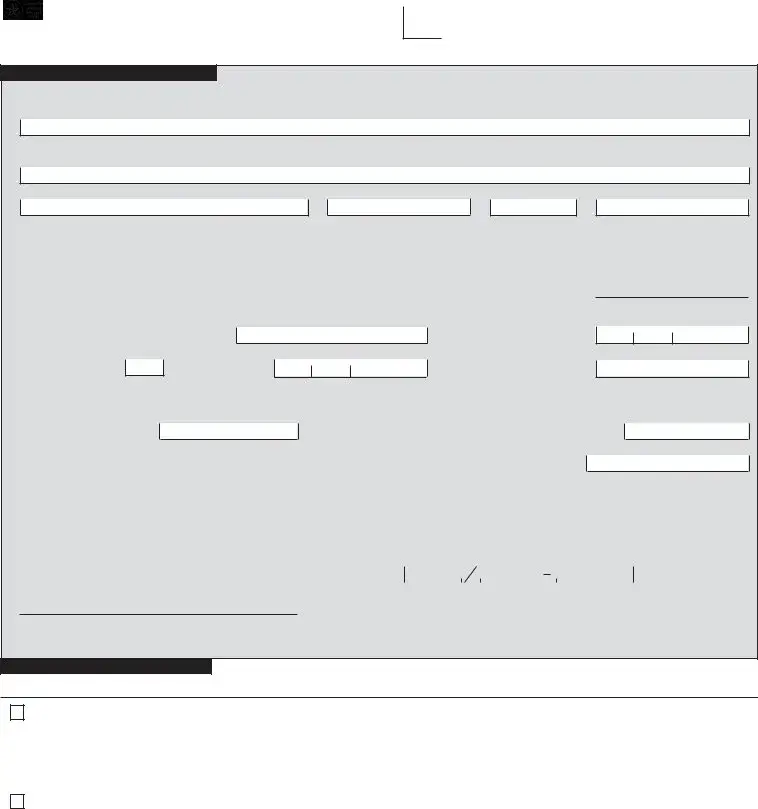
TEXAS APPLICATION FOR TAX EXEMPTION
FOR RELIGIOUS AND
SECTION A
1. ORGANIZATION NAME
• TYPE OR PRINT |
|
• Do NOT write in shaded areas. |
Page 1 |
(Legal name as provided in Articles of Incorporation, or, if unincorporated, the governing document. For
2. ORGANIZATION MAILING ADDRESS
Street number, P.O. Box, or rural route and box number
CityState/provinceZIP codeCounty (or country, if outside the U.S.)
3. Texas Taxpayer number (if applicable) ................................................................................................................
4. For TEXAS corporations ONLY, filing information issued by the Secretary of State:
File Number ..............................................
Month |
Day |
Year |
File Date .......................................
5. For |
Month |
Day |
Year |
|
Certificate of Authority File Number .............
File Date ...............................
Home State
of Incorporation .......
Month |
Day |
Year |
Date of
Incorporation ...
Home State Filing
or Registration Number .......
6. Federal Employer's Identification Number (EIN) (Required if applying for exemption on the basis of a federal exemption) ......
7.Average attendance
at worship service ................
If average attendance is less than 50, indicate the number
of families represented in the average attendance ...................
8. Date of first worship service ................................................................................................................................................
|
|
|
|
|
|
|
Time |
|
|
|
|
|
|
|
|
|
|
|
|
Frequency |
|
|
|
|||||
9. Time and frequency of worship services |
|
|
|
|
|
|
|
|
|
|
|
|
|
|
|
|
|
|
|
|
|
|
||||||
|
|
|
|
|
|
|
|
|
|
|
|
|
|
|
|
|
|
|
|
|
|
|||||||
|
|
|
|
|
|
|
|
|
|
|
|
|
|
|
|
|
|
|
|
|
|
|||||||
10. Name, address and daytime phone number of the person submitting this application. |
|
|
|
|||||||||||||||||||||||||
|
Name |
|
|
|
|
|
|
|
|
|
Title |
|
|
|
||||||||||||||
|
|
|
|
|
|
|
|
|
|
|
|
|
|
|
|
|
|
|
|
|
|
|
|
|
|
|
|
|
|
Organization Name |
Daytime Phone (Area code and number) |
|
|
Extension |
|||||||||||||||||||||||
|
|
|
|
|
|
|
|
|
|
|
|
|
|
|
|
|
|
|
|
|
|
|
|
|
|
|
|
|
|
Address |
|
|
|
|
City |
|
|
|
|
|
|
|
State |
Zip |
|||||||||||||
|
|
|
|
|
|
|
|
|
|
|
|
|
|
|
||||||||||||||
|
|
|
|
|
|
|
|
|
|
|
|
|
|
|
|
|
|
|
|
|
|
|
|
|
|
|
|
|
|
|
If address provided is not the same as the organization's mailing address, indicate to which address our response should be mailed: |
||||||||||||||||||||||||||
|
|
|
|
To organization mailing address |
|
|
|
To mailing address of submitter |
|
|
|
|||||||||||||||||
|
|
|
|
|
|
|
|
|
|
|||||||||||||||||||
|
|
|
|
|
|
|
|
|
|
|
|
|
|
|
|
|
|
|
|
|
|
|
|
|
|
|
|
|
SECTION B
Provide the following additional information as it applies to the appropriate option below:
Option A (Member of a common denomination or convention of churches):
If your organization is a church that is a member of a common denomination or convention of churches, and the parent organization either has a 501(c)(3) federal group exemption, or has previously obtained a religious exemption in Texas for the churches under its jurisdiction, your church can obtain exemption based on its affiliation with the parent organization. Attach a letter from the parent organization stating that your church is a recognized subordinate, or provide the web address of the parent organization where your church's affiliation can be verified.
Option B (Independent church or nondenominational church that does not meet the requirements under Option A):
A copy of your organization’s governing document
A copy of your group’s statement of faith.
Documentation such as a bulletin, brochure, Web address (URL) or written statement that indicates the regular order of what takes place during the worship services.
A statement containing the physical address (no P.O. Box) and a description of the facility where worship services are regularly conducted. If available, include pictures of the interior and exterior of the facility. If renting or leasing, include a copy of the rental/lease agreement.
A statement confirming the services are open to the public. The statement must indicate how the services are advertised to the public.
If your church has its own 501(c)(3) federal exemption, provide a copy of the IRS determination letter along with the information in option A or B so that we may update our records.
APPLICATIONS RECEIVED WITHOUT SUPPORTING DOCUMENTATION REQUIRED
UNDER OPTION A OR OPTION B WILL BE RETURNED.
| Fact Name | Fact Description |
|---|---|
| Purpose of AP-209 | The AP-209 form is used by nonprofit religious organizations in Texas to apply for exemption from state sales tax, hotel occupancy tax, and franchise tax. |
| Eligibility Criteria | To qualify for exemption, an organization must regularly meet at a specific location with an established congregation for religious worship, as defined by Texas law. |
| Governing Laws | Exemptions for religious organizations are outlined in Sections 151.310, 156.102, and 171.058 of the Texas Tax Code, along with Comptroller’s Rules 3.322, 3.161, and 3.541. |
| Federal Exemption Impact | While federal tax exemption is not required for state tax exemption, organizations that qualify federally under IRC sections may receive state exemptions for sales and franchise taxes, but not for hotel occupancy tax. |
Completing the Texas AP 209 form is an important step for nonprofit religious organizations seeking tax exemptions. Once the form is filled out and submitted, the organization will receive a response regarding its exemption status within ten working days. It's essential to provide accurate information and any required documentation to ensure a smooth review process.
After completing these steps, gather any additional documentation required based on your organization's affiliation. Submit the application and documents to the Comptroller of Public Accounts for processing.
The Texas AP 209 form is an application used by nonprofit religious organizations to request exemptions from certain Texas taxes. These include sales tax, hotel occupancy tax, and franchise tax. To qualify, the organization must be a group that meets regularly for religious worship.
Only nonprofit religious organizations can apply using this form. The organization must have a defined congregation and hold regular worship services. Groups that only support or promote religion without a formal structure do not qualify.
The AP 209 form allows for exemptions from:
No, a federal tax exemption is not required for a state tax exemption. However, if your organization has a federal exemption under certain sections of the Internal Revenue Code, it may simplify the process for state exemptions.
Documentation varies based on your organization's structure:
Make sure to include any required supporting documents to avoid delays.
After submitting your application, expect to hear back within 10 working days. The Comptroller's office may contact you for additional information if needed.
The Comptroller or an authorized representative may audit your organization's records during regular business hours. This is to verify your exempt status. Keeping accurate records will help during this process.
Mail your completed application and all required documentation to:
COMPTROLLER OF PUBLIC ACCOUNTSCompleting the Texas AP 209 form requires careful attention to detail. One common mistake is failing to provide the legal name of the organization as stated in the Articles of Incorporation. This is crucial, as discrepancies can lead to delays or denials of the exemption request. If the organization is unincorporated, the governing document must be used to establish the legal name. Ensuring accuracy in this section is essential for a smooth application process.
Another frequent error is neglecting to include the correct mailing address. The form requires a complete address, including street number, city, state, and ZIP code. Omitting any part of this information can result in complications when the Comptroller's office attempts to contact the organization regarding its application. Applicants should double-check this section to avoid miscommunication.
Many applicants overlook the requirement for a Federal Employer's Identification Number (EIN). This number is necessary when applying for an exemption based on federal qualifications. If the organization has not yet obtained an EIN, it is advisable to apply for one before submitting the AP 209 form. Failure to include this information can hinder the approval process.
In Section B, some organizations mistakenly select the wrong option regarding their affiliation. Option A applies to churches that are part of a common denomination, while Option B is for independent or non-denominational churches. Providing the wrong documentation can lead to a rejection of the application. Therefore, it is vital to understand the organization's status before proceeding.
Supporting documentation is another area where errors often occur. Applications submitted without the necessary attachments, such as the governing document or statement of faith, will be returned. This can significantly delay the exemption process. Applicants should ensure that all required documents are included and properly labeled to avoid unnecessary setbacks.
Another common mistake is providing incomplete information regarding the average attendance at worship services. This section requires specific details, such as the number of families represented if attendance is less than 50. Inaccurate or vague responses can lead to questions from the Comptroller's office and may complicate the evaluation of the application.
Lastly, some applicants fail to indicate the address for correspondence if it differs from the organization's mailing address. This can lead to confusion and delays in receiving important communication from the Comptroller’s office. It is crucial to clarify where responses should be sent to ensure timely updates on the application status.
The Texas AP 209 form is essential for nonprofit religious organizations seeking tax exemptions. However, several other documents complement this application. Each document plays a crucial role in establishing the eligibility of the organization for tax exemptions. Below is a list of commonly used forms and documents alongside the Texas AP 209 form.
Gathering these documents ensures a smooth application process for tax exemption. Each piece of information supports the organization's claim and helps clarify its religious purpose. Proper documentation can significantly expedite the review process and enhance the likelihood of receiving the desired exemption.
When filling out the Texas AP 209 form, there are several important dos and don’ts to keep in mind. Properly completing this form can help ensure that your nonprofit religious organization receives the tax exemptions it qualifies for. Below is a list of guidelines to assist you.
Following these guidelines can significantly enhance the likelihood of a successful application. Take the time to prepare thoroughly, and ensure that your organization meets the requirements outlined in the Texas Tax Code.
Understanding the Texas AP 209 form can be challenging. Here are five common misconceptions about this form:
This is not true. Any nonprofit religious organization, regardless of size, can apply for exemption from Texas sales tax, hotel occupancy tax, and franchise tax, provided they meet the necessary criteria.
Many believe that a federal tax exemption is a prerequisite for state exemption. However, Texas law allows organizations to qualify for state tax exemption without having federal tax exemption.
Not all organizations that engage in religious activities qualify. For example, evangelistic associations and Bible study groups do not meet the specific criteria outlined in Texas law for tax exemption.
This is incorrect. While organizations may be exempt from sales and franchise taxes based on federal exemptions, they are not exempt from hotel occupancy tax under Texas law.
While the form may seem simple, the process can take time. After submitting the application, it may take up to 10 working days to receive a response, and additional documentation may be required.
Here are five key takeaways about filling out and using the Texas AP 209 form: