Homepage Blank Texas 3044 Form
Outline

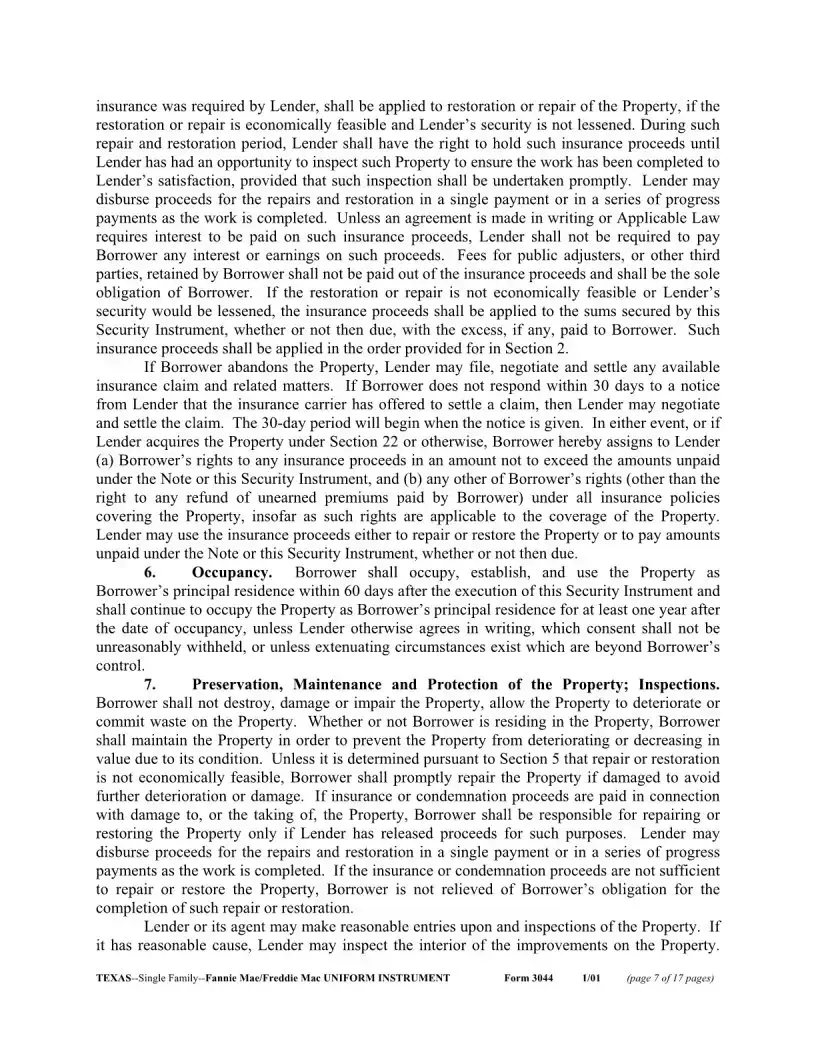
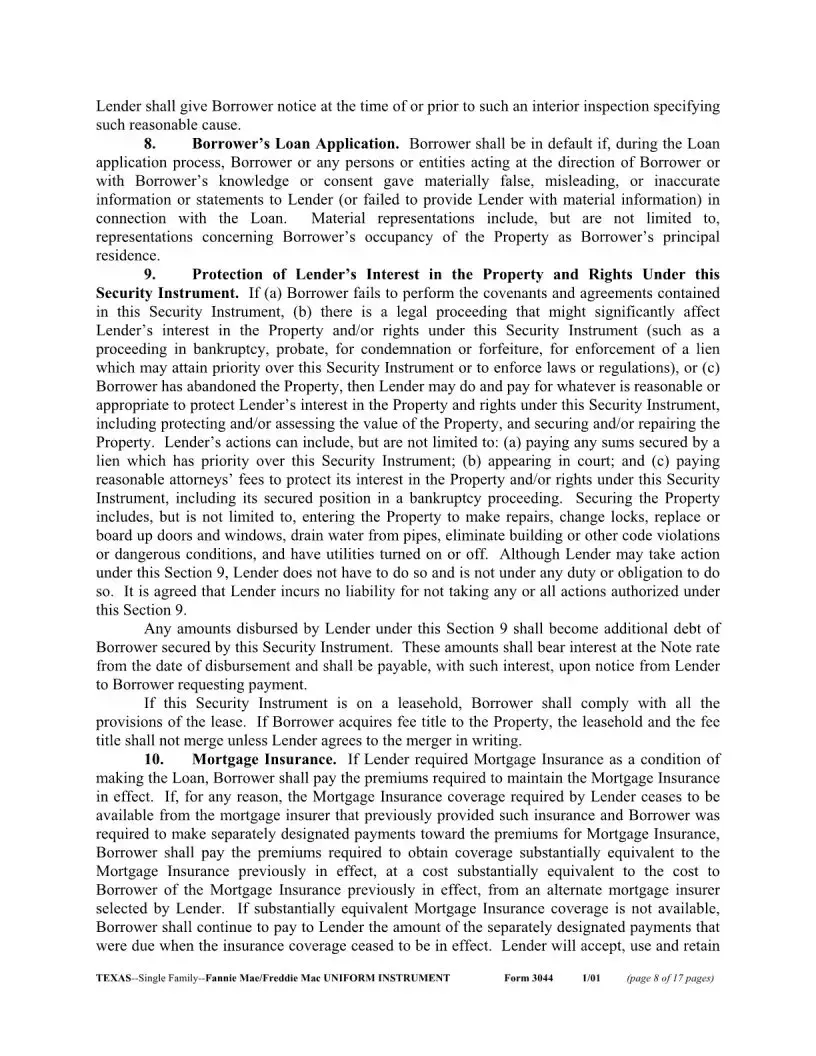
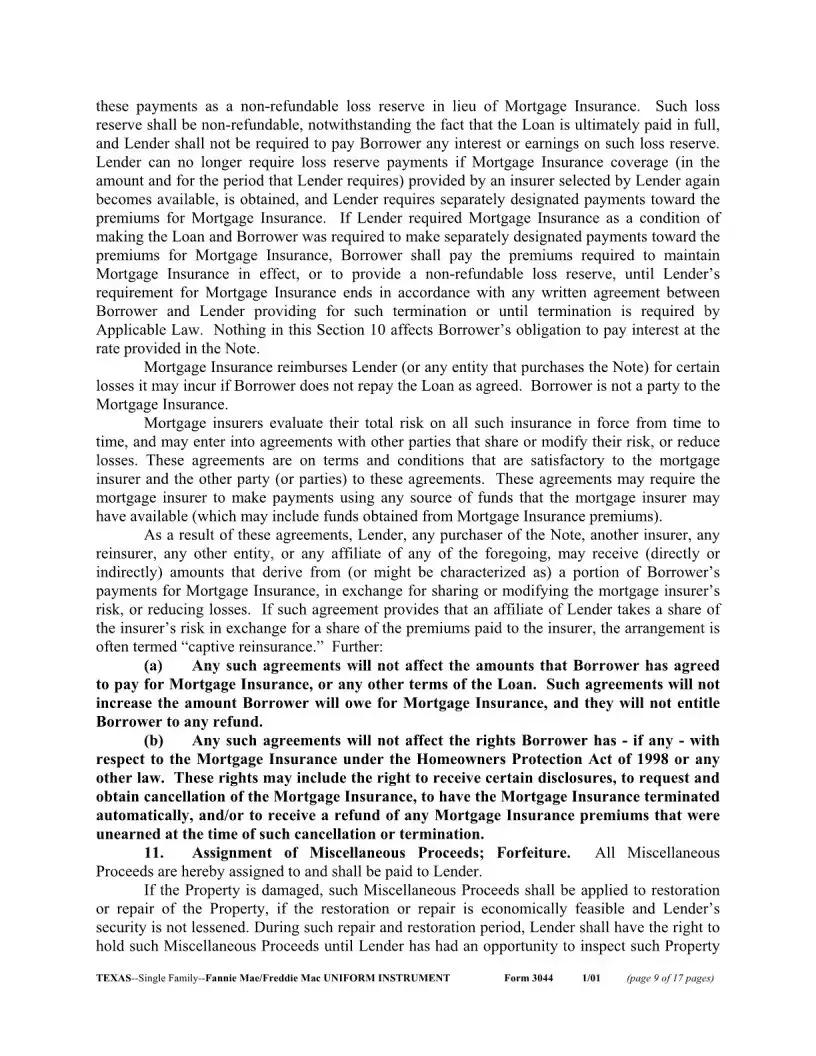
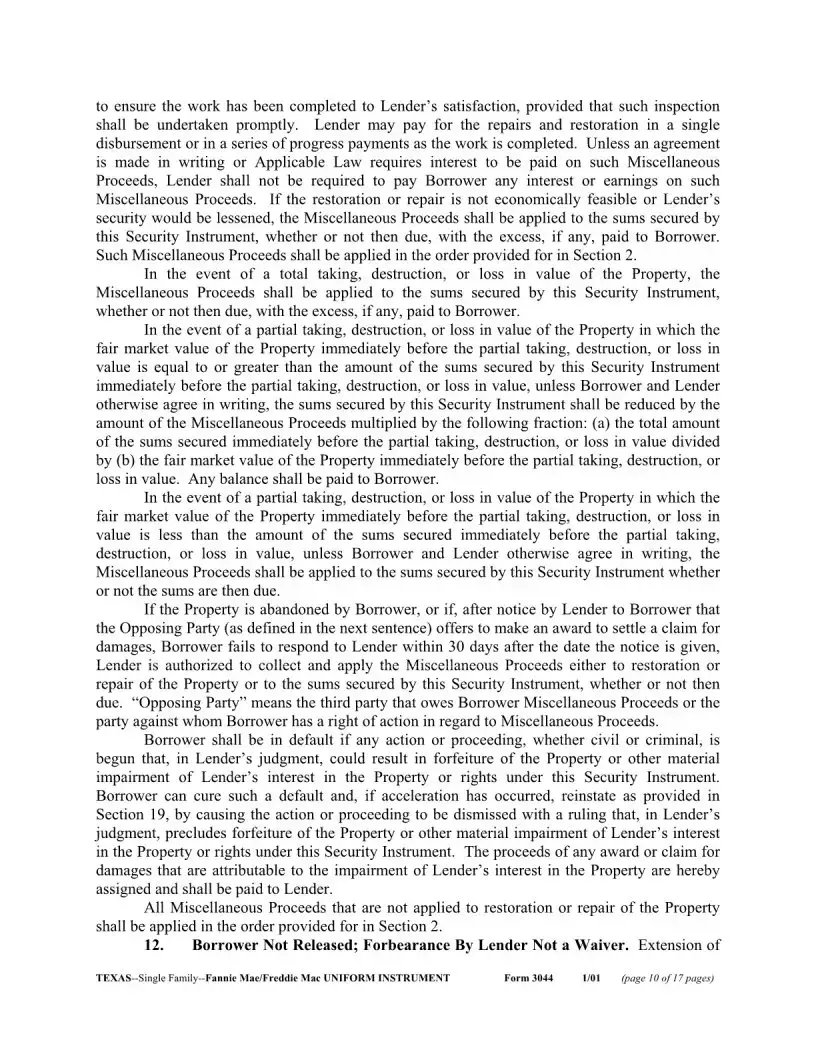
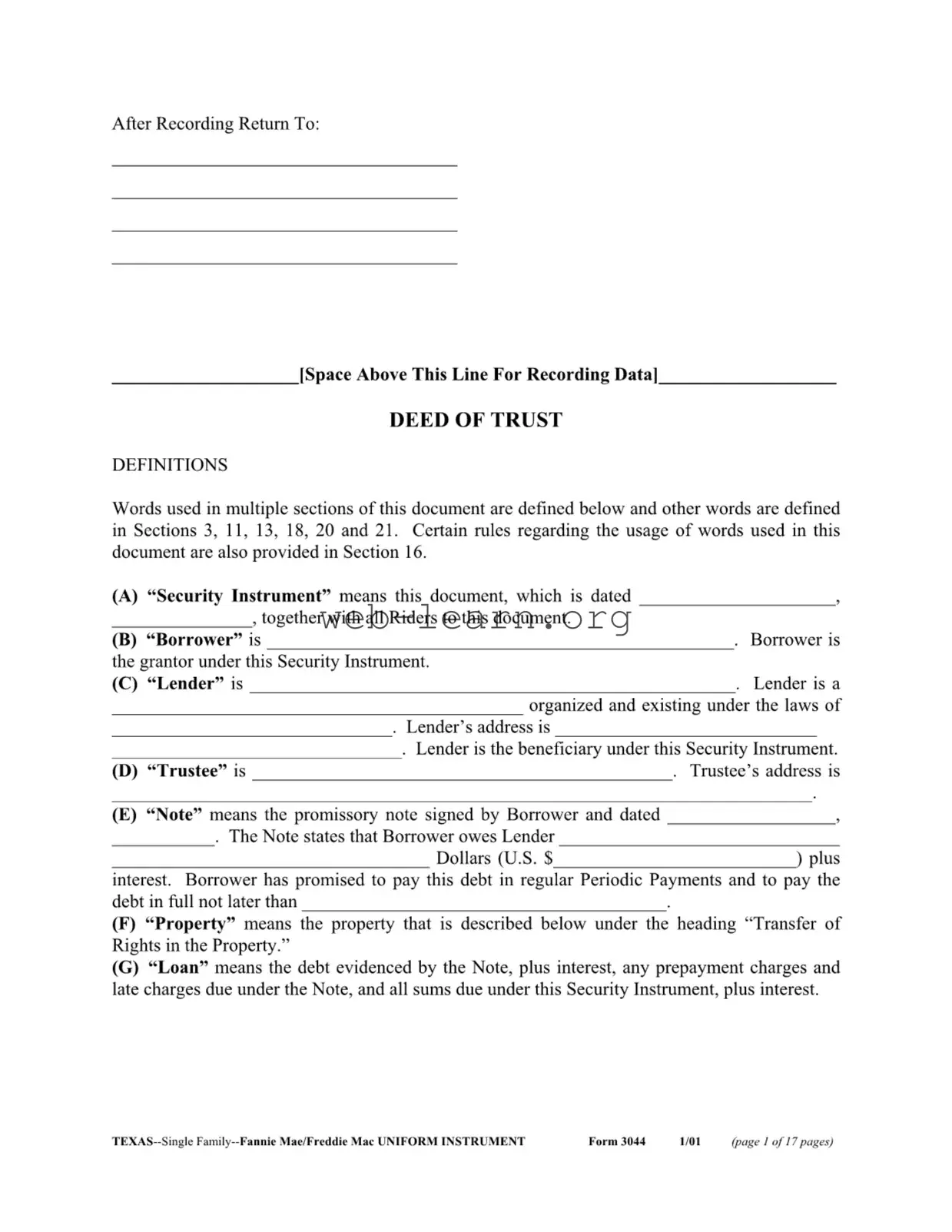
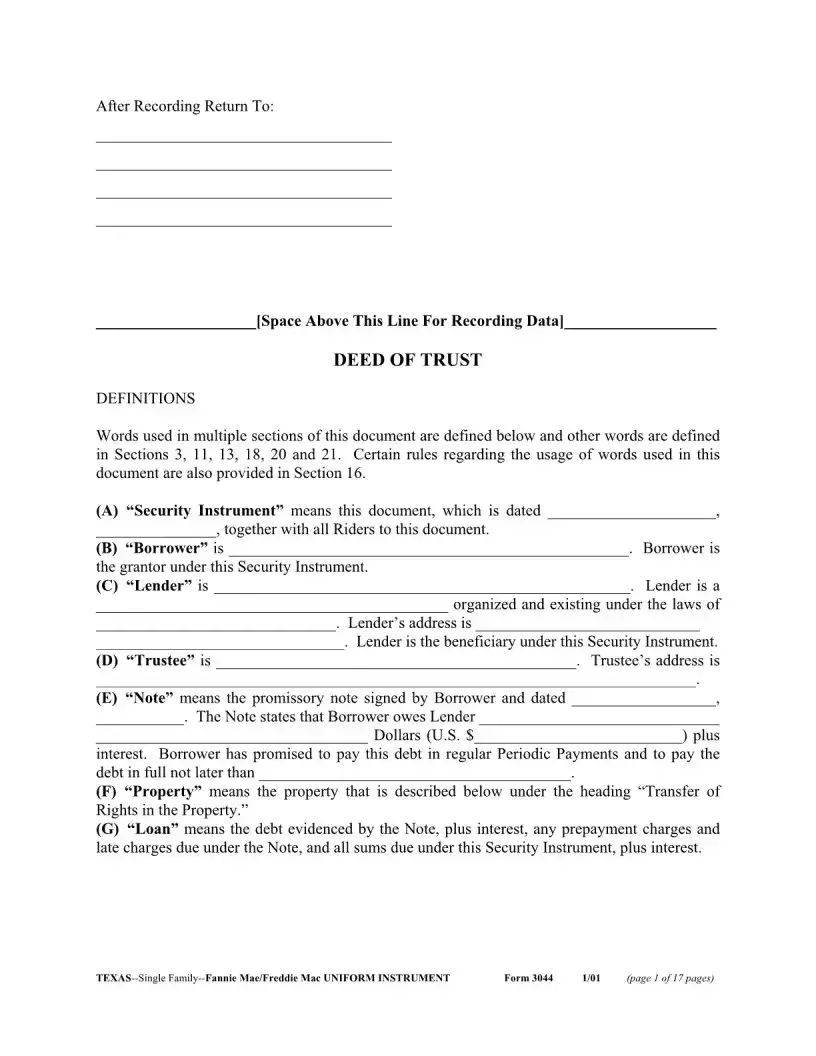
The Texas 3044 form is a vital document in the realm of real estate transactions, particularly for those involving loans secured by property. It serves as a Deed of Trust, which outlines the rights and responsibilities of the borrower, lender, and trustee. Within this form, several key terms are defined to ensure clarity and mutual understanding among all parties involved. For instance, the "Lender" is identified as the beneficiary under the security instrument, while the "Borrower" is the individual or entity that owes money to the lender. The document also specifies the "Property," which is the real estate being financed, and the "Loan," which encompasses not only the principal amount but also any interest and additional charges. Importantly, the Texas 3044 form includes provisions for various riders that may apply to the loan, such as adjustable rate or balloon riders, allowing for tailored agreements based on individual circumstances. Furthermore, it outlines the borrower's obligations, including the timely payment of principal, interest, and any associated fees. By incorporating these elements, the Texas 3044 form aims to protect the interests of all parties and facilitate a smooth transaction process.
Sample - Texas 3044 Form

Form Information

Fact Name Description
Document Purpose The Texas 3044 form is a Deed of Trust that secures a loan by establishing the rights and obligations of the borrower and lender.
Key Definitions It includes important definitions such as "Lender," "Trustee," "Note," and "Property," which clarify the roles and responsibilities of each party involved.
Applicable Law This form is governed by Texas state law, as well as federal laws such as the Real Estate Settlement Procedures Act (RESPA).
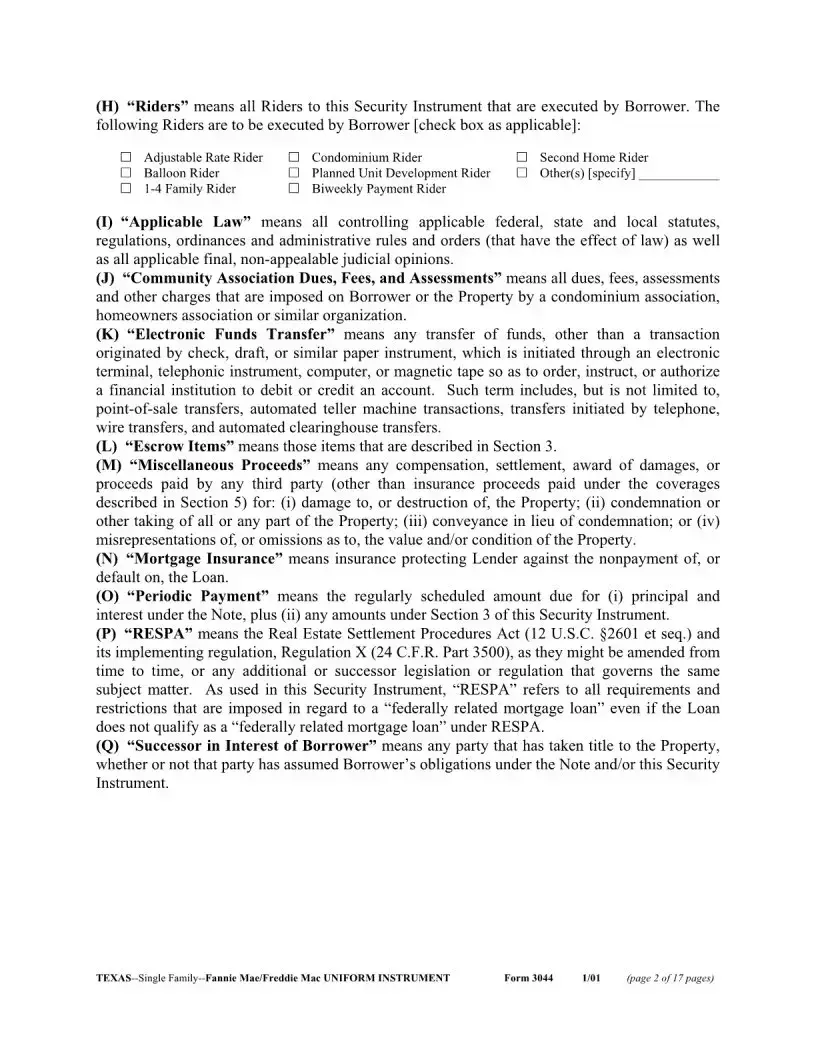
Riders Borrowers can choose from various riders, including Adjustable Rate Rider and Balloon Rider, which modify the terms of the loan.
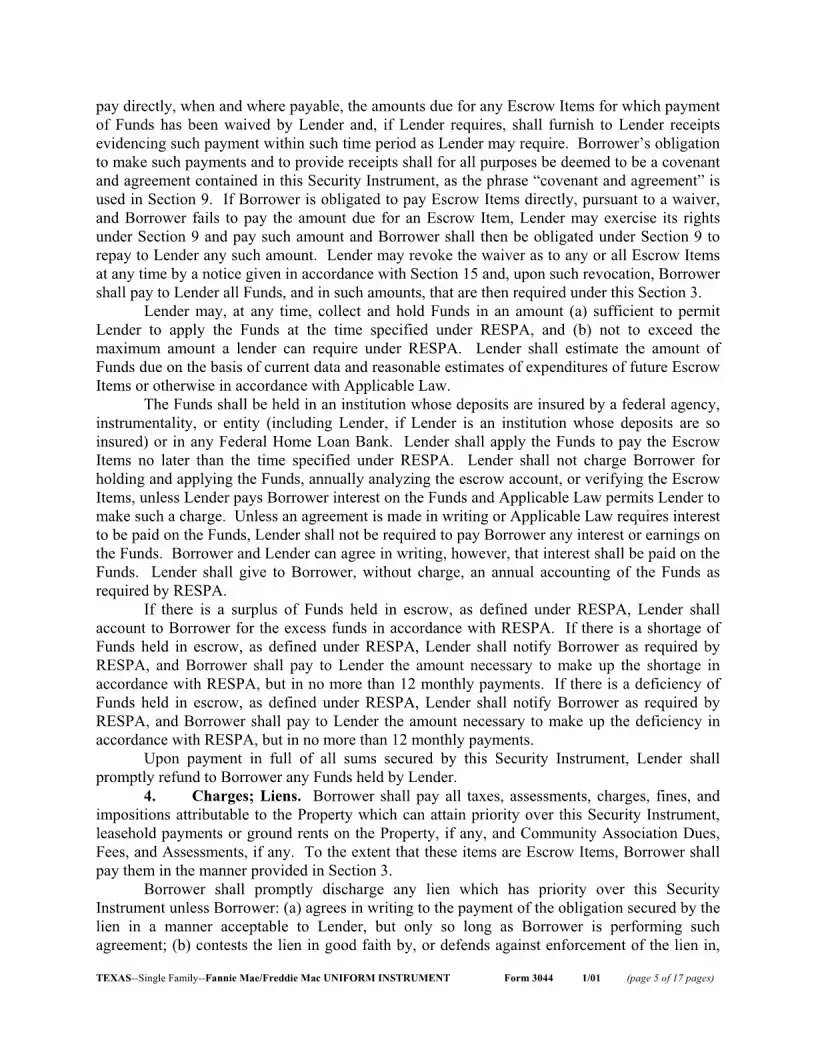
Escrow Items Section 3 of the form specifies the types of escrow items that may be required, including property taxes and insurance.
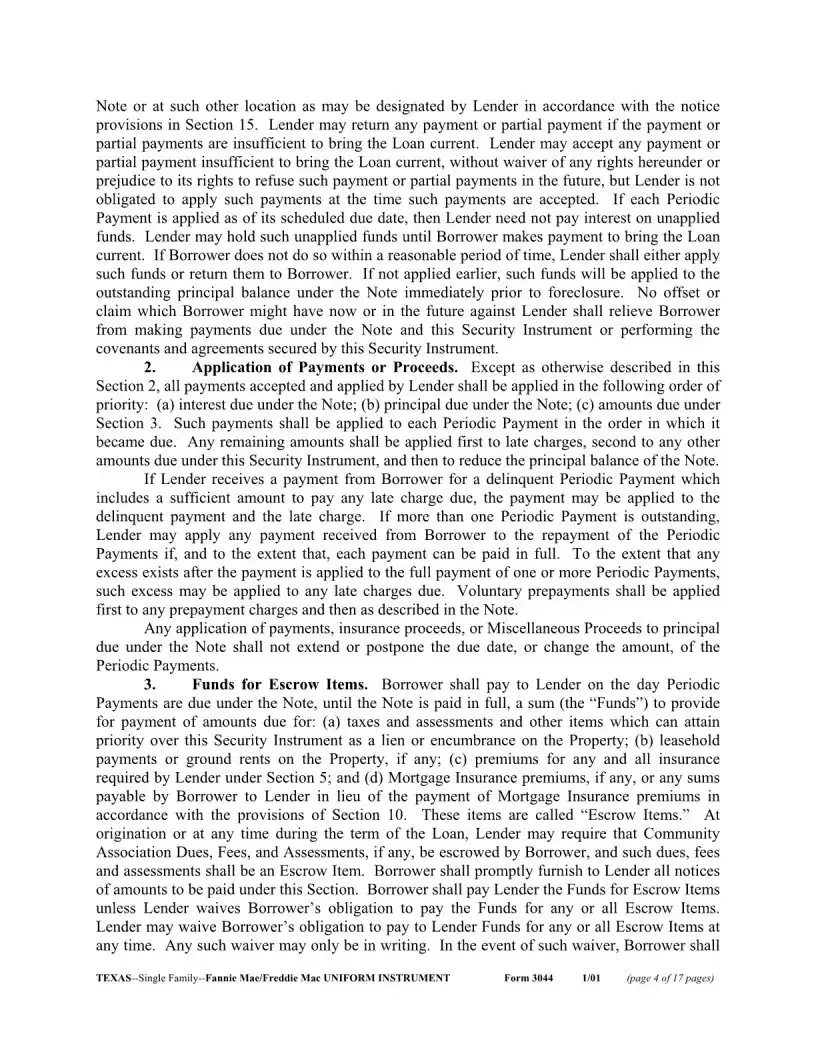
Periodic Payments Borrowers must make regular periodic payments that cover principal and interest, as well as any other amounts specified in the agreement.
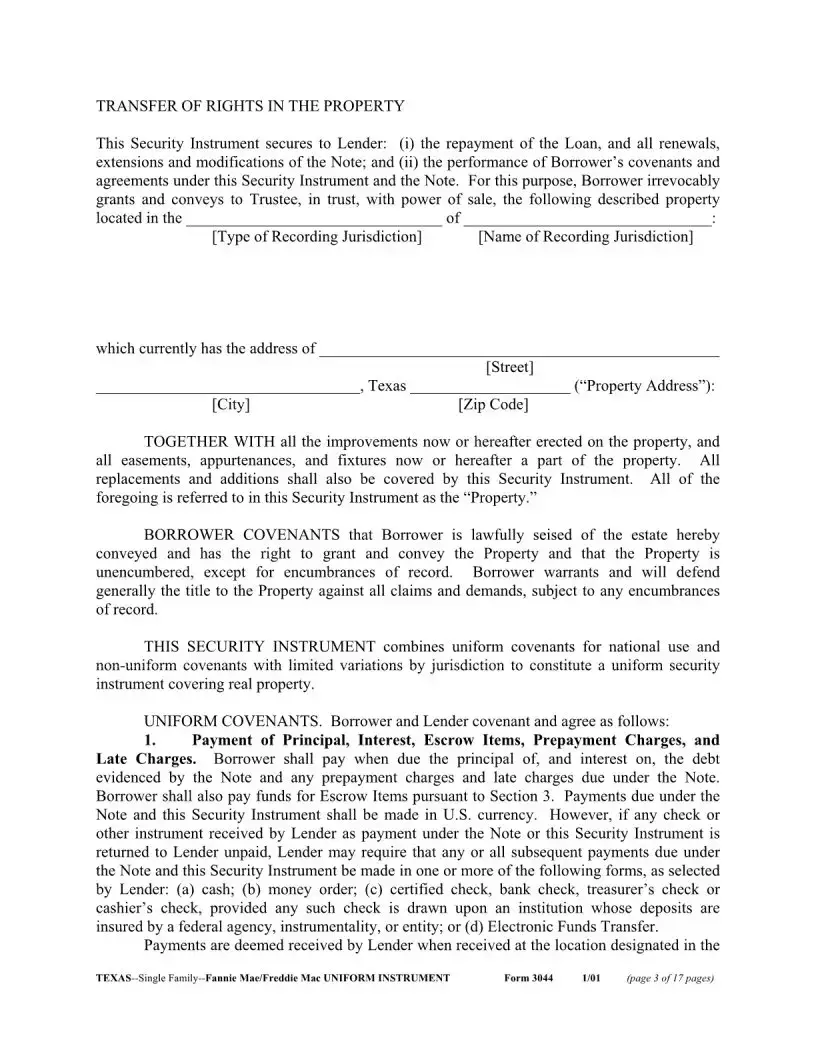
Transfer of Rights The form allows for the transfer of rights in the property, ensuring that the lender has security for the loan in case of default.

Detailed Guide for Filling Out Texas 3044

Filling out the Texas 3044 form requires careful attention to detail. Each section must be completed accurately to ensure that the document serves its intended purpose. After completing the form, it is crucial to review the information provided for any errors or omissions before submission.

  1. Begin by locating the section labeled "After Recording Return To" at the top of the form. Leave this space blank for the recording data.
  2. In the "Lender" section, write the full name of the lender. This is the entity providing the loan.
  3. Next, fill in the "Trustee" section with the name of the trustee who will oversee the trust.
  4. In the "Note" section, specify the amount owed by the borrower, followed by the interest rate and the date of the note.
  5. Identify the "Property" by providing a detailed description, including the address and any relevant identifiers.
  6. Indicate the "Loan" details, including any additional charges or fees that may apply.
  7. Check any applicable boxes for "Riders" that will accompany the security instrument. Options include adjustable rate, balloon, or condominium riders, among others.
  8. In the "Transfer of Rights in the Property" section, provide the jurisdiction information and the property address again.
  9. Ensure that the borrower’s covenants are clearly stated, confirming their legal right to convey the property.
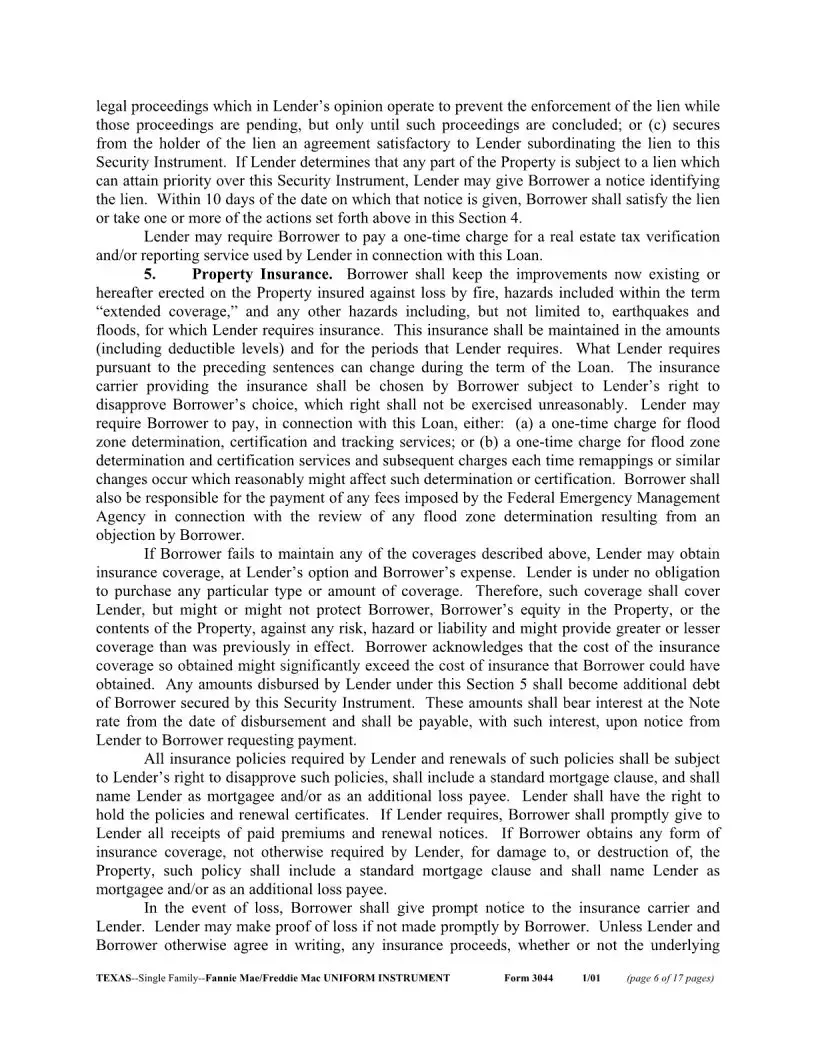
  10. Review the uniform covenants section, ensuring all obligations regarding payments and escrow items are clearly understood and agreed upon.
  11. Finally, sign and date the document where indicated, ensuring that all parties involved have done the same.

Obtain Answers on Texas 3044

  1. What is the Texas 3044 form?

    The Texas 3044 form is a legal document known as a Deed of Trust. It serves as a security instrument that outlines the agreement between a borrower and a lender regarding a loan secured by real property. This form is commonly used in Texas for single-family residences and is designed to protect the lender's interests while detailing the borrower's obligations.

  2. Who are the parties involved in the Texas 3044 form?

    There are typically three main parties involved in this form:

    • Lender: The financial institution or individual providing the loan.
    • Borrower: The individual or entity receiving the loan and agreeing to repay it.
    • Trustee: A neutral third party who holds the legal title to the property until the loan is paid off.
  3. What is the purpose of the Deed of Trust?

    The primary purpose of the Deed of Trust is to secure the loan by granting the lender a lien on the property. This means that if the borrower fails to make the required payments, the lender can take possession of the property through a foreclosure process. Essentially, it protects the lender's investment while also outlining the borrower's responsibilities.

  4. What is included in the Texas 3044 form?

    The form includes several key components:

    • Definitions of important terms, such as "Lender," "Borrower," and "Property."
    • Details about the loan amount, interest rate, and repayment terms.
    • Information about any additional riders that may apply, such as an Adjustable Rate Rider or a Balloon Rider.
    • Sections outlining the rights and responsibilities of both the borrower and lender.
  5. What are Riders, and why are they important?

    Riders are additional provisions that can modify the terms of the Deed of Trust. They are important because they allow for customization based on the specific needs of the loan. For instance, an Adjustable Rate Rider would specify that the interest rate can change over time, while a Balloon Rider might indicate that a large payment is due at the end of the loan term.

  6. What happens if the borrower defaults on the loan?

    If the borrower defaults, meaning they fail to make payments as agreed, the lender has the right to initiate foreclosure proceedings. This process allows the lender to sell the property to recover the outstanding loan balance. The Deed of Trust outlines the steps that must be taken during this process, ensuring that both parties are aware of their rights.

  7. Can the Texas 3044 form be modified?

    Yes, the Texas 3044 form can be modified, but any changes must be agreed upon by both the borrower and lender. Modifications might include changes to the loan terms or additional riders. It’s essential to document any modifications in writing to ensure they are legally binding.

  8. Where should the Texas 3044 form be recorded?

    The Texas 3044 form must be recorded in the county where the property is located. This recording provides public notice of the lender's interest in the property and helps protect the lender's rights in case of future disputes. After recording, the form should be returned to the lender or trustee as indicated on the document.

Common mistakes

Filling out the Texas 3044 form can be a straightforward task, but many individuals make critical mistakes that can lead to complications down the line. One common error is failing to provide complete and accurate information regarding the lender and borrower. This includes not filling in names, addresses, and other identifying details. Incomplete information can create confusion and may delay the processing of the document.

Another frequent mistake is neglecting to check the appropriate boxes for any riders that apply to the loan. The Texas 3044 form includes several options, such as the Adjustable Rate Rider or the Balloon Rider. Failing to indicate which riders are applicable can lead to misunderstandings about the terms of the loan. This oversight may not only complicate matters but could also affect the legal standing of the agreement.

People also often overlook the importance of understanding the definitions provided in the form. The terms "Lender," "Trustee," and "Property" have specific meanings that are crucial for the context of the document. Misinterpreting these definitions can lead to significant issues, particularly if there are disputes later regarding the rights and responsibilities of each party involved.

Lastly, many individuals forget to ensure that the form is signed and dated correctly. The absence of a signature or an incorrect date can render the document invalid. It is essential to review the form thoroughly before submission to confirm that all necessary signatures are present and that the dates align with the required timelines. Taking these steps can help prevent unnecessary complications and ensure that the document serves its intended purpose.

Documents used along the form

When dealing with real estate transactions in Texas, particularly those involving mortgages, various forms and documents are essential to ensure a smooth process. The Texas 3044 form, which serves as a deed of trust, is often accompanied by several other important documents. Understanding these documents can help you navigate the complexities of real estate agreements and protect your interests.

  • Loan Application (Form 1003): This is the standard form used by lenders to collect information from borrowers. It includes details about the borrower's financial situation, employment history, and the property being financed.
  • Good Faith Estimate (GFE): This document provides an estimate of the closing costs and fees associated with a mortgage. It helps borrowers understand the financial implications of their loan before proceeding.
  • Closing Disclosure (CD): Required by federal law, this document outlines the final terms and costs of the mortgage. It must be provided to borrowers at least three days before closing, ensuring transparency in the transaction.
  • Title Insurance Policy: This policy protects the lender and, optionally, the borrower from potential disputes over property ownership. It ensures that the title is clear of liens and other encumbrances.
  • Appraisal Report: An appraisal determines the fair market value of the property. Lenders require this report to ensure that the loan amount does not exceed the property's value.
  • Homeowners Insurance Policy: This insurance protects the property against damages and losses. Lenders often require proof of insurance before finalizing the loan.
  • Property Survey: A survey outlines the boundaries of the property and identifies any easements or encroachments. This document is crucial for clarifying property lines and ensuring there are no disputes.
  • IRS Form 4506-T: This form allows lenders to obtain a transcript of the borrower's tax returns directly from the IRS. It helps verify the borrower's income and financial stability.
  • Affidavit of Title: This document is signed by the seller, affirming their ownership of the property and disclosing any known issues or encumbrances. It provides additional assurance to the buyer and lender.

Each of these documents plays a vital role in the real estate transaction process, ensuring that all parties are informed and protected. Familiarizing yourself with these forms can empower you to make informed decisions and navigate your real estate journey with confidence.

Similar forms

The Texas 3044 form is a type of deed of trust used in real estate transactions. It shares similarities with several other legal documents related to property financing and ownership. Below are four documents that are comparable to the Texas 3044 form:

  • Mortgage Agreement: Like the Texas 3044 form, a mortgage agreement outlines the terms of a loan secured by real property. Both documents specify the borrower's obligations, including repayment terms and conditions related to default.
  • Promissory Note: A promissory note serves as a written promise to repay a loan. Similar to the Texas 3044 form, it details the amount borrowed, interest rates, and payment schedules, establishing the borrower's commitment to the lender.
  • Security Agreement: This document secures a loan with collateral, often real estate. It is similar to the Texas 3044 form in that both establish the lender's rights to the property if the borrower defaults on the loan.
  • Loan Agreement: A loan agreement outlines the terms of a loan, including repayment conditions and interest rates. Like the Texas 3044 form, it formalizes the relationship between the borrower and lender, detailing responsibilities and rights.

Dos and Don'ts

When filling out the Texas 3044 form, it is essential to approach the process with care and attention. Below are five guidelines to consider, detailing what you should and should not do.

  • Do ensure all information is accurate. Double-check names, addresses, and financial details to avoid any discrepancies.
  • Do read the instructions thoroughly. Familiarize yourself with each section of the form to understand what is required.
  • Do use clear and legible handwriting or type the information. This will help prevent misunderstandings and ensure that all details are easily readable.
  • Do seek assistance if needed. If you have questions or uncertainties, consider reaching out to a legal advisor or a trusted professional.
  • Do keep a copy of the completed form. Retaining a copy for your records can be beneficial for future reference.
  • Don’t rush through the form. Take your time to ensure that every section is completed correctly.
  • Don’t leave any required fields blank. Incomplete forms may be rejected or delayed, causing further complications.
  • Don’t use correction fluid or tape. If you make a mistake, it’s better to cross it out neatly and initial the change.
  • Don’t ignore deadlines. Be mindful of any submission deadlines to avoid penalties or issues with your application.
  • Don’t hesitate to ask for clarification. If any terms or sections are unclear, seeking clarification can prevent costly mistakes.

Misconceptions

Misconceptions about the Texas 3044 form can lead to confusion for borrowers and lenders alike. Here are seven common misunderstandings:

  • The Texas 3044 form is only for new loans. Many believe this form is exclusively for new mortgage applications. However, it can also be used for refinancing existing loans.
  • Only banks can use the Texas 3044 form. This form is not limited to banks. Any licensed lender can utilize it for mortgage transactions.
  • The Texas 3044 form is the same as a mortgage. While the form is related to mortgages, it specifically serves as a deed of trust. This means it secures the loan with the property as collateral.
  • All borrowers must have perfect credit to use this form. Creditworthiness is important, but borrowers with less than perfect credit can still qualify for loans secured by this form.
  • Once signed, the Texas 3044 form cannot be changed. Borrowers may modify the terms of the loan after signing, as long as both parties agree to the changes.
  • The Texas 3044 form is only applicable in Texas. Although it is designed for Texas transactions, similar forms exist in other states, tailored to their specific laws.
  • Using the Texas 3044 form guarantees loan approval. Completing this form does not guarantee approval. Lenders will still evaluate the borrower's financial situation and credit history.

Key takeaways

Filling out the Texas 3044 form can seem daunting, but understanding its key components will make the process smoother. Here are some essential takeaways to keep in mind:

  • Understand the Definitions: Familiarize yourself with the terms defined in the form, such as "Lender," "Trustee," and "Borrower." These definitions are crucial for understanding your obligations.
  • Know Your Property: Clearly describe the property involved in the transaction. This includes the address and any improvements or fixtures that are part of the property.
  • Payment Details: Be aware that you must specify the amount owed, including principal, interest, and any applicable fees. Regular payments are a critical part of the agreement.
  • Riders: Check the appropriate boxes for any additional riders that apply to your loan, such as an Adjustable Rate Rider or a Balloon Rider. These can significantly affect your loan terms.
  • Escrow Items: Understand what escrow items are included in your agreement. This typically covers property taxes and insurance that may be paid through an escrow account.
  • Compliance with Laws: The form references various laws and regulations, including the Real Estate Settlement Procedures Act (RESPA). Make sure to comply with all applicable legal requirements.
  • Signature and Acknowledgment: Finally, ensure that all parties involved sign the form. This acknowledgment is vital for the enforceability of the agreement.

By keeping these points in mind, you can navigate the Texas 3044 form with greater confidence and clarity. Remember, thoroughness and attention to detail are key in any legal documentation.