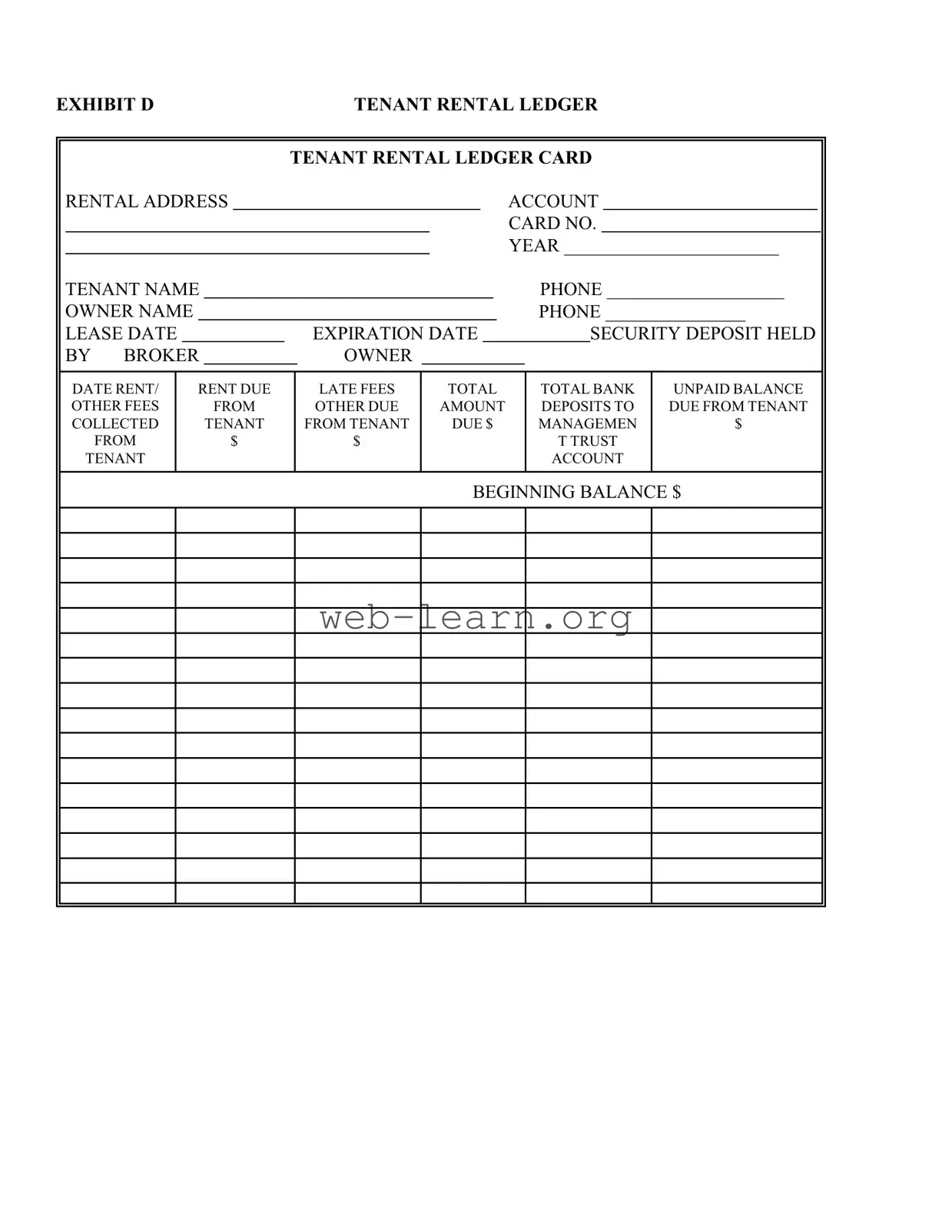
The Tenant Ledger Card form serves as a crucial document in the rental management process, providing a comprehensive overview of a tenant's financial obligations and payments. This form includes essential details such as the rental address, tenant and owner names, and contact information. It captures key dates, including the lease start and expiration dates, which are vital for both parties. The form also outlines the security deposit held by the broker or owner, ensuring transparency regarding initial funds. Additionally, it details the rent and any other fees collected from the tenant, highlighting amounts due and any late fees incurred. The total amount due, along with the unpaid balance and deposits, is clearly indicated, facilitating accurate record-keeping. Overall, the Tenant Ledger Card is an indispensable tool for landlords and property managers to track financial transactions and maintain clear communication with tenants.

EXHIBIT D |
|
|
TENANT RENTAL LEDGER |
|
|||||||||||||||||
|
|
|
|
|
|
|
|
|
|
|
|
|
|
|
|
|
|
|
|
|
|
|
|
|
|
|
|
|
|
|
|
|
|
|
|
|
|
|
|
|
|
|
|
|
|
|
|
|
|
|
TENANT RENTAL LEDGER CARD |
|
|||||||||||||
|
|
RENTAL ADDRESS |
|
|
|
|
|
|
|
|
ACCOUNT |
|
|
|
|||||||
|
|
|
|
|
|
|
|
|
|
|
|
|
|
CARD NO. |
|
|
|
||||
|
|
|
|
|
|
|
|
|
|
|
|
|
|
YEAR _______________________ |
|
||||||
|
|
TENANT NAME |
|
|
|
|
|
|
|
|
|
|
PHONE ___________________ |
|
|||||||
|
|
OWNER NAME |
|
|
|
|
|
|
|
|
|
|
PHONE _______________ |
|
|||||||
|
|
LEASE DATE |
|
|
|
EXPIRATION DATE |
|
|
|
|
|
SECURITY DEPOSIT HELD |
|
||||||||
|
|
BY BROKER |
|
|
|
OWNER |
|
|
|
|
|
|
|
|
|
|
|
|
|||
DATE RENT/ OTHER FEES COLLECTED FROM TENANT
RENT DUE
FROM
TENANT
$
LATE FEES
OTHER DUE
FROM TENANT
$
TOTAL
AMOUNT
DUE $
TOTAL BANK |
UNPAID BALANCE |
DEPOSITS TO |
DUE FROM TENANT |
MANAGEMEN |
$ |
T TRUST |
|
ACCOUNT |
|
|
|
BEGINNING BALANCE $
| Fact Name | Description |
|---|---|
| Purpose | The Tenant Ledger Card is designed to track all financial transactions between a tenant and a property owner or manager, including rent payments, fees, and deposits. |
| Information Included | This form includes essential details such as tenant and owner names, contact information, lease dates, security deposits, and a breakdown of amounts due and unpaid. |
| Account Tracking | The ledger serves as a comprehensive account card, summarizing the tenant's financial obligations and payments over a specified year. |
| State-Specific Regulations | In states like California, the use of a Tenant Ledger Card is governed by the California Civil Code, which outlines requirements for record-keeping in rental agreements. |
| Importance of Accuracy | Maintaining accurate records on the Tenant Ledger Card is crucial for resolving disputes, ensuring compliance with rental laws, and providing transparency to tenants. |
| Record Keeping | Property owners and managers are advised to keep these records for a minimum of several years, as they may be needed for tax purposes or legal disputes. |
Filling out the Tenant Ledger Card form is an essential step in managing rental agreements and tracking payments. By accurately completing this form, you can maintain clear records of rental transactions and ensure both tenants and landlords have a transparent understanding of financial obligations.
What is the purpose of the Tenant Ledger Card?
The Tenant Ledger Card serves as a comprehensive record of all financial transactions between the tenant and the property owner or management. It tracks rent payments, late fees, and any other fees associated with the rental agreement. This card helps both parties maintain clarity regarding outstanding balances and payment history.
What information is included on the Tenant Ledger Card?
The Tenant Ledger Card includes essential details such as:
How often should the Tenant Ledger Card be updated?
It is crucial to update the Tenant Ledger Card regularly, ideally after each transaction. This ensures that both the tenant and the owner have accurate and current information regarding payments and outstanding balances. Regular updates help prevent misunderstandings and disputes.
Who is responsible for maintaining the Tenant Ledger Card?
The property owner or their management team is typically responsible for maintaining the Tenant Ledger Card. However, tenants should also keep their own records to ensure they have a clear understanding of their payment history and any amounts owed.
What should a tenant do if they notice an error on the Tenant Ledger Card?
If a tenant identifies an error, they should promptly contact the property owner or management. Open communication is key. It is advisable to provide any supporting documentation, such as receipts or bank statements, to help clarify the situation.
Can the Tenant Ledger Card be used in legal disputes?
Yes, the Tenant Ledger Card can serve as a vital document in legal disputes regarding rent payments or other fees. Its detailed record of transactions can provide evidence of payment history and outstanding balances, which can be important in resolving conflicts.
Is the Tenant Ledger Card confidential?
Yes, the information contained in the Tenant Ledger Card is considered confidential. It should only be shared with relevant parties, such as the tenant, property owner, or authorized management personnel. Protecting this information is essential to maintain trust and privacy.
Filling out the Tenant Ledger Card form accurately is crucial for both landlords and tenants. However, many people make common mistakes that can lead to confusion and disputes. One frequent error is failing to provide the correct tenant name. It might seem simple, but an incorrect name can cause issues when it comes to lease agreements or payment records. Always double-check that the name matches the lease document.
Another mistake involves the lease dates. Many individuals overlook the importance of clearly indicating the lease start and expiration dates. If these dates are incorrect or missing, it can lead to misunderstandings about rental terms and obligations. Make sure to verify these dates with the lease agreement before submitting the form.
Many people also neglect to include the security deposit amount. This figure is essential as it protects both parties and outlines what has been collected. Leaving this blank or entering an incorrect amount can create disputes later, especially when it comes time to return the deposit.
Additionally, some individuals forget to document late fees or other fees collected from the tenant. It's important to keep a clear record of all financial transactions. Not recording these fees can lead to confusion over what is owed and can affect the tenant's overall balance.
Another common oversight is failing to calculate the total amount due accurately. This total should include rent, late fees, and any other charges. An error in this calculation can lead to disputes over payment amounts, so take the time to double-check these figures.
People sometimes also miss the section for unpaid balances. This part is crucial for tracking any outstanding payments. If it’s left blank, it can create confusion regarding what the tenant still owes, complicating the rental relationship.
Lastly, many forget to include the beginning balance for the management trust account. This figure is important for maintaining accurate financial records. Omitting it can lead to discrepancies in accounting, making it harder to track payments and balances over time.
The Tenant Ledger Card form is an essential document for tracking rental payments and financial interactions between landlords and tenants. However, several other forms and documents are often used alongside it to ensure a comprehensive understanding of the rental relationship. Below is a list of these documents, each serving a unique purpose in the management of rental agreements.
Understanding these documents can significantly enhance the rental experience for both landlords and tenants. Each form plays a critical role in ensuring clear communication and establishing mutual expectations throughout the rental period.
The Tenant Ledger Card form serves as an essential tool for tracking rental transactions between landlords and tenants. Several other documents share similarities with this form, each serving a specific purpose in the realm of property management and tenant relations. Below are six documents that resemble the Tenant Ledger Card, along with explanations of their similarities.
When filling out the Tenant Ledger Card form, it’s important to ensure accuracy and clarity. Here are some key points to consider:
Following these guidelines can help prevent errors and ensure that the Tenant Ledger Card is filled out correctly.
Understanding the Tenant Ledger Card form is crucial for both landlords and tenants. However, several misconceptions can lead to confusion. Here are nine common misunderstandings:
By addressing these misconceptions, both landlords and tenants can better navigate their responsibilities and rights. Keeping clear records fosters a positive rental experience for everyone involved.
Understanding how to fill out and use the Tenant Ledger Card form is essential for both landlords and tenants. Here are some key takeaways:
By following these key points, both landlords and tenants can ensure a smooth and transparent rental experience.