Tattooing is not just an art form; it is a deeply personal experience that often carries significant meaning for the individual receiving the tattoo. As the popularity of tattoos continues to rise, the importance of understanding the legal implications surrounding them becomes increasingly vital. One key document in this process is the Tattoo Release form, which serves multiple purposes. This form is primarily designed to protect both the tattoo artist and the client by outlining the terms of the tattooing process. It typically includes sections that address consent, the risks associated with getting a tattoo, and the rights of the artist regarding the use of images of the tattoo for promotional purposes. Additionally, the form may contain information about aftercare instructions and the client’s responsibility for following them. By ensuring that all parties are informed and in agreement, the Tattoo Release form helps to foster a transparent and respectful relationship between the artist and the client, ultimately enhancing the tattoo experience.
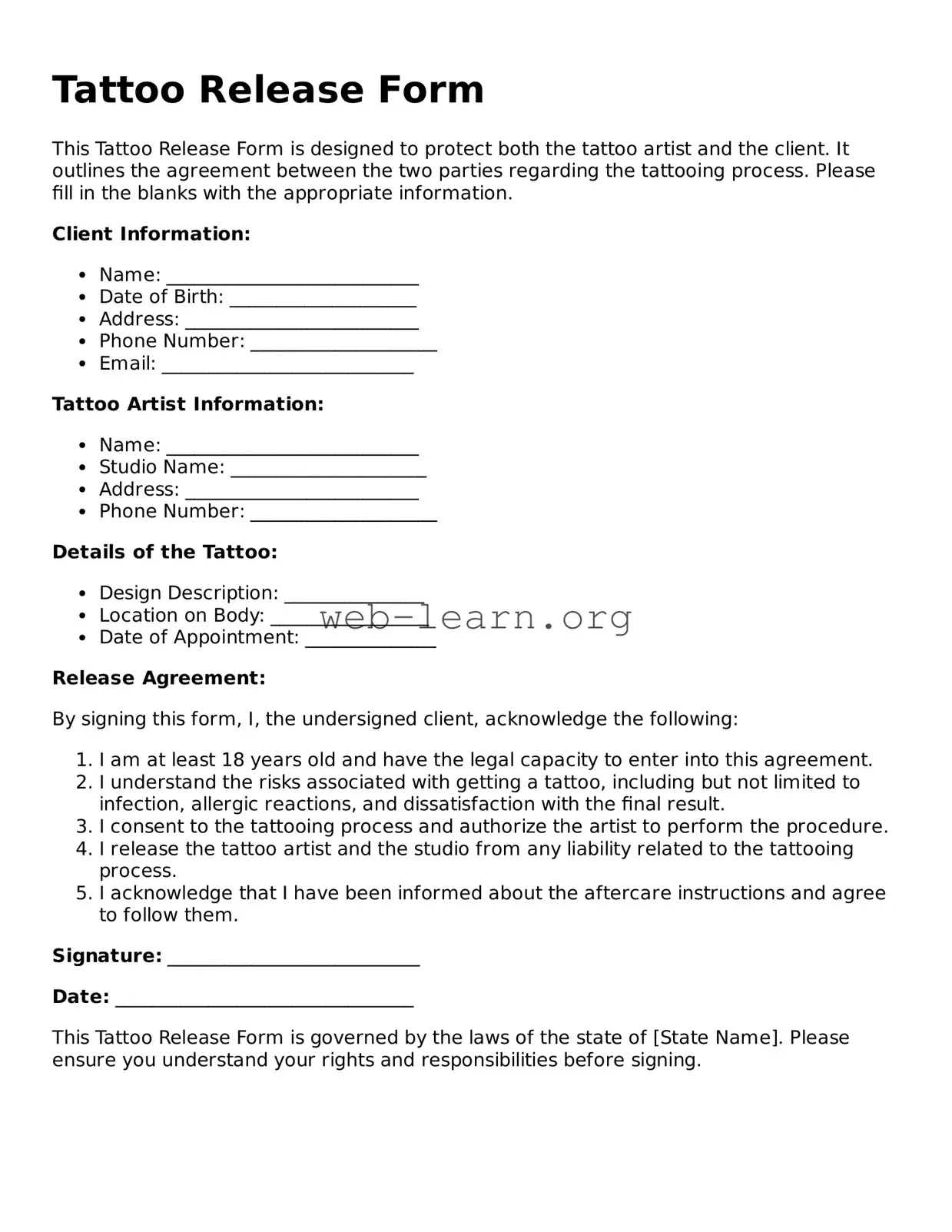
Tattoo Release Form
This Tattoo Release Form is designed to protect both the tattoo artist and the client. It outlines the agreement between the two parties regarding the tattooing process. Please fill in the blanks with the appropriate information.
Client Information:
Tattoo Artist Information:
Details of the Tattoo:
Release Agreement:
By signing this form, I, the undersigned client, acknowledge the following:
Signature: ___________________________
Date: ________________________________
This Tattoo Release Form is governed by the laws of the state of [State Name]. Please ensure you understand your rights and responsibilities before signing.
| Fact Name | Description |
|---|---|
| Purpose | A Tattoo Release Form protects tattoo artists from liability by obtaining consent from clients before performing a tattoo. |
| Legal Age | Most states require clients to be at least 18 years old to sign a Tattoo Release Form without parental consent. |
| State-Specific Laws | In California, the form must comply with the California Business and Professions Code Section 11930. |
| Health Risks | The form often includes a disclaimer about potential health risks associated with getting a tattoo. |
| Record Keeping | Tattoo artists are generally required to keep signed release forms on file for a certain period, often for legal and insurance purposes. |
Filling out the Tattoo Release form is a straightforward process. Once completed, the form will allow you to proceed with your tattoo session, ensuring that all necessary permissions are in place.
Once you have completed these steps, you can hand the form to your tattoo artist before your session begins.
A Tattoo Release Form is a document that gives permission for a tattoo artist to use images of your tattoo for promotional purposes. This can include social media, websites, or portfolios. By signing this form, you are allowing the artist to showcase their work and your tattoo.
Signing the form protects both you and the tattoo artist. It ensures that the artist has your consent to use images of your tattoo. This can help them build their portfolio and promote their business while also respecting your rights as the tattoo owner.
Yes, you can refuse to sign the Tattoo Release Form. If you choose not to sign, the artist will not be able to use images of your tattoo for promotional purposes. However, you will still receive your tattoo as planned.
If you change your mind after signing the form, it’s important to communicate with the tattoo artist as soon as possible. Depending on the terms outlined in the form, you may have the option to withdraw your consent, but this may not apply to images already shared.
Yes, your personal information should be kept confidential. Tattoo artists typically only use images of your tattoo for promotional purposes. Always check with the artist about their privacy policy to understand how your information will be handled.
Generally, you do not receive compensation for signing a Tattoo Release Form. The benefit is primarily for the artist, who can use the images to promote their work. However, some artists may offer incentives, such as discounts on future services, so it’s worth asking.
If you have concerns, discuss them with the tattoo artist before signing the form. You can specify how and where you are comfortable with your tattoo being used. Clear communication can help address any worries you might have.
It’s reasonable to request to see images before they are used. While this may not be guaranteed, many artists are open to sharing the images with you. This way, you can feel more comfortable about how your tattoo will be represented.
Yes, typically, you must be at least 18 years old to sign a Tattoo Release Form. If you are under 18, a parent or guardian will need to sign on your behalf. Always check with the tattoo studio for their specific age requirements.
Filling out a Tattoo Release form is an important step in ensuring that both the artist and the client are protected. However, many people make mistakes that can lead to complications down the line. One common error is failing to read the entire form before signing. This can result in misunderstandings about the rights being waived or the scope of the release.
Another frequent mistake is providing incomplete or inaccurate personal information. When clients fail to include their full name, contact details, or date of birth, it can create issues if there are any disputes or if the artist needs to reach them later. Always double-check that all fields are filled out correctly.
Some individuals overlook the importance of understanding the terms outlined in the release. It is crucial to know what rights you are giving up regarding the use of your tattoo image. Not understanding these terms can lead to unexpected consequences, such as the artist using your tattoo in ways you did not intend.
Additionally, people often forget to ask questions if they are unsure about any part of the form. A Tattoo Release form can be complex, and it’s essential to clarify any doubts before signing. Ignoring this step can lead to regret and potential legal issues later.
Lastly, many clients neglect to keep a copy of the signed form for their records. This can be problematic if there is ever a disagreement about what was agreed upon. Always ensure you have a copy for your own reference to avoid confusion in the future.
When getting a tattoo, several documents may accompany the Tattoo Release form to ensure clarity and protection for both the artist and the client. Understanding these documents can help you navigate the process more smoothly.
Being aware of these additional documents can enhance your tattoo experience. Each form plays a vital role in ensuring that both the artist and the client are on the same page, promoting a safe and satisfactory process.
When filling out a Tattoo Release form, it’s essential to approach the process with care. Here are some important dos and don’ts to keep in mind:
When it comes to tattoo release forms, several misconceptions can lead to confusion. Understanding these can help both tattoo artists and clients navigate the process more effectively. Here are five common misconceptions:
Many people believe that a verbal agreement is sufficient. However, a written release form protects both the artist and the client by clearly outlining the terms of the tattooing process.
While it does offer legal protection for the artist, it also safeguards the client’s rights. It ensures that clients are aware of the risks and responsibilities involved.
This is not true. A release form typically limits liability for specific issues but does not eliminate all rights. Clients still have recourse in cases of negligence or malpractice.
Even returning clients should sign a release form for each new tattoo. This ensures that all parties are on the same page regarding new designs and any potential risks involved.
While legal documents can be dense, many tattoo studios strive to use clear and straightforward language. Clients should feel comfortable asking questions about any part of the form they do not understand.
Filling out and using a Tattoo Release form is an important step for both the artist and the client. Here are key takeaways to consider: