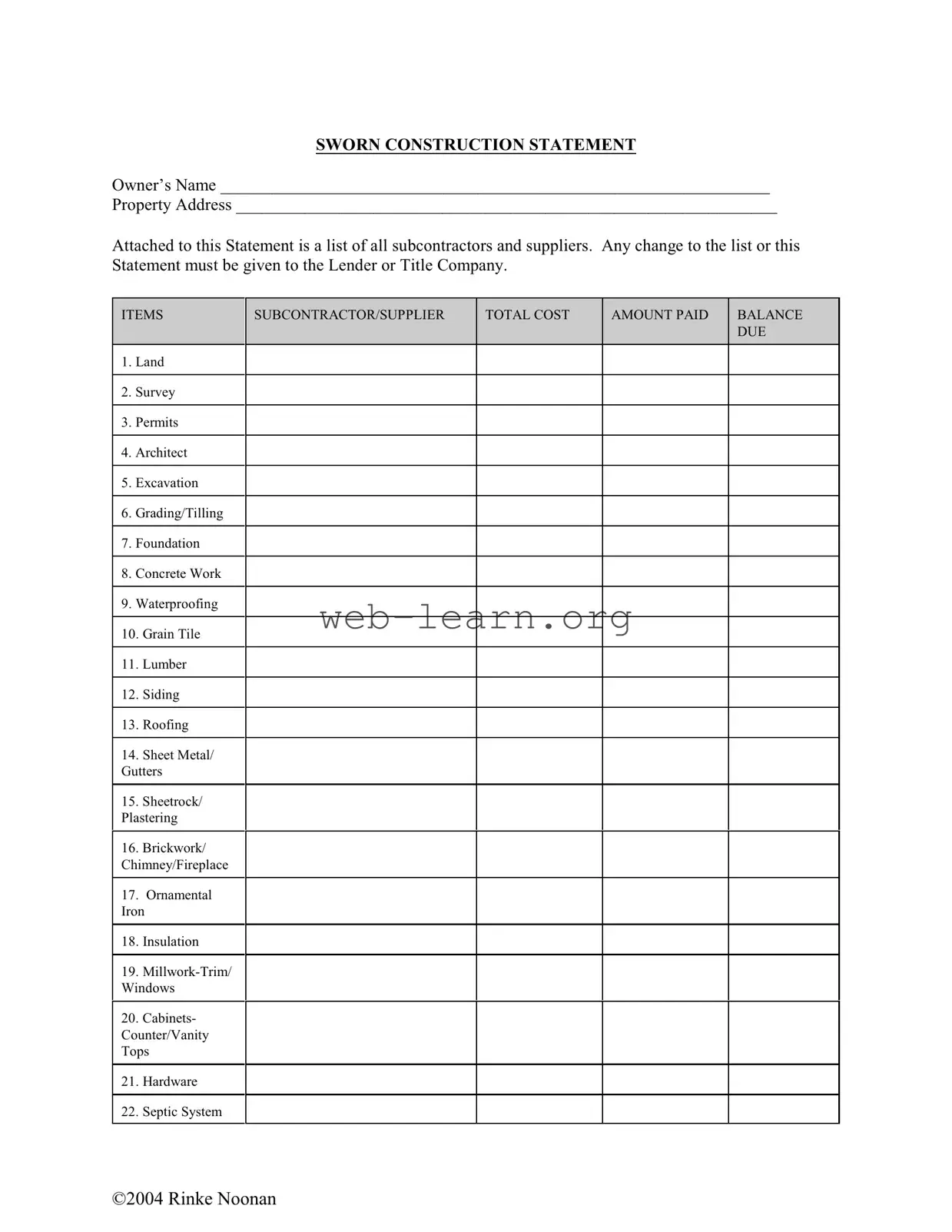
The Sworn Construction Statement form plays a crucial role in the construction financing process, serving as a detailed declaration by the property owner and contractor regarding the costs associated with a construction project. This form requires the owner to provide their name and the property address, ensuring that all parties involved are clearly identified. Attached to the statement is a comprehensive list of subcontractors and suppliers, which must be kept up-to-date, as any changes need to be communicated to the lender or title company. The form outlines various items related to the construction process, ranging from land acquisition and permits to specific labor and materials required for completion. Each item is accompanied by a breakdown of costs, amounts paid, and balances due, providing a transparent view of the financial obligations involved. By signing this document, the contractor and owner affirm that the information is accurate and that there are no outstanding contracts beyond what is specified. This statement is designed to facilitate the disbursement of loan proceeds, ensuring that funds are allocated appropriately to cover construction costs while also protecting the interests of the lender and title company. Furthermore, it includes provisions for the appointment of an escrow agent and outlines the responsibilities of all parties in the event of any unpaid bills or mechanic’s liens. Overall, the Sworn Construction Statement is an essential tool for managing the financial aspects of construction projects, promoting accountability and clarity among stakeholders.
SWORN CONSTRUCTION STATEMENT
Owner’s Name ________________________________________________________________
Property Address _______________________________________________________________
Attached to this Statement is a list of all subcontractors and suppliers. Any change to the list or this Statement must be given to the Lender or Title Company.
ITEMS
1.Land
2.Survey
3.Permits
4.Architect
5.Excavation
6.Grading/Tilling
7.Foundation
8.Concrete Work
9.Waterproofing
10.Grain Tile
11.Lumber
12.Siding
13.Roofing
14.Sheet Metal/ Gutters
15.Sheetrock/ Plastering
16.Brickwork/
Chimney/Fireplace
17.Ornamental
Iron
18.Insulation
19.
20.Cabinets- Counter/Vanity Tops
21.Hardware
22.Septic System
SUBCONTRACTOR/SUPPLIER
TOTAL COST
AMOUNT PAID
BALANCE DUE
©2004 Rinke Noonan
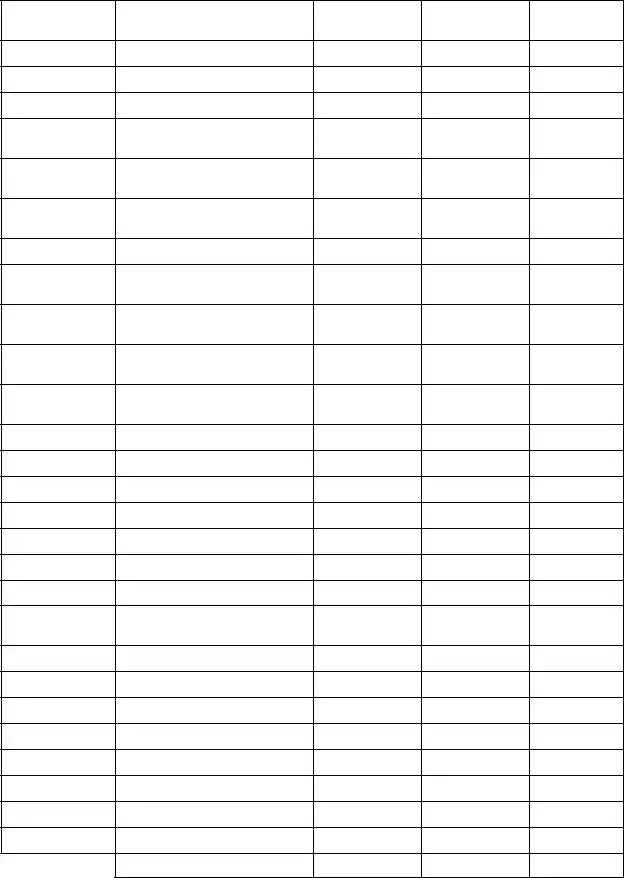
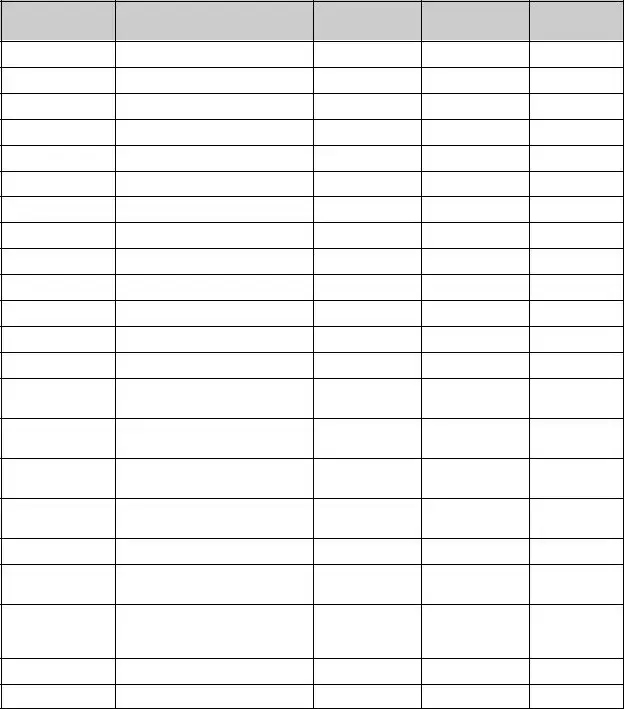
23.Water/Gas/ Sewer Hookup
24.Well
25.Plumbing
26.Heating
27.Air Conditioning
28.Electrical Wiring
29.Electrical Fixtures
30.Glass/Mirrors
31.Painting/ Interior Decorating
32.Painting - Exterior
33.Tile Work - Ceramic/Plastic
34.Linoleum/Floor Tile
35.Carpeting
36.Garage Doors
37.Appliances
38.Blacktopping
39.Bedding/Sod
40.Landscaping
41.Carpenter Labor
42.Contractor’s
Fee
43.Furnishings
44.
45.
46.
47.
48.
49.
50.
TOTALS
©2004 Rinke Noonan
The undersigned contractor and owner of the Property state that the attached list contains the names of all subcontractors and suppliers for specific portions of the work on this Property. All material costs shown are correct. The items mentioned include all labor and material required to complete the building according to plans and specifications and there are no other contracts outstanding. There is nothing due or to become due for materials, labor or other work other than as above stated.
To increase the cost of construction, owner or contractor must furnish to the Lender and the Title Company with additional owner deposits (if requested) to cover the increase. In the event of an increase, no orders or claims will be made until the information and additional deposits shall have been made. The purpose of this Statement is to induce the Title Company to pay out of the proceeds of a loan of $____________________, secured by a mortgage on the Property; and that upon payment of the specific
unpaid items listed herein, the undersigned contractor hereby agrees to waive all claims of priority to said mortgage. The undersigned hereby authorizes Lender and Title Company to disburse the proceeds of the above real estate mortgage, together with such additional funds as undersigned furnishes and makes available, to the Contractor and/or subcontractors from time to time as work progresses, on the basis of the Construction Statement and lien waivers presented.
The undersigned specifically agrees to pay any unpaid bills for construction or site improvements, to remove mechanic’s liens should any be filed against said Property, and to pay all bills, costs, expenses and legal fees; and indemnify said company against any loss should it become necessary for the company to bring action to remove the lien or to pay the bills.
The parties agree to appoint the Title Company as Escrow Agent; and the Lender is authorized to advance to the Escrow Agent from time to time during the progress of construction adequate funds to pay for costs of construction as warranted by lender’s periodic inspection of progress of construction.
A facsimile signature on this Statement is valid as an original.
Subscribed and sworn to before this ______ |
______________________________________ |
|
Contractor |
___________________________________ |
|
(Date) |
______________________________________ |
|
Signature |
___________________________________ |
|
Notary Public |
______________________________________ |
|
Contractor (Title) |
|
______________________________________ |
|
Owner |
|
______________________________________ |
|
Owner |
©2004 Rinke Noonan
| Fact Name | Description |
|---|---|
| Purpose | The Sworn Construction Statement is designed to provide a comprehensive account of all subcontractors and suppliers involved in a construction project, ensuring transparency for lenders and title companies. |
| Owner's Responsibility | It is the owner's duty to inform the lender or title company of any changes to the list of subcontractors and suppliers attached to the statement. |
| Cost Breakdown | The form includes a detailed list of items related to construction, such as land, permits, and labor, allowing for a clear understanding of total costs. |
| Legal Implications | By signing the statement, the contractor waives any claims of priority to the mortgage, ensuring that the lender can disburse funds without risk of liens. |
| State-Specific Regulations | In many states, including Texas, the Sworn Construction Statement must comply with specific laws governing construction financing and lien waivers. |
| Signature Validity | A facsimile signature on the Sworn Construction Statement holds the same legal weight as an original signature, streamlining the process for all parties involved. |
After completing the Sworn Construction Statement form, it is essential to ensure that all information is accurate and comprehensive. This document plays a critical role in the construction financing process, as it outlines the costs associated with the project and the parties involved. Follow the steps below to fill out the form correctly.
What is a Sworn Construction Statement?
A Sworn Construction Statement is a document that outlines all costs associated with a construction project. It includes details about subcontractors and suppliers, as well as the total costs for various construction items. This statement is often required by lenders or title companies before they disburse funds for construction projects.
Why is the Sworn Construction Statement important?
This statement is crucial because it provides transparency about the costs and parties involved in a construction project. It helps ensure that all subcontractors and suppliers are paid, thereby protecting the interests of both the property owner and the lender. By signing this document, the contractor and owner confirm that all information is accurate and complete.
Who needs to sign the Sworn Construction Statement?
Both the contractor and the property owner must sign the Sworn Construction Statement. Their signatures confirm that they agree with the listed costs and understand their obligations regarding payments and any potential liens.
What happens if there are changes to the subcontractors or suppliers?
If there are any changes to the list of subcontractors or suppliers, the property owner or contractor must notify the lender or title company immediately. This ensures that all parties are aware of any updates that could affect the project’s financing or legal standing.
What is the role of the Title Company in this process?
The Title Company acts as an escrow agent, managing the disbursement of funds to contractors and subcontractors as the construction progresses. They ensure that payments are made according to the Sworn Construction Statement and that all necessary lien waivers are obtained.
What should be included in the Sworn Construction Statement?
The statement should include:
Can a facsimile signature be used on the Sworn Construction Statement?
Yes, a facsimile signature is considered valid as an original. This allows for easier processing and quicker transactions, especially when time is of the essence in construction projects.
What are the consequences of not paying subcontractors?
If subcontractors are not paid, they may file mechanic’s liens against the property. This can lead to legal complications and additional costs for the property owner. The Sworn Construction Statement helps mitigate this risk by ensuring that all parties are aware of their financial obligations.
When filling out the Sworn Construction Statement form, many people make mistakes that can lead to complications. One common error is leaving out the owner's name or providing incorrect information. This information is crucial for identifying who is responsible for the property and the construction project.
Another frequent mistake is failing to include the property address. Without the correct address, it can be challenging for lenders or title companies to associate the statement with the right property. This can delay the approval process and create confusion.
Some individuals neglect to attach the required list of subcontractors and suppliers. This list is essential for transparency and accountability in the construction process. Omitting it can raise red flags and may result in additional scrutiny from lenders.
People often forget to update the statement if there are any changes to the subcontractors or suppliers. This can lead to discrepancies and issues later on. It is important to communicate any changes to the lender or title company promptly.
Another mistake is not providing accurate cost amounts for each item listed. Inaccurate figures can lead to funding problems or disputes over payments. Ensuring all amounts are correct is vital for a smooth transaction.
Some individuals fail to calculate the total costs correctly. This is a crucial part of the form, as it summarizes the financial aspects of the construction project. Errors in this section can affect the overall understanding of the project's budget.
Another issue arises when people do not sign the form or forget to include the date. A missing signature or date can render the document invalid, causing delays in processing and potential legal complications.
People sometimes overlook the importance of including a notary public's signature. This signature adds an extra layer of authenticity to the document. Without it, the statement may not hold up in certain situations.
Some individuals also fail to specify the loan amount being requested. This information is necessary for the lender to understand the financial needs of the project. Omitting it can lead to misunderstandings and delays.
Lastly, individuals may not fully understand the implications of the statement. It is crucial to read and comprehend the terms outlined, including any responsibilities regarding unpaid bills or mechanic’s liens. Ignoring these details can lead to significant issues down the line.
The Sworn Construction Statement form is an important document in the construction process, particularly when it comes to securing financing and ensuring that all parties involved are clear about the costs and responsibilities. Alongside this form, several other documents are often utilized to provide a comprehensive overview of the project. Below is a list of related forms that may be required.
Understanding these documents and their purposes can significantly streamline the construction process. Each plays a vital role in protecting the interests of all parties involved and ensuring that the project runs smoothly from start to finish.
The Sworn Construction Statement form is an important document in construction projects, but it shares similarities with several other forms. Here’s a look at nine documents that resemble it, highlighting their key similarities:
When filling out the Sworn Construction Statement form, it’s essential to follow certain guidelines to ensure accuracy and compliance. Here’s a list of things you should and shouldn’t do:
By adhering to these guidelines, you can help ensure that the process goes smoothly and that all parties involved have the necessary information for a successful transaction.
Understanding the Sworn Construction Statement form is crucial for homeowners and contractors alike. However, several misconceptions can lead to confusion. Here are nine common misunderstandings:
Being aware of these misconceptions can help ensure that all parties involved understand their responsibilities and rights under the Sworn Construction Statement form.
Filling out the Sworn Construction Statement form is an important step in the construction process. Here are some key takeaways to keep in mind:
Taking the time to carefully complete this form can help avoid complications down the road. Always keep communication open with your lender and title company to ensure a smooth construction process.