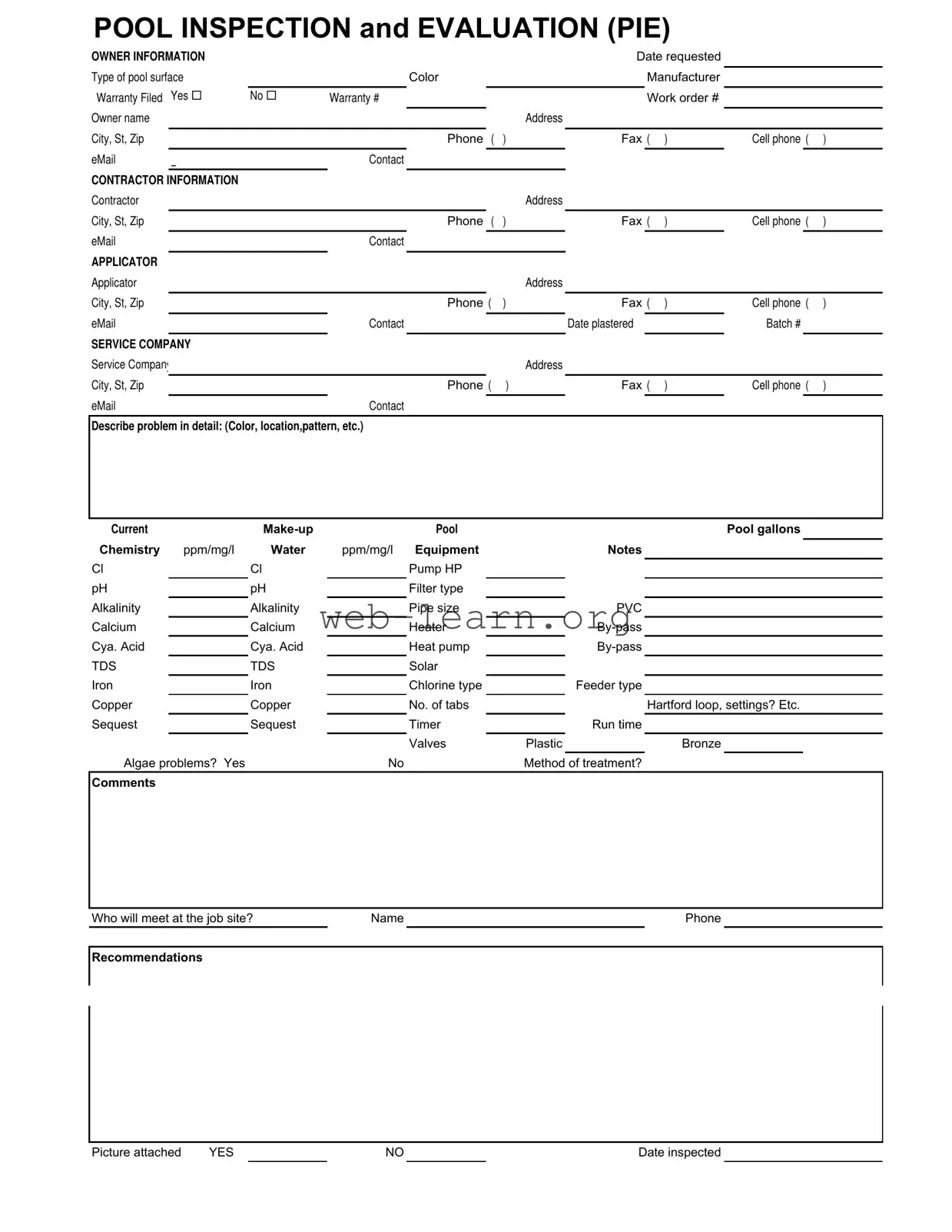
The Swimming Pool Inspection form is a crucial tool for ensuring the safety and functionality of a swimming pool. This comprehensive document gathers essential information about both the pool and its owner, including details such as the type of pool surface, its color, and the manufacturer. It also captures warranty information, ensuring that any issues can be addressed promptly. The form requires contact information for the owner, contractor, applicator, and service company, facilitating clear communication among all parties involved. A section dedicated to describing any specific problems helps pinpoint issues related to color, location, and pattern. Additionally, the form collects vital data on pool chemistry, including levels of chlorine, pH, and alkalinity, which are key to maintaining a safe swimming environment. Equipment specifications, such as pump horsepower and filter type, are also documented. Finally, the form allows for notes on algae problems and treatment methods, ensuring that all aspects of pool maintenance are covered. By systematically addressing these elements, the Swimming Pool Inspection form plays a pivotal role in promoting safe and enjoyable swimming experiences.

POOL INSPECTION and EVALUATION (PIE)
OWNER INFORMATION |
|
|
|
|
|
|
|
|
|
Date requested |
|
|
|
|||||
Type of pool surface |
|
|
|
|
|
|
|
|
|
|
|
|
|
|
||||
|
|
|
Color |
|
|
|
|
|
Manufacturer |
|
|
|
||||||
|
|
|
|
|
|
|
|
|
|
|
|
|
|
|
|
|
|
|
Warranty Filed Yes |
No |
Warranty # |
|
|
|
|
|
Work order # |
|
|
|
|||||||
Owner name |
|
|
|
|
|
|
|
Address |
|
|
|
|
|
|||||
|
|
|
|
|
|
|
|
|
|
|
|
|
|
|
|
|
||
City, St, Zip |
|
|
|
Phone ( |
) |
|
|
Fax ( |
) |
|
Cell phone ( |
) |
||||||
|
|
|
|
|
|
|
|
|
|
|
|
|
|
|
|
|
||
|
Contact |
|
|
|
|
|
|
|
|
|
|
|
||||||
|
|
|
|
|
|
|
|
|
|
|
|
|
|
|
|
|
|
|
CONTRACTOR INFORMATION |
|
|
|
|
|
|
|
|
|
|
|
|
|
|
|
|
|
|
Contractor |
|
|
|
|
|
|
|
Address |
|
|
|
|
|
|||||
|
|
|
|
|
|
|
|
|
|
|
|
|
|
|
|
|||
City, St, Zip |
|
|
|
Phone ( |
) |
|
|
Fax ( |
) |
|
Cell phone ( |
) |
||||||
|
|
|
|
|
|
|
|
|
|
|
|
|
|
|
|
|
||
|
Contact |
|
|
|
|
|
|
|
|
|
|
|
||||||
|
|
|
|
|
|
|
|
|
|
|
|
|
|
|
|
|
|
|
APPLICATOR |
|
|
|
|
|
|
|
|
|
|
|
|
|
|
|
|
|
|
Applicator |
|
|
|
|
|
|
|
Address |
|
|
|
|
|
|||||
|
|
|
|
|
|
|
|
|
|
|
|
|
|
|
|
|||
City, St, Zip |
|
|
|
Phone ( |
) |
|
|
Fax ( |
) |
|
Cell phone ( |
) |
||||||
|
|
|
|
|
|
|
|
|
|
|
|
|
|
|
||||
|
Contact |
|
|
|
Date plastered |
|
|
Batch # |
|
|||||||||
|
|
|
|
|
|
|
|
|
|
|
|
|
|
|
|
|
|
|
SERVICE COMPANY |
|
|
|
|
|
|
|
|
|
|
|
|
|
|
|
|
|
|
Service Company |
|
|
|
|
|
|
|
Address |
|
|
|
|
|
|||||
|
|
|
|
|
|
|
|
|
|
|
|
|
|
|
|
|||
City, St, Zip |
|
|
|
Phone ( |
) |
|
|
Fax ( |
) |
|
Cell phone ( |
) |
||||||
|
|
|
|
|
|
|
|
|
|
|
|
|
|
|
|
|||
|
Contact |
|
|
|
|
|
|
|
|
|
|
|
||||||
Describe problem in detail: (Color, location,pattern, etc.)
Current |
|
|
Pool |
|
|
|
|
|
Pool gallons |
|||
Chemistry |
ppm/mg/l |
Water |
ppm/mg/l Equipment |
|
|
Notes |
|
|
|
|
||
|
|
|
|
|
|
|||||||
Cl |
|
Cl |
|
Pump HP |
|
|
|
|
|
|
|
|
pH |
|
pH |
|
Filter type |
|
|
|
|
|
|
|
|
Alkalinity |
|
Alkalinity |
|
Pipe size |
|
|
PVC |
|
|
|
|
|
Calcium |
|
Calcium |
|
Heater |
|
|
|
|
|
|
|
|
Cya. Acid |
|
Cya. Acid |
|
Heat pump |
|
|
|
|
|
|
||
TDS |
|
TDS |
|
Solar |
|
|
|
|
|
|
|
|
Iron |
|
Iron |
|
Chlorine type |
|
|
Feeder type |
|
|
|
|
|
Copper |
|
Copper |
|
No. of tabs |
|
|
|
|
Hartford loop, settings? Etc. |
|||
Sequest |
|
Sequest |
|
Timer |
|
|
Run time |
|
|
|
|
|
|
|
|
|
Valves |
Plastic |
|
Bronze |
|
|
|||
Algae problems? Yes |
|
No |
Method of treatment? |
|
|
|
|
|||||
Comments |
|
|
|
|
|
|
|
|
|
|
|
|
|
|
|
|
|
|
|
|
|
|
|
|
|
Who will meet at the job site? |
Name |
|
Phone |
Recommendations
Picture attached |
YES |
|
NO |
|
Date inspected |
| Fact Name | Description |
|---|---|
| Owner Information | The form requires detailed information about the pool owner, including name, address, and contact details. |
| Contractor Information | Contractor details must be provided, including their address and contact information for effective communication. |
| Applicator Details | The form includes sections for the applicator's information, ensuring accountability for the pool surface work. |
| Service Company Information | Details about the service company are required, including their address and phone numbers for follow-up inquiries. |
| Problem Description | A section is dedicated to describing any issues with the pool, which aids in assessing the necessary repairs. |
| Current Pool Chemistry | The form requests current pool chemistry readings, such as pH and chlorine levels, to evaluate water quality. |
| State-Specific Requirements | Some states may have specific laws governing pool inspections, such as California's Health and Safety Code § 116025. |
| Inspection Recommendations | Inspectors can provide recommendations based on their findings, which are crucial for maintaining pool safety and compliance. |
Completing the Swimming Pool Inspection form is a straightforward process that requires attention to detail. Gather the necessary information before you begin, as this will help ensure accuracy and completeness. Once the form is filled out, it will serve as a vital record for the inspection process.
What is the purpose of the Swimming Pool Inspection form?
The Swimming Pool Inspection form is designed to assess the condition and safety of a swimming pool. It collects essential information about the pool's surface, equipment, and any issues that may affect its operation or safety. This form helps both pool owners and contractors to document the current state of the pool and plan for any necessary repairs or maintenance.
What information is required from the pool owner?
The pool owner must provide their name, address, contact information, and details about the pool, including its type, surface, color, and warranty status. This information is crucial for identifying the specific pool and ensuring that any issues are addressed appropriately.
Who fills out the contractor information section?
The contractor responsible for the inspection or maintenance of the pool should complete the contractor information section. This includes their name, address, and contact details, which allow for clear communication regarding the inspection findings and any subsequent actions.
What details should be included when describing problems with the pool?
When detailing problems, it is important to describe the issue clearly. Include specifics such as the color, location, and pattern of any stains or damages. This information helps the contractor understand the situation better and devise an effective solution.
How is water chemistry recorded in the form?
The form requires specific measurements related to water chemistry, including chlorine levels, pH, alkalinity, and other relevant metrics. These values are critical for assessing the pool's water quality and ensuring it is safe for use.
What should be done if there are algae problems?
If algae problems are noted, the form includes a section to indicate whether this is the case and to describe the method of treatment being used. This information is essential for tracking the effectiveness of treatments and preventing future occurrences.
Is it necessary to attach pictures to the form?
While it is not mandatory, attaching pictures is highly recommended. Visual documentation can provide valuable context for the issues described and assist contractors in understanding the pool's condition more thoroughly.
Who is responsible for meeting at the job site?
The form asks for the name and phone number of the person who will meet at the job site. This person is typically the contractor or a representative from the service company, ensuring that there is clear communication and coordination during the inspection or repair process.
How is the inspection date recorded?
The date of the inspection is recorded at the bottom of the form. This date is important for tracking the timeline of inspections and any follow-up actions that may be required in the future.
Filling out the Swimming Pool Inspection form can be straightforward, but many make common mistakes that can lead to delays or issues. One frequent error is leaving out owner information. It is crucial to provide complete details such as name, address, and contact numbers. Incomplete information can hinder communication and follow-up.
Another mistake involves the contractor information. Some individuals forget to fill in the contractor's details or provide inaccurate contact information. This omission can create complications when trying to reach the contractor for clarifications or updates.
Many people also overlook the applicator information. Failing to include the applicator’s name and contact details can result in confusion regarding who performed the work. This can be particularly problematic if issues arise later.
Providing insufficient details in the problem description section is a common mistake. Vague descriptions like "there's a problem" do not help inspectors understand the issue. Instead, specify the color, location, and pattern of the problem for a more accurate evaluation.
Another area where mistakes frequently occur is in the current make-up pool section. Individuals often neglect to include the pool's gallon capacity. This information is vital for assessing chemical balance and overall pool health.
Errors in recording chemistry levels are also common. Many forget to check and accurately report ppm/mg/l for chlorine, alkalinity, and other chemicals. Inaccurate data can lead to incorrect treatment recommendations.
When filling out the equipment notes, some fail to include essential details like pump horsepower or filter type. This information is crucial for understanding the pool's operational efficiency and any potential issues.
Finally, neglecting to indicate who will meet at the job site can lead to confusion on the day of inspection. Clearly stating the name and phone number of the contact person ensures that everyone is on the same page and helps facilitate a smooth inspection process.
When conducting a swimming pool inspection, several additional forms and documents are often utilized to ensure a comprehensive evaluation. These documents help streamline the inspection process, facilitate communication between parties, and maintain accurate records. Below is a list of commonly used forms that complement the Swimming Pool Inspection form.
Utilizing these forms in conjunction with the Swimming Pool Inspection form enhances the overall effectiveness of pool management and maintenance. Each document serves a specific purpose, contributing to a safer and more enjoyable swimming experience for all users.
The Swimming Pool Inspection form shares similarities with several other documents that also focus on safety, maintenance, and evaluation. Here’s a look at five such documents:
When filling out the Swimming Pool Inspection form, there are important guidelines to follow. Here’s a list of what you should and shouldn't do:
Following these guidelines will help ensure that the inspection process goes smoothly and that all necessary information is communicated clearly.
Understanding the Swimming Pool Inspection form can help pool owners navigate the inspection process more effectively. Here are ten common misconceptions about this form:
By clarifying these misconceptions, pool owners can approach the inspection process with a better understanding and ensure their pools remain safe and well-maintained.
When filling out and using the Swimming Pool Inspection form, consider the following key takeaways: