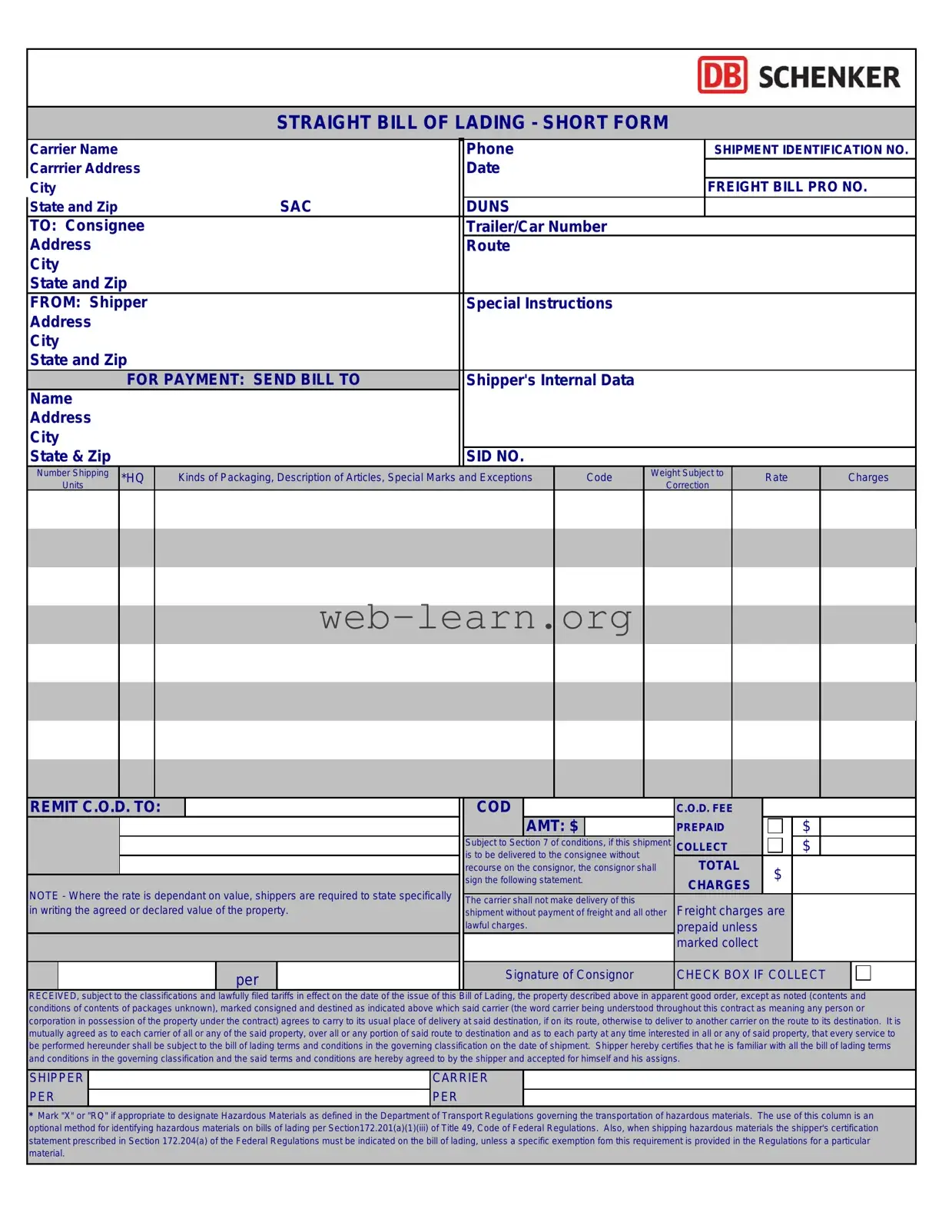
The Straight Bill of Lading is a critical document in the shipping and transportation industry, serving as a receipt for goods and a contract between the shipper and the carrier. This form is particularly significant because it designates the recipient of the cargo, ensuring that the goods are delivered to the correct party. Unlike other types of bills of lading, the Straight Bill of Lading is non-negotiable, meaning it cannot be transferred to another party. It typically contains essential information, such as the names and addresses of the shipper and consignee, a detailed description of the goods, and the terms of transportation. Understanding the nuances of this form is vital for anyone involved in shipping, as it affects the legal rights and responsibilities of all parties involved. Moreover, the accuracy of the information provided on the Straight Bill of Lading can prevent disputes and facilitate smoother transactions, highlighting the importance of careful attention to detail. As businesses increasingly rely on efficient logistics, familiarity with this document has never been more urgent.
STRAIGHT BILL OF LADING - SHORT FORM
Carrier Name |
|
|
Phone |
|
|
SHIPMENT IDENTIFICATION NO. |
||
Carrrier Address |
|
|
Date |
|
|
|
|
|
City |
SAC |
|
|
|
|
FREIGHT BILL PRO NO. |
||
State and Zip |
|
DUNS |
|
|
|
|
|
|
TO: Consignee |
|
|
Trailer/Car Number |
|
|
|
|
|
Address |
|
|
Route |
|
|
|
|
|
City |
|
|
|
|
|
|
|
|
State and Zip |
|
|
|
|
|
|
|
|
FROM: Shipper |
|
|
Special Instructions |
|
|
|
|
|
Address |
|
|
|
|
|
|
|
|
City |
|
|
|
|
|
|
|
|
State and Zip |
|
|
|
|
|
|
|
|
FOR PAYMENT: SEND BILL TO |
|
Shipper's Internal Data |
|
|
|
|
||
Name |
|
|
|
|
|
|
|
|
Address |
|
|
|
|
|
|
|
|
City |
|
|
|
|
|
|
|
|
State & Zip |
|
|
SID NO. |
|
|
|
|
|
Number Shipping *HQ |
Kinds of Packaging, Description of Articles, Special Marks and Exceptions |
Code |
Weight Subject to |
Rate |
Charges |
|||
Units |
|
|
|
|
Correction |
|
|
|
|
|
|
|
|
|
|
|
|
|
|
|
|
|
|
|
|
|
|
|
|
|
|
|
|
|
|
|
|
|
|
|
|
|
|
|
|
|
|
|
|
|
|
|
|
|
|
|
|
|
|
|
|
|
|
|
|
|
|
|
|
|
|
|
|
|
|
|
|
REMIT C.O.D. TO: |
|
|
|
|
COD |
|
|
C.O.D. FEE |
|
|
|
|
||
Address |
|
|
|
|
|
|
AMT: $ |
|
PREPAID |
|
$ |
|
|
|
City |
|
|
|
|
|
Subject to Section 7 of conditions, if this shipment |
COLLECT |
|
$ |
|
|
|||
State & Zip |
|
|
|
|
|
is to be delivered to the consignee without |
TOTAL |
|
|
|
|
|||
|
|
|
|
|
recourse on the consignor, the consignor shall |
$ |
|
|
|
|||||
NOTE - Where the rate is dependant on value, shippers are required to state specifically |
|
sign the following statement. |
CHARGES |
|
|
|
||||||||
|
|
|
|
|
|
|
|
|||||||
|
The carrier shall not make delivery of this |
Freight charges are |
|
|
|
|||||||||
in writing the agreed or declared value of the property. |
|
shipment without payment of freight and all other |
|
|
|
|||||||||
|
|
|
|
|
|
|
lawful charges. |
prepaid unless |
|
|
|
|
||
The agreed or declared vlaue of the property is hereby specifically stated by the shipper to |
|
|
|
|
marked collect |
|
|
|
|
|||||
be not exceeding |
|
|
|
|
|
|
|
|
|
|
|
|||
$ |
|
|
|
per |
|
|
Signature of Consignor |
CHECK BOX IF COLLECT |
|
|||||
RECEIVED, subject to the classifications and lawfully filed tariffs in effect on the date of the issue of this Bill of Lading, the property described above in apparent good order, except as noted (contents and conditions of contents of packages unknown), marked consigned and destined as indicated above which said carrier (the word carrier being understood throughout this contract as meaning any person or corporation in possession of the property under the contract) agrees to carry to its usual place of delivery at said destination, if on its route, otherwise to deliver to another carrier on the route to its destination. It is mutually agreed as to each carrier of all or any of the said property, over all or any portion of said route to destination and as to each party at any time interested in all or any of said property, that every service to be performed hereunder shall be subject to the bill of lading terms and conditions in the governing classification on the date of shipment. Shipper hereby certifies that he is familiar with all the bill of lading terms and conditions in the governing classification and the said terms and conditions are hereby agreed to by the shipper and accepted for himself and his assigns.
SHIPPER |
|
CARRIER |
|
PER |
|
PER |
|
*Mark "X" or "RQ" if appropriate to designate Hazardous Materials as defined in the Department of Transport Regulations governing the transportation of hazardous materials. The use of this column is an optional method for identifying hazardous materials on bills of lading per Section172.201(a)(1)(iii) of Title 49, Code of Federal Regulations. Also, when shipping hazardous materials the shipper's certification statement prescribed in Section 172.204(a) of the Federal Regulations must be indicated on the bill of lading, unless a specific exemption fom this requirement is provided in the Regulations for a particular material.
| Fact Name | Description |
|---|---|
| Definition | A Straight Bill of Lading is a document issued by a carrier that details the type, quantity, and destination of goods being transported. It serves as a receipt for the goods and a contract for transportation. |
| Transferability | This form is non-negotiable, meaning it cannot be transferred to another party. Only the named consignee can claim the goods upon arrival. |
| Governing Law | The Uniform Commercial Code (UCC) governs the use of Bills of Lading in most states, but specific state laws may also apply. |
| Usage | Commonly used in domestic shipping, a Straight Bill of Lading is preferred when the shipper wants to ensure that the goods are delivered directly to a specific recipient without the possibility of resale. |
Filling out the Straight Bill of Lading form is crucial for ensuring that your shipment is properly documented. This form serves as a receipt for the goods and outlines the terms of the shipment. Follow these steps carefully to complete the form accurately.
Once you have completed the form, keep a copy for your records and provide the original to the carrier. Ensure that all parties involved have a clear understanding of the shipment details to avoid any issues during transit.
What is a Straight Bill of Lading?
A Straight Bill of Lading is a shipping document that serves as a receipt for goods and a contract between the shipper and the carrier. Unlike other types of bills of lading, it is non-negotiable, meaning it cannot be transferred to another party. The consignee named on the document is the only one who can claim the goods upon delivery.
What are the key components of a Straight Bill of Lading?
Typically, a Straight Bill of Lading includes:
How does a Straight Bill of Lading differ from a Negotiable Bill of Lading?
The main difference lies in the transferability of the document. A Negotiable Bill of Lading can be endorsed and transferred to others, allowing multiple parties to claim the goods. In contrast, a Straight Bill of Lading is issued to a specific consignee and cannot be transferred.
When should I use a Straight Bill of Lading?
This type of bill is ideal when you want to ensure that only a specific person or entity can receive the goods. It is commonly used for shipments where the consignee is known and trusted, minimizing the risk of unauthorized claims.
What happens if the consignee cannot pick up the goods?
If the consignee cannot pick up the goods, they will typically need to arrange for someone else to retrieve them, or they may need to contact the shipper to make alternative arrangements. Since the Straight Bill of Lading is non-negotiable, it cannot be transferred to another person without the shipper's consent.
Is a Straight Bill of Lading legally binding?
Yes, it is a legally binding document. By signing it, the parties involved agree to the terms outlined within it. This includes the responsibilities of the shipper, carrier, and consignee regarding the transportation and delivery of the goods.
Can I track my shipment with a Straight Bill of Lading?
Yes, tracking is often available. Most carriers provide a tracking number associated with the Straight Bill of Lading, allowing you to monitor the shipment's progress online. Make sure to keep the bill handy for reference.
What should I do if there is damage to the goods upon delivery?
If you notice any damage, document it immediately. Take photos and note the specifics of the damage. Then, contact the carrier as soon as possible to file a claim. The Straight Bill of Lading serves as proof of the agreement and may be required during the claims process.
Can I modify a Straight Bill of Lading after it has been issued?
Modifications are generally not recommended after issuance. However, if changes are necessary, it is best to contact the carrier and shipper to discuss the situation. They may require a new bill to be issued to reflect any changes.
How do I obtain a Straight Bill of Lading?
You can obtain a Straight Bill of Lading from your carrier or freight forwarder. They often have standardized forms available, or you can create one based on the necessary components. Ensure all required information is filled out accurately to avoid issues during shipping.
When filling out the Straight Bill of Lading form, many individuals make common mistakes that can lead to delays or complications in shipping. One frequent error is not providing complete information about the consignee. This includes missing the consignee's full name, address, or contact number. Without accurate details, the shipment may not reach its intended destination, causing frustration for both the sender and the recipient.
Another mistake often seen is the failure to accurately describe the goods being shipped. It's crucial to include the correct weight, dimensions, and any special handling instructions. Incomplete or incorrect descriptions can result in improper handling or additional charges. Always ensure that the information reflects the actual contents of the shipment.
People also tend to overlook the importance of signatures on the form. A lack of a signature can render the document invalid. Both the shipper and the carrier should sign the bill of lading to confirm agreement on the terms of the shipment. This step is essential for protecting both parties in case of disputes.
Lastly, many individuals forget to keep a copy of the completed Straight Bill of Lading for their records. This document serves as proof of the agreement between the shipper and the carrier. Having a copy can help resolve any issues that may arise during transit. Always remember to retain a copy for your files.
The Straight Bill of Lading is a crucial document in the shipping and transportation industry. It serves as a receipt for goods and a contract between the shipper and the carrier. However, several other forms and documents are often used alongside it to ensure smooth operations and compliance with regulations. Below is a list of these important documents.
Understanding these documents is essential for anyone involved in shipping and logistics. Each plays a vital role in facilitating the movement of goods and ensuring compliance with various regulations. Being prepared with the right documentation can help prevent delays and issues during transportation.
When filling out the Straight Bill Of Lading form, it's important to be precise and careful. Here are some key dos and don'ts to keep in mind:
The Straight Bill of Lading (BOL) is a crucial document in the shipping and logistics industry, yet many people hold misconceptions about its purpose and function. Here’s a look at some common misunderstandings:
While both documents serve as proof of shipment, a Straight Bill of Lading is non-negotiable. This means it cannot be transferred to another party, unlike a negotiable Bill of Lading, which can be endorsed and transferred.
The Straight Bill of Lading does not ensure that goods will be delivered on time or in perfect condition. It serves primarily as a receipt and a contract of carriage between the shipper and the carrier.
This document is typically used for shipments where the consignee is known and predetermined. For shipments involving multiple potential recipients, a different type of Bill of Lading may be more appropriate.
Not all carriers may accept this form. It’s essential to confirm with the specific carrier to ensure they recognize and accept a Straight Bill of Lading.
A Straight Bill of Lading does not provide insurance coverage for the goods being shipped. Separate insurance must be obtained to protect against loss or damage during transit.
Once a Straight Bill of Lading is issued, its terms cannot be changed without the consent of all parties involved. Modifications can lead to disputes or issues with the shipment.
While the shipper does benefit from having a formal record of the shipment, the consignee also gains protection and assurance regarding the delivery of their goods.
The Straight Bill of Lading is a legal document that outlines the obligations of the carrier and the rights of the shipper and consignee. It can be enforced in a court of law.
There can be variations in the format and requirements of a Straight Bill of Lading depending on the carrier and the specific shipment. Always review the document carefully to ensure it meets all necessary criteria.
Understanding these misconceptions can help individuals and businesses navigate the complexities of shipping more effectively. Clarity about the Straight Bill of Lading ensures smoother transactions and fewer disputes.
When filling out and using the Straight Bill of Lading form, it is important to keep several key points in mind. Below are some essential takeaways to ensure proper use of this document.
By following these guidelines, you can effectively use the Straight Bill of Lading to facilitate smooth shipping and transportation processes.