When navigating the complex world of business transactions, a Stock Purchase Agreement (SPA) stands out as a vital document for both buyers and sellers of stock. This agreement outlines the terms and conditions under which shares of a company are bought and sold, ensuring that all parties are on the same page regarding the transaction. Key aspects of the SPA include the purchase price, the number of shares being sold, and the representations and warranties made by both parties. Additionally, the agreement often addresses closing conditions, indemnification provisions, and any applicable restrictions on the transfer of shares. These elements work together to create a clear framework that protects the interests of both the buyer and the seller, while also facilitating a smooth transition of ownership. Given the potential complexities involved, understanding the nuances of an SPA is essential for anyone engaged in the buying or selling of stock. This understanding not only fosters transparency but also helps mitigate risks associated with such transactions.
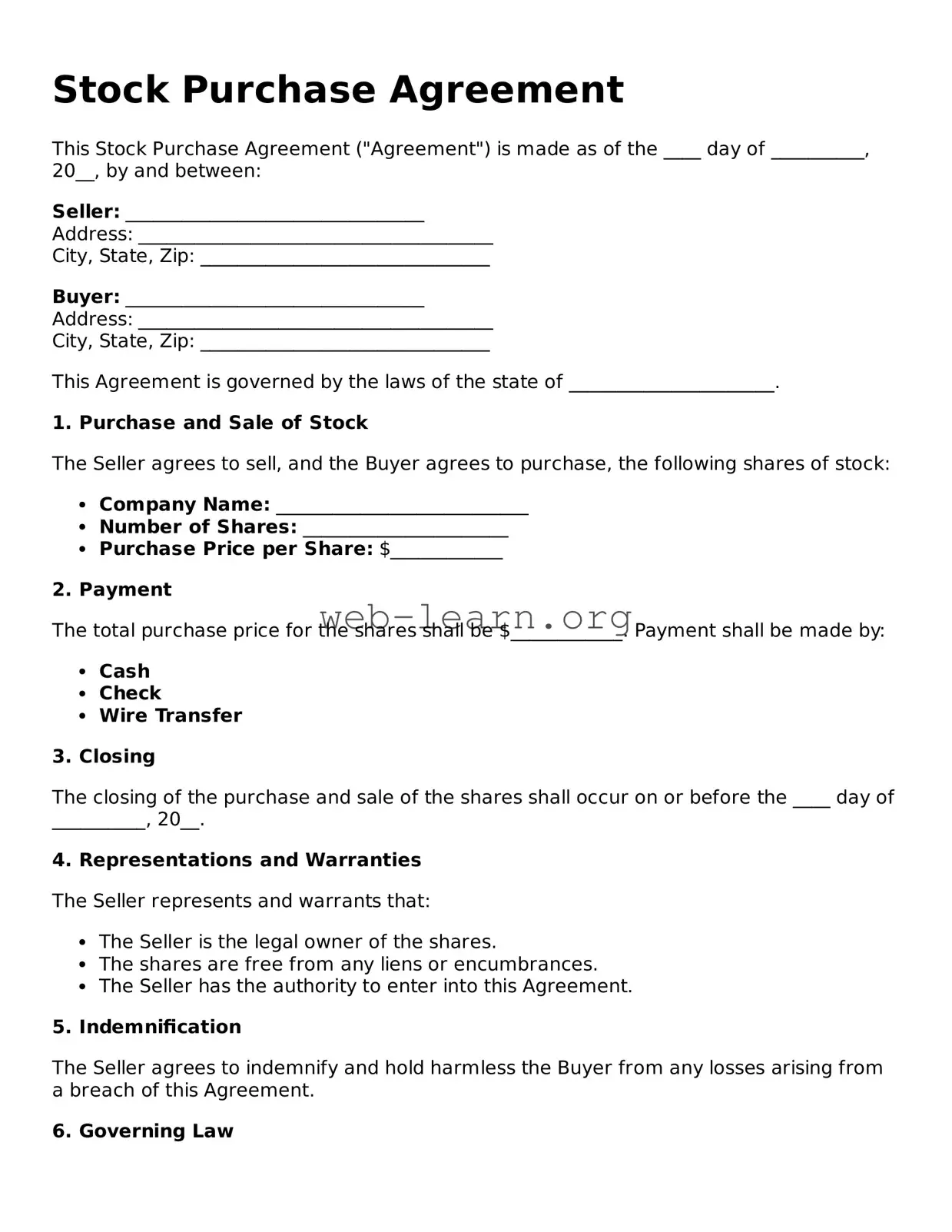
Stock Purchase Agreement
This Stock Purchase Agreement ("Agreement") is made as of the ____ day of __________, 20__, by and between:
Seller: ________________________________
Address: ______________________________________
City, State, Zip: _______________________________
Buyer: ________________________________
Address: ______________________________________
City, State, Zip: _______________________________
This Agreement is governed by the laws of the state of ______________________.
1. Purchase and Sale of Stock
The Seller agrees to sell, and the Buyer agrees to purchase, the following shares of stock:
2. Payment
The total purchase price for the shares shall be $____________. Payment shall be made by:
3. Closing
The closing of the purchase and sale of the shares shall occur on or before the ____ day of __________, 20__.
4. Representations and Warranties
The Seller represents and warrants that:
5. Indemnification
The Seller agrees to indemnify and hold harmless the Buyer from any losses arising from a breach of this Agreement.
6. Governing Law
This Agreement shall be governed by and construed in accordance with the laws of the state of ______________________.
7. Entire Agreement
This Agreement constitutes the entire understanding between the parties and supersedes all prior agreements or understandings.
IN WITNESS WHEREOF, the parties have executed this Stock Purchase Agreement as of the date first above written.
Seller Signature: ____________________________
Date: ________________
Buyer Signature: ____________________________
Date: ________________
| Fact Name | Description |
|---|---|
| Definition | A Stock Purchase Agreement is a legal document that outlines the terms of buying and selling shares of a company. |
| Parties Involved | The agreement typically involves the buyer and the seller of the stock. |
| Purchase Price | The document specifies the price per share and the total purchase price for the stock. |
| Governing Law | The agreement is subject to the laws of the state where the company is incorporated, which may vary by state. |
| Closing Date | The agreement includes a closing date, which is when the transaction is finalized. |
| Representations and Warranties | Both parties make certain promises about the stock and the company, ensuring transparency in the transaction. |
| Conditions Precedent | The agreement may outline specific conditions that must be met before the sale can proceed. |
| Confidentiality | Often, the agreement includes a confidentiality clause to protect sensitive information shared during the transaction. |
After obtaining the Stock Purchase Agreement form, you will need to provide specific information related to the transaction. This information will help ensure that all parties involved are clear about the terms and conditions of the stock purchase.
Once the form is completed, it is advisable to keep a copy for your records. This document serves as a formal record of the transaction and can be referenced in the future if needed.
A Stock Purchase Agreement is a legal document that outlines the terms and conditions under which one party agrees to purchase shares of stock from another party. This agreement serves to protect both the buyer and the seller by clearly defining the rights and obligations of each party involved in the transaction.
Typically, a Stock Purchase Agreement includes the following key components:
This agreement is crucial because it provides a clear framework for the transaction, minimizing the risk of misunderstandings or disputes. It protects the interests of both parties by ensuring that all terms are agreed upon and documented. Additionally, it can help facilitate a smoother transfer of ownership.
Before signing, consider the following:
Yes, a Stock Purchase Agreement can be modified after it is signed, but any changes must be agreed upon by both parties. It is advisable to document any modifications in writing to avoid potential disputes in the future.
If one party breaches the agreement, the other party may have legal remedies available. This could include seeking damages or specific performance, which means requiring the breaching party to fulfill their obligations under the agreement. Legal advice is recommended to navigate the situation effectively.
Filling out a Stock Purchase Agreement (SPA) can be a daunting task, especially for those unfamiliar with the intricacies of such documents. One common mistake people make is neglecting to clearly identify the parties involved. It’s essential to provide full names and addresses for both the buyer and seller. Omitting this information can lead to confusion and potential disputes down the line.
Another frequent error is failing to specify the number of shares being purchased. This detail is crucial, as it defines the scope of the transaction. Without this clarity, both parties may have differing expectations, which could result in misunderstandings or even legal issues later on.
Moreover, individuals often overlook the importance of including the purchase price. This amount should be clearly stated, and any payment terms should be detailed as well. A vague or missing purchase price can create ambiguity, leaving room for disputes regarding the financial aspects of the agreement.
Additionally, people sometimes forget to address contingencies. These are conditions that must be met for the agreement to be valid. For instance, if the buyer needs financing or if the seller must fulfill certain obligations before the sale, these should be explicitly outlined. Ignoring contingencies can lead to complications if circumstances change.
Another mistake involves the lack of a clear description of the shares being sold. This includes specifying the class of stock, whether it’s common or preferred, and any relevant rights associated with the shares. A vague description can lead to confusion about what exactly is being purchased.
Many individuals also fail to include representations and warranties. These are assurances made by the seller regarding the shares and their ownership. By not including these, buyers may find themselves at risk if the seller misrepresents the status of the shares.
Furthermore, people often neglect to incorporate a clause regarding governing law. This clause specifies which state’s laws will govern the agreement. Without it, parties may face challenges if a dispute arises, as they may not know which jurisdiction’s laws apply.
Another common oversight is the failure to sign the agreement properly. Both parties must sign and date the document to validate it. In some cases, people may forget to have witnesses or notarization, which can be required for certain types of agreements.
Finally, individuals sometimes rush through the review process. It’s vital to read the entire agreement carefully before signing. Overlooking even a small detail can have significant implications. Taking the time to ensure everything is accurate and complete can save both parties from future headaches.
When engaging in a stock purchase transaction, a Stock Purchase Agreement is essential, but it is often accompanied by several other important documents. These documents help clarify the terms of the transaction, protect the interests of both parties, and ensure compliance with relevant laws. Below are five commonly used forms and documents that often accompany a Stock Purchase Agreement.
Understanding these accompanying documents is crucial for anyone involved in a stock purchase. They not only facilitate a smoother transaction but also provide essential protections for both buyers and sellers. Being well-prepared can lead to a more successful and secure investment experience.
When filling out the Stock Purchase Agreement form, it's essential to follow certain guidelines to ensure accuracy and compliance. Here are seven things you should and shouldn't do:
Following these guidelines will help ensure a smooth transaction process. Make sure to pay attention to details and verify all information before submission.
When it comes to Stock Purchase Agreements (SPAs), many individuals and businesses hold misconceptions that can lead to misunderstandings during negotiations or transactions. Below are some common misconceptions about SPAs:
Understanding these misconceptions can help individuals and businesses navigate the complexities of Stock Purchase Agreements with greater confidence and clarity.
When filling out and using a Stock Purchase Agreement, keep these key takeaways in mind:
Following these guidelines will help ensure a smooth transaction process.
Agreement to Release Earnest Funds - It is a straightforward document that helps streamline the closing process.