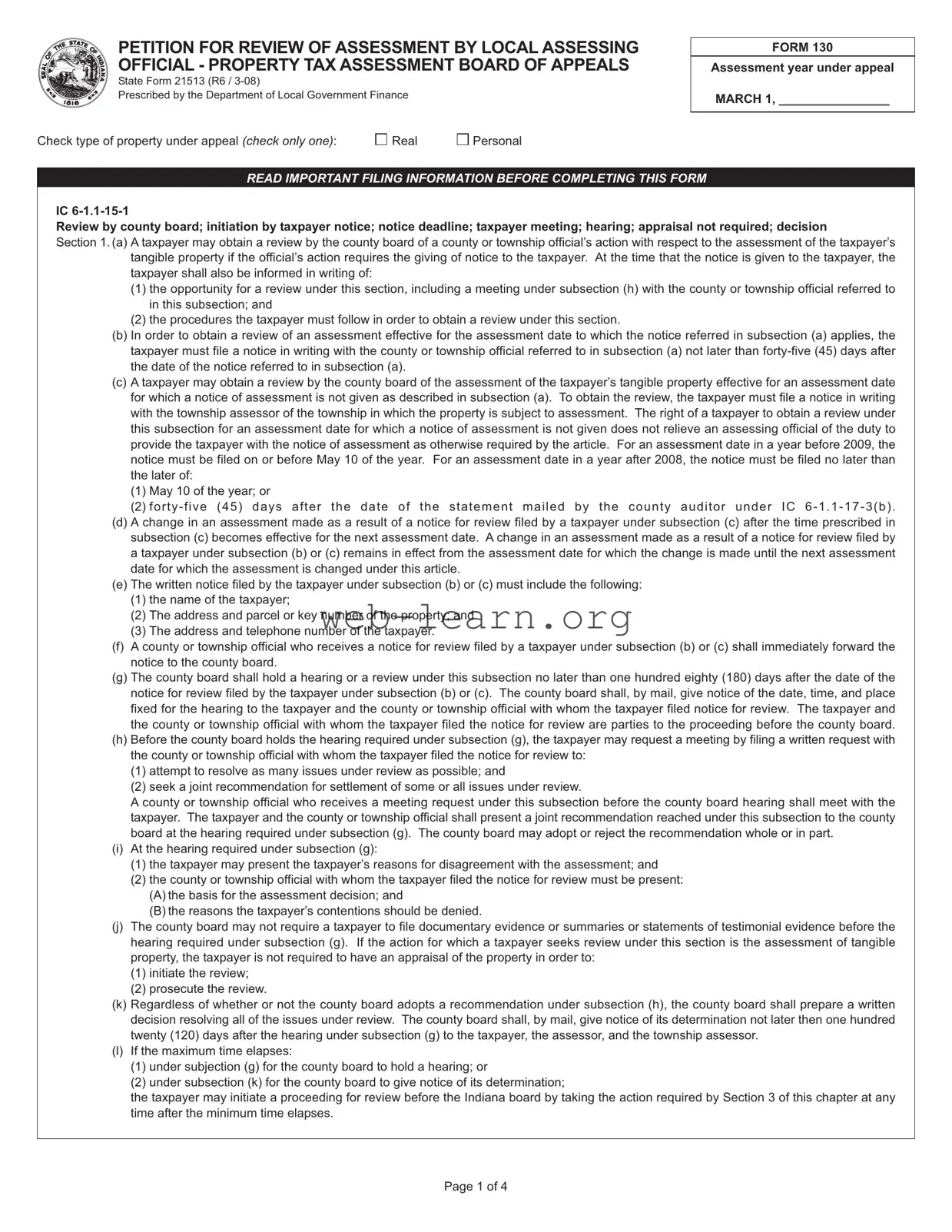
The State of Indiana Form 130 serves as a crucial tool for taxpayers seeking to challenge property assessments made by local officials. This petition allows individuals to request a review of their tangible property assessments, whether they pertain to real or personal property. Taxpayers must initiate this process within specific timeframes, typically within 45 days of receiving notice of the assessment. The form requires essential information, including the property’s address, the taxpayer’s contact details, and the reasons for disputing the assessment. The county board is responsible for holding a hearing within 180 days of the review request, where both the taxpayer and the assessing official can present their cases. Importantly, taxpayers are not required to provide an appraisal to initiate the review, making the process more accessible. Should the county board's decision be unsatisfactory, taxpayers have the option to escalate their appeal to the Indiana Board of Tax Review, adhering to additional deadlines and procedures. Understanding these aspects of Form 130 is vital for any property owner looking to navigate the assessment review process effectively.

PETITION FOR REVIEW OF ASSESSMENT BY LOCAL ASSESSING OFFICIAL - PROPERTY TAX ASSESSMENT BOARD OF APPEALS
State Form 21513 (R6 /
Prescribed by the Department of Local Government Finance
Check type of property under appeal (check only one): |
Real |
Personal |
FORM 130
Assessment year under appeal
MARCH 1, ________________
READ IMPORTANT FILING INFORMATION BEFORE COMPLETING THIS FORM
IC
Review by county board; initiation by taxpayer notice; notice deadline; taxpayer meeting; hearing; appraisal not required; decision
Section 1. (a) A taxpayer may obtain a review by the county board of a county or township official’s action with respect to the assessment of the taxpayer’s tangible property if the official’s action requires the giving of notice to the taxpayer. At the time that the notice is given to the taxpayer, the taxpayer shall also be informed in writing of:
(1)the opportunity for a review under this section, including a meeting under subsection (h) with the county or township official referred to in this subsection; and
(2)the procedures the taxpayer must follow in order to obtain a review under this section.
(b)In order to obtain a review of an assessment effective for the assessment date to which the notice referred in subsection (a) applies, the taxpayer must file a notice in writing with the county or township official referred to in subsection (a) not later than
(c)A taxpayer may obtain a review by the county board of the assessment of the taxpayer’s tangible property effective for an assessment date for which a notice of assessment is not given as described in subsection (a). To obtain the review, the taxpayer must file a notice in writing with the township assessor of the township in which the property is subject to assessment. The right of a taxpayer to obtain a review under this subsection for an assessment date for which a notice of assessment is not given does not relieve an assessing official of the duty to provide the taxpayer with the notice of assessment as otherwise required by the article. For an assessment date in a year before 2009, the notice must be filed on or before May 10 of the year. For an assessment date in a year after 2008, the notice must be filed no later than the later of:
(1)May 10 of the year; or
(2) forty - five (45) days after the date of the statement mailed by the county auditor under IC 6 - 1 . 1 - 17 - 3(b) .
(d)A change in an assessment made as a result of a notice for review filed by a taxpayer under subsection (c) after the time prescribed in subsection (c) becomes effective for the next assessment date. A change in an assessment made as a result of a notice for review filed by a taxpayer under subsection (b) or (c) remains in effect from the assessment date for which the change is made until the next assessment date for which the assessment is changed under this article.
(e)The written notice filed by the taxpayer under subsection (b) or (c) must include the following:
(1)the name of the taxpayer;
(2)The address and parcel or key number of the property; and
(3)The address and telephone number of the taxpayer.
(f)A county or township official who receives a notice for review filed by a taxpayer under subsection (b) or (c) shall immediately forward the notice to the county board.
(g)The county board shall hold a hearing or a review under this subsection no later than one hundred eighty (180) days after the date of the notice for review filed by the taxpayer under subsection (b) or (c). The county board shall, by mail, give notice of the date, time, and place fixed for the hearing to the taxpayer and the county or township official with whom the taxpayer filed notice for review. The taxpayer and the county or township official with whom the taxpayer filed the notice for review are parties to the proceeding before the county board.
(h)Before the county board holds the hearing required under subsection (g), the taxpayer may request a meeting by filing a written request with the county or township official with whom the taxpayer filed the notice for review to:
(1)attempt to resolve as many issues under review as possible; and
(2)seek a joint recommendation for settlement of some or all issues under review.
A county or township official who receives a meeting request under this subsection before the county board hearing shall meet with the taxpayer. The taxpayer and the county or township official shall present a joint recommendation reached under this subsection to the county board at the hearing required under subsection (g). The county board may adopt or reject the recommendation whole or in part.
(i)At the hearing required under subsection (g):
(1)the taxpayer may present the taxpayer’s reasons for disagreement with the assessment; and
(2)the county or township official with whom the taxpayer filed the notice for review must be present:
(A)the basis for the assessment decision; and
(B)the reasons the taxpayer’s contentions should be denied.
(j)The county board may not require a taxpayer to file documentary evidence or summaries or statements of testimonial evidence before the hearing required under subsection (g). If the action for which a taxpayer seeks review under this section is the assessment of tangible property, the taxpayer is not required to have an appraisal of the property in order to:
(1)initiate the review;
(2)prosecute the review.
(k)Regardless of whether or not the county board adopts a recommendation under subsection (h), the county board shall prepare a written decision resolving all of the issues under review. The county board shall, by mail, give notice of its determination not later then one hundred twenty (120) days after the hearing under subsection (g) to the taxpayer, the assessor, and the township assessor.
(l)If the maximum time elapses:
(1)under subjection (g) for the county board to hold a hearing; or
(2)under subsection (k) for the county board to give notice of its determination;
the taxpayer may initiate a proceeding for review before the Indiana board by taking the action required by Section 3 of this chapter at any time after the minimum time elapses.
Page 1 of 4

IMPORTANT FILING INFORMATION (continued)
IC
Review by Indiana board; initiation by petition of taxpayer or county assessor; petition deadline and form; appraisal not required; decision
Section 3.(a) A taxpayer may obtain a review by the Indiana board of a county board's action with respect to the following:
(1)The assessment of that taxpayer's tangible property if the county board's action requires the giving of notice to the taxpayer.
(2)The exemption of that taxpayer's tangible property if the taxpayer receives a notice of an exemption determination by the county board under IC
(b)The county assessor is the party to the review under this section to defend the determination of the county board. At the time the notice of that determination is given to the taxpayer, the taxpayer shall also be informed in writing of:
(1)the taxpayer's opportunity for review under this section; and
(2)the procedures the taxpayer must follow in order to obtain review under this section.
(c)A county assessor who dissents from the determination of an assessment or an exemption by the county board may obtain a review of the assessment or the exemption by the Indiana board.
(d)In order to obtain a review by the Indiana board under this section, the party must, not later than
(1)file a petition for review with the Indiana board; and
(2)mail a copy of the petition to the other party.
(e)The Indiana board shall prescribe the form of the petition for review of an assessment determination or an exemption by the county board. The Indiana board shall issue instructions for completion of the form. The form and the instructions must be clear, simple, and understandable to the average individual. A petition for review of such a determination must be made on the form prescribed by the Indiana board. The form must require the petitioner to specify the reasons why the petitioner believes that the assessment determination or the exemption determination by the county board is erroneous.
(f)If the action for which a taxpayer seeks review under this section is the assessment of tangible property, the taxpayer is not required to have an appraisal of the property in order to do the following:
(1)Initiate the review.
(2)Prosecute the review.
GENERAL INSTRUCTIONS:
1.Please print or type.
2.The petitioner should complete Section I, Section II, and Section III of this form.
3.The petition must be signed by the petitioner or an authorized representative. A representative must attach a notarized power of attorney unless the representative is a duly authorized employee of corporate officer of the taxpayer.
Is a power of attorney attached? |
Yes |
No |
4.Certified tax representatives must attach a Tax Representative Disclosure statement. 50 IAC
As a result of filing this petition, the assessment may increase, may decrease, or may stay the same.
SECTION I: PROPERTY & PETITIONER INFORMATION
County |
Township |
Parcel or key number (for real property only) |
|
|
|
|
|
Address of property being appealed (number and street, city state, and ZIP code) |
|
|
|
|
|
|
|
Legal description on Form 11 or Property Record card (for real property), or business name (for personal property) |
|
|
|
|
|
|
|
Name of property owner |
|
Telephone number of property owner |
|
|
|
( |
) |
|
|
|
|
Mailing address of property owner (number and street, city state, and ZIP code) |
|
|
|
|
|
|
|
Name of authorized representative (if different from owner) |
|
Telephone number of authorized representative |
|
|
|
( |
) |
|
|
|
|
Mailing address of authorized representative (number and street, city state, and ZIP code)
Page 2 of 4
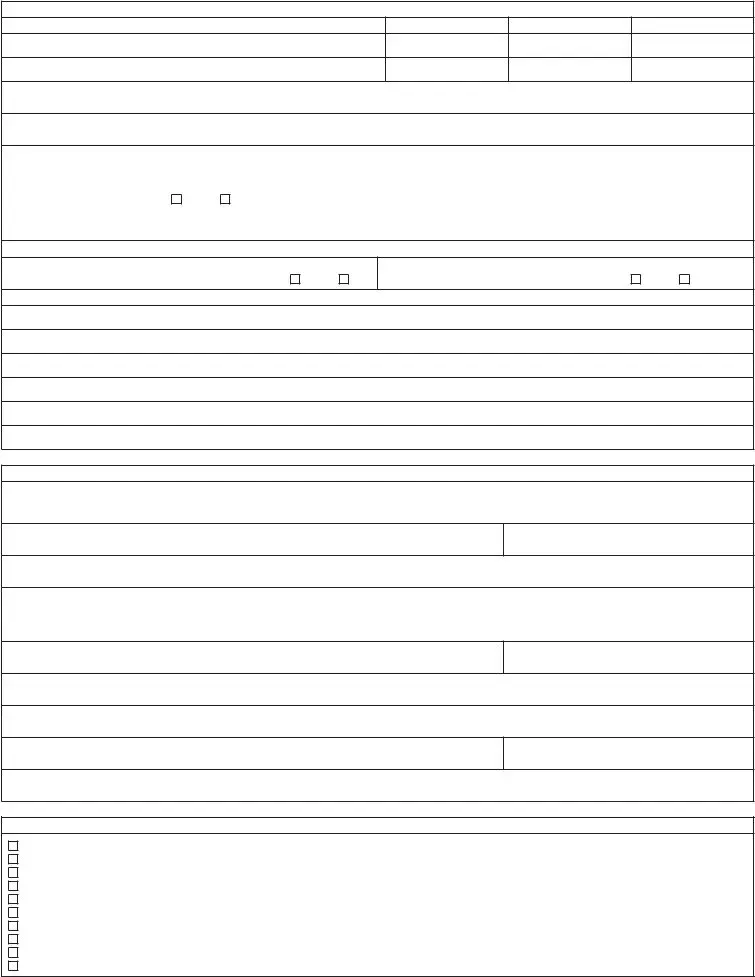
SECTION II: REASON FOR APPEAL
Land |
Improvements |
Personal Property |
The property described in Section I is currently assessed at:
The petitioner contends that the property should be assessed at:
Present use for the property
Use for which property was designed
Classification of property (commercial, residential, etc.)
Was property sold in the last three years? |
|
If yes, date of sale (month, day, year) |
Sale price |
Yes |
No |
|
|
|
|
|
|
If the property was sold in the last three years, attach the purchase agreement, escrow statement, closing statement, or other evidence, if available. If buyer and seller were or are related or had any common business interests, attach an explanation of the relationship.
If the property was not sold but was listed for sale in the past three years, attach a copy of the listing agreement or other available evidence.
Do you intend to present the testimony or report of a professional assessor / appraiser?
Yes |
No |
Is the property valued higher than comparable properties?
Yes
No
If yes, attach the owner’s name and address of each comparable property and explain how the property is comparable to the property being appealed.
The requested change in assessed value is justified for the following reasons: (Give specific reasons. Do not give conclusions such as the assessment is too high.)
SECTION III: SIGNATURES
Petitioner, taxpayer, or duly authorized employee or corporate officer of the taxpayer
I certify that my entries in Section I and Section II are accurate to the best of my knowledge and belief. I also understand that by appealing my assessment, my assessment may increase, may decrease, or may remain the same.
Signature of petitioner, taxpayer, or duly authorized officer
Date of signature (month, day, year)
Printed or typed name of petitioner, taxpayer, or duly authorized officer
Tax representative
I certify that the entries in Section I and Section II are accurate to the best of my knowledge and belief. I certify that I have viewed this property, the property record card, and Form 11 or Form 113, and that I have the authority to file this appeal on behalf of the taxpayer. I certify that I have made all necessary disclosures to my client, pursuant to 50 IAC
Signature of tax representative
Date of signature (month, day, year)
Printed or typed name of tax representative
Attorney representative
I certify that my entries in Section I and Section II are accurate to the best of my knowledge and belief.
Signature of attorney representative
Date of signature (month, day, year)
Printed or typed name of attorney representative
CHECKLIST
I have reviewed Form 11 RA, Form 11 CI, or Form 113. I have reviewed the property record card.
If I am appealing both real and personal property assessments, I have filed separate petitions for each property. I have checked the type of property under appeal (real or personal) at the top of page one.
I have completed Section I, Section II, and Section III of this petition.
I have given specific reasons for the requested change in value in Section II of this petition.
If this petition is being filed by an authorized tax representative, a duly executed power of attorney and a Tax Representative Disclosure statement is attached. I have signed this petition.
I understand that I must submit the original and one copy of this form to the assessing official. If there are other related parcels currently under appeal, a listing of these parcels is attached.
Page 3 of 4
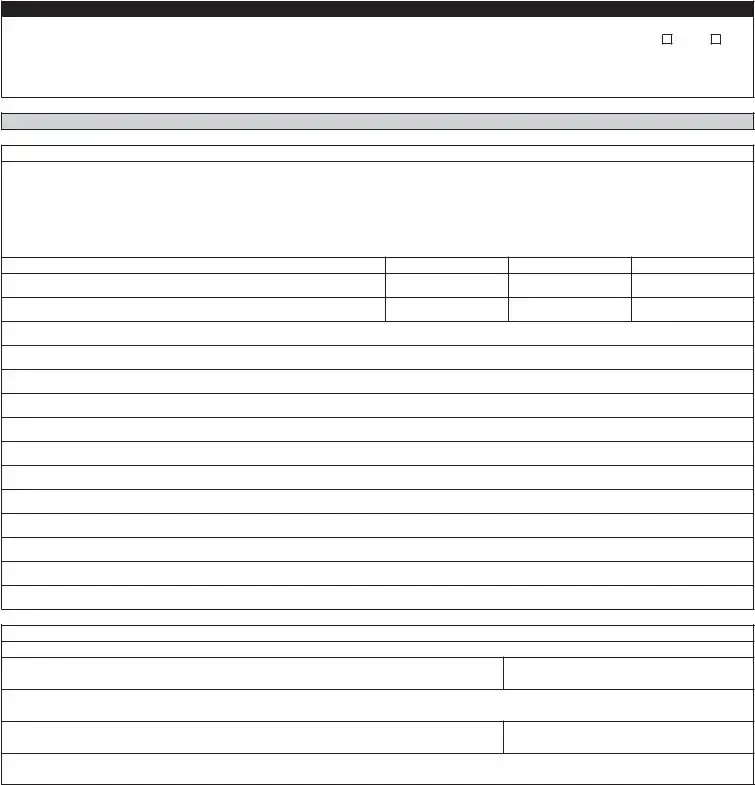
FOR ASSESSING OFFICIAL USE ONLY
1. Date notice was sent to taxpayer (month, day, year) |
2. Date petition for review was filed by petitioner (month, day, year) |
3. Petition for review timely filed? |
|
|
|
Yes |
No |
|
|
|
|
Signature of assessor |
Date of signature (month, day, year) |
|
|
|
|
|
|
If the answer to number 3 above is “No”, the assessor shall notify the petitioner that the petition was not timely filed.
THE FOLLOWING SECTION IS FOR THE ASSESSOR / PETITIONER CONFERENCE
SECTION IV: RESULTS OF ASSESSOR / PETITIONER CONFERENCE
Before the county board holds the hearing required under IC
(1)attempt to resolve as many issues under review as possible; and
(2)seek a joint recommendation for settlement of some or all of the issues under review.
A county or township official who receives a meeting request under this subsection before the county board hearing shall meet with the taxpayer. The taxpayer and the county or township official shall present a joint recommendation reached under this subsection to the county board at the hearing required under IC
Land |
Improvements |
Personal Property |
The petitioner contends that the property should be assessed at:
The assessing official contends that the property should be assessed at:
If no agreement can be reached, explain the reasons for disagreement. If a change in assessed value is being made, explain the reason for the change.
SIGNATURES
The values listed above and the explanation given accurately reflect my opinion regarding this property.
Signature of assessing official
Date of signature (month, day, year)
Printed or typed name of assessing official
Signature of taxpayer or authorized representative
Date of conference (month, day, year)
Printed or typed name of taxpayer or authorized representative
Page 4 of 4
| Fact Name | Fact Description |
|---|---|
| Statehood | Indiana became the 19th state of the United States on December 11, 1816. |
| Capital City | The capital and largest city of Indiana is Indianapolis. |
| Geography | Indiana is located in the Midwestern region of the United States and is bordered by Michigan, Ohio, Kentucky, Illinois, and the Wabash River. |
| Population | As of 2020, Indiana had an estimated population of approximately 6.7 million people. |
| Economy | Indiana's economy is diverse, with major sectors including manufacturing, agriculture, and services. |
| Education | Indiana is home to several notable universities, including Indiana University and Purdue University. |
| State Flower | The peony was designated as the state flower of Indiana in 1957. |
| State Bird | The northern cardinal is recognized as the state bird of Indiana. |
| Governing Law | Property tax assessment appeals in Indiana are governed by IC 6-1.1-15-1 and IC 6-1.1-15-3. |
Filling out the State of Indiana Form 130 is an essential step for taxpayers who wish to appeal their property tax assessment. This form allows you to formally request a review of the assessment made by local officials. Completing the form accurately ensures that your appeal is processed in a timely manner.
The Indiana Form 130 is a petition used by taxpayers to request a review of property assessments made by local assessing officials. If you believe your property has been incorrectly assessed, this form allows you to initiate a formal review process with the county Property Tax Assessment Board of Appeals.
Any taxpayer who owns tangible property that has been assessed can file a Form 130. This includes individuals and businesses that believe their property has been overvalued or incorrectly classified for tax purposes.
You must file your Form 130 within forty-five (45) days of receiving a notice regarding your property assessment. If no notice was received, the deadline is typically May 10 of the assessment year for properties assessed before 2009. For properties assessed after 2008, the deadline is either May 10 or forty-five days after receiving a statement from the county auditor, whichever is later.
The form requires specific details, including:
No, you are not required to have an appraisal of your property to file a Form 130. You can initiate and prosecute your review without this documentation, although providing evidence can strengthen your case.
After you submit your Form 130, the county board will schedule a hearing within one hundred eighty (180) days. You will receive notice of the hearing date, and both you and the assessing official will have the opportunity to present your arguments regarding the assessment.
Yes, you can request a meeting with the county or township official before the hearing. This meeting aims to resolve issues and potentially reach a joint recommendation for the county board to consider during the hearing.
If you disagree with the outcome of the county board's decision, you have the right to appeal to the Indiana Board of Tax Review. This must be done within forty-five (45) days of receiving the county board's determination.
If your Form 130 is deemed not timely filed, the assessor will notify you. It is crucial to adhere to deadlines to ensure your appeal is considered. If you miss the deadline, you may lose your right to contest the assessment for that year.
Filling out the State of Indiana Form 130 can be a straightforward process, but many people make common mistakes that can hinder their appeal. One frequent error is failing to check the correct type of property under appeal. It's essential to select either "Real" or "Personal" property, as checking both can lead to confusion and delays.
Another common mistake is not providing complete information in Section I. This section requires details such as the property address, parcel number, and contact information. Omitting any of these details can result in your petition being deemed incomplete, which could delay the review process.
Many individuals overlook the importance of providing specific reasons for the appeal in Section II. Simply stating that the assessment is "too high" is not sufficient. Instead, it's crucial to outline clear, detailed reasons that justify the requested change in assessed value. This helps the reviewing body understand your perspective better.
Another misstep is failing to attach necessary documentation. If the property was sold in the last three years, you must include relevant documents like the purchase agreement or closing statement. Skipping this step can weaken your case significantly.
People often forget to sign the petition. This may seem minor, but without a signature, the petition cannot be processed. Ensure that both the taxpayer and any authorized representatives sign the form where indicated.
Not meeting the filing deadline is another critical mistake. The petition must be submitted within 45 days of receiving the notice of assessment. Missing this deadline can result in losing the right to appeal, so it's vital to keep track of dates and submit your petition on time.
Some individuals mistakenly believe that they do not need to include a power of attorney when filing through a representative. If you are using someone else to file on your behalf, ensure that a notarized power of attorney is attached, unless that person is a corporate officer or an employee of the taxpayer.
Additionally, failing to review the checklist at the end of the form can lead to oversights. This checklist is designed to help ensure that all necessary steps have been completed before submission. Ignoring it can result in incomplete filings.
Another common error involves not submitting the original form along with a copy. It's important to provide both to the assessing official to ensure that your appeal is properly logged and processed.
Finally, some people do not take the opportunity to request a meeting with the assessing official before the hearing. This meeting can be beneficial for resolving issues amicably and may lead to a joint recommendation, which can be presented to the county board.
The State of Indiana Form 130 is used for appealing property tax assessments. When filing this form, several other documents may also be required to support the appeal process. Below is a list of additional forms and documents that are commonly used in conjunction with the Form 130.
These documents can play a vital role in the property tax assessment appeal process. Having them prepared and organized can assist in presenting a strong case during the review and hearing stages.
When filling out the State of Indiana Form 130, it is essential to follow certain guidelines to ensure your petition is processed smoothly. Below is a list of things you should and shouldn't do.
Understanding the process of property tax assessment and appeals in Indiana can be complicated. Here are nine common misconceptions about the State of Indiana Form 130, which is used for petitioning a review of property assessments.
This is not true. Taxpayers are not required to have an appraisal to initiate or prosecute a review of their property assessment.
There are strict deadlines. A taxpayer must file a notice in writing within 45 days after receiving notice of the assessment.
While a hearing is typically held, it is contingent upon the timely filing of the petition and the specifics of the case.
Initially, appeals are made to the county board. Only after that can a taxpayer escalate the appeal to the Indiana Board if needed.
The county board is required to hold a hearing where both the taxpayer and the assessing official present their cases before any changes are made.
Taxpayers can appeal even if they did not receive a notice, but they must still file within the specified time frame for the relevant assessment year.
While there are similarities, there are distinct forms and processes for appealing assessments on real versus personal property.
In fact, taxpayers can request a meeting to resolve issues before the hearing, which may facilitate a quicker resolution.
The county board has up to 120 days to notify the taxpayer of its decision after the hearing concludes.
By clarifying these misconceptions, taxpayers can better navigate the property assessment appeal process in Indiana.
When filling out the State of Indiana 130 Short Form, it’s essential to keep several key points in mind:
By following these guidelines, you can navigate the petition process more effectively and advocate for a fair assessment of your property.