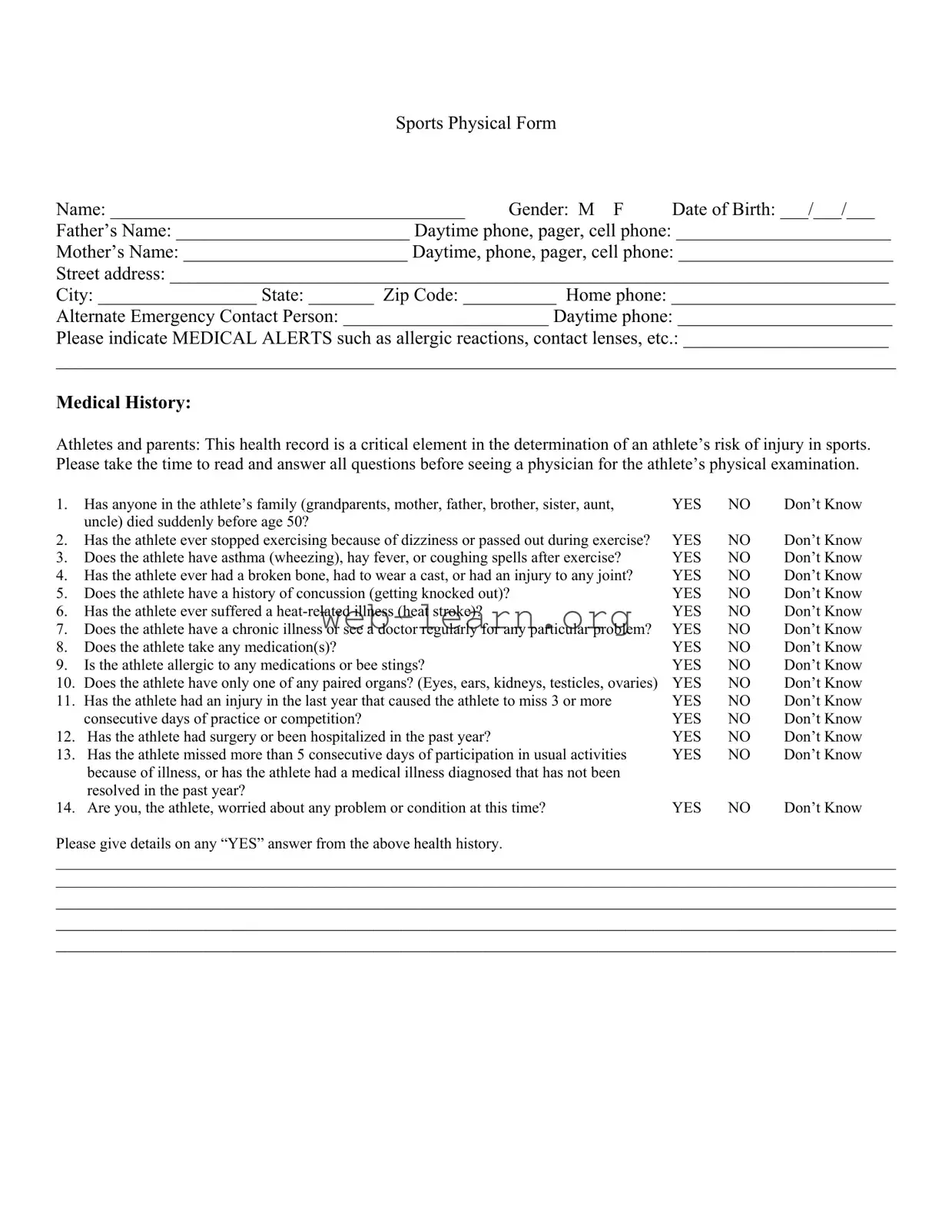
The Sports Physical form serves as a vital tool in ensuring the health and safety of student-athletes. It collects essential information about the athlete, including personal details such as name, gender, and date of birth, alongside contact information for parents or guardians. This form also emphasizes the importance of medical history, prompting both athletes and their families to disclose any relevant health concerns. Questions regarding family medical history, past injuries, and current medications are critical for assessing potential risks. Additionally, the form includes a section for a physician to conduct a thorough physical examination, documenting vital statistics like height, weight, and blood pressure, as well as evaluating various body systems. The physician's assessment culminates in a certification of the athlete's medical readiness to participate in sports, while also allowing for any necessary participation restrictions. By carefully completing this form, families contribute to a safer sporting environment, helping to mitigate risks and promote the well-being of young athletes.
Sports Physical Form
Name: ______________________________________ Gender: M F Date of Birth: ___/___/___
Father’s Name: _________________________ Daytime phone, pager, cell phone: _______________________
Mother’s Name: ________________________ Daytime, phone, pager, cell phone: _______________________
Street address: _____________________________________________________________________________
City: _________________ State: _______ Zip Code: __________ Home phone: ________________________
Alternate Emergency Contact Person: ______________________ Daytime phone: _______________________
Please indicate MEDICAL ALERTS such as allergic reactions, contact lenses, etc.: ______________________
__________________________________________________________________________________________
Medical History:
Athletes and parents: This health record is a critical element in the determination of an athlete’s risk of injury in sports. Please take the time to read and answer all questions before seeing a physician for the athlete’s physical examination.
1. |
Has anyone in the athlete’s family (grandparents, mother, father, brother, sister, aunt, |
YES |
NO |
Don’t Know |
|
uncle) died suddenly before age 50? |
|
|
|
2. |
Has the athlete ever stopped exercising because of dizziness or passed out during exercise? |
YES |
NO |
Don’t Know |
3. |
Does the athlete have asthma (wheezing), hay fever, or coughing spells after exercise? |
YES |
NO |
Don’t Know |
4. |
Has the athlete ever had a broken bone, had to wear a cast, or had an injury to any joint? |
YES |
NO |
Don’t Know |
5. |
Does the athlete have a history of concussion (getting knocked out)? |
YES |
NO |
Don’t Know |
6. |
Has the athlete ever suffered a |
YES |
NO |
Don’t Know |
7. |
Does the athlete have a chronic illness or see a doctor regularly for any particular problem? |
YES |
NO |
Don’t Know |
8. |
Does the athlete take any medication(s)? |
YES |
NO |
Don’t Know |
9. |
Is the athlete allergic to any medications or bee stings? |
YES |
NO |
Don’t Know |
10. |
Does the athlete have only one of any paired organs? (Eyes, ears, kidneys, testicles, ovaries) |
YES |
NO |
Don’t Know |
11. |
Has the athlete had an injury in the last year that caused the athlete to miss 3 or more |
YES |
NO |
Don’t Know |
|
consecutive days of practice or competition? |
YES |
NO |
Don’t Know |
12. Has the athlete had surgery or been hospitalized in the past year? |
YES |
NO |
Don’t Know |
|
13. Has the athlete missed more than 5 consecutive days of participation in usual activities |
YES |
NO |
Don’t Know |
|
|
because of illness, or has the athlete had a medical illness diagnosed that has not been |
|
|
|
|
resolved in the past year? |
|
|
|
14. |
Are you, the athlete, worried about any problem or condition at this time? |
YES |
NO |
Don’t Know |
Please give details on any “YES” answer from the above health history.
____________________________________________________________________________________________________________
____________________________________________________________________________________________________________
__________________________________________________________________________________________
__________________________________________________________________________________________
__________________________________________________________________________________________

PHYSICAL EXAM – TO BE COMPLETED BY PHYSICIAN
Height __________ |
Weight __________ |
Pulse __________ |
Blood Pressure __________ |
Vision: R _____ / _____ uncorrected R _____ / _____ corrected |
L _____ / _____ uncorrected L _____ / _____ corrected |
||
Normal |
Abnormal Findings |
1.Eyes
2.Ears, Nose, Throat
3.Mouth & Teeth
4.Neck
5.Cardiovascular
6.Chest & Lungs
7.Abdomen
8.Skin
9.
10.Muskuloskeletal: ROM, strength, etc.
a.neck
b.spine
c.shoulders
d.arms/ hands
e.hips
f.thighs
g.knees
h.ankles
i.feet
11.Neuromuscular
Initials
Please Print/ Stamp
Physician’s Name ___________________________________________________________________________________
Street Address _____________________________________________________________________________________
City, State, Zip Code ________________________________________________________________________________
Telephone _________________________________________________________________________________________
I certify that I have examined this athlete and found him/her medically qualified to participate in sports. I also certify that I am a licensed medical physician, physician’s assistant, or family nurse practitioner. (Doctor of Chiropractic Medicine is not satisfactory.)
Physician Signature __________________________________________________________ Date __________________
PARTICIPATION RESTRICTIONS: _________________________________________________________________
__________________________________________________________________________________________________
__________________________________________________________________________________________________
| Fact Name | Description |
|---|---|
| Purpose | The Sports Physical form assesses an athlete's health to determine their fitness for participation in sports. |
| Medical History Importance | It includes a medical history section that identifies potential health risks related to sports participation. |
| Parental Involvement | Parents or guardians are required to provide information and consent for the athlete's physical examination. |
| Physician's Role | A licensed physician, physician's assistant, or family nurse practitioner must complete the physical examination section. |
| State-Specific Forms | Many states have specific requirements or forms that must be used, governed by local laws regarding youth sports. |
| Medical Alerts | Athletes must indicate any medical alerts, such as allergies, that could impact their sports participation. |
| Frequency of Use | The form is typically required annually or prior to the start of each sports season, depending on school or league policies. |
Filling out the Sports Physical form is an important step in ensuring the health and safety of an athlete before participating in sports. The form collects essential information about the athlete's medical history and current health status, which will be reviewed by a physician during the physical examination.
The Sports Physical form is designed to assess an athlete's health and fitness level before they participate in sports activities. It helps identify any medical conditions that may pose a risk during physical activity. This form is essential for ensuring the safety of the athlete and is often required by schools and sports organizations.
All athletes participating in school sports or organized athletic programs are typically required to complete the Sports Physical form. This includes students of all ages, from youth leagues to high school sports teams.
The form requires personal information such as the athlete's name, gender, date of birth, and contact information for parents or guardians. Additionally, it includes a medical history section where athletes and their families must answer questions about past injuries, illnesses, and any current medical conditions.
If your child has a medical condition, it is crucial to provide detailed information on the Sports Physical form. Be honest and thorough in answering the medical history questions. Consult with a physician to determine if any special considerations or restrictions should be noted on the form.
The Sports Physical should be completed annually or as required by the specific sports organization. Some schools may have different timelines, so it is important to check with the athletic department for their specific requirements.
The physical examination must be conducted by a licensed medical physician, physician’s assistant, or family nurse practitioner. It is important to note that a Doctor of Chiropractic Medicine is not an acceptable provider for this examination.
If the athlete is not cleared to participate in sports, the physician will provide participation restrictions on the form. It is essential to follow these restrictions to ensure the athlete's safety and health. Parents should discuss any concerns with the physician and consider follow-up care as needed.
If your child has allergies, it is important to indicate this on the Sports Physical form. Be specific about the type of allergies, including any medications or environmental factors. This information will help coaches and medical staff respond appropriately in case of an allergic reaction.
The completed Sports Physical form should be submitted to the school’s athletic department or the designated sports organization. Make sure to keep a copy for your records. Check with the specific organization for any additional submission guidelines.
Filling out the Sports Physical form accurately is essential for ensuring the safety and well-being of young athletes. However, several common mistakes can occur during this process. One significant error is failing to provide complete contact information for parents or guardians. This information is crucial for emergency situations. Incomplete or incorrect phone numbers can delay communication in case of an emergency, potentially putting the athlete at risk.
Another frequent mistake is neglecting to disclose important medical history details. Parents and athletes may overlook past injuries, surgeries, or chronic illnesses that could affect the athlete's participation in sports. For instance, if an athlete has a history of concussions or asthma, this information must be clearly communicated. Omitting such details can lead to inadequate medical assessments and increase the risk of further injury.
Many individuals also misunderstand the importance of the medical alerts section. This part of the form is designed to highlight any allergies or medical conditions that require special attention. Failing to indicate allergies to medications or bee stings can have serious consequences. In the event of an emergency, medical personnel rely on this information to provide appropriate care.
Finally, some parents or athletes may rush through the form and answer questions without fully considering their implications. For example, answering "no" to questions about past injuries or medical conditions without thorough reflection can lead to misrepresentation of the athlete’s health status. This oversight can ultimately result in inadequate preparation for the athlete's safety during sports activities.
When preparing for participation in sports, athletes often need to complete various forms in addition to the Sports Physical form. Each document serves a specific purpose to ensure the athlete's health and safety. Here’s a list of commonly required forms and documents:
Completing these forms accurately and thoroughly is essential for ensuring a safe and successful sports experience. Athletes and their families should take the time to understand each document and its implications. Proper preparation can make a significant difference in an athlete's readiness to participate.
The Sports Physical form is essential for assessing an athlete's health and readiness for sports participation. Several other documents serve similar purposes in different contexts. Here’s a list of eight documents that share similarities with the Sports Physical form:
When filling out the Sports Physical form, it's important to be thorough and accurate. Here are some guidelines to help you navigate the process.
By following these guidelines, you can help ensure that the Sports Physical form is filled out correctly, providing essential information for your health and safety.
In reality, athletes of all ages, including middle school students and those participating in recreational sports, may be required to complete this form.
This form serves a specific purpose: to assess an athlete's health and readiness for sports participation, focusing on injury risk and overall fitness.
While parents can provide information, it is essential to discuss any concerns with a physician during the physical examination.
Medical history includes a range of issues, such as chronic illnesses, allergies, and mental health concerns, which can impact athletic performance.
Different sports may have specific requirements or considerations, and the form may vary accordingly.
It is important to update the form annually or whenever there are significant changes in the athlete's health status.
The goal is to identify any health issues and ensure that the athlete is fit to compete, not just to determine eligibility.
No form can predict injuries. However, it helps identify risks and promotes safer participation in sports.
The signature indicates that a qualified medical professional has assessed the athlete, which is crucial for ensuring safety.
Full disclosure is vital. Undisclosed conditions can lead to serious health risks during sports participation.