When it comes to managing a single-member LLC, having a well-crafted operating agreement is essential. This document serves as the backbone of your business structure, outlining the rules and procedures that govern your operations. While it may seem straightforward, a Single-Member Operating Agreement is more than just a formality; it provides clarity and protection for the owner. Key aspects of this agreement include the definition of ownership, the management structure, and the allocation of profits and losses. Additionally, it addresses important topics such as decision-making authority, the process for adding new members, and the dissolution of the LLC if necessary. By establishing these guidelines, the operating agreement not only helps in maintaining compliance with state laws but also reinforces the separation between personal and business assets, shielding the owner from potential liabilities. In essence, a Single-Member Operating Agreement is a vital tool that lays the groundwork for a successful and legally sound business venture.
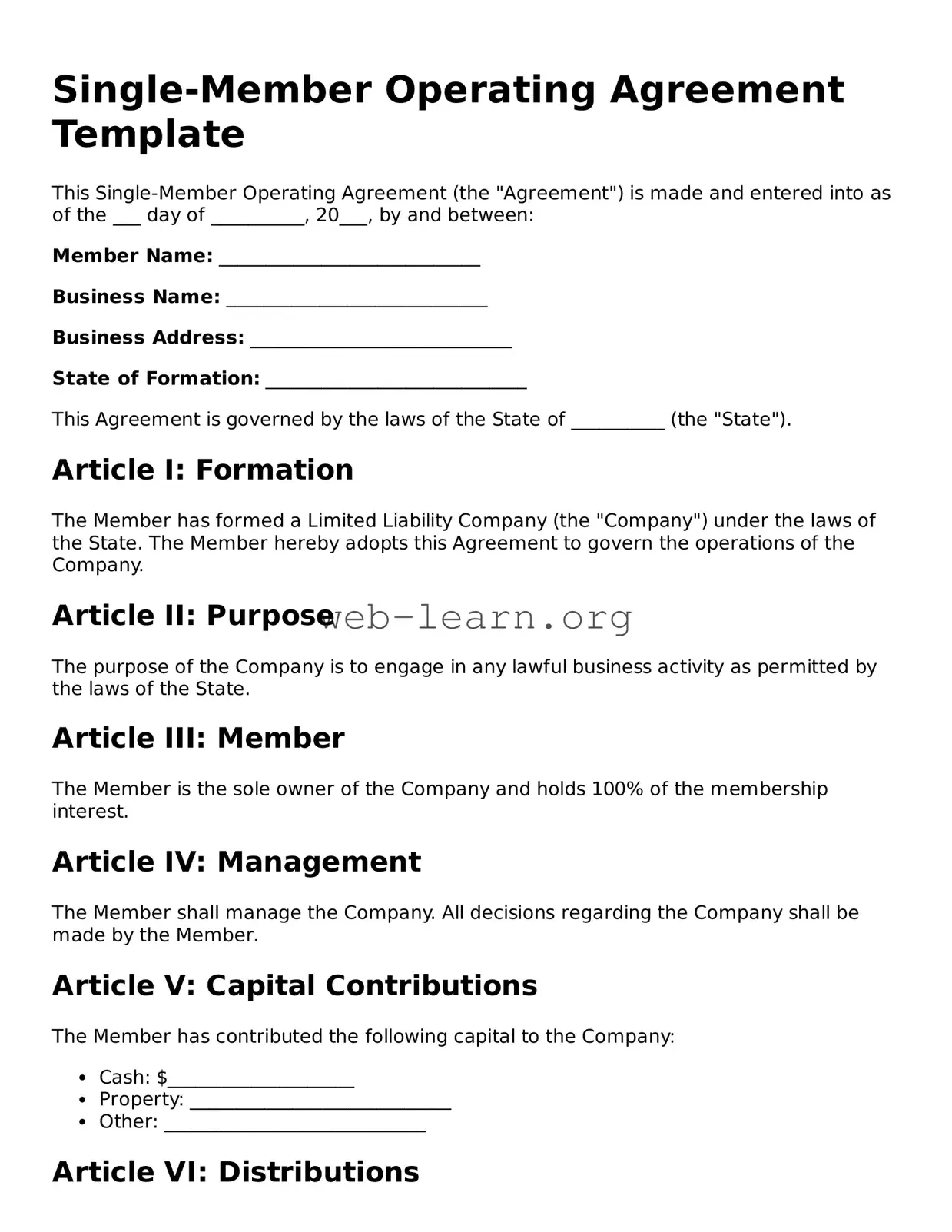
Single-Member Operating Agreement Template
This Single-Member Operating Agreement (the "Agreement") is made and entered into as of the ___ day of __________, 20___, by and between:
Member Name: ____________________________
Business Name: ____________________________
Business Address: ____________________________
State of Formation: ____________________________
This Agreement is governed by the laws of the State of __________ (the "State").
Article I: Formation
The Member has formed a Limited Liability Company (the "Company") under the laws of the State. The Member hereby adopts this Agreement to govern the operations of the Company.
Article II: Purpose
The purpose of the Company is to engage in any lawful business activity as permitted by the laws of the State.
Article III: Member
The Member is the sole owner of the Company and holds 100% of the membership interest.
Article IV: Management
The Member shall manage the Company. All decisions regarding the Company shall be made by the Member.
Article V: Capital Contributions
The Member has contributed the following capital to the Company:
Article VI: Distributions
Distributions of profits shall be made to the Member at the times and in the amounts determined by the Member.
Article VII: Indemnification
The Company shall indemnify the Member to the fullest extent permitted by law against any losses, expenses, or liabilities incurred in connection with the Company.
Article VIII: Amendments
This Agreement may be amended only by a written agreement signed by the Member.
Article IX: Miscellaneous
IN WITNESS WHEREOF, the Member has executed this Agreement as of the date first above written.
Member Signature: ____________________________
Date: ____________________________
| Fact Name | Description |
|---|---|
| Definition | A Single-Member Operating Agreement outlines the management structure and operational guidelines for a single-member LLC. |
| Purpose | This document helps clarify the owner's rights and responsibilities, ensuring smooth business operations. |
| Legal Requirement | While not always required by law, having an operating agreement is highly recommended for legal protection. |
| State-Specific Forms | Each state may have its own version of the form, reflecting local laws and regulations. |
| Governing Law | The operating agreement is governed by the laws of the state in which the LLC is formed. |
| Flexibility | Owners can customize the agreement to fit their specific business needs and preferences. |
| Liability Protection | The agreement helps maintain the limited liability status of the LLC, protecting personal assets. |
| Tax Considerations | It outlines how the business will be taxed, which can affect personal tax filings. |
| Dispute Resolution | The document can include provisions for resolving disputes, providing a clear path forward in conflicts. |
| Amendments | Owners can amend the agreement as needed, allowing for adaptability as the business evolves. |
Filling out a Single-Member Operating Agreement is an important step in formalizing your business structure. This document outlines how your single-member LLC will operate and helps protect your personal assets. Follow the steps below to complete the form accurately.
Once you have filled out the form, review it for accuracy and completeness. It’s advisable to keep a copy for your records. You may also want to consult with a legal professional to ensure everything is in order before finalizing your LLC.
What is a Single-Member Operating Agreement?
A Single-Member Operating Agreement is a legal document that outlines the management structure and operational guidelines for a single-member limited liability company (LLC). This agreement serves as an internal document, detailing how the LLC will operate, how decisions will be made, and how profits and losses will be distributed.
Why do I need a Single-Member Operating Agreement?
Even though a single-member LLC may not be required by law to have an operating agreement, it is highly advisable to create one. This document helps establish your business as a separate legal entity, which can protect your personal assets from business liabilities. Additionally, it provides clarity on your business operations and can be beneficial if you ever decide to bring in additional members.
What should be included in a Single-Member Operating Agreement?
The agreement should cover several key areas:
Is a Single-Member Operating Agreement legally binding?
Yes, once signed, a Single-Member Operating Agreement is legally binding. It serves as a contract between you and your LLC, outlining your rights and responsibilities. However, it is important to ensure that the agreement complies with state laws to be enforceable.
Can I change my Single-Member Operating Agreement later?
Yes, you can amend your operating agreement at any time. It is advisable to document any changes in writing and keep a record of these amendments. This ensures that your agreement remains up-to-date and accurately reflects your business operations.
Do I need to file my Single-Member Operating Agreement with the state?
No, you typically do not need to file your Single-Member Operating Agreement with the state. This document is kept internally within your business records. However, some states may have specific requirements, so it is wise to check local regulations.
Can I draft my own Single-Member Operating Agreement?
Yes, you can create your own operating agreement. Many templates are available online to help guide you. However, it is recommended to consult with a legal professional to ensure that your agreement complies with state laws and adequately protects your interests.
What are the consequences of not having a Single-Member Operating Agreement?
Without an operating agreement, your LLC may be subject to default state laws, which may not align with your intentions for the business. This can lead to complications in management, profit distribution, and liability protection. In worst-case scenarios, it could jeopardize the limited liability status of your LLC.
How does a Single-Member Operating Agreement benefit my business?
A well-crafted operating agreement provides clarity and structure for your business operations. It can help prevent misunderstandings and disputes, streamline decision-making, and enhance your credibility with banks and investors. Additionally, it reinforces the separation between your personal and business assets, which is essential for liability protection.
When filling out the Single-Member Operating Agreement form, individuals often overlook essential details. One common mistake is failing to clearly define the purpose of the business. A vague description can lead to confusion about the business's objectives and operations. It is crucial to articulate the specific activities the business will engage in to ensure clarity and avoid potential disputes in the future.
Another frequent error is neglecting to include the member's name and address accurately. This information is vital for legal identification and communication purposes. Inaccurate or incomplete details can result in difficulties when establishing the business or when legal matters arise. Always double-check that the member's information is precise and up-to-date.
People also often forget to outline the management structure of the business. Even though it is a single-member entity, specifying how decisions will be made and what authority the member holds is important. Omitting this information can lead to misunderstandings about the decision-making process and responsibilities, especially if the business grows or changes over time.
Lastly, many individuals fail to consider the tax implications of their operating agreement. While the form may not directly address tax matters, understanding how the structure affects taxation is essential. Ignoring this aspect can lead to unexpected financial consequences. Consulting a tax professional can provide valuable insights and help ensure that the agreement aligns with tax regulations.
A Single-Member Operating Agreement is a crucial document for individuals who own a single-member limited liability company (LLC). This agreement outlines the management structure, operational procedures, and the rights and responsibilities of the owner. To ensure comprehensive business management and compliance, several other forms and documents are often used alongside the Single-Member Operating Agreement. Below is a list of these essential documents.
Utilizing these forms and documents in conjunction with the Single-Member Operating Agreement can help streamline business operations and ensure compliance with legal requirements. Each document plays a vital role in the establishment and ongoing management of the LLC, contributing to its success and sustainability.
The Single-Member Operating Agreement is a crucial document for individuals who own a single-member limited liability company (LLC). Several other documents serve similar purposes in defining the structure and operations of various business entities. Here are ten documents that share similarities with the Single-Member Operating Agreement:
When filling out the Single-Member Operating Agreement form, it is essential to adhere to certain guidelines to ensure accuracy and legality. Below is a list of things to do and avoid during this process.
When it comes to Single-Member Operating Agreements, there are several misconceptions that often arise. Understanding these can help you make informed decisions about your business. Here’s a list of common misunderstandings:
By addressing these misconceptions, you can better understand the importance of a Single-Member Operating Agreement and how it can benefit your business.
When creating a Single-Member Operating Agreement, several key considerations can enhance its effectiveness and clarity. Here are some essential takeaways:
By paying attention to these elements, you can create a robust Single-Member Operating Agreement that serves your business well.