When renting a self-storage unit, a clear and comprehensive rental agreement is essential for both the tenant and the storage facility. This document outlines the terms and conditions of the rental, ensuring that both parties understand their rights and responsibilities. Key aspects of the Self-Storage Rental Agreement form include the duration of the rental period, payment details, and the rental fees involved. Additionally, it typically covers the rules regarding access to the unit, security measures in place, and any restrictions on the type of items that can be stored. The agreement may also specify the procedures for terminating the rental, including notice requirements and potential penalties for early termination. Understanding these components is crucial for anyone looking to secure their belongings in a self-storage facility, as it helps prevent misunderstandings and protects both the renter and the provider.
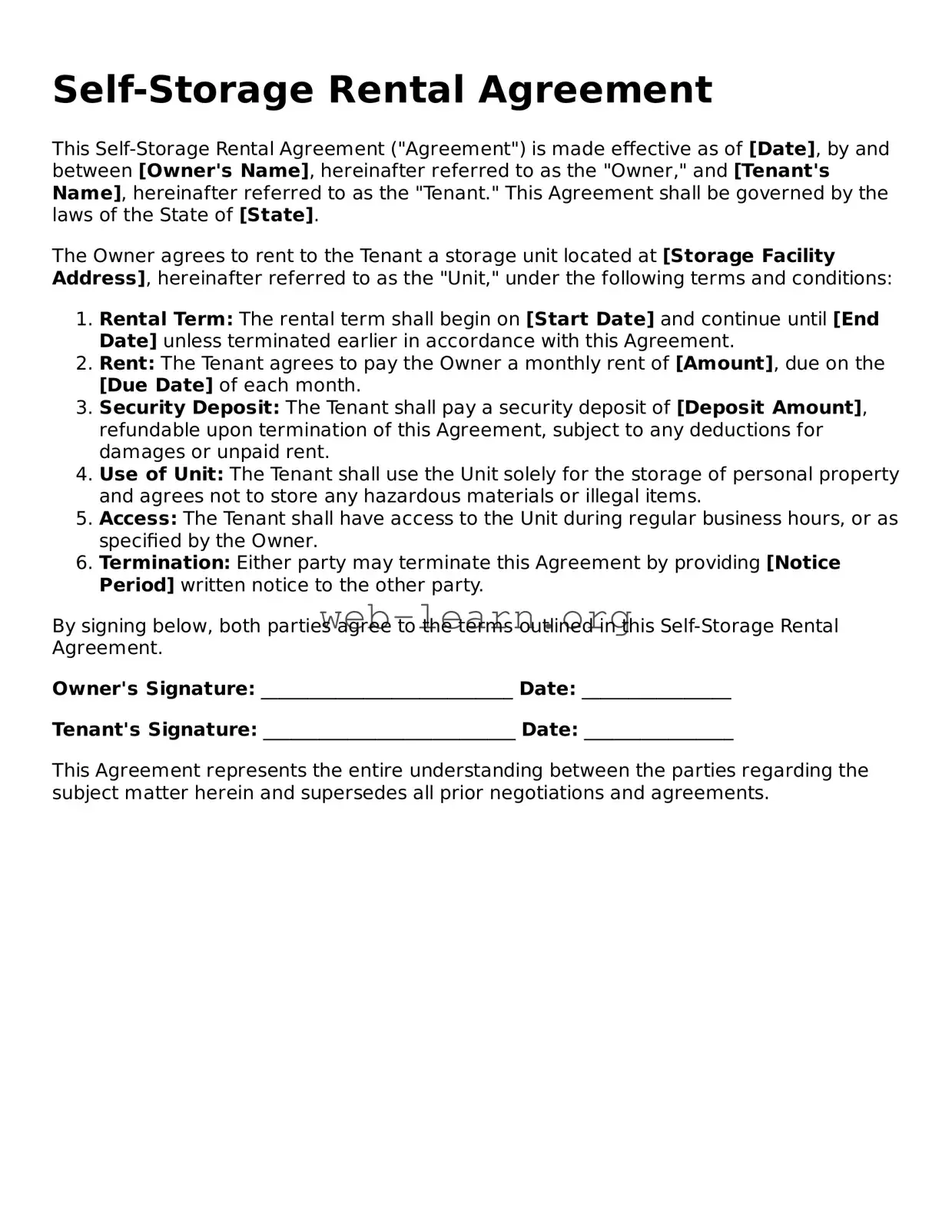
Self-Storage Rental Agreement
This Self-Storage Rental Agreement ("Agreement") is made effective as of [Date], by and between [Owner's Name], hereinafter referred to as the "Owner," and [Tenant's Name], hereinafter referred to as the "Tenant." This Agreement shall be governed by the laws of the State of [State].
The Owner agrees to rent to the Tenant a storage unit located at [Storage Facility Address], hereinafter referred to as the "Unit," under the following terms and conditions:
By signing below, both parties agree to the terms outlined in this Self-Storage Rental Agreement.
Owner's Signature: ___________________________ Date: ________________
Tenant's Signature: ___________________________ Date: ________________
This Agreement represents the entire understanding between the parties regarding the subject matter herein and supersedes all prior negotiations and agreements.
| Fact Name | Description |
|---|---|
| Definition | A self-storage rental agreement is a contract between a storage facility and a customer for the rental of storage space. |
| Duration | The agreement typically specifies the rental period, which can be month-to-month or for a fixed term. |
| Payment Terms | It outlines the payment schedule, including due dates and acceptable payment methods. |
| Security Deposit | Many agreements require a security deposit, which may be refundable upon the termination of the rental. |
| Access Rights | The contract details the customer's rights to access the storage unit, including hours of operation. |
| Liability Limitations | Liability clauses often limit the facility's responsibility for damage or loss of stored items. |
| Governing Law | The agreement is subject to state laws, which can vary significantly. For example, in California, the governing law is the California Self-Service Storage Facility Act. |
| Termination Conditions | Conditions under which either party can terminate the agreement are typically outlined, including notice requirements. |
Completing the Self-Storage Rental Agreement form is an important step in securing your storage unit. It is essential to provide accurate information to ensure a smooth rental process. Follow these steps to fill out the form correctly.
Once you have filled out the form, you can expect to receive confirmation of your rental agreement. This may include further instructions regarding payment and access to your storage unit.
What is a Self-Storage Rental Agreement?
A Self-Storage Rental Agreement is a legal document that outlines the terms and conditions between a storage facility and the renter. It specifies the rights and responsibilities of both parties regarding the rental of a storage unit. This agreement typically includes details such as rental fees, payment terms, security deposits, and the duration of the rental period.
What information is included in the agreement?
The agreement usually contains the following information:
How long does the rental agreement last?
The duration of the rental agreement can vary. Most agreements are set for a month-to-month basis, allowing flexibility for renters. However, some facilities may offer longer-term contracts. It’s essential to review the specific terms in your agreement to understand the duration and any renewal options.
Can I terminate the rental agreement early?
Yes, many agreements allow for early termination. However, it’s crucial to check the specific terms outlined in your contract. Some facilities may require a notice period or charge a fee for early termination. Understanding these details can help you avoid unexpected costs.
What happens if I miss a payment?
If a payment is missed, the facility typically has the right to charge late fees. Continued non-payment may lead to additional penalties, including the potential loss of access to your unit. Ultimately, if payments remain unpaid, the facility may initiate a lien process, which could result in the sale of your stored items. Always communicate with the facility if you anticipate payment issues.
Do I need insurance for my stored items?
While insurance is not always required, it is highly recommended. Most storage facilities do not cover the value of your belongings. You can either purchase insurance through the facility or check if your homeowner's or renter's insurance policy covers items in storage. Protecting your belongings can provide peace of mind.
Filling out a Self-Storage Rental Agreement can seem straightforward, but many people make common mistakes that can lead to complications later on. Understanding these pitfalls can help ensure a smoother rental experience.
One frequent error is not reading the entire agreement before signing. Many individuals rush through the process, skipping important details. This can result in misunderstandings about payment terms, security deposits, or even the duration of the rental. Always take the time to thoroughly review the document.
Another mistake involves inaccurate personal information. Whether it’s a misspelled name or incorrect contact details, such errors can create issues when the storage facility needs to reach you. Ensure that all information is correct and up-to-date before submitting the form.
People often overlook the importance of understanding the payment schedule. Some rental agreements may require monthly payments, while others might involve different terms. Failing to grasp these details can lead to unexpected charges or late fees. Clarify the payment structure to avoid surprises.
Additionally, many renters forget to specify the type of items being stored. This can be crucial for insurance purposes or for the facility’s regulations. If the agreement requires a list of items, make sure to include all relevant details to protect your belongings.
Some individuals neglect to inquire about insurance options. While the storage facility may offer coverage, it’s essential to understand what is included. If you have valuable items, consider additional insurance to safeguard against potential loss or damage.
Another common oversight is failing to check the facility’s access hours. Some storage units have limited access times, which can be inconvenient. Knowing when you can access your belongings is vital for planning your visits.
People sometimes forget to ask about the facility’s security measures. Understanding how your items will be protected can provide peace of mind. Inquire about surveillance, lighting, and access controls to ensure your belongings are safe.
Moreover, many renters do not document the condition of their storage unit before moving in. Taking photos or noting any existing damage can protect you from being held responsible for issues that were present before your rental began.
Lastly, individuals may overlook the importance of keeping a copy of the signed agreement. Having a copy on hand can be invaluable if any disputes arise or if you need to refer back to the terms later. Always retain a copy for your records.
By being mindful of these common mistakes, you can navigate the Self-Storage Rental Agreement process with confidence. Taking the time to review and understand the terms will lead to a more positive experience.
When renting a self-storage unit, several forms and documents may accompany the Self-Storage Rental Agreement. Each of these documents serves a specific purpose, helping both the renter and the facility manager understand their rights and responsibilities. Below is a list of commonly used forms that you might encounter.
These forms and documents play a vital role in the self-storage rental process. They help protect both the renter and the facility, ensuring a smooth experience for everyone involved. Understanding each document can make the rental process clearer and more efficient.
When filling out the Self-Storage Rental Agreement form, it is important to follow certain guidelines to ensure a smooth process. Here are ten things to keep in mind:
By following these guidelines, you can help ensure that your self-storage experience is positive and hassle-free.
Understanding the Self-Storage Rental Agreement form is essential for anyone considering renting a storage unit. However, several misconceptions can lead to confusion. Below is a list of common misconceptions about this agreement:
Being informed about these misconceptions can help you make better decisions when renting a self-storage unit. Always read the rental agreement carefully and ask questions if anything is unclear.
When it comes to filling out and using a Self-Storage Rental Agreement form, understanding the key components can make a significant difference. Here are some essential takeaways:
By keeping these takeaways in mind, you can navigate the self-storage rental process with greater confidence and clarity.
Rent Increase Notice Sample - A straightforward notification that aims to reduce misunderstandings.
Photobooth Rental Contract - Includes a description of the photo booth’s design and style.