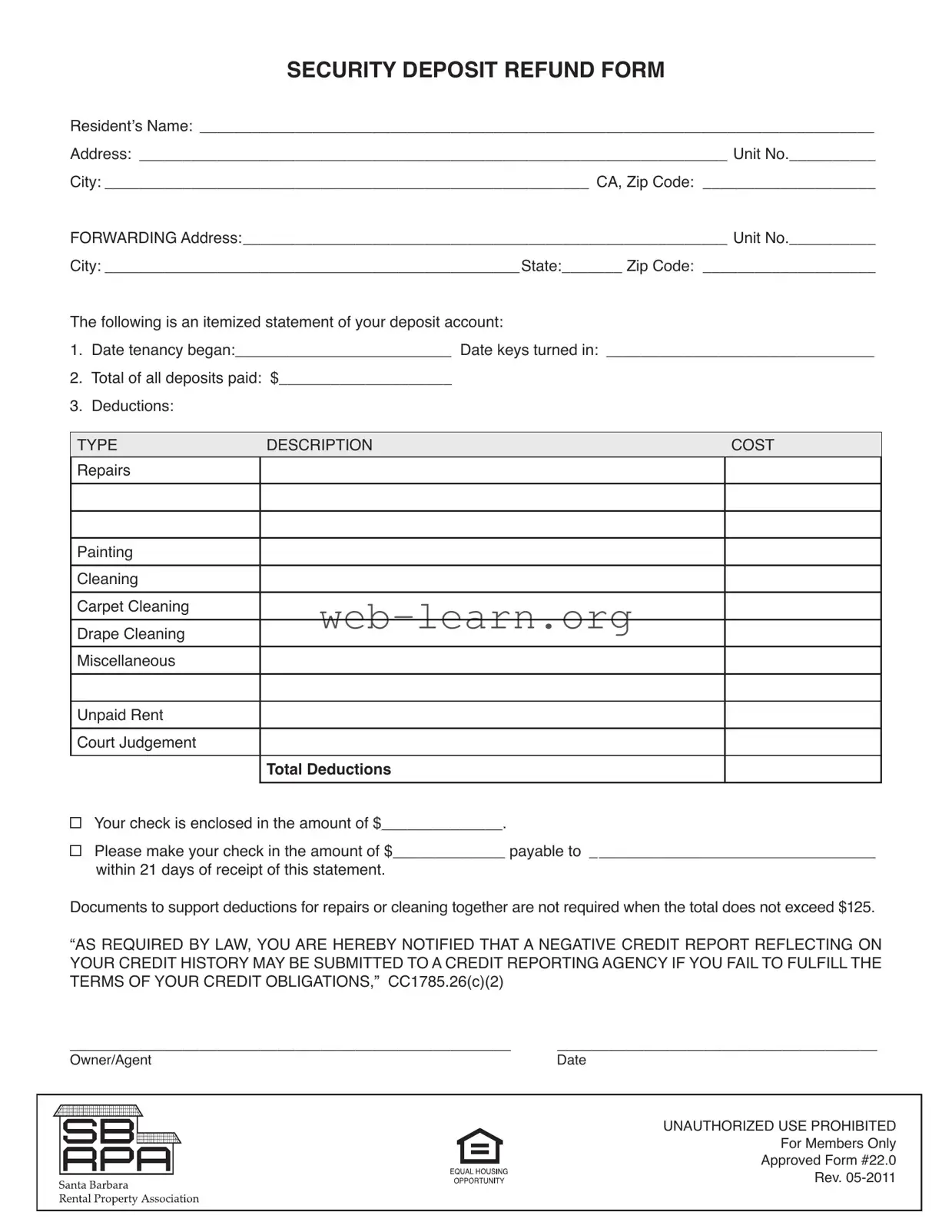
The Security Deposit Deductions form serves as a vital tool for both tenants and landlords in the rental process. This form outlines the necessary information regarding the return of a tenant's security deposit after their lease ends. It includes spaces for the resident's name, address, and forwarding address, ensuring that all parties can communicate effectively. Key details about the tenancy, such as the start date and when the keys were returned, are also recorded. The form features an itemized statement that lists total deposits paid and any deductions that may apply, including costs for repairs, cleaning, and unpaid rent. This transparency helps tenants understand how their deposit was utilized. Importantly, it specifies the amount of the refund check and the timeline for payment, which must be issued within 21 days of the statement's receipt. Additionally, it includes a legal notice regarding potential negative credit reporting, highlighting the importance of fulfilling financial obligations. Overall, this form is designed to protect both tenants' rights and landlords' interests in a clear and organized manner.
SECURITY DEPOSIT REFUND FORM
Resident’s Name: ______________________________________________________________________________
Address: ____________________________________________________________________ Unit No.__________
City: ________________________________________________________ CA, Zip Code: ____________________
FORWARDING Address:________________________________________________________ Unit No.__________
City: ________________________________________________State:_______ Zip Code: ____________________
The following is an itemized statement of your deposit account:
1.Date tenancy began:_________________________ Date keys turned in: _______________________________
2.Total of all deposits paid: $____________________
3.Deductions:
TYPE |
DESCRIPTION |
COST |
|
|
|
Repairs
Painting
Cleaning
Carpet Cleaning
Drape Cleaning
Miscellaneous
Unpaid Rent
Court Judgement
TOTAL DEDUCTIONS
Your check is enclosed in the amount of $______________.
Please make your check in the amount of $_____________ payable to _________________________________
within 21 days of receipt of this statement.
Documents to support deductions for repairs or cleaning together are not required when the total does not exceed $125.
“AS REQUIRED BY LAW, YOU ARE HEREBY NOTIFIED THAT A NEGATIVE CREDIT REPORT REFLECTING ON YOUR CREDIT HISTORY MAY BE SUBMITTED TO A CREDIT REPORTING AGENCY IF YOU FAIL TO FULFILL THE TERMS OF YOUR CREDIT OBLIGATIONS,” CC1785.26(c)(2)
___________________________________________________ |
_____________________________________ |
Owner/Agent |
Date |
UNAUTHORIZED USE PROHIBITED
For Members Only
Approved Form #22.0
Rev.
| Fact Name | Details |
|---|---|
| Purpose | The Security Deposit Deductions form is used to itemize deductions from a tenant's security deposit after the lease ends. |
| Tenant Information | It collects essential information, including the resident's name, address, and forwarding address for refund purposes. |
| Tenancy Dates | The form requires the date the tenancy began and the date keys were returned, which are critical for determining the rental period. |
| Total Deposits | It includes a section for the total amount of deposits paid by the tenant, which is important for calculating deductions. |
| Deductions Itemization | Deductions are itemized by type, including repairs, cleaning, and unpaid rent, allowing for transparency in the refund process. |
| Documentation Requirement | Supporting documents for deductions are not required if the total does not exceed $125, simplifying the process for minor deductions. |
| Payment Instructions | The form specifies that the refund check should be made payable to the owner or agent and sent within 21 days of receipt. |
| Legal Notification | It includes a legal notification regarding potential negative credit reports if obligations are not fulfilled, as per California Civil Code §1785.26(c)(2). |
| Form Approval | This form is labeled as "Approved Form #22.0" and has a revision date, indicating it is a standardized document for use. |
| Unauthorized Use | The form states that unauthorized use is prohibited, ensuring that it is used correctly and legally. |
Once you have your Security Deposit Deductions form in hand, you can begin the process of filling it out. This form will help you document any deductions from your security deposit and ensure that everything is accounted for. Follow these steps carefully to complete the form accurately.
After completing the form, review it for accuracy. It’s essential to keep a copy for your records before sending it off. This ensures you have all the necessary information should any questions arise later.
What is the purpose of the Security Deposit Deductions form?
The Security Deposit Deductions form serves to provide tenants with a clear breakdown of any deductions made from their security deposit upon moving out. This form outlines the costs associated with repairs, cleaning, and any unpaid rent, ensuring transparency in the process of returning the remaining deposit amount.
How do I fill out the Security Deposit Deductions form?
To complete the form, begin by filling in your personal information, including your name and address. Next, provide details about your tenancy, such as the start date and the date you returned the keys. You will also need to list the total amount of deposits paid and any deductions that apply, along with their respective costs. Finally, ensure that you sign and date the form before submission.
What types of deductions can be made from my security deposit?
Deductions can include a variety of costs such as:
Each deduction should be clearly itemized on the form to ensure you understand the reasons behind the charges.
Will I receive a refund of my security deposit?
Yes, if there are no deductions that exceed your total deposit amount, you will receive a refund. The form will indicate the amount being refunded, and you should receive your check within 21 days of receiving the deductions statement.
Do I need to provide documentation for deductions?
Documentation is not required for deductions totaling less than $125. However, if the deductions exceed this amount, it is advisable to keep records of any repairs or cleaning that justify the costs. This can help clarify any disputes that may arise regarding the deductions.
What happens if I do not agree with the deductions made?
If you believe the deductions are unjustified, you have the right to dispute them. It is recommended to communicate directly with the landlord or property management to discuss your concerns. Documentation and evidence supporting your position can be crucial in resolving the issue amicably.
What is the significance of the negative credit report notification?
The notification regarding a negative credit report serves as a warning. If you fail to fulfill the terms of your credit obligations, such as unpaid rent, the landlord may report this to a credit agency. This could impact your credit score and future rental applications, so it is important to address any outstanding obligations promptly.
How long does the entire process take?
The entire process typically takes around 21 days from the date you receive the deductions statement. During this time, the landlord or property management will calculate any deductions and prepare your refund check. It is essential to ensure that your forwarding address is accurate to avoid delays in receiving your refund.
Completing the Security Deposit Deductions form requires attention to detail. One common mistake is failing to provide accurate personal information. Residents should ensure their name, address, and forwarding address are correct. Errors in this section can lead to delays in processing the refund.
Another frequent error involves the dates. It is essential to fill in the date tenancy began and the date keys were turned in accurately. Missing or incorrect dates can create confusion regarding the lease period and may affect the deductions allowed.
Inaccurate reporting of the total deposits paid is also a mistake that can have significant consequences. Residents must double-check the total amount they initially paid to avoid discrepancies. A mismatch between reported deposits and actual payments can lead to disputes.
When itemizing deductions, residents often overlook providing a detailed description for each type of deduction. For example, simply stating "repairs" without specifying what repairs were made can result in rejection of those deductions. Clear descriptions help justify the costs incurred.
Another issue arises when residents fail to total the deductions accurately. Each type of deduction should be calculated and summed correctly. An incorrect total can misrepresent the amount owed to the resident, leading to potential financial loss.
Additionally, residents sometimes neglect to include supporting documents for deductions, particularly when the total exceeds $125. While documents are not always required for smaller amounts, failing to provide them when necessary can complicate the refund process.
Residents should also be cautious about the amount written for the refund check. An incorrect figure can delay the issuance of the refund or result in insufficient funds being provided. It is crucial to verify that the amount matches the total deductions.
Lastly, not reading the notification regarding credit reporting can be a significant oversight. This section outlines potential consequences for failing to meet obligations. Understanding this information is vital to avoid negative impacts on credit history.
When dealing with security deposits, several other forms and documents may be required to ensure a smooth process. Understanding these documents can help both landlords and tenants navigate their responsibilities and rights effectively.
Having these documents prepared and understood can greatly enhance communication and minimize conflicts between landlords and tenants. Each form serves a unique purpose and contributes to a clearer understanding of the rental agreement and its implications.
The Security Deposit Deductions form serves a specific purpose in the rental process, but it shares similarities with several other important documents. Here’s a list of seven documents that are similar in function or intent:
Each of these documents plays a crucial role in the rental process, ensuring transparency and accountability for both landlords and tenants.
When filling out the Security Deposit Deductions form, it is essential to follow certain guidelines to ensure accuracy and compliance. Here are six things you should and shouldn't do:
The following are common misconceptions regarding the Security Deposit Deductions form:
In reality, if the total deductions do not exceed $125, the landlord is not required to provide documentation to support the deductions for repairs or cleaning.
While tenants have the right to dispute deductions, they must provide valid reasons and evidence to support their claims. Not all disputes will be accepted.
Security deposits may be partially or fully withheld based on the condition of the property and any unpaid rent or damages incurred during the tenancy.
Deductions must be reasonable and itemized. Landlords cannot arbitrarily decide on the amounts without justification.
Tenants typically have a limited timeframe to respond or dispute the deductions. Prompt action is advisable to protect their interests.
According to the law, landlords can submit a negative credit report if tenants fail to fulfill their financial obligations related to the security deposit.
When dealing with the Security Deposit Deductions form, understanding the process is crucial. Here are some key takeaways to keep in mind:
Taking these steps seriously can help ensure a smoother process and protect your rights as a tenant. Stay proactive and informed!