For salon professionals seeking independence and flexibility, a Salon Booth Rental Agreement serves as a crucial tool. This agreement outlines the terms and conditions under which a stylist or beauty professional can rent a booth within a salon. It typically covers essential aspects such as rental fees, duration of the rental period, responsibilities of both the salon owner and the renter, and the maintenance of the space. Additionally, it may address issues like liability insurance, utility costs, and the salon's policies on product sales and client interactions. By establishing clear expectations, this agreement fosters a harmonious working relationship between the salon owner and the booth renter, ensuring that both parties understand their rights and obligations. Ultimately, a well-crafted Salon Booth Rental Agreement promotes a successful and professional environment, allowing beauty professionals to thrive in their chosen careers.
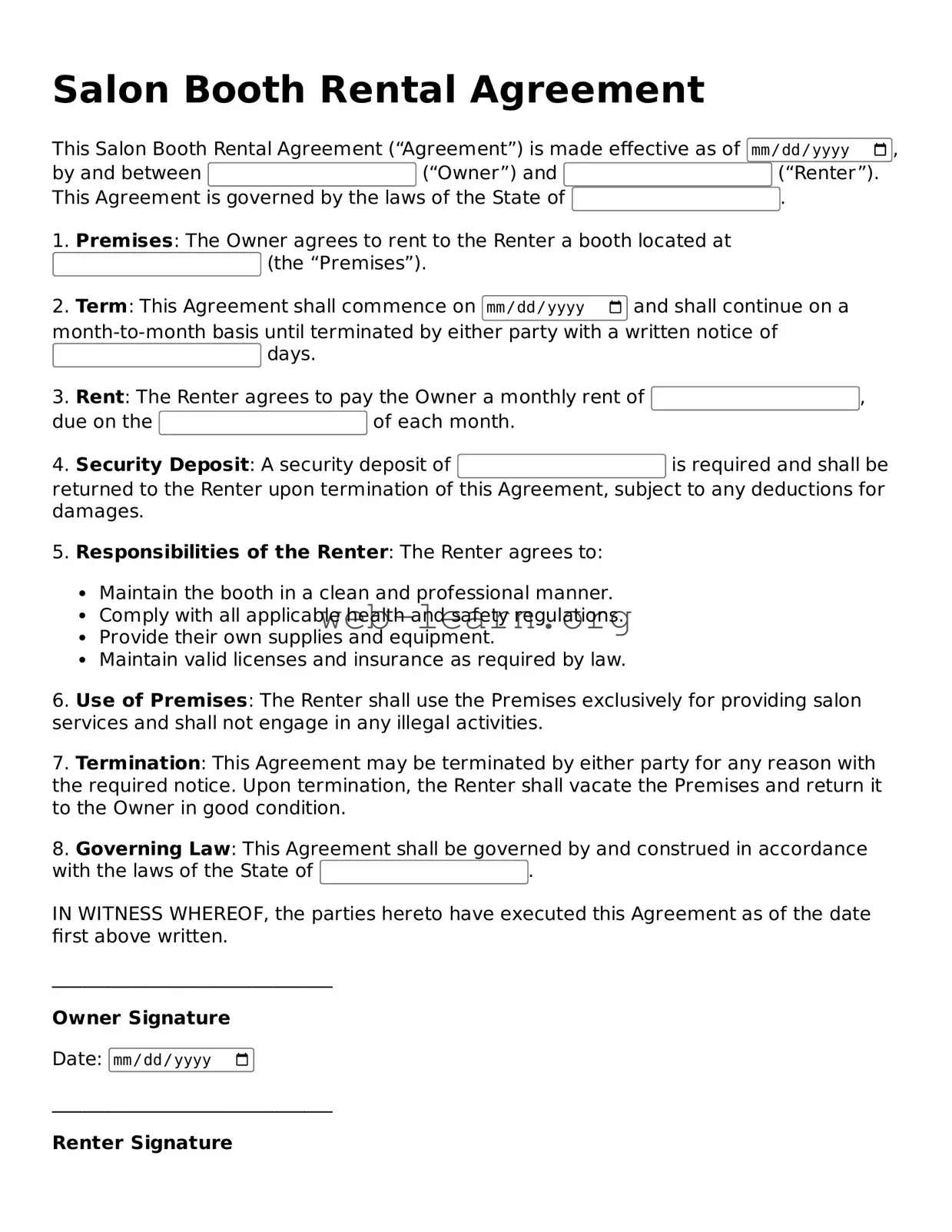
Salon Booth Rental Agreement
This Salon Booth Rental Agreement (“Agreement”) is made effective as of , by and between (“Owner”) and (“Renter”). This Agreement is governed by the laws of the State of .
1. Premises: The Owner agrees to rent to the Renter a booth located at (the “Premises”).
2. Term: This Agreement shall commence on and shall continue on a month-to-month basis until terminated by either party with a written notice of days.
3. Rent: The Renter agrees to pay the Owner a monthly rent of , due on the of each month.
4. Security Deposit: A security deposit of is required and shall be returned to the Renter upon termination of this Agreement, subject to any deductions for damages.
5. Responsibilities of the Renter: The Renter agrees to:
6. Use of Premises: The Renter shall use the Premises exclusively for providing salon services and shall not engage in any illegal activities.
7. Termination: This Agreement may be terminated by either party for any reason with the required notice. Upon termination, the Renter shall vacate the Premises and return it to the Owner in good condition.
8. Governing Law: This Agreement shall be governed by and construed in accordance with the laws of the State of .
IN WITNESS WHEREOF, the parties hereto have executed this Agreement as of the date first above written.
______________________________
Owner Signature
Date:
______________________________
Renter Signature
Date:
| Fact Name | Description |
|---|---|
| Purpose | A Salon Booth Rental Agreement outlines the terms under which a stylist rents a booth in a salon. |
| Parties Involved | The agreement typically involves the salon owner and the stylist renting the booth. |
| Rental Terms | Details regarding the rental fee, payment schedule, and duration of the rental are included. |
| Responsibilities | Both parties have specific responsibilities, including maintenance and compliance with salon policies. |
| Governing Law | The agreement is subject to state laws, which may vary. For instance, in California, it follows the California Business and Professions Code. |
| Termination Clause | Conditions under which the agreement can be terminated by either party are specified. |
| Liability | Provisions regarding liability and insurance responsibilities are typically included to protect both parties. |
Filling out the Salon Booth Rental Agreement form is a straightforward process. Make sure you have all necessary information ready before you start. This will help you complete the form accurately and efficiently.
After completing the form, review all entries for accuracy. Make a copy for your records and submit it to the salon owner or manager as instructed.
What is a Salon Booth Rental Agreement?
A Salon Booth Rental Agreement is a legal document that outlines the terms and conditions between a salon owner and a stylist who rents a booth within the salon. This agreement specifies the rights and responsibilities of both parties, including rental fees, duration of the rental, and other important details.
Who needs to sign the agreement?
Both the salon owner and the stylist must sign the agreement. This ensures that both parties understand and agree to the terms set forth in the document.
What are the typical rental terms?
Rental terms can vary, but they usually include:
What happens if I want to terminate the agreement early?
If either party wishes to terminate the agreement before the end date, they must follow the conditions outlined in the document. Typically, this includes providing written notice within a specified timeframe.
Are utilities included in the rental fee?
Utilities may or may not be included in the rental fee. The agreement should clearly state whether utilities like water, electricity, and internet are covered. If not included, it will specify how those costs will be handled.
Can I bring my own equipment and supplies?
Generally, stylists are allowed to bring their own equipment and supplies. However, the agreement may have specific guidelines regarding the types of equipment that can be used and any necessary insurance requirements.
What if there is damage to the booth or salon property?
The agreement should outline the responsibilities for damages. Typically, the stylist may be held responsible for any damage they cause. It's essential to review this section carefully to understand your liabilities.
Can I sublease my booth?
Subleasing is usually not permitted unless explicitly stated in the agreement. If you wish to sublease, you should check the terms and seek approval from the salon owner.
What should I do if I have questions about the agreement?
If you have questions, it's important to discuss them with the salon owner before signing. Clarifying any uncertainties will help ensure a smooth working relationship.
Filling out the Salon Booth Rental Agreement form can be straightforward, but many people make common mistakes that can lead to confusion or legal issues. One frequent error is failing to provide complete personal information. This includes your full name, address, and contact details. Incomplete information can delay the processing of your agreement.
Another common mistake is not clearly stating the rental terms. This includes the duration of the rental and the payment schedule. It’s essential to specify whether the payment is weekly, monthly, or another arrangement. Ambiguities in this section can lead to misunderstandings down the line.
Many individuals overlook the importance of reading the entire agreement before signing. Skimming through the document can result in missing crucial clauses related to responsibilities, liabilities, and termination conditions. Always take the time to understand what you are agreeing to.
Additionally, people often forget to include any special provisions or conditions they may want to negotiate. If there are specific needs or requests, such as maintenance responsibilities or shared utilities, these should be documented in the agreement. Not addressing these points can lead to disputes later.
Another mistake involves not keeping a copy of the signed agreement. After signing, it’s vital to retain a copy for your records. This ensures you have access to the terms and conditions if any issues arise in the future.
In some cases, individuals fail to provide the necessary documentation, such as proof of insurance or licenses. These documents may be required to complete the agreement. Without them, the agreement may be considered incomplete.
Misunderstanding the payment terms is also a frequent issue. Some people may assume that the rental fee includes utilities or other expenses. Clarifying what the rental fee covers is crucial to avoid unexpected costs.
Lastly, neglecting to communicate with the salon owner or manager can lead to problems. If there are questions or concerns about the agreement, it’s important to discuss them before signing. Open communication can prevent misunderstandings and foster a better working relationship.
When entering into a Salon Booth Rental Agreement, several other forms and documents can be essential for both the salon owner and the booth renter. These documents help clarify responsibilities, protect rights, and ensure a smooth working relationship. Here are some commonly used forms that complement the Salon Booth Rental Agreement:
These forms work together to create a clear framework for the salon's operations and the booth rental arrangement. Having them in place can lead to a successful and professional environment for everyone involved.
When filling out a Salon Booth Rental Agreement form, it’s important to be thorough and careful. Here are ten things you should and shouldn't do:
Understanding the Salon Booth Rental Agreement is essential for both salon owners and booth renters. Here are ten common misconceptions about this agreement:
By addressing these misconceptions, both salon owners and booth renters can engage in a more informed and productive relationship.
The Salon Booth Rental Agreement form is an essential document for both salon owners and independent stylists. It outlines the terms and conditions of the rental arrangement. Below are key takeaways regarding its use:
Utilizing the Salon Booth Rental Agreement form effectively can lead to a harmonious working relationship between salon owners and stylists.
Simple Rental Agreement Between Family Members - This document can help ensure that all family members are on the same page regarding the lease.
Rent Increase Notice Sample - A letter that aims to promote open lines of communication.
Does Microsoft Word Have a Free Lease Agreement Template? - Details the rental period and payment terms for storage space.