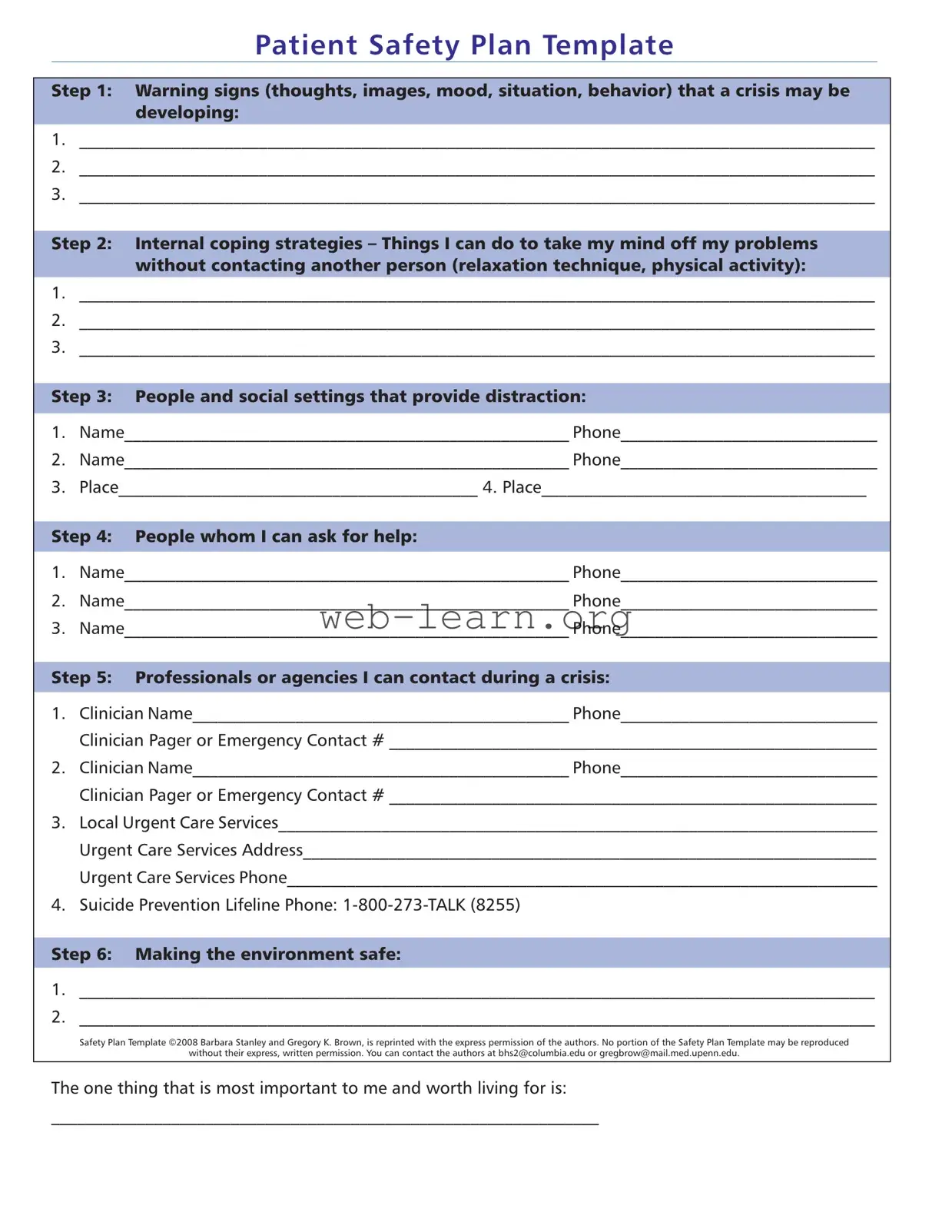
The Safety Plan form is a vital tool designed to assist individuals in managing crises effectively. It serves as a structured guide that helps identify warning signs, coping strategies, and support systems. The first step prompts individuals to recognize specific thoughts, feelings, or situations that may signal an impending crisis. Following this, the form encourages the development of internal coping strategies—activities that can provide distraction and relief without the need for external contact. Identifying supportive people and social settings is crucial, as these can offer comfort during difficult times. Furthermore, the form includes a section for listing trusted individuals who can be contacted for help, as well as professionals or agencies that can provide immediate assistance during a crisis. Finally, it emphasizes the importance of creating a safe environment, ensuring that individuals can take proactive steps to protect themselves. By completing this form, individuals can gain clarity and confidence in their ability to navigate challenging moments, reinforcing their commitment to mental well-being.

Patient Safety Plan Template
Step 1: Warning signs (thoughts, images, mood, situation, behavior) that a crisis may be developing:
1._____________________________________________________________________________________________
2._____________________________________________________________________________________________
3._____________________________________________________________________________________________
Step 2: Internal coping strategies – Things I can do to take my mind off my problems without contacting another person (relaxation technique, physical activity):
1._____________________________________________________________________________________________
2._____________________________________________________________________________________________
3._____________________________________________________________________________________________
Step 3: People and social settings that provide distraction:
1.Name____________________________________________________ Phone______________________________
2.Name____________________________________________________ Phone______________________________
3.Place__________________________________________ 4. Place______________________________________
Step 4: People whom I can ask for help:
1.Name____________________________________________________ Phone______________________________
2.Name____________________________________________________ Phone______________________________
3.Name____________________________________________________ Phone______________________________
Step 5: Professionals or agencies I can contact during a crisis:
1.Clinician Name____________________________________________ Phone______________________________
Clinician Pager or Emergency Contact # _________________________________________________________
2.Clinician Name____________________________________________ Phone______________________________
Clinician Pager or Emergency Contact # _________________________________________________________
3.Local Urgent Care Services______________________________________________________________________
Urgent Care Services Address___________________________________________________________________
Urgent Care Services Phone_____________________________________________________________________
4.Suicide Prevention Lifeline Phone:
Step 6: Making the environment safe:
1._____________________________________________________________________________________________
2._____________________________________________________________________________________________
Safety Plan Template ©2008 Barbara Stanley and Gregory K. Brown, is reprinted with the express permission of the authors. No portion of the Safety Plan Template may be reproduced
without their express, written permission. You can contact the authors at [email protected] or [email protected].
The one thing that is most important to me and worth living for is:
________________________________________________________________
| Fact Name | Description |
|---|---|
| Purpose | The Safety Plan form is designed to help individuals identify warning signs and coping strategies during a crisis. |
| Warning Signs | Users list specific thoughts, images, moods, situations, or behaviors that indicate a crisis may be developing. |
| Coping Strategies | The form encourages individuals to identify internal coping strategies to manage their feelings without needing to reach out to others. |
| Support Network | People and social settings that can provide distraction are documented to ensure access to support during difficult times. |
| Help Contacts | Individuals can list friends, family, or professionals they can reach out to for help when needed. |
| Professional Resources | The form includes a section for professionals or agencies to contact during a crisis, ensuring immediate support is available. |
| Emergency Contacts | Clinicians and local urgent care services can be recorded, providing essential contact information for quick access during emergencies. |
| Safety Environment | Steps to make the environment safe are outlined, helping individuals create a secure space for themselves. |
| Legal Considerations | The form is governed by mental health laws which may vary by state, emphasizing the importance of local regulations. |
| Copyright Notice | The Safety Plan Template ©2008 is protected, and reproduction without permission is prohibited, highlighting the importance of intellectual property. |
Completing the Safety Plan form is a vital step in ensuring your well-being. This process will help you identify warning signs, coping strategies, and support systems. Follow these steps carefully to fill out the form effectively.
Finally, reflect on what matters most to you. Write down the one thing that is most important and worth living for. This can serve as a powerful reminder during challenging times.
A Safety Plan form is a tool designed to help individuals identify warning signs that a crisis may be developing. It provides a structured way to outline coping strategies, support networks, and resources to use during difficult times. The goal is to enhance safety and well-being by having a clear plan in place.
To fill out the Safety Plan form, start by identifying your personal warning signs. These may include specific thoughts, images, moods, or behaviors that signal a crisis is approaching. Next, list internal coping strategies that help you manage your feelings without needing to reach out to others. Then, identify people and places that can provide distraction, as well as those you can ask for help.
Finally, note down professionals or agencies you can contact during a crisis, including their phone numbers. Make sure to include local urgent care services and the Suicide Prevention Lifeline number.
The Safety Plan form is suitable for anyone who may experience a mental health crisis. This includes individuals dealing with anxiety, depression, or suicidal thoughts. It is particularly useful for those who have previously experienced crises and want to create a proactive plan to manage future situations.
Yes, sharing your Safety Plan with trusted friends, family members, or mental health professionals can be beneficial. Doing so allows them to understand your needs and how they can support you during a crisis. However, ensure that you are comfortable sharing the details, as privacy is important.
If your circumstances or coping strategies change, it is essential to update your Safety Plan. Regularly reviewing and revising the plan ensures it remains relevant and effective. Consider setting aside time to revisit the plan every few months or after any significant life changes.
Yes, the information you include in your Safety Plan is confidential. It is a personal document meant for your use. However, if you choose to share it with others, be mindful of what details you disclose. Maintaining confidentiality can help you feel secure in using the plan when needed.
Filling out a Safety Plan form is a crucial step in preparing for potential crises. However, many individuals make common mistakes that can hinder the effectiveness of the plan. One frequent error is not fully understanding the purpose of each section. Each part of the form is designed to help the individual identify warning signs, coping strategies, and support systems. Without a clear grasp of these components, the information provided may be incomplete or vague.
Another mistake often made is leaving sections blank. When individuals skip over areas, they miss the opportunity to reflect on important aspects of their safety. For instance, if someone does not list their warning signs, they may struggle to recognize when a crisis is approaching. Completing every section, even if it feels challenging, is essential for creating a comprehensive plan.
Additionally, people sometimes underestimate the importance of specific details, such as contact information for support networks. When individuals provide only names without phone numbers, they create barriers to seeking help. In a moment of crisis, quick access to this information can be vital. Thus, including complete and accurate contact details can make a significant difference.
Another common error is failing to update the Safety Plan regularly. Life circumstances change, and so do personal relationships and coping strategies. A plan that was effective six months ago may no longer serve its purpose. Regularly revisiting and revising the Safety Plan ensures it remains relevant and useful.
Some individuals may also neglect to include professionals or agencies that can offer assistance. Relying solely on friends or family may not provide the necessary support during a crisis. Including mental health professionals or crisis hotlines can enhance the safety plan's effectiveness and provide immediate access to specialized help.
Moreover, people sometimes approach the form with a sense of reluctance, viewing it as a chore rather than a helpful tool. This mindset can lead to a lack of thoroughness in filling out the form. Embracing the process as a proactive step toward personal safety can foster a more thoughtful and complete response.
Finally, individuals often overlook the importance of identifying what is worth living for. This section may seem less critical compared to the others, but it serves as a powerful reminder of hope and purpose. By acknowledging personal values and reasons for living, individuals can create a more meaningful and motivating safety plan.
When creating a comprehensive Safety Plan, several other forms and documents may be beneficial. These documents help ensure that individuals have the necessary resources and support during a crisis. Below is a list of common forms that often accompany the Safety Plan.
Using these documents alongside the Safety Plan can significantly enhance the support system for individuals in crisis. It is crucial to have these resources organized and readily accessible to ensure timely intervention and assistance.
When filling out the Safety Plan form, it’s essential to approach the task thoughtfully. Here are some important dos and don’ts to keep in mind:
By following these guidelines, you can create a comprehensive Safety Plan that reflects your needs and supports your well-being.
Understanding the Safety Plan form is crucial for anyone looking to create a supportive strategy for mental health. However, several misconceptions can cloud its purpose and use. Here are eight common misunderstandings about the Safety Plan form:
By dispelling these misconceptions, individuals can better understand the value of the Safety Plan form and utilize it effectively in their mental health journey.
When filling out and using the Safety Plan form, consider the following key takeaways: