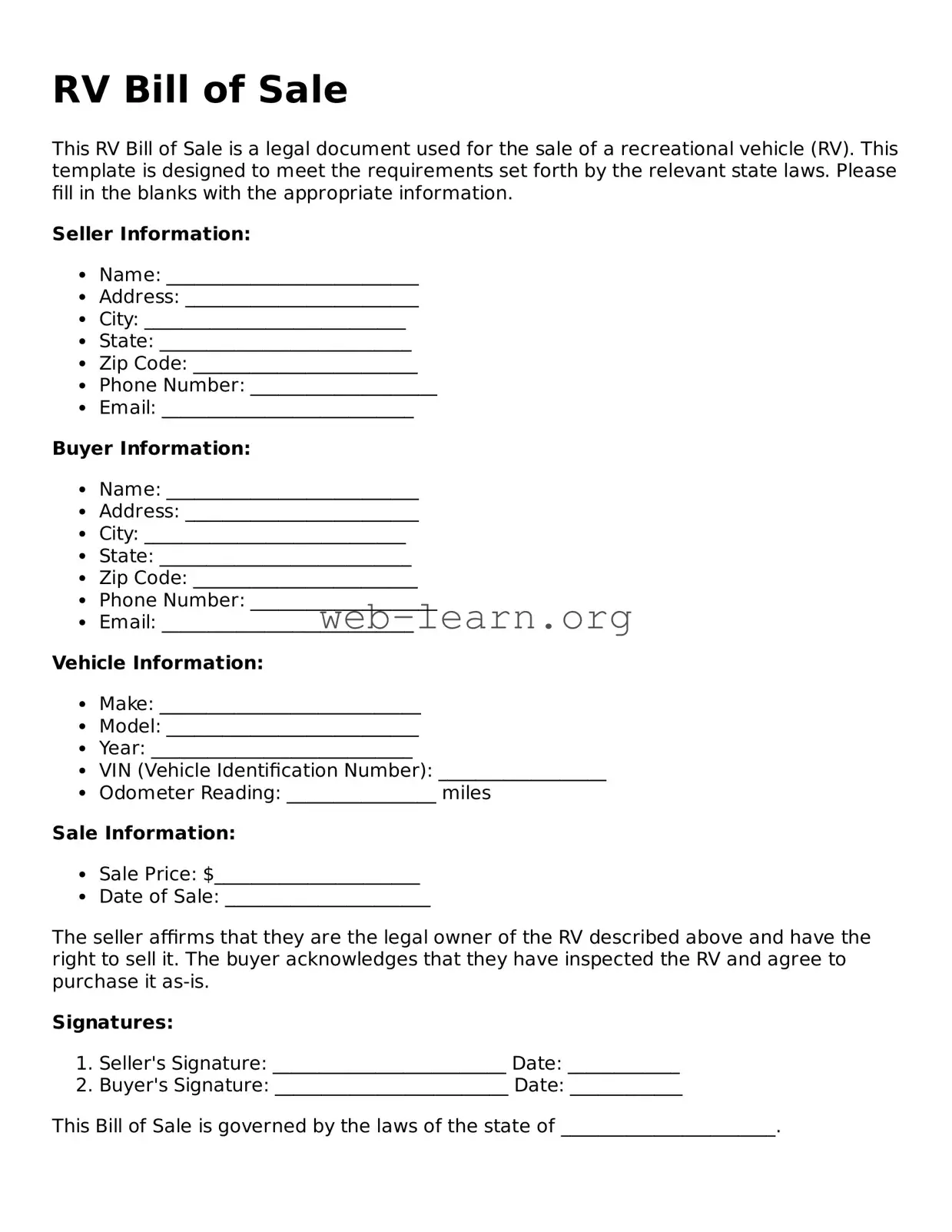
When engaging in the purchase or sale of a recreational vehicle (RV), a crucial document often comes into play: the RV Bill of Sale. This form serves as a legal record of the transaction between the buyer and the seller. It typically includes essential details such as the names and addresses of both parties, the vehicle identification number (VIN), and a description of the RV, including its make, model, and year. Additionally, the document outlines the purchase price and any terms of sale, which may include payment methods or conditions regarding warranties. By providing a clear and comprehensive account of the transaction, the RV Bill of Sale protects both parties and can be important for future registration or title transfer. Understanding the components of this form is vital for anyone involved in the buying or selling process, as it helps ensure that all necessary information is documented properly and that both parties are aware of their rights and responsibilities.
RV Bill of Sale
This RV Bill of Sale is a legal document used for the sale of a recreational vehicle (RV). This template is designed to meet the requirements set forth by the relevant state laws. Please fill in the blanks with the appropriate information.
Seller Information:
Buyer Information:
Vehicle Information:
Sale Information:
The seller affirms that they are the legal owner of the RV described above and have the right to sell it. The buyer acknowledges that they have inspected the RV and agree to purchase it as-is.
Signatures:
This Bill of Sale is governed by the laws of the state of _______________________.
| Fact Name | Description |
|---|---|
| Purpose | The RV Bill of Sale form serves as a legal document that records the sale and transfer of ownership of a recreational vehicle between a buyer and a seller. |
| State-Specific Requirements | Each state may have unique requirements for the RV Bill of Sale, including specific information that must be included or additional forms that may need to be filed. |
| Governing Laws | The sale of recreational vehicles is governed by state laws, which vary. For example, in California, the California Vehicle Code regulates these transactions. |
| Importance of Accuracy | Completing the RV Bill of Sale accurately is crucial. Errors or omissions can lead to disputes over ownership or issues with registration. |
Once you have the RV Bill of Sale form ready, you will need to provide specific information to ensure a smooth transaction. Completing this form accurately is crucial for both the buyer and the seller, as it serves as a record of the sale. Follow the steps below to fill out the form correctly.
What is an RV Bill of Sale?
An RV Bill of Sale is a legal document that serves as proof of the sale and transfer of ownership of a recreational vehicle (RV). This document includes important details such as the names of the buyer and seller, the vehicle's identification number (VIN), make, model, year, and sale price. It protects both parties by clearly outlining the terms of the sale.
Why do I need an RV Bill of Sale?
Having an RV Bill of Sale is essential for several reasons. First, it provides legal protection for both the buyer and the seller. It helps to establish ownership and can be used for registration purposes. Additionally, it serves as a record of the transaction for tax purposes. If any disputes arise later, this document can be crucial in resolving them.
What information should be included in the RV Bill of Sale?
When creating an RV Bill of Sale, make sure to include the following information:
Is the RV Bill of Sale required by law?
While not all states require an RV Bill of Sale for the transfer of ownership, it is highly recommended. Some states may have specific laws regarding vehicle sales, so it is wise to check local regulations. Having a Bill of Sale can simplify the registration process and provide proof of ownership.
Can I create my own RV Bill of Sale?
Yes, you can create your own RV Bill of Sale. There are many templates available online that can guide you through the process. Just ensure that all required information is included and that both parties sign the document. Alternatively, you may choose to consult with a legal professional for assistance.
What should I do after completing the RV Bill of Sale?
After completing the RV Bill of Sale, both the buyer and seller should keep a copy for their records. The buyer will need the document for registration purposes with the Department of Motor Vehicles (DMV). Additionally, it is advisable to notify your insurance company of the sale.
Can an RV Bill of Sale be used for financing?
An RV Bill of Sale can be useful when seeking financing for the purchase of an RV. Lenders often require proof of purchase, and the Bill of Sale can serve as that proof. However, it is important to check with the financing institution for their specific requirements, as they may also need additional documentation.
Completing an RV Bill of Sale form can seem straightforward, but many people make common mistakes that can lead to complications down the road. One frequent error is failing to include all necessary details about the vehicle. It's crucial to provide complete information, including the make, model, year, and Vehicle Identification Number (VIN). Missing even one detail can create confusion or disputes later.
Another mistake is not accurately stating the purchase price. This figure should reflect the true amount paid for the RV. Understating the price can lead to issues with taxes or registration, while overstating it might raise suspicions during a transaction. Always ensure that the price listed is correct and agreed upon by both parties.
People often overlook the importance of signatures. Both the seller and the buyer must sign the document for it to be legally binding. If one party forgets to sign, the sale could be considered invalid. Double-checking signatures before finalizing the transaction can save a lot of trouble.
Additionally, individuals sometimes neglect to include the date of the sale. This detail is essential for establishing when the transfer of ownership took place. Without a date, it may be difficult to resolve any future disputes regarding the sale.
Another common error is not providing a clear description of any included accessories or additional items. If the RV comes with equipment such as a generator, awning, or appliances, these should be listed explicitly. Failing to do so may lead to misunderstandings about what is included in the sale.
People may also forget to check for any liens on the RV. It is important to ensure that the seller has the legal right to sell the vehicle and that there are no outstanding debts attached to it. Buyers should request a lien release from the seller to avoid potential legal issues.
In some cases, individuals may not keep a copy of the completed Bill of Sale. This document serves as a record of the transaction and can be vital for future reference. Always make sure to retain a copy for personal records.
Another mistake involves not verifying the buyer’s or seller’s identification. Ensuring that both parties are who they say they are helps prevent fraud. It is wise to ask for a driver’s license or another form of ID to confirm identities.
Lastly, many people fail to understand the importance of local regulations. Different states may have specific requirements regarding the Bill of Sale. Researching these regulations can help ensure that the form is compliant and that the transaction proceeds smoothly.
When completing the purchase or sale of an RV, several additional documents may be necessary to ensure a smooth transaction. Each of these documents serves a specific purpose and helps protect the interests of both the buyer and the seller.
Having these documents ready will facilitate the transaction and help avoid any potential disputes in the future. Ensure all parties review each document carefully before signing to confirm accuracy and completeness.
The RV Bill of Sale form shares similarities with several other documents used in transactions. Here are four such documents:
When filling out the RV Bill of Sale form, it’s important to ensure accuracy and clarity. Here are some essential dos and don'ts to keep in mind:
By following these guidelines, you can help ensure a smooth transaction and protect the interests of both the buyer and seller.
The RV Bill of Sale form is an important document in the process of buying or selling a recreational vehicle. However, there are several misconceptions surrounding this form. Below are six common misunderstandings:
Understanding these misconceptions can help ensure a smoother transaction when buying or selling an RV.
When it comes to buying or selling a recreational vehicle (RV), having a properly filled out Bill of Sale is crucial. This document serves as proof of the transaction and outlines the details of the sale. Here are some key takeaways to consider when filling out and using the RV Bill of Sale form:
Using the RV Bill of Sale form correctly can help facilitate a smooth transaction and protect the interests of both the buyer and the seller. It serves as a foundational document that confirms the sale and provides clarity on the terms agreed upon.
Atv Bill of Sale Printable - Can be easily completed and stored for future reference.
Printable Trailer Bill of Sale Pdf - The Trailer Bill of Sale can help ensure that both parties are on the same page regarding the sale.