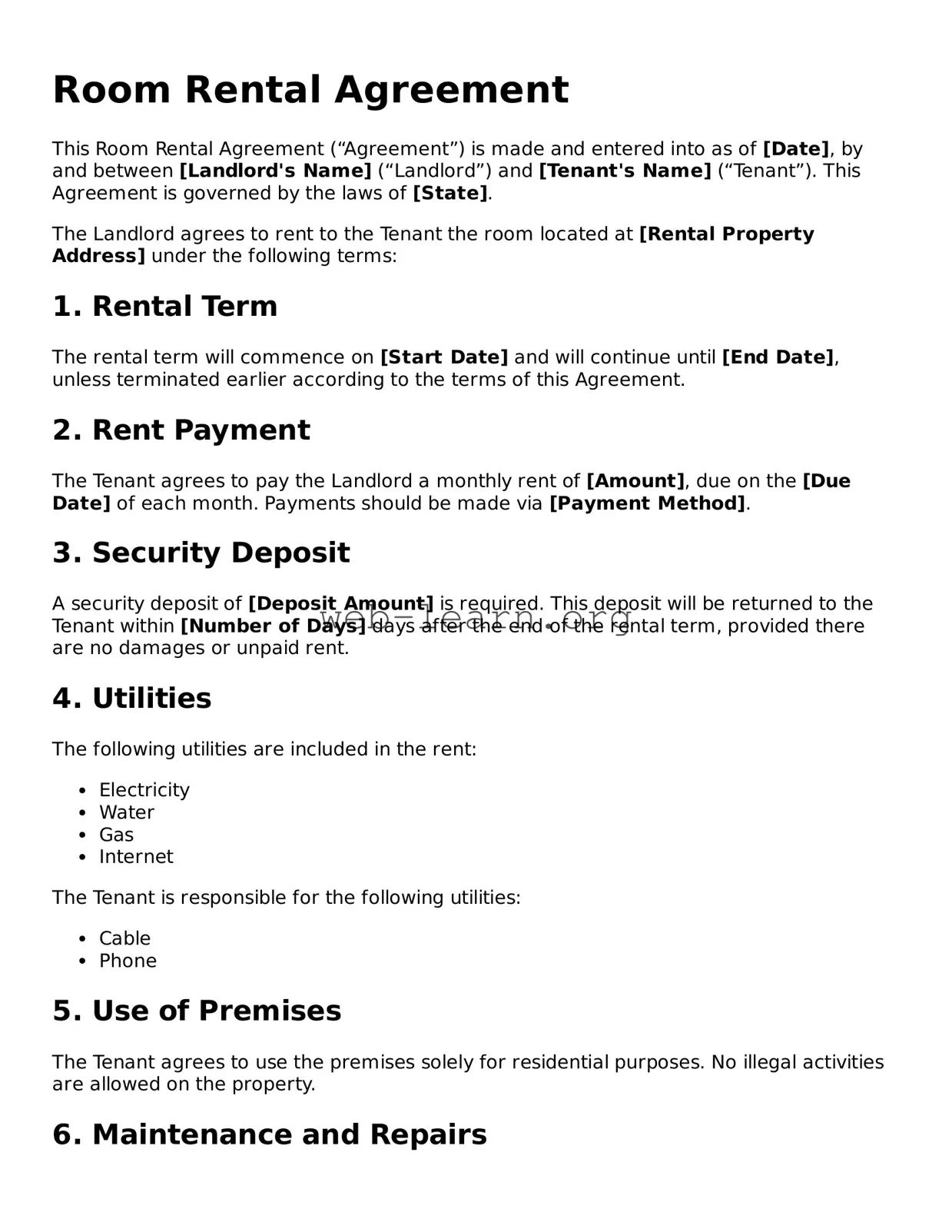
A Room Rental Agreement form serves as a crucial document in the rental process, outlining the terms and conditions between a landlord and a tenant. This agreement typically includes essential details such as the rental amount, payment due dates, and the duration of the lease. It also specifies the responsibilities of both parties, including maintenance obligations and rules regarding the use of shared spaces. Additionally, the form may address security deposits, termination clauses, and procedures for resolving disputes. By clearly defining these aspects, the Room Rental Agreement aims to protect the interests of both landlords and tenants, ensuring a smooth and transparent rental experience. Understanding the components of this agreement is vital for anyone involved in renting a room, as it sets the foundation for a successful landlord-tenant relationship.
Room Rental Agreement
This Room Rental Agreement (“Agreement”) is made and entered into as of [Date], by and between [Landlord's Name] (“Landlord”) and [Tenant's Name] (“Tenant”). This Agreement is governed by the laws of [State].
The Landlord agrees to rent to the Tenant the room located at [Rental Property Address] under the following terms:
1. Rental Term
The rental term will commence on [Start Date] and will continue until [End Date], unless terminated earlier according to the terms of this Agreement.
2. Rent Payment
The Tenant agrees to pay the Landlord a monthly rent of [Amount], due on the [Due Date] of each month. Payments should be made via [Payment Method].
3. Security Deposit
A security deposit of [Deposit Amount] is required. This deposit will be returned to the Tenant within [Number of Days] days after the end of the rental term, provided there are no damages or unpaid rent.
4. Utilities
The following utilities are included in the rent:
The Tenant is responsible for the following utilities:
5. Use of Premises
The Tenant agrees to use the premises solely for residential purposes. No illegal activities are allowed on the property.
6. Maintenance and Repairs
The Tenant must keep the room clean and in good condition. Any repairs needed should be reported to the Landlord promptly.
7. Termination
Either party may terminate this Agreement with [Notice Period] written notice to the other party.
8. Governing Law
This Agreement shall be governed by and construed in accordance with the laws of [State].
By signing below, both parties agree to the terms outlined in this Room Rental Agreement.
Landlord Signature: ___________________________ Date: _______________
Tenant Signature: ____________________________ Date: _______________
| Fact Name | Description |
|---|---|
| Purpose | A Room Rental Agreement outlines the terms and conditions for renting a room. |
| Parties Involved | The agreement typically includes the landlord and the tenant's information. |
| Duration | The agreement specifies the rental period, which can be short-term or long-term. |
| Rent Amount | The document states the monthly rent and due date for payments. |
| Security Deposit | It may require a security deposit, which is refundable under certain conditions. |
| Governing Law | Each state has specific laws governing rental agreements. For example, California follows the California Civil Code. |
| Termination Clause | The agreement should include terms for ending the rental arrangement. |
Filling out the Room Rental Agreement form is an important step in establishing the terms of your rental arrangement. This document outlines the responsibilities and expectations of both the landlord and the tenant, ensuring clarity in the rental process. Below are the steps to effectively complete the form.
Once the form is completed, it is advisable to keep a copy for both parties. This ensures that everyone involved has access to the agreed-upon terms and conditions, fostering a respectful and transparent rental relationship.
A Room Rental Agreement is a legal document that outlines the terms and conditions between a landlord and a tenant for renting a room in a property. This agreement typically includes details such as the rental amount, duration of the lease, security deposit requirements, and rules regarding the use of shared spaces.
Key elements of a Room Rental Agreement should include:
The rental price is typically determined by several factors, including the location of the property, the size and condition of the room, and the amenities provided. Researching comparable rental prices in the area can help both landlords and tenants agree on a fair amount.
Yes, a Room Rental Agreement can be modified, but both parties must agree to any changes. It is best to document any modifications in writing and have both parties sign the revised agreement to avoid future disputes.
If a tenant violates the terms of the Room Rental Agreement, the landlord may have the right to take specific actions, which could include issuing a warning, imposing penalties, or even terminating the lease. The exact consequences depend on the nature of the violation and the terms outlined in the agreement.
Yes, a Room Rental Agreement is legally binding as long as it meets the necessary legal requirements. Both parties must sign the agreement, and it should comply with local rental laws. If disputes arise, this document can serve as evidence in legal proceedings.
Filling out a Room Rental Agreement can seem straightforward, but many individuals make common mistakes that can lead to misunderstandings or even legal issues down the line. One of the most frequent errors is failing to provide complete personal information. Renters should ensure that their full name, contact number, and email address are clearly stated. Missing this information can hinder communication between the landlord and tenant.
Another common mistake is neglecting to read the entire agreement before signing. Many people skim through the document, assuming they understand the terms. This can lead to unexpected obligations or fees. It’s crucial to take the time to read each section carefully, ensuring that all terms are clear and agreeable.
Some individuals overlook the importance of specifying the rental period. Whether it’s a month-to-month agreement or a fixed term, clarity is essential. Without a defined rental period, both parties may have different expectations, leading to disputes later on.
Additionally, failing to document the condition of the property at the time of rental is a significant oversight. Tenants should take photographs and note any existing damages. This step protects both the tenant and landlord by establishing a clear record of the property’s state before moving in.
Another mistake is not understanding the payment terms. Renters should clarify the amount due, the due date, and acceptable payment methods. Confusion over these details can result in late fees or strained relationships between tenants and landlords.
People often forget to ask about utilities and other expenses. The agreement should outline whether utilities are included in the rent or if they are the tenant's responsibility. This clarification helps avoid unexpected bills that could strain a tenant's budget.
Some renters fail to check for any additional fees that might apply. These can include pet fees, maintenance costs, or security deposits. Understanding these charges upfront can prevent frustration and financial surprises later.
Another common oversight is neglecting to include the names of all occupants. If multiple people will be living in the rental, it’s essential to list everyone. This inclusion ensures that all parties are covered under the agreement and helps prevent any unauthorized occupants from living in the space.
In some cases, individuals do not verify the landlord’s authority to rent the property. Tenants should ensure that the person they are dealing with has the right to lease the space. This verification can save a lot of trouble in the future.
Lastly, many renters forget to keep a copy of the signed agreement. Having a personal copy is important for reference and can be invaluable if any disputes arise. It’s a simple step that can make a significant difference in protecting one’s rights.
When entering into a Room Rental Agreement, several other forms and documents may be necessary to ensure a smooth rental process. These documents help clarify expectations, outline responsibilities, and protect the interests of both the landlord and the tenant. Below is a list of commonly used forms that accompany a Room Rental Agreement.
Having these forms ready can facilitate a more organized and transparent rental experience. Each document plays a crucial role in establishing clear communication and mutual understanding between landlords and tenants.
When filling out a Room Rental Agreement form, it’s important to be thorough and careful. Here are some dos and don’ts to keep in mind:
Following these guidelines will help you complete the Room Rental Agreement correctly and avoid potential issues down the line.
Understanding the Room Rental Agreement form can be challenging, and several misconceptions often arise. These misunderstandings can lead to confusion for both landlords and tenants. Here are five common misconceptions:
By clarifying these misconceptions, both landlords and tenants can approach their rental agreements with greater confidence and understanding.
When filling out and using the Room Rental Agreement form, it's essential to understand the various components and implications of the document. Here are some key takeaways to keep in mind:
By following these guidelines, both landlords and tenants can create a positive rental experience and minimize potential conflicts.
Event Rental Contract Template - Include a section for addendums or modifications to the agreement.
Simple Rental Agreement Between Family Members - This lease can provide a sense of security for both the landlord and tenant.
Written Notice of Not Renewing Lease - The notice ensures transparency in landlord-tenant relationships.