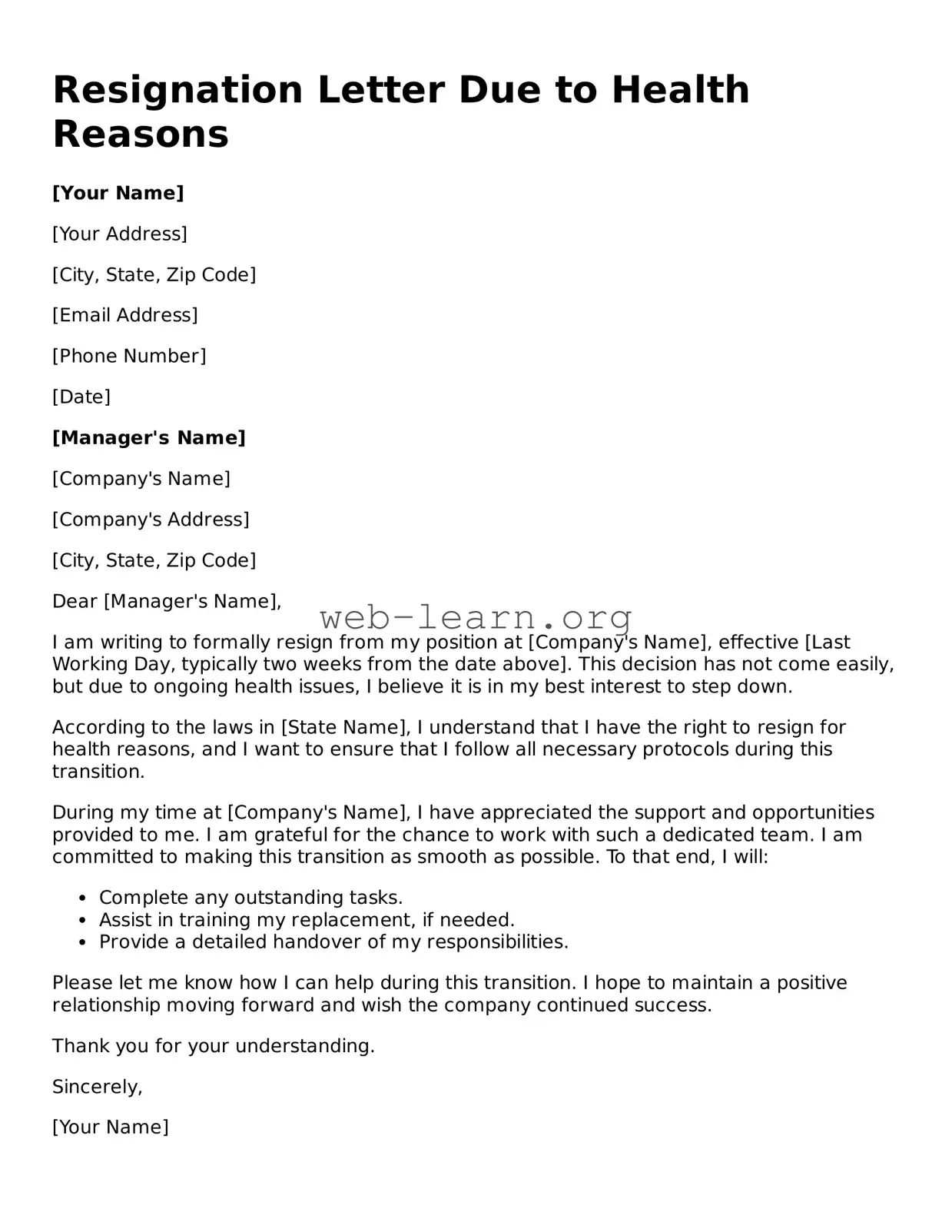
When facing health challenges, the decision to resign from a job can be particularly difficult. The Resignation Letter Due to Health Reasons form serves as a formal way to communicate this decision to your employer. This document not only expresses your intention to leave the position but also provides a clear explanation for your departure, ensuring that your employer understands the circumstances surrounding your resignation. Typically, the form includes essential details such as your name, the date of your resignation, and a brief statement about your health situation. It’s important to maintain a professional tone while also conveying your gratitude for the opportunities you’ve had during your employment. By using this form, you can ensure that your resignation is handled with care and consideration, allowing you to focus on your health and well-being without unnecessary stress. Whether you’re dealing with a temporary illness or a more serious condition, this form can help facilitate a smooth transition out of the workplace.
Resignation Letter Due to Health Reasons
[Your Name]
[Your Address]
[City, State, Zip Code]
[Email Address]
[Phone Number]
[Date]
[Manager's Name]
[Company's Name]
[Company's Address]
[City, State, Zip Code]
Dear [Manager's Name],
I am writing to formally resign from my position at [Company's Name], effective [Last Working Day, typically two weeks from the date above]. This decision has not come easily, but due to ongoing health issues, I believe it is in my best interest to step down.
According to the laws in [State Name], I understand that I have the right to resign for health reasons, and I want to ensure that I follow all necessary protocols during this transition.
During my time at [Company's Name], I have appreciated the support and opportunities provided to me. I am grateful for the chance to work with such a dedicated team. I am committed to making this transition as smooth as possible. To that end, I will:
Please let me know how I can help during this transition. I hope to maintain a positive relationship moving forward and wish the company continued success.
Thank you for your understanding.
Sincerely,
[Your Name]
| Fact Name | Description |
|---|---|
| Purpose | A resignation letter due to health reasons formally informs an employer about an employee's decision to leave their job due to health-related issues. |
| Notice Period | Typically, employees should provide a notice period, which may vary based on company policy or state law. This allows the employer to plan for the transition. |
| State-Specific Considerations | Some states may have specific laws regarding resignation and employee rights. It's important to check local regulations to ensure compliance. |
| Confidentiality | While it's essential to communicate the reason for resignation, employees are not obligated to disclose specific health details in the letter. |
After completing the Resignation Letter Due to Health Reasons form, you will need to submit it to your employer. Ensure you keep a copy for your records. This step is crucial for maintaining a clear communication trail regarding your departure.
A resignation letter due to health reasons is a formal document that an employee submits to their employer when they need to leave their job for medical reasons. This letter communicates the employee's decision to resign and often provides a brief explanation of the health issues prompting the resignation.
Submitting a resignation letter is important because it provides a clear and documented record of your intent to leave. It helps maintain professionalism and can assist in ensuring a smooth transition for both you and your employer. Additionally, it can be useful for future references or employment verification.
Your resignation letter should include:
You are not required to provide detailed medical information in your resignation letter. A simple statement indicating that you are resigning due to health reasons is sufficient. Your privacy should always be respected, and you should feel comfortable sharing only what you wish.
The amount of notice you should give can vary based on your company's policies and your specific situation. Typically, two weeks' notice is standard. However, if your health condition requires immediate resignation, it is acceptable to resign with shorter notice. Communicate openly with your employer about your circumstances.
Once you submit a resignation letter, it is generally considered a formal decision. However, if your situation changes and you wish to stay, it is best to communicate this to your employer as soon as possible. They may be understanding, but it ultimately depends on company policies and your relationship with your employer.
If you are on medical leave, you can still submit your resignation letter. In fact, it may be a good time to address your health concerns. Ensure that your letter is clear and professional, and consider discussing your decision with your HR department if possible.
While there is no strict format, a resignation letter should be professional and concise. Use a standard business letter format, which includes your contact information, the date, the employer's information, a greeting, the body of the letter, and a closing. Keep the tone respectful and express gratitude for your time at the company.
When filling out a Resignation Letter Due to Health Reasons form, individuals often overlook important details that can lead to misunderstandings or complications. One common mistake is failing to clearly state the reason for resignation. While it may seem obvious, being explicit helps ensure that the employer understands the context and can process the resignation appropriately.
Another frequent error is neglecting to include a specific last working day. Providing this information is crucial for both the employee and the employer. Without a clear end date, the employer may not know when to adjust schedules or find a replacement, potentially leading to confusion.
Some individuals forget to express gratitude towards their employer. A brief note of thanks can go a long way in maintaining a positive relationship, even when leaving due to health issues. This gesture reflects professionalism and can leave the door open for future opportunities.
In addition, people sometimes fail to proofread their resignation letter. Spelling or grammatical errors can detract from the message and may create an impression of carelessness. Taking a moment to review the letter can help avoid this pitfall.
Another mistake is using an overly emotional tone. While it is understandable to feel strongly about health issues, maintaining a neutral tone ensures that the letter remains professional. This helps to convey the message clearly without unnecessary drama.
Some individuals may also forget to provide their contact information. Including a phone number or email address allows the employer to reach out for any follow-up questions or clarifications. This can be particularly important if the resignation leads to questions about benefits or final paychecks.
Additionally, people sometimes submit the resignation letter without discussing their decision with their supervisor first. It is generally advisable to have a conversation before submitting a formal letter. This approach can help foster understanding and respect between both parties.
Another common error involves not checking company policy regarding resignations. Each organization may have specific procedures that need to be followed. Failing to adhere to these policies can complicate the resignation process and may affect final pay or benefits.
Some individuals also overlook the importance of timing. Submitting a resignation letter during a particularly busy period for the company can lead to unnecessary tension. Being mindful of the timing can help ensure a smoother transition.
Lastly, people sometimes underestimate the importance of keeping a copy of the resignation letter. Retaining a copy for personal records can be useful in case of future disputes or questions about the resignation. This simple step can provide peace of mind.
When resigning from a job due to health reasons, it's essential to have all the necessary documents in order. Along with your resignation letter, several other forms and documents may be required to ensure a smooth transition. Here’s a list of commonly used documents that can accompany your resignation.
Having these documents prepared can make the resignation process smoother and less stressful. It's always a good idea to keep communication open with your employer during this time. They may have specific procedures in place that you need to follow, so being well-informed can help you navigate this transition more effectively.
When filling out a resignation letter due to health reasons, it is important to approach the task thoughtfully. Below are five key actions to consider, along with five common pitfalls to avoid.
Things You Should Do:
Things You Shouldn't Do:
When it comes to resigning from a job due to health reasons, many individuals may have misconceptions about the process and the requirements involved. Understanding these misconceptions can help ensure that the resignation process is smooth and respectful. Here are five common misconceptions:
By clarifying these misconceptions, individuals can navigate the resignation process with greater confidence and understanding. It is always advisable to approach such situations with care and professionalism.
When filling out and using the Resignation Letter Due to Health Reasons form, consider the following key takeaways: