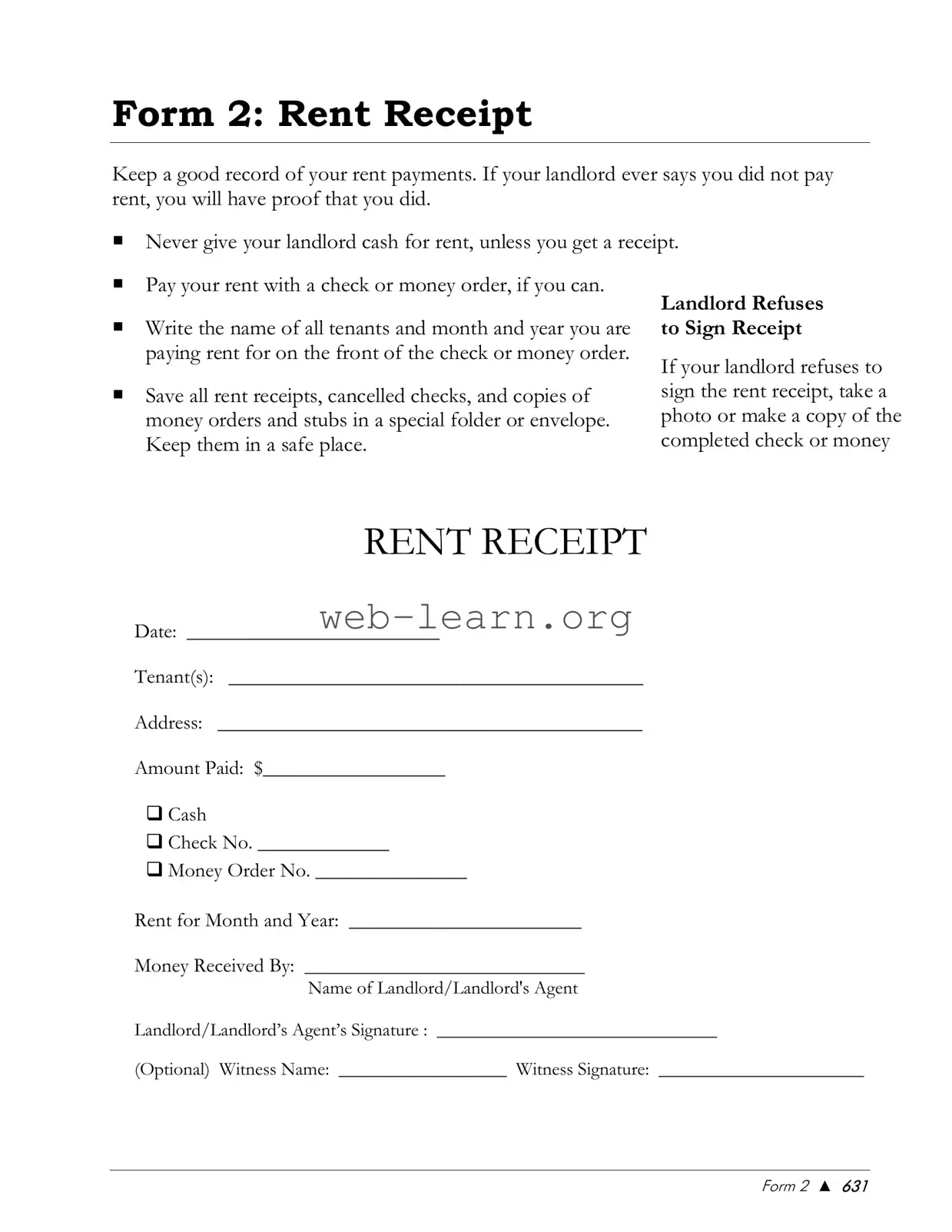
When renting a property, both tenants and landlords benefit from clear documentation of payments made. One essential document in this process is the rental receipt form, which serves as proof of payment for rent. This form typically includes important details such as the date of payment, the names of the tenant(s), and the address of the rented property. It also specifies the amount paid, which can be made through various methods like cash, check, or money order. Additionally, the rental receipt captures the month and year for which the rent is being paid, ensuring clarity regarding the rental period. The name of the landlord or their agent is recorded, along with a signature, which adds an extra layer of verification. In some cases, a witness may also sign the receipt, further solidifying the transaction's legitimacy. Overall, the rental receipt form is a vital tool that helps maintain transparency and accountability in rental agreements.
RENT RECEIPT
Date: _________________________
Tenant(s): _________________________________________
Address: __________________________________________
Amount Paid: $__________________
Cash
Check No. _____________
Money Order No. _______________
Rent for Month and Year: _______________________
Money Received By: ______________________________
Name of Landlord/Landlord's Agent Landlord/Landlord’s Agent’s Signature : ______________________________
(Optional) Witness Name: __________________ Witness Signature: ______________________
| Fact Name | Description |
|---|---|
| Date of Payment | The rental receipt includes a designated space for the date on which the payment was made, ensuring clarity on when the transaction occurred. |
| Tenant and Landlord Information | It captures essential information about the tenant(s) and the landlord or their agent, which helps establish a clear record of the parties involved in the rental agreement. |
| Payment Method | The form allows tenants to indicate their payment method, whether cash, check, or money order, providing a transparent account of how the rent was paid. |
| Governing Laws | In many states, rental receipts are governed by local landlord-tenant laws, which may require landlords to provide a receipt upon payment to ensure accountability and protect tenant rights. |
Completing the Rental Receipt form is a straightforward process that ensures both the landlord and tenant have a clear record of payment. This document serves as proof of rent payment and can be useful for various purposes, such as tax records or lease disputes. Follow these steps carefully to fill out the form accurately.
What is a Rental Receipt form?
A Rental Receipt form is a document that serves as proof of payment made by a tenant to a landlord. It includes essential details such as the date of payment, the amount paid, and the method of payment (cash, check, or money order). This form is important for both tenants and landlords as it provides a record of transactions and can be used for tax purposes or dispute resolution.
What information do I need to fill out on the Rental Receipt?
When completing the Rental Receipt form, you will need to provide the following information:
Completing all these fields ensures that the receipt is valid and comprehensive.
Why is it important to have a Rental Receipt?
Having a Rental Receipt is crucial for several reasons. Firstly, it acts as a legal record of payment, which can protect both parties in case of disputes regarding rent payments. Secondly, it can be used for tax purposes, as landlords may need to report rental income. Lastly, tenants can use the receipt to verify their payment history, which can be beneficial when applying for future rentals or loans.
What if I lose my Rental Receipt?
If you lose your Rental Receipt, it can be challenging to prove that you made a payment. However, you can request a duplicate receipt from your landlord. It’s a good practice to keep copies of all rental receipts in a safe place. If a duplicate cannot be obtained, other documentation, such as bank statements or check stubs, may serve as proof of payment.
Can a Rental Receipt be used in court?
Yes, a Rental Receipt can be used in court as evidence of payment. If a dispute arises between a tenant and landlord regarding unpaid rent, the receipt serves as proof that the tenant fulfilled their obligation. However, it is essential that the receipt is filled out correctly and includes all necessary information to be considered valid in legal proceedings.
Filling out a rental receipt form may seem straightforward, but many people make common mistakes that can lead to confusion or disputes later on. One frequent error is failing to include the date of the transaction. Without a clear date, both the landlord and tenant may have differing interpretations of when the payment was made, which can complicate future communications.
Another common mistake is neglecting to list the tenant's name correctly. Accuracy is crucial, as discrepancies in names can create issues, especially if the receipt is needed for legal purposes. Always double-check the spelling and ensure that all tenants are accounted for, especially in shared living situations.
Additionally, some individuals forget to specify the amount paid. Leaving this field blank can lead to misunderstandings about how much rent was actually received. It’s essential to write the exact amount clearly to avoid any potential disputes over payment.
People often overlook the payment method as well. The form includes options for cash, check, or money order, but failing to mark the appropriate box can lead to confusion. If a tenant pays with a check, for instance, the check number should be noted. This detail is important for record-keeping and tracking payments.
Another mistake is not including the month and year for which the rent is being paid. This information is vital for both parties to understand the specific rental period covered by the receipt. Omitting it can result in ambiguity about which month’s rent is being acknowledged.
Landlords or their agents sometimes forget to sign the receipt. The signature serves as a confirmation that the payment was received, and without it, the document may lack credibility. A signature adds a layer of authenticity that can be crucial if disputes arise later.
Some people also fail to provide the witness name and signature. While this is optional, having a witness can add an extra layer of protection for both parties. A witness can confirm that the transaction occurred, which can be beneficial in case of any future disagreements.
Another common oversight is not keeping a copy of the receipt. Both the landlord and tenant should retain a copy for their records. This ensures that both parties have proof of payment and can refer back to it if necessary.
Lastly, many individuals rush through the process and make typos or mistakes in the information provided. Taking the time to carefully review the completed form can prevent errors that may lead to misunderstandings. Accuracy is key when documenting financial transactions.
By being aware of these common mistakes, both tenants and landlords can ensure that the rental receipt form is filled out correctly, fostering clear communication and reducing the risk of future disputes.
When managing rental properties, landlords often utilize various forms and documents to ensure smooth operations and clear communication with tenants. Each document serves a specific purpose, helping to establish agreements, record transactions, and maintain legal compliance.
Utilizing these forms in conjunction with the Rental Receipt form can help landlords and tenants navigate the complexities of rental agreements. By keeping clear records and maintaining open communication, both parties can foster a positive rental experience.
The Rental Receipt form serves as a vital document in the rental process, providing proof of payment for tenants. Several other documents share similar functions or purposes. Here are four such documents:
When filling out the Rental Receipt form, it is essential to follow certain guidelines to ensure accuracy and clarity. Below is a list of things you should and shouldn't do.
Misconceptions about the Rental Receipt form can lead to confusion for both landlords and tenants. Here are six common misunderstandings:
When filling out and using the Rental Receipt form, consider the following key takeaways:
Using the Rental Receipt form effectively can protect both tenants and landlords by providing clear documentation of rental payments.