The Release of Earnest Money Contract Form is a crucial document in real estate transactions, specifically designed to address the handling of earnest money deposits. This form outlines the conditions under which the earnest money, typically held in trust during the purchase process, can be released to either the buyer or seller. In situations where a transaction does not proceed as planned, clarity on the terms of release becomes essential. The form includes sections for both parties to agree on the distribution of funds, ensuring that the process is transparent and legally binding. By detailing the necessary conditions for the release, such as mutual consent or specific contractual obligations, this form helps mitigate disputes and fosters trust between buyers and sellers. Understanding the significance of this document can aid parties in navigating the complexities of real estate transactions, ultimately protecting their financial interests.
Release of Earnest Money Contract Form
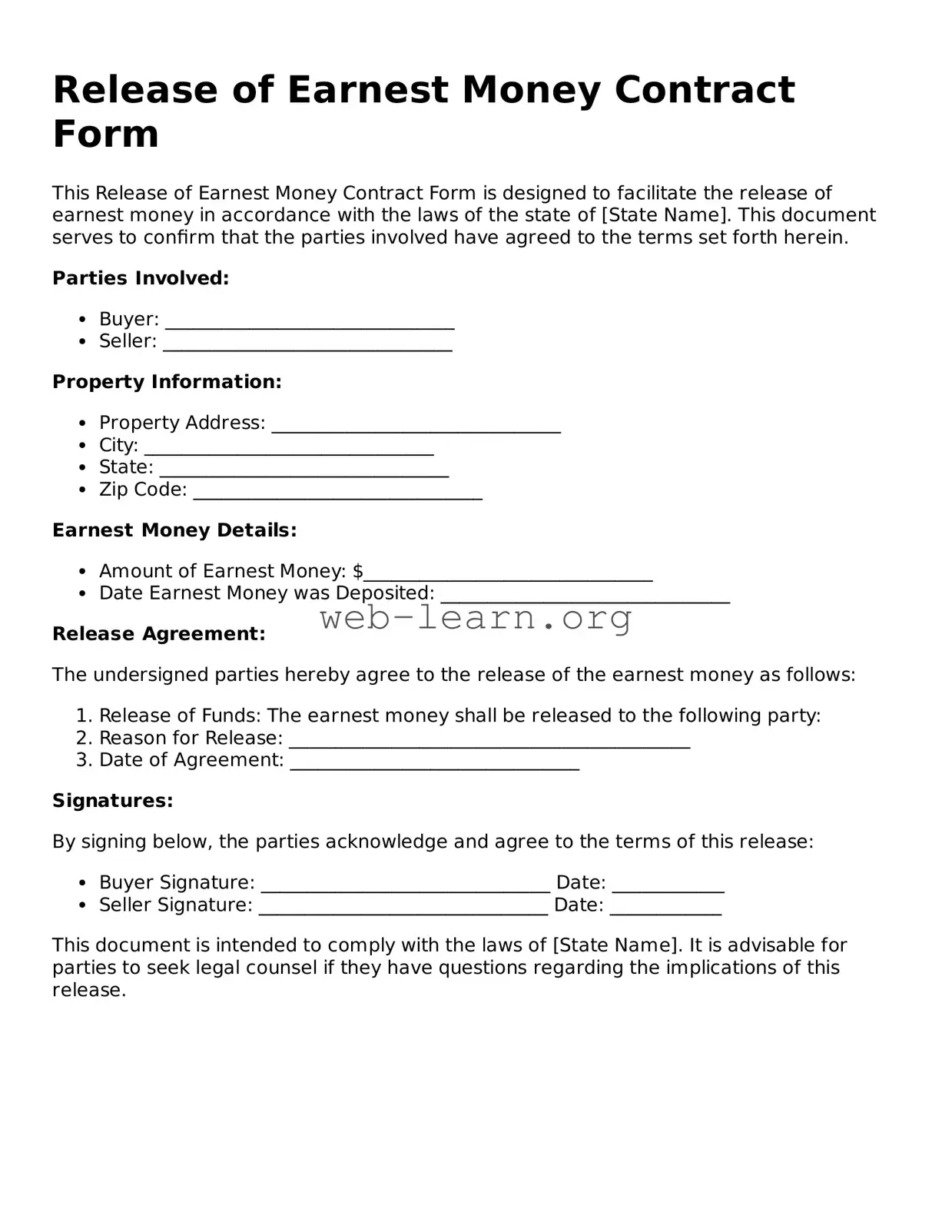
This Release of Earnest Money Contract Form is designed to facilitate the release of earnest money in accordance with the laws of the state of [State Name]. This document serves to confirm that the parties involved have agreed to the terms set forth herein.
Parties Involved:
Property Information:
Earnest Money Details:
Release Agreement:
The undersigned parties hereby agree to the release of the earnest money as follows:
Signatures:
By signing below, the parties acknowledge and agree to the terms of this release:
This document is intended to comply with the laws of [State Name]. It is advisable for parties to seek legal counsel if they have questions regarding the implications of this release.
| Fact Name | Description |
|---|---|
| Purpose | The Release of Earnest Money Contract Form is used to document the release of earnest money held in a real estate transaction. |
| Parties Involved | This form typically involves the buyer, seller, and the escrow agent or title company managing the earnest money. |
| Governing Laws | In states like California, the form is governed by the California Civil Code Section 2985. In Texas, it follows the Texas Property Code. |
| Importance | Using this form helps to prevent disputes regarding the disposition of earnest money, ensuring all parties agree on its release. |
| Submission Process | The completed form should be submitted to the escrow agent or title company to facilitate the release of funds. |
After obtaining the Release of Earnest Money Contract Form, you are ready to proceed with filling it out. Completing this form accurately is essential for the timely processing of your earnest money release. Follow these steps carefully to ensure all necessary information is included.
What is the Release of Earnest Money Contract Form?
The Release of Earnest Money Contract Form is a document used in real estate transactions. It allows parties involved in a real estate contract to formally release earnest money held in escrow. This form is crucial when a transaction does not proceed as planned, whether due to a failed inspection, financing issues, or mutual agreement to cancel the deal.
When should I use this form?
This form should be used when the parties to a real estate transaction agree to release the earnest money deposit. Common scenarios include:
Who needs to sign the form?
Typically, both the buyer and seller must sign the Release of Earnest Money Contract Form. This ensures that both parties consent to the release of funds. If there are multiple buyers or sellers, all parties involved should sign the document to avoid any disputes later.
What happens if one party does not agree to the release?
If one party does not agree to the release of earnest money, the funds may remain in escrow until a resolution is reached. In such cases, legal advice may be necessary to determine the next steps, which could involve mediation or other dispute resolution methods.
Is there a deadline for submitting this form?
While there is no universal deadline, it is generally advisable to submit the Release of Earnest Money Contract Form as soon as both parties agree to release the funds. Delaying the submission may lead to complications, especially if one party changes their mind or if there are disputes regarding the terms of the release.
What information is required on the form?
The form typically requires the following information:
Can I create my own version of this form?
While it is possible to create a custom version of the Release of Earnest Money Contract Form, it is highly recommended to use a standard form provided by real estate professionals or legal experts. Standard forms are designed to comply with local laws and regulations, reducing the risk of errors or omissions that could lead to disputes.
What should I do after submitting the form?
After submitting the Release of Earnest Money Contract Form, it is important to keep a copy for your records. Additionally, confirm with the escrow agent or title company that the release has been processed. This ensures that the earnest money is returned to the appropriate party without delay.
Where can I obtain this form?
The Release of Earnest Money Contract Form can typically be obtained from real estate agents, brokers, or legal professionals. Many online resources also provide downloadable versions of the form. Always ensure that the version you use is up-to-date and compliant with local regulations.
Filling out the Release of Earnest Money Contract Form can seem straightforward, but many people make common mistakes that can lead to complications. One frequent error is neglecting to include all necessary parties. It’s essential to ensure that all individuals involved in the transaction are listed. Missing a name can cause delays or even disputes later on.
Another mistake is failing to provide accurate property details. The form requires specific information about the property in question, including the address and any relevant identifiers. Omitting or miswriting this information can create confusion and may even invalidate the release.
People often overlook the importance of signatures. All parties must sign the form for it to be legally binding. Sometimes, individuals assume that one signature is sufficient, but without all required signatures, the document may not hold up if challenged.
Additionally, many forget to date the form. A missing date can lead to questions about when the release was agreed upon, which could impact the timing of any subsequent transactions. It’s a simple step that can save a lot of trouble down the line.
Another common oversight is not providing a clear reason for the release of earnest money. The form should explain why the earnest money is being released. Without this explanation, there may be misunderstandings or disputes regarding the funds.
Lastly, people sometimes fail to keep copies of the completed form. After submitting the Release of Earnest Money Contract Form, it’s crucial to retain a copy for personal records. This can be beneficial if any issues arise in the future, allowing you to reference the original document easily.
When navigating real estate transactions, several key documents often accompany the Release of Earnest Money Contract Form. Each document plays a vital role in ensuring that all parties are protected and informed throughout the process. Below is a list of commonly used forms that may be relevant.
Each of these documents plays a crucial role in the real estate transaction process. Understanding their purpose can help buyers and sellers navigate the complexities of property sales with greater confidence.
The Release of Earnest Money Contract Form is a crucial document in real estate transactions. It serves to outline the conditions under which earnest money can be released. Several other documents share similarities in purpose and function. Here are five such documents:
When filling out the Release of Earnest Money Contract Form, it’s essential to follow certain guidelines to ensure accuracy and compliance. Here are five things you should and shouldn't do:
By adhering to these guidelines, you can help ensure that the process of releasing earnest money proceeds smoothly and without complications.
The Release of Earnest Money Contract Form can often be misunderstood. Here are five common misconceptions:
This is not true. Both buyers and sellers can use this form. It serves to release the earnest money held in escrow, regardless of which party initiated the request.
While the form is a request for the release of funds, it does not automatically guarantee that the money will be returned. The conditions of the sale and any agreements between the parties play a significant role in the final decision.
This form can also be used when a transaction closes successfully. If both parties agree to release the earnest money at closing, this form is still relevant.
The timing for submitting the Release of Earnest Money Contract Form varies. It depends on the specific terms of the purchase agreement and the circumstances surrounding the transaction.
Understanding the Release of Earnest Money Contract Form is essential for anyone involved in a real estate transaction. Here are some key takeaways to consider when filling out and using this important document:
The form is used to formally release earnest money that was previously deposited in a real estate transaction. This can occur for various reasons, such as a buyer deciding to withdraw their offer.
Both parties involved in the transaction, typically the buyer and the seller, must agree to the release of the earnest money. This ensures that there is mutual consent regarding the handling of the funds.
It is important to clearly state the reason for the release in the form. Providing a detailed explanation can help prevent misunderstandings or disputes later on.
After completing the form, ensure that all parties sign it. The signatures indicate that everyone involved acknowledges and agrees to the terms of the release.
Once the form is signed, it should be submitted to the escrow agent or the party holding the earnest money. This initiates the process of returning the funds to the appropriate party.
By following these guidelines, you can navigate the process of releasing earnest money with greater confidence and clarity.
Share Acquisition Agreement - It may require the buyer to conduct background checks on the company.
Supplemental Purchase Agreement - It is a useful tool for negotiating additional terms after the main agreement has been signed.
Transaction Finalization Extension Addendum - A simple way to adjust closing dates without starting over.