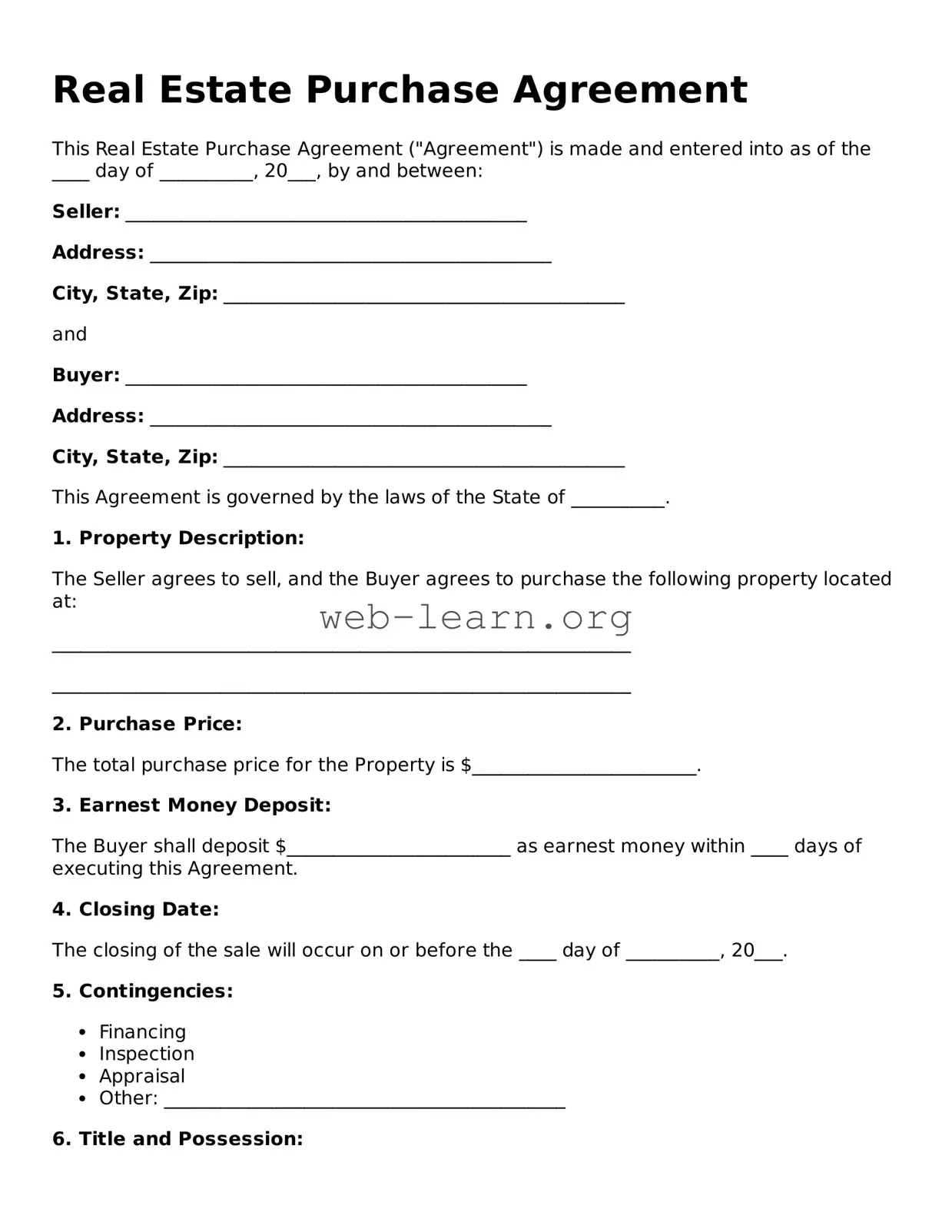
When navigating the complexities of buying or selling property, the Real Estate Purchase Agreement (REPA) serves as a crucial document that outlines the terms and conditions of the transaction. This form typically includes essential details such as the purchase price, the legal description of the property, and the closing date. Additionally, it specifies the responsibilities of both the buyer and the seller, addressing contingencies that may arise, such as financing or inspection requirements. The agreement also outlines the earnest money deposit, which demonstrates the buyer's commitment to the purchase. By clearly detailing these aspects, the REPA helps to protect the interests of both parties and provides a framework for resolving any disputes that may occur during the transaction process. Understanding this form is vital for anyone involved in real estate, as it lays the foundation for a successful transfer of property ownership.
Real Estate Purchase Agreement
This Real Estate Purchase Agreement ("Agreement") is made and entered into as of the ____ day of __________, 20___, by and between:
Seller: ___________________________________________
Address: ___________________________________________
City, State, Zip: ___________________________________________
and
Buyer: ___________________________________________
Address: ___________________________________________
City, State, Zip: ___________________________________________
This Agreement is governed by the laws of the State of __________.
1. Property Description:
The Seller agrees to sell, and the Buyer agrees to purchase the following property located at:
______________________________________________________________
______________________________________________________________
2. Purchase Price:
The total purchase price for the Property is $________________________.
3. Earnest Money Deposit:
The Buyer shall deposit $________________________ as earnest money within ____ days of executing this Agreement.
4. Closing Date:
The closing of the sale will occur on or before the ____ day of __________, 20___.
5. Contingencies:
6. Title and Possession:
The Seller shall provide a clear title to the Property at closing. Possession shall be delivered to the Buyer on the closing date.
7. Default:
In the event of default by either party, the non-defaulting party may pursue remedies available under state law.
8. Signatures:
By signing below, both parties agree to the terms outlined in this Agreement.
Seller's Signature: ___________________________ Date: _______________
Buyer's Signature: ___________________________ Date: _______________
This Agreement constitutes the entire understanding between the parties and supersedes all prior discussions or agreements.
| Fact Name | Description |
|---|---|
| Definition | A Real Estate Purchase Agreement is a legally binding contract between a buyer and a seller outlining the terms of a real estate transaction. |
| Components | The agreement typically includes details such as the purchase price, property description, and closing date. |
| Earnest Money | Buyers often provide earnest money to demonstrate their serious intent to purchase the property. |
| Contingencies | Common contingencies may include financing, inspections, and appraisal requirements that must be met for the sale to proceed. |
| Governing Law | The agreement is typically governed by state law, which varies by jurisdiction. For example, California law applies to agreements executed in California. |
| Disclosure Requirements | Sellers are often required to disclose known issues with the property, such as structural problems or pest infestations. |
| Closing Process | The closing process involves finalizing the transaction, transferring ownership, and recording the deed with local authorities. |
| Default Consequences | If either party defaults on the agreement, the non-breaching party may seek remedies, which could include retaining earnest money or pursuing legal action. |
| Modification | Any changes to the agreement must be made in writing and signed by both parties to be enforceable. |
| Importance of Legal Advice | It is advisable for both buyers and sellers to seek legal advice before signing the agreement to ensure their rights are protected. |
Filling out a Real Estate Purchase Agreement is an important step in the home buying process. After completing this form, you will be one step closer to finalizing your property purchase. The next steps will involve reviewing the agreement, negotiating terms if necessary, and eventually signing the document to make it legally binding.
A Real Estate Purchase Agreement is a legal document that outlines the terms and conditions under which a buyer agrees to purchase a property from a seller. This agreement serves as a binding contract once both parties sign it. It typically includes details such as the purchase price, financing terms, and contingencies that must be met before the sale can proceed.
Several important elements should be included in a Real Estate Purchase Agreement:
This agreement protects both the buyer and the seller by clearly defining the terms of the sale. It minimizes misunderstandings and disputes by outlining each party's responsibilities. Additionally, it provides a legal framework for resolving any issues that may arise during the transaction.
Yes, the Real Estate Purchase Agreement can be modified after signing, but both parties must agree to any changes. Modifications should be documented in writing and signed by both the buyer and the seller to ensure clarity and enforceability.
If either the buyer or the seller fails to comply with the terms of the agreement, it constitutes a breach. The non-breaching party may have several options, including seeking damages, enforcing the agreement in court, or terminating the contract. The specific remedies available depend on the terms outlined in the agreement and applicable state laws.
Filling out a Real Estate Purchase Agreement form can be daunting. Many individuals make mistakes that can lead to complications down the line. One common error is failing to include all necessary parties in the agreement. This can happen when buyers or sellers neglect to list co-owners or other interested parties. Omitting someone can create confusion and potentially invalidate the agreement.
Another mistake often seen is not providing accurate property details. This includes the address, legal description, and any specific features of the property. Inaccurate information can lead to disputes later, especially if the buyer believes they are purchasing a different property than what is described in the agreement.
People frequently overlook the importance of understanding the terms of the agreement. Some may sign without fully grasping the implications of contingencies, financing, or closing dates. It is crucial to read and understand each section thoroughly. Misunderstandings can lead to unmet expectations and financial loss.
Lastly, many individuals forget to include important dates and deadlines. These can include the date for the earnest money deposit, inspection periods, and closing dates. Without clear timelines, both parties may find themselves at odds, leading to frustration and potential legal issues. Keeping track of these details is essential for a smooth transaction.
When engaging in a real estate transaction, several important documents accompany the Real Estate Purchase Agreement. Each document serves a specific purpose and helps ensure a smooth process for both buyers and sellers. Understanding these documents can provide clarity and confidence as you navigate your real estate journey.
Each of these documents plays a vital role in the real estate transaction process. Familiarity with them can help buyers and sellers navigate their responsibilities and rights effectively. Being well-informed can lead to a more successful and less stressful experience in real estate dealings.
Lease Agreement: This document outlines the terms under which a tenant rents property from a landlord. Similar to a purchase agreement, it details the parties involved, property description, and the obligations of each party.
Option to Purchase Agreement: This agreement gives a tenant the right to purchase the property at a later date. Like a purchase agreement, it specifies the purchase price and conditions for the sale.
Seller Disclosure Statement: This document is provided by the seller to inform potential buyers about the condition of the property. It is similar in that it is often part of the overall purchase process and helps buyers make informed decisions.
Real Estate Listing Agreement: This agreement is between a property owner and a real estate agent. It outlines the agent’s responsibilities and the terms of sale, similar to how a purchase agreement outlines the sale terms between buyer and seller.
Purchase and Sale Agreement: Often used interchangeably with the real estate purchase agreement, this document serves the same purpose of detailing the terms of sale for a property, including price and closing date.
Financing Agreement: This document outlines the terms of a loan used to purchase real estate. It is similar in that it details financial obligations and can be a crucial part of the overall purchase process.
Title Report: This document provides information about the legal ownership of the property. While not a purchase agreement itself, it is closely related as it ensures that the buyer is aware of any liens or claims against the property before the sale is finalized.
When filling out a Real Estate Purchase Agreement form, attention to detail is crucial. Here are some important dos and don'ts to keep in mind:
Understanding the Real Estate Purchase Agreement (REPA) is crucial for anyone involved in buying or selling property. However, several misconceptions can cloud this important document. Here’s a list of ten common misunderstandings, along with clarifications to help you navigate this essential part of real estate transactions.
By addressing these misconceptions, individuals can approach the Real Estate Purchase Agreement with greater confidence and clarity, ensuring a smoother transaction process.
When filling out and using the Real Estate Purchase Agreement form, keep the following key points in mind: