When it comes to real estate transactions, having the right tools at your disposal can make all the difference. One essential tool is the Real Estate Power of Attorney form. This document allows you to designate someone you trust to handle your real estate matters on your behalf. Whether you’re buying, selling, or managing property, this form can streamline the process and ensure that your interests are protected. It grants your agent the authority to sign documents, negotiate deals, and make decisions regarding your property. Importantly, the form can be tailored to fit your specific needs, giving you control over what powers you grant. Understanding how this form works and the implications of its use is crucial for anyone involved in real estate transactions. With the right knowledge, you can navigate the complexities of property management with confidence.
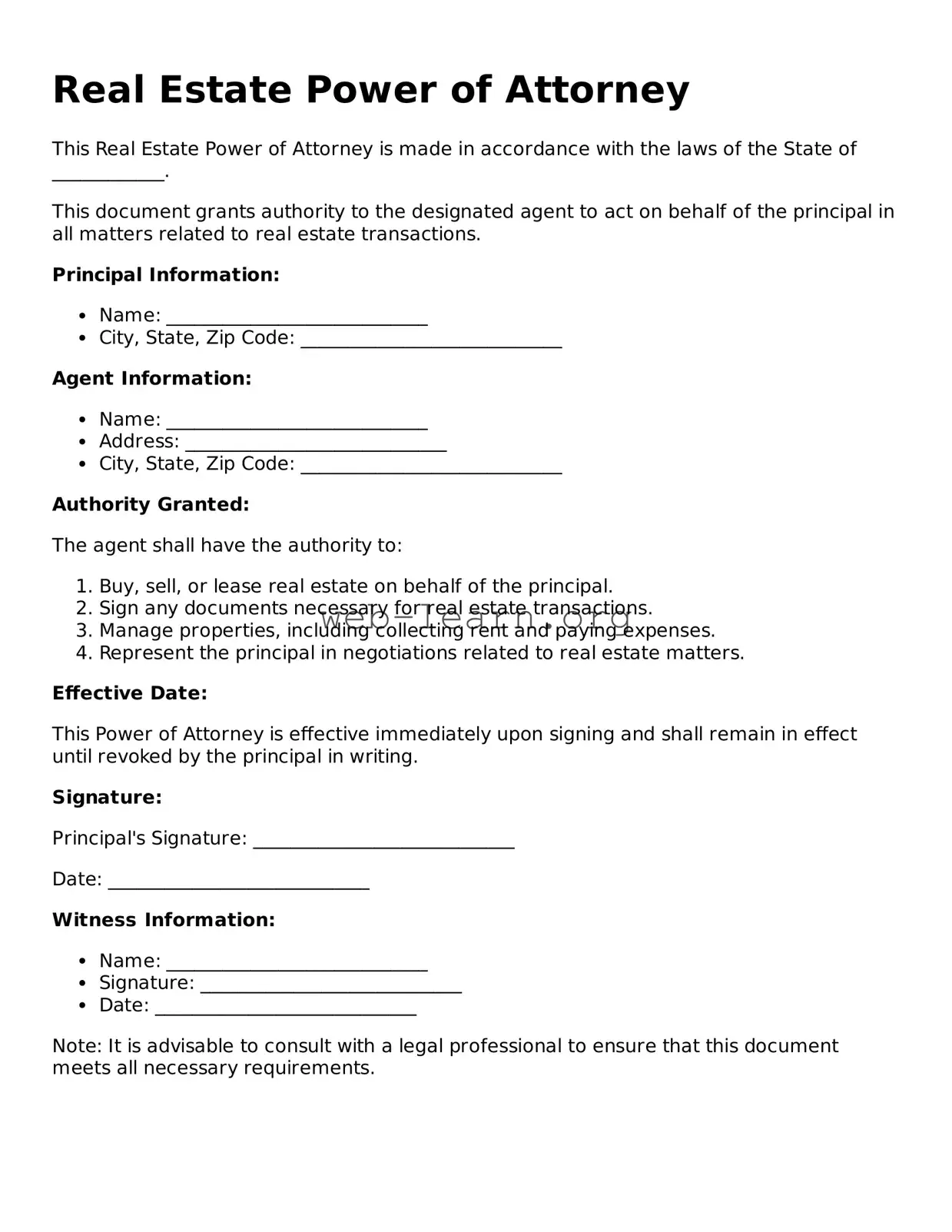
Real Estate Power of Attorney
This Real Estate Power of Attorney is made in accordance with the laws of the State of ____________.
This document grants authority to the designated agent to act on behalf of the principal in all matters related to real estate transactions.
Principal Information:
Agent Information:
Authority Granted:
The agent shall have the authority to:
Effective Date:
This Power of Attorney is effective immediately upon signing and shall remain in effect until revoked by the principal in writing.
Signature:
Principal's Signature: ____________________________
Date: ____________________________
Witness Information:
Note: It is advisable to consult with a legal professional to ensure that this document meets all necessary requirements.
| Fact Name | Description |
|---|---|
| Definition | A Real Estate Power of Attorney form allows an individual to designate another person to handle real estate transactions on their behalf. |
| Governing Law | The laws governing the use of this form vary by state. For example, in California, the relevant laws are found in the California Probate Code. |
| Scope of Authority | The person granted power can perform a variety of tasks, such as buying, selling, or managing property, depending on the specific terms outlined in the document. |
| Durability | A durable power of attorney remains effective even if the principal becomes incapacitated, ensuring continuity in real estate management. |
| Revocation | The principal can revoke the power of attorney at any time, provided they are mentally competent to do so. |
Filling out a Real Estate Power of Attorney form requires careful attention to detail. Once completed, this document will empower someone to act on your behalf in real estate matters. Follow these steps to ensure you fill out the form correctly.
A Real Estate Power of Attorney is a legal document that allows one person, known as the principal, to grant another person, known as the agent or attorney-in-fact, the authority to act on their behalf in real estate transactions. This can include buying, selling, leasing, or managing property.
There are several reasons to consider a Real Estate Power of Attorney:
Your agent can be anyone you trust, such as a family member, friend, or professional, like an attorney or real estate agent. It is crucial to choose someone who understands your wishes and can act in your best interest.
Yes, in most states, a Real Estate Power of Attorney must be notarized to be legally valid. Notarization helps verify the identity of the principal and ensures that the document was signed voluntarily.
Yes, you can revoke a Real Estate Power of Attorney at any time, as long as you are mentally competent. To do so, you must create a written revocation and notify your agent and any relevant parties, such as financial institutions or real estate professionals.
You can grant your agent a wide range of powers, including:
However, you can also limit the powers granted if you wish to maintain control over certain aspects.
While a Real Estate Power of Attorney is recognized in all states, the specific requirements and rules can vary. It is essential to understand the laws in your state to ensure that the document is valid and enforceable.
If your agent fails to act in your best interest or engages in misconduct, you can take legal action against them. This may include revoking the Power of Attorney and potentially seeking damages for any losses incurred.
To ensure your Real Estate Power of Attorney is effective:
Filling out a Real Estate Power of Attorney form can be a straightforward process, but mistakes can lead to complications down the line. One common error is failing to specify the powers granted. It’s essential to clearly outline what the agent can and cannot do. Without this clarity, the agent may overstep their authority or, conversely, may not be able to perform necessary actions.
Another frequent mistake is neglecting to include the date of execution. The date is crucial because it establishes when the powers take effect. If the date is missing, it can create confusion regarding the validity of the document. Additionally, individuals often forget to sign the form. A Power of Attorney is not effective unless it is signed by the principal. This oversight can render the entire document useless.
Some people also overlook the importance of having witnesses or notarization. Depending on state laws, a Power of Attorney may require one or more witnesses or a notary public to validate it. Without these, the document might not hold up in legal situations. Furthermore, failing to provide the agent's full name and contact information can lead to issues. The agent must be easily identifiable to avoid any disputes or confusion regarding who has the authority.
Another mistake is using outdated forms. Real estate laws can change, and using an old version of the Power of Attorney form may lead to legal challenges. It’s always best to ensure that the most current version is being utilized. Additionally, individuals often forget to revoke previous Powers of Attorney. If a new document is created without revoking the old one, it can lead to conflicts over which document is valid.
Lastly, people sometimes do not consider the implications of granting Power of Attorney. It’s vital to understand the level of trust being placed in the agent. If the relationship with the agent changes, it may be necessary to revoke the Power of Attorney. Failing to do so can leave one vulnerable to misuse of authority.
A Real Estate Power of Attorney form allows one person to authorize another to act on their behalf in real estate transactions. This document is often used in conjunction with several other forms and documents to ensure that all legal requirements are met and that the transaction proceeds smoothly. Below are some common forms that are frequently used alongside the Real Estate Power of Attorney.
Using these documents in conjunction with the Real Estate Power of Attorney can help facilitate a smoother transaction process. Each form serves a specific purpose and contributes to the overall legal framework needed for real estate dealings.
When filling out a Real Estate Power of Attorney form, it is important to approach the task with care. Below are some key actions to take and avoid, ensuring that the document is completed accurately and effectively.
By following these guidelines, you can help ensure that your Real Estate Power of Attorney form is filled out correctly and serves its intended purpose. Take your time and be thorough in your approach.
Understanding the Real Estate Power of Attorney form can be challenging due to common misconceptions. Below are five prevalent misunderstandings about this important legal document.
Many people believe that a Real Estate Power of Attorney is limited to transactions involving the purchase or sale of real estate. In reality, this form can also authorize someone to manage property, handle leases, or deal with property taxes on behalf of another person.
While older adults often use this form to delegate authority, anyone can benefit from a Real Estate Power of Attorney. Unexpected situations, such as travel or health issues, may require someone to act on behalf of another person, regardless of age.
Some individuals assume that notarization is a requirement for the Real Estate Power of Attorney to be effective. Although notarization is recommended for added credibility, the specific requirements can vary by state. In some cases, witnesses may suffice.
People often think that signing a Real Estate Power of Attorney grants the agent unrestricted authority. However, the document can be tailored to specify the powers granted, allowing the principal to maintain control over certain decisions.
Another common belief is that once a Real Estate Power of Attorney is established, it cannot be changed. In fact, the principal retains the right to revoke or modify the document at any time, as long as they are mentally competent to do so.
By addressing these misconceptions, individuals can better understand the Real Estate Power of Attorney and its potential benefits.
When filling out and using a Real Estate Power of Attorney form, it is essential to consider several key points to ensure the document is effective and legally binding. Below are important takeaways:
Temporary Power of Attorney for Child - It grants temporary authority to a trusted adult for specific responsibilities regarding the child.