When embarking on a significant purchase, particularly in real estate or business acquisitions, the Purchase Letter of Intent (LOI) serves as a critical first step in the negotiation process. This document outlines the preliminary understanding between the buyer and seller, establishing a foundation for future agreements. It typically includes essential details such as the purchase price, terms of payment, and timelines for due diligence and closing. The LOI may also address any contingencies that need to be met before finalizing the deal. While it is generally non-binding, this letter demonstrates the parties' serious intent to move forward and can help prevent misunderstandings down the line. By clearly articulating the key components of the transaction, the Purchase Letter of Intent not only facilitates smoother negotiations but also sets the stage for a successful agreement.
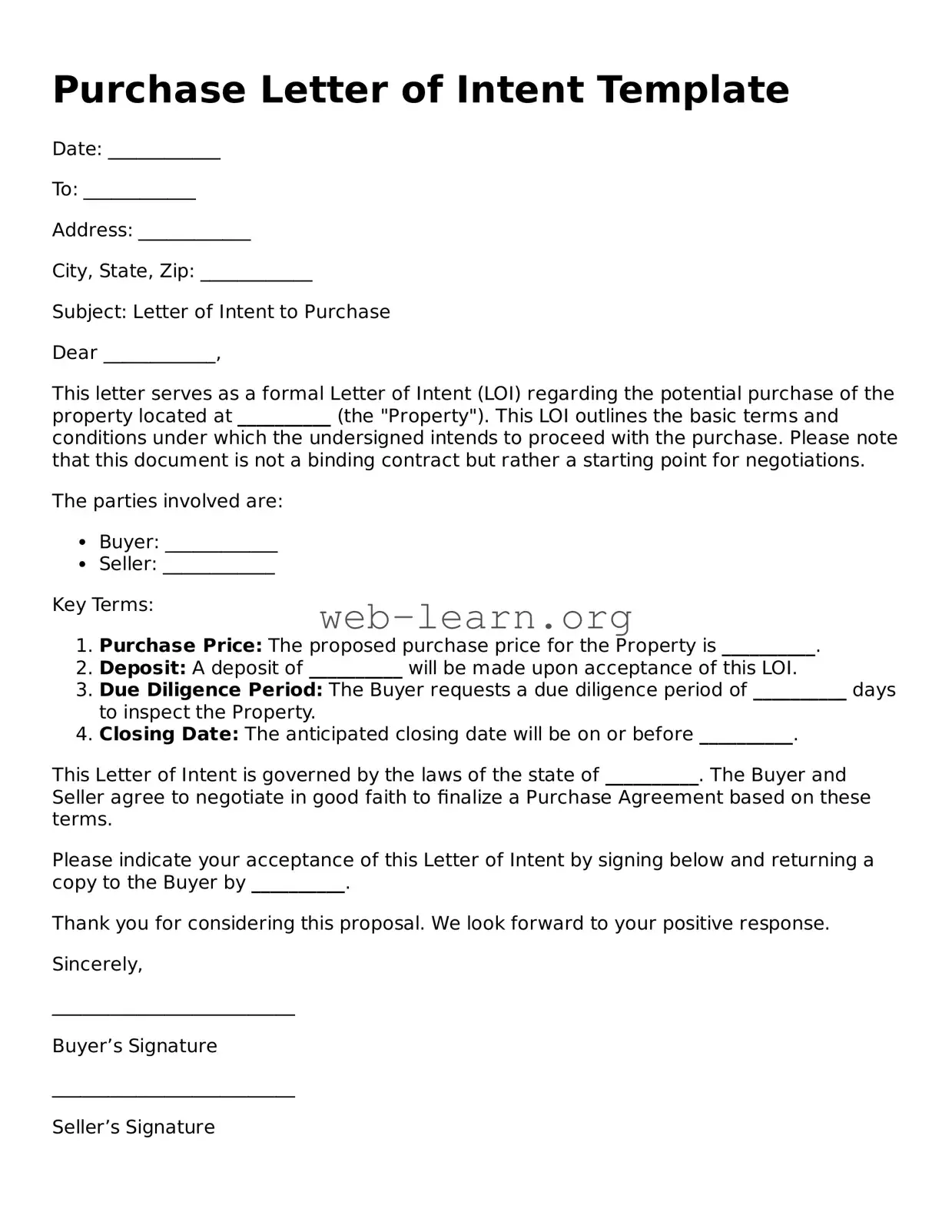
Purchase Letter of Intent Template
Date: ____________
To: ____________
Address: ____________
City, State, Zip: ____________
Subject: Letter of Intent to Purchase
Dear ____________,
This letter serves as a formal Letter of Intent (LOI) regarding the potential purchase of the property located at __________ (the "Property"). This LOI outlines the basic terms and conditions under which the undersigned intends to proceed with the purchase. Please note that this document is not a binding contract but rather a starting point for negotiations.
The parties involved are:
Key Terms:
This Letter of Intent is governed by the laws of the state of __________. The Buyer and Seller agree to negotiate in good faith to finalize a Purchase Agreement based on these terms.
Please indicate your acceptance of this Letter of Intent by signing below and returning a copy to the Buyer by __________.
Thank you for considering this proposal. We look forward to your positive response.
Sincerely,
__________________________
Buyer’s Signature
__________________________
Seller’s Signature
| Fact Name | Description |
|---|---|
| Definition | A Purchase Letter of Intent is a document that outlines the preliminary agreement between a buyer and a seller regarding the purchase of a property. |
| Purpose | This document serves to express the intent of both parties to negotiate the terms of a sale before finalizing a formal purchase agreement. |
| Non-Binding | Typically, a Purchase Letter of Intent is non-binding, meaning it does not legally obligate either party to complete the transaction. |
| State-Specific Forms | Different states may have specific forms or requirements for Purchase Letters of Intent, influenced by local laws. |
| Governing Law | The governing laws for Purchase Letters of Intent vary by state. For example, in California, the relevant laws include the California Civil Code. |
Once you have the Purchase Letter of Intent form in front of you, it’s time to fill it out with the necessary information. This form serves as a preliminary agreement between parties interested in a potential purchase. Completing it accurately is crucial for moving forward in the buying process.
After completing the form, review it carefully to ensure all information is accurate and complete. Once satisfied, you can present it to the seller to initiate discussions regarding the purchase.
A Purchase Letter of Intent (LOI) is a document that outlines the preliminary understanding between a buyer and a seller regarding the sale of a property or business. It serves as a starting point for negotiations and expresses the buyer's intention to purchase the specified asset. While it is not a legally binding contract, it often includes important terms that both parties can agree upon before moving forward.
This document is crucial because it lays the groundwork for the transaction. It helps clarify the expectations of both the buyer and the seller, which can prevent misunderstandings later on. By outlining key details such as price, payment terms, and timelines, an LOI can facilitate smoother negotiations and provide a framework for the eventual purchase agreement.
A well-crafted Purchase Letter of Intent typically includes:
Including these elements can help ensure that both parties are on the same page as negotiations progress.
Generally, a Purchase Letter of Intent is not legally binding. However, some sections may be binding if explicitly stated, such as confidentiality agreements or exclusivity clauses. It’s essential to clearly indicate which parts of the LOI are binding and which are not to avoid confusion later on.
The LOI can significantly impact negotiations by establishing a clear framework for discussions. It allows both parties to identify and address key issues early in the process, which can lead to more productive negotiations. Additionally, having a written document can help keep both parties accountable and focused on reaching a mutually beneficial agreement.
Once the Purchase Letter of Intent is signed, it’s time to move forward with due diligence. This may involve inspections, appraisals, and securing financing. Both parties should also begin drafting a formal purchase agreement based on the terms outlined in the LOI. Keeping communication open and transparent during this phase is vital to ensure a successful transaction.
When individuals or businesses decide to purchase a property or asset, they often begin the process by filling out a Purchase Letter of Intent (LOI). This document serves as a preliminary agreement outlining the terms of the proposed transaction. However, there are common mistakes that people make when completing this form that can lead to misunderstandings or complications later on.
One frequent error is failing to provide complete information. Buyers sometimes overlook important details, such as the full legal description of the property or the specific terms of the offer. Incomplete information can create confusion and may delay the negotiation process. It is crucial to ensure that all sections of the LOI are filled out accurately and thoroughly.
Another mistake involves using vague language. When terms are not clearly defined, it can lead to different interpretations by the parties involved. For instance, phrases like "reasonable time" or "fair price" can be subjective. Instead, it is better to use precise terms that leave little room for ambiguity. This clarity helps to set clear expectations and can prevent disputes down the line.
Additionally, some individuals neglect to include contingencies in their LOI. Contingencies are conditions that must be met for the agreement to move forward, such as obtaining financing or conducting a satisfactory inspection. Omitting these important clauses can leave buyers vulnerable, as they may find themselves committed to a purchase without the necessary protections in place.
Lastly, many people forget to consult with professionals before submitting their Purchase Letter of Intent. While it might seem straightforward, having a real estate agent or attorney review the document can provide valuable insights. These experts can identify potential issues and suggest improvements, ultimately safeguarding the buyer's interests.
When preparing a Purchase Letter of Intent, several other forms and documents may also be needed to ensure a smooth transaction. Each of these documents plays a vital role in the process, providing clarity and structure to the agreement between parties.
Having these documents ready can streamline the purchasing process and help avoid potential complications. Each form contributes to a clearer understanding between the buyer and seller, ensuring that everyone is on the same page throughout the transaction.
The Purchase Letter of Intent (LOI) serves as a preliminary agreement between parties interested in completing a transaction. Several other documents share similarities with the LOI in terms of purpose and structure. Here are four such documents:
When filling out a Purchase Letter of Intent form, there are several important dos and don'ts to keep in mind. Following these guidelines can help ensure that your intentions are clearly communicated and understood.
Things You Should Do:
Things You Shouldn't Do:
Understanding the Purchase Letter of Intent (LOI) is crucial for anyone involved in real estate or business transactions. However, several misconceptions can cloud the true purpose and function of this document. Here are five common misconceptions:
By dispelling these misconceptions, individuals can better navigate the complexities of the Purchase Letter of Intent and utilize it effectively in their transactions.
When filling out and using the Purchase Letter of Intent form, consider the following key takeaways:
Commercial Lease Proposal Template - This document can serve as a roadmap for the negotiation of the final lease agreement.
Letter of Intent Template Medical School - An opportunity to discuss how you envision your role in advancing healthcare.
Letter of Intent for Business - A Letter of Intent can facilitate communication between the buyer and seller.