Before embarking on any journey, especially when it involves a commercial vehicle, safety should always be the top priority. The Pre Trip Inspection Checklist form serves as an essential tool for drivers to ensure that their vehicle is in optimal condition before hitting the road. This comprehensive checklist covers various critical aspects of the vehicle, including the condition of tires, brakes, lights, and fluid levels. It also prompts drivers to examine the functioning of essential systems such as steering, suspension, and exhaust. By systematically reviewing each component, drivers can identify potential issues that may compromise safety or lead to costly repairs later on. Furthermore, this checklist not only helps in maintaining the vehicle's reliability but also aligns with regulatory compliance, ensuring that all safety standards are met. Ultimately, the Pre Trip Inspection Checklist empowers drivers to take responsibility for their safety and the safety of others on the road, fostering a culture of diligence and preparedness in the transportation industry.
Class A CDL
®
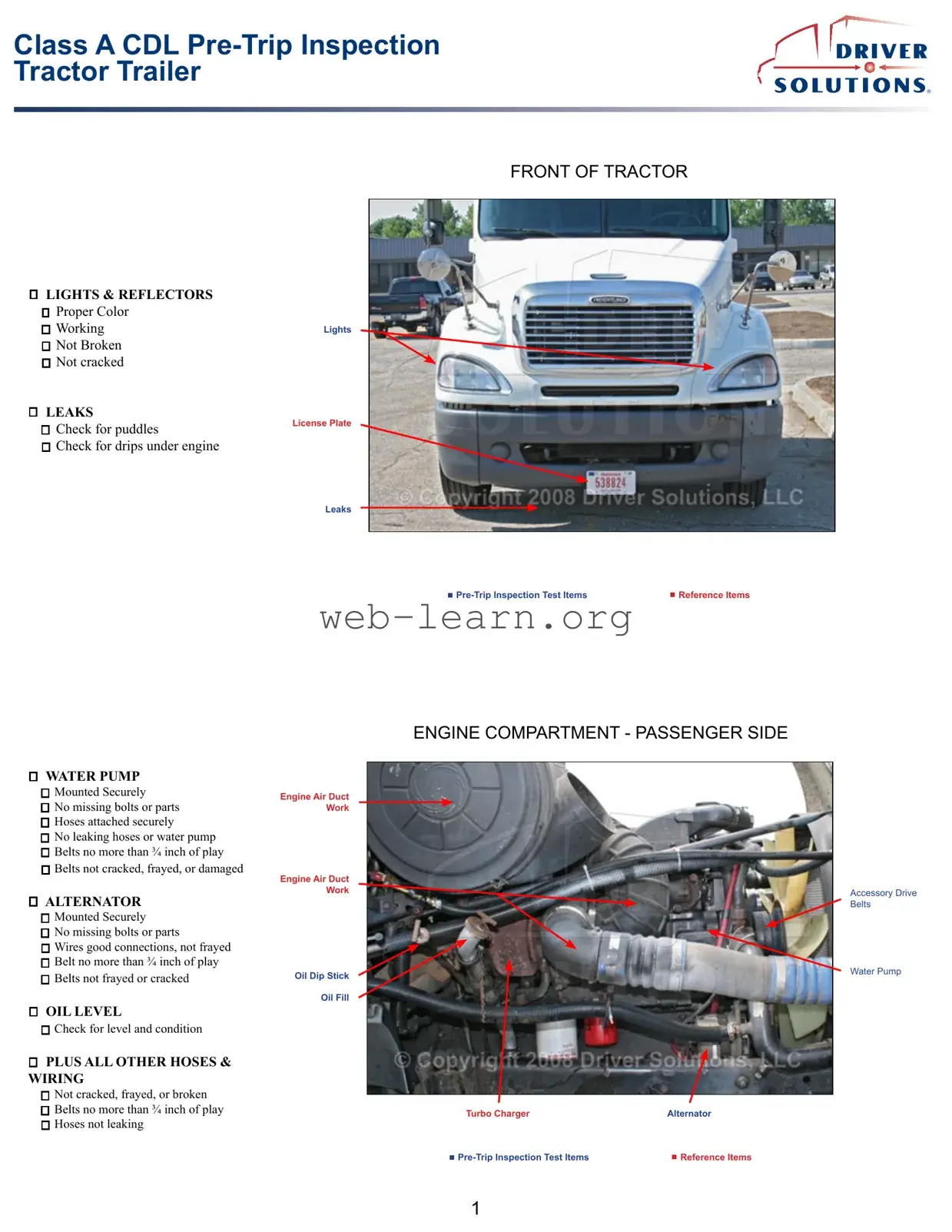
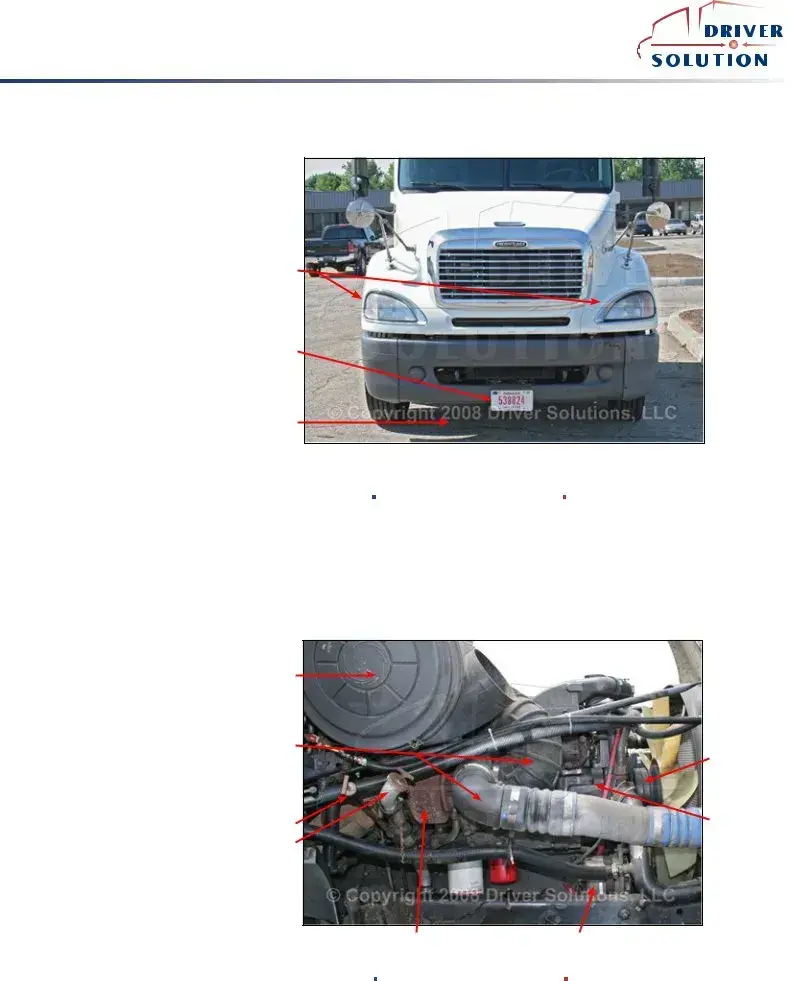
FRONT OF TRACTOR
LIGHTS & REFLECTORS o Proper Color
o Working
o Not Broken o Not cracked
LEAKS
o Check for puddles
o Check for drips under engine
Lights
License Plate
Leaks
Reference Items |
ENGINE COMPARTMENT - PASSENGER SIDE
WATER PUMP o Mounted Securely
o No missing bolts or parts o Hoses attached securely
o No leaking hoses or water pump o Belts no more than ¾ inch of play
o Belts not cracked, frayed, or damaged
ALTERNATOR
o Mounted Securely
o No missing bolts or parts
oWires good connections, not frayed
oBelt no more than ¾ inch of play
oBelts not frayed or cracked
OIL LEVEL
oCheck for level and condition
PLUS ALL OTHER HOSES & WIRING
oNot cracked, frayed, or broken
oBelts no more than ¾ inch of play o Hoses not leaking
Engine Air Duct Work
Engine Air Duct Work
Oil Dip Stick
Oil Fill
|
Accessory Drive |
|
Belts |
|
Water Pump |
Turbo Charger |
Alternator |
Reference Items |
1
Class A CDL
®
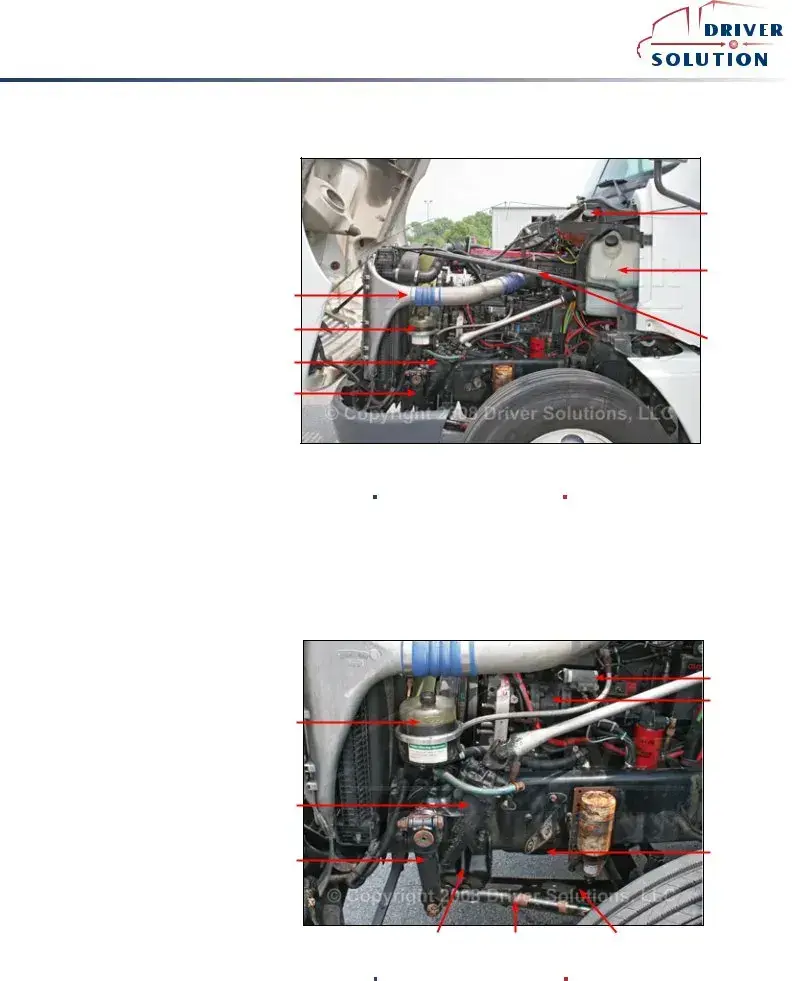
ENGINE COMPARTMENT - DRIVER SIDE
COOLANT
oCheck for level and condition
oHoses attached and not leaking
POWER STEERING RESERVOIR
oMounted properly
oHoses attached and not leaking
oCheck for level and condition
AIR COMPRESSOR
oMounted Securely
oNo missing bolts or parts
oNo air leaks at lines
oCheck if gear or belt driven
oBelt no more than ¾ inch of play
oBelts not cracked or frayed
STEERING GEAR BOX
oMounted properly
oNo missing parts, nuts or bolts o Lines and hoses not leaking or broken
|
Engine Coolant |
|
Reservoir |
|
Windsheild |
|
Washer Fluid |
|
Reservoir |
Engine Air Duct |
|
Work |
|
Power Steering |
|
Reservoir |
Radiator Brace |
|
|
Steering Gear |
|
Box |
|
Pitman Arm |
|
Reference Items |
POWER STEERING RESERVOIR |
ENGINE COMPARTMENT - DRIVER SIDE CON’T |
||
|
|
|
|
o Mounted properly |
|
|
|
o Hoses attached and not leaking |
|
|
|
o Check for level and condition |
|
|
|
AIR COMPRESSOR |
|
|
|
o Mounted Securely |
Power Steering |
|
|
o No missing bolts or parts |
|
|
|
Reservoir |
|
|
|
o No air leaks at lines |
|
|
|
o Check if gear or belt driven |
|
|
|
o Belt no more than ¾ inch of play |
|
|
|
o Belts not cracked or frayed |
|
|
|
STEERING GEAR BOX |
Steering Gear |
|
|
Box |
|
|
|
o Mounted properly |
|
|
|
o No missing parts, nuts or bolts |
|
|
|
o Lines and hoses not leaking or |
Pitman Arm |
|
|
broken |
|
|
|
|
|
|
|
STEERING LINKAGE |
|
|
|
o Pitman arm, Drag link, Steering |
|
|
|
knuckle, Tie rods and tie rod ends |
|
|
|
o Not cracked, bent or broken |
Spring Mount |
Drag Link |
Leaf Spring |
o Castle nuts and cotter pins |
|
|
|
o Not missing and in place |
|
|
|
Reference Items |
Air Governor
Air Compressor
Engine Oil Pan
2
Class A CDL
®
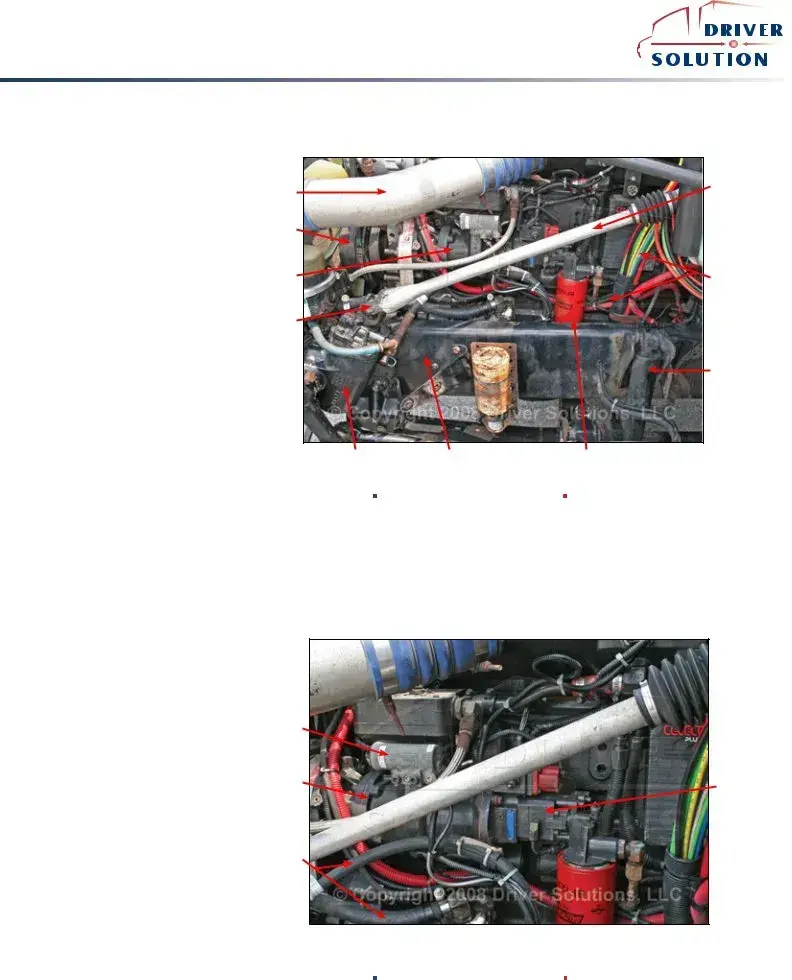
AIR COMPRESSOR o Mounted Securely
o No missing bolts or parts o No air leaks at lines
o Check if gear or belt driven
o Belt no more than ¾ inch of play o Belts not cracked or frayed
STEERING GEAR BOX
o Mounted properly
oNo missing parts, nuts or bolts o Lines and hoses not leaking or broken
ENGINE COMPARTMENT - DRIVER SIDE CON’T
Engine Air Duct
Work
Fan Belts
Gear Driven Air
Compressor
Steering
Steering Column
Additional Hoses & Wiring
Shock Absorber
Steering Gear Box |
Frame Rail |
Fuel Filter |
Reference Items |
||
ENGINE COMPARTMENT - AIR COMPRESSOR
AIR COMPRESSOR o Mounted Securely
o No missing bolts or parts o No air leaks at lines
o Check if gear or belt driven
o Belt no more than ¾ inch of play o Belts not cracked or frayed
Air Governor
Gear Driven Air Compressor
Hoses
Fuel Pump
Reference Items |
3
Class A CDL
®
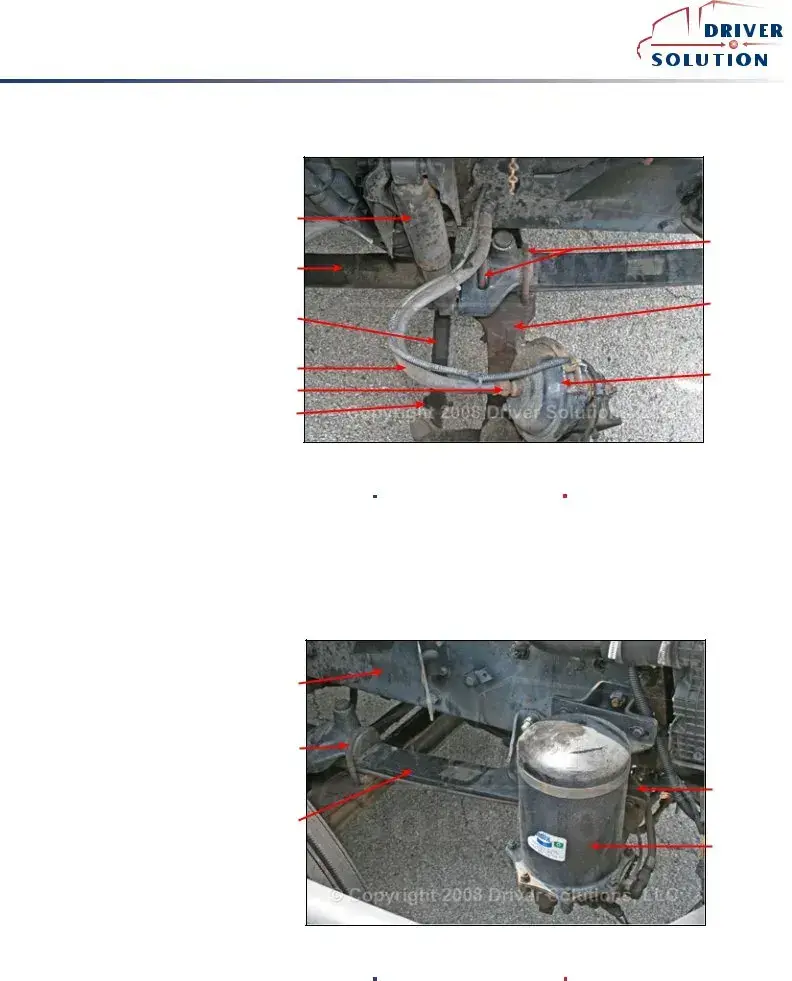
FRONT SUSPENSION
LEAF SPRINGS
o Not shifted or out of place
oNot cracked, broken or missing
SPRING MOUNTS
oMounted securely- front, back, and
oNot cracked or broken
SHOCK ABSORBER
oMounted Securely
oNot bent or dented o Not leaking
Shock Absorber
Leaf Spring
Tie Rod
Air Hose
Air LIne
Tie Rod End
Axle |
Service Brake |
Chamber |
Reference Items |
LEAF SPRINGS
o Not shifted or out of place
oNot cracked, broken or missing
SPRING MOUNTS
oMounted securely- front, back, and
oNot cracked or broken
SHOCK ABSORBER
oMounted Securely
oNot bent or dented o Not leaking
FRONT SUSPENSION CON’T
Frame Rail
Leaf Spring
Air Dryer location varies depending on model.
Located either behind the front bumper or behind the fuel tank.
Reference Items |
4
Spring Mount
Air Dryer
Class A CDL
®
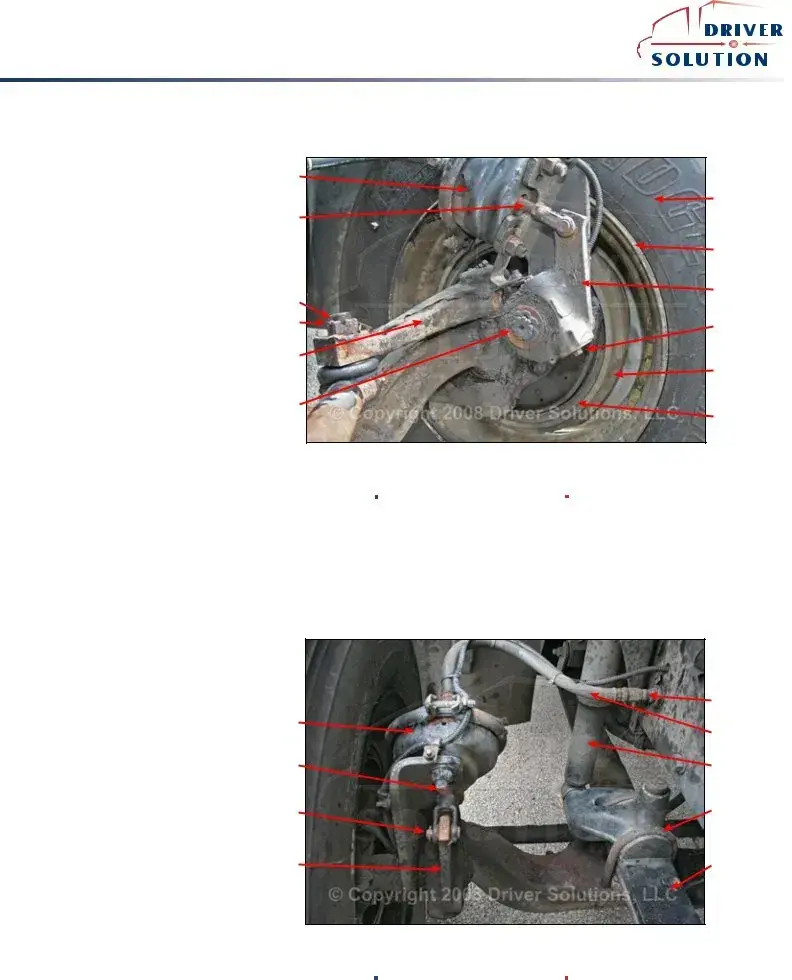
HOSES AND LINES |
|
FRONT BRAKES |
|
|
|
||
o Mounted securely |
Service Brake |
|
|
o |
Not leaking |
|
|
o |
Not cracked or frayed |
Chamber |
|
|
Tire |
||
|
|
|
|
CHAMBER |
Push Rod |
|
|
o Mounted securely |
|
|
|
o Not dented or damaged |
|
Wheel |
|
o |
Not leaking |
|
|
SLACK ADJUSTER |
|
Slack Adjuster |
|
o |
No more than 1 inch of free play at |
Castle Nut |
|
the push rod with the brakes released. |
Cotter Pin |
Adjustment Nut |
|
o |
Not bent, broken, loose, or missing |
|
|
|
|
||
parts |
Steering |
|
|
|
|
Knuckle |
Brake Drum |
DRUMS |
|
||
|
|
||
o |
Not cracked, broken or dented |
|
|
o |
No oil leaking from inner oil seal, |
Snap Ring |
|
free of debris |
|
Brake Lining |
|
LININGS |
|
|
|
oNo cracked, broken or missing parts o Not less than ¼ inch in thickness
Reference Items |
HOSES AND LINES o Mounted securely o Not leaking
o Not cracked or frayed
CHAMBER
o Mounted securely
oNot dented or damaged
oNot leaking
SLACK ADJUSTER
oNo more than 1 inch of free play at the push rod with the brakes released.
oNot bent, broken, loose, or missing parts
DRUMS
oNot cracked, broken or dented
oNo oil leaking from inner oil seal, free of debris
LININGS
oNo cracked, broken or missing parts
oNot less than ¼ inch in thickness
FRONT BRAKES CON’T
Service Brake
Chamber
Push Rod
Clevis Pin &
Cotter Pin
Slack Adjuster
Reference Items |
Air Line
Air Hose
Shock Absorber
Spring
5
Class A CDL
®
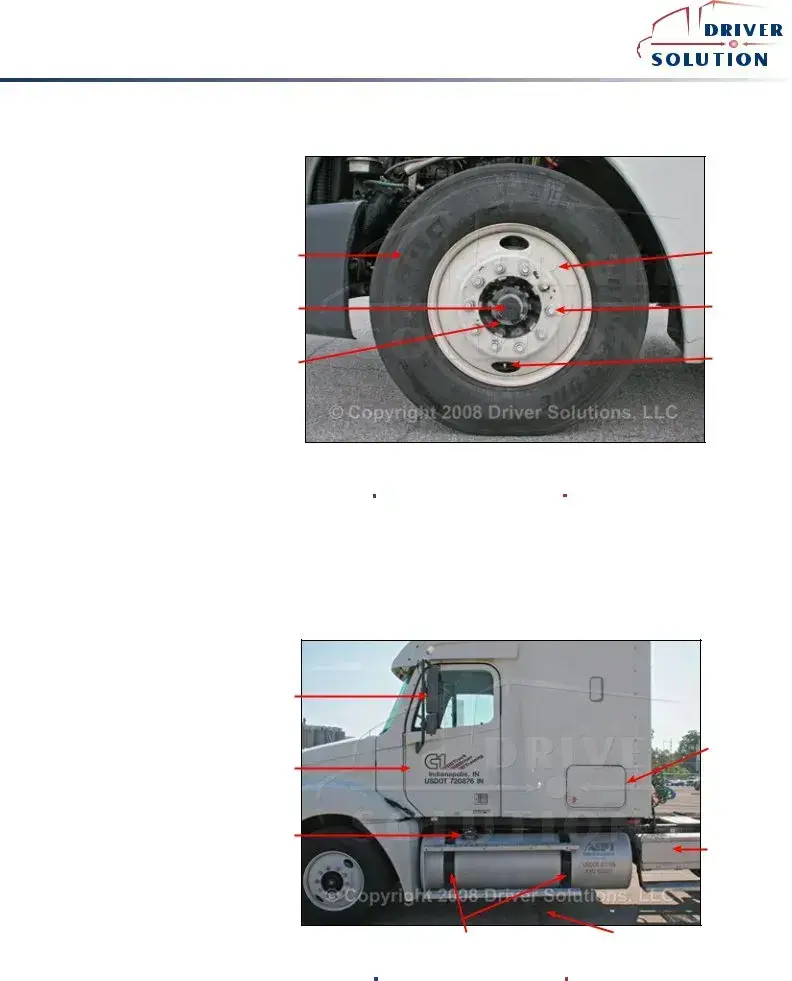
FRONT WHEEL
TIRES
oProper inflation – company or manufacturer specification
o No bulges, cuts, or retreads
o Minimum tread depth of 4/32”
RIMS
oNot bent, cracked, No welding repairs.
LUG NUTS
oNone are missing
oTight – no shinny threads, or rust trails
OUTER HUB OIL SEALS
oNot leaking, no missing bolts o Proper oil level
Tire |
Wheel |
|
Hub Oil |
Lug Nut |
|
Reservior |
||
|
||
Outer Hub |
Valve Cap |
|
Oil Seal |
|
Reference Items |
DRIVER FUEL AREA
DRIVER’S DOOR
oDoor opens and closes properly
oSeal is in good condition
DRIVER’S MIRRORS
oClean and free of obstruction
oNot cracked, broken, or damaged
oMounted securely
FUEL TANK
oMounted securely
o Not leaking
o Seal in cap OK
Mirror |
Storage |
Compartment |
Door |
Cap & Seal |
Battery Box & |
Cover |
Saddle Mounts |
Leaks |
Reference Items |
6
Class A CDL
®
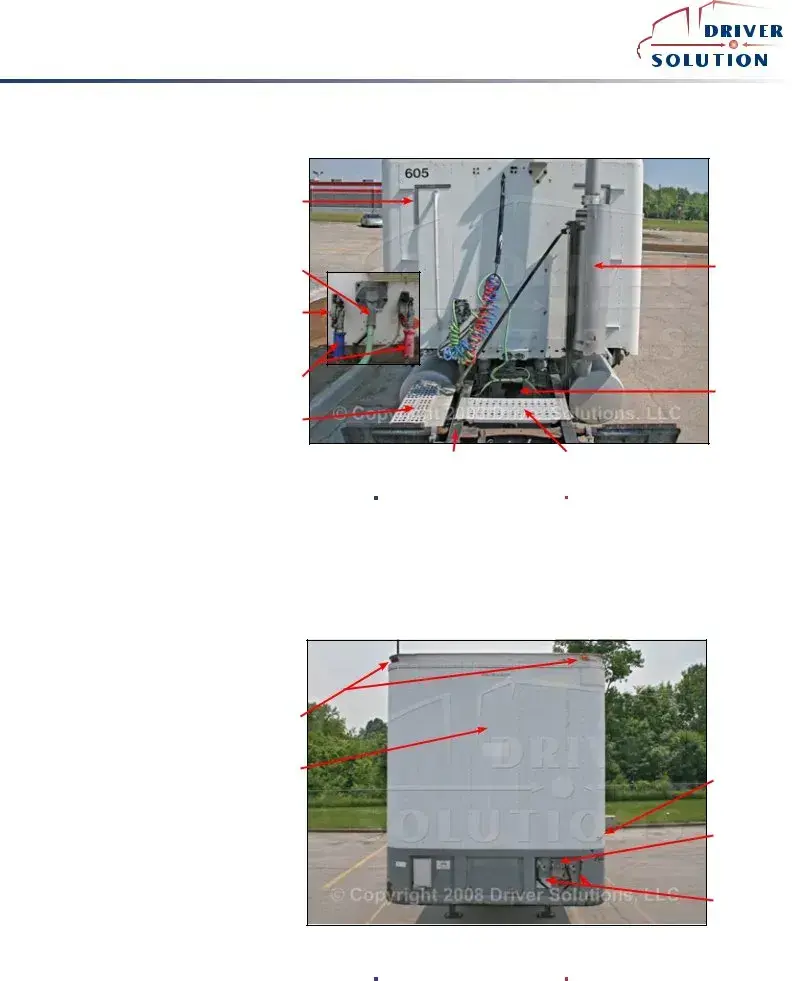
AIR LINES & ELECTRIC LINE o Not cracked, frayed, cut, or kinked o Mounted securely at the glad hands o Not leaking
BEHIND THE CAB
BATTERY BOX & BATTERIES o Box is mounted properly
o Batteries are secure in the box o Lid secure
o Connections not corroded
CATWALK
o Mounted properly
oNot, missing, or damaged
oFree of obstructions
DRIVE SHAFT
oNot bent, or damaged
oCoupling,
EXHAUST SYSTEM
oSecurely mounted
oNot dented or damaged
oNot leaking
FRAME
oNot cracked, or damaged
oNo missing bolts
oNo illegal welds
LIGHTS & REFLECTORS
oClean and working
Lights & |
|
Reflectors |
|
Electrical Line |
Exhaust |
Glad Hand |
|
Service & |
|
Emergency |
|
Airlines |
Drive Shaft |
|
|
Battery Box & |
|
Batteries |
|
Frame |
Catwalk |
Reference Items |
FRONT OF TRAILER
HEADER BOARD
oNo holes or missing rivets
LIGHTS & REFLECTORS
oNone broken, cracked, or missing
oWorking and proper color of amber
Lights |
Header Board |
Height Sticker
Electric Hookup
Air Line
Reference Items |
7
Class A CDL
®
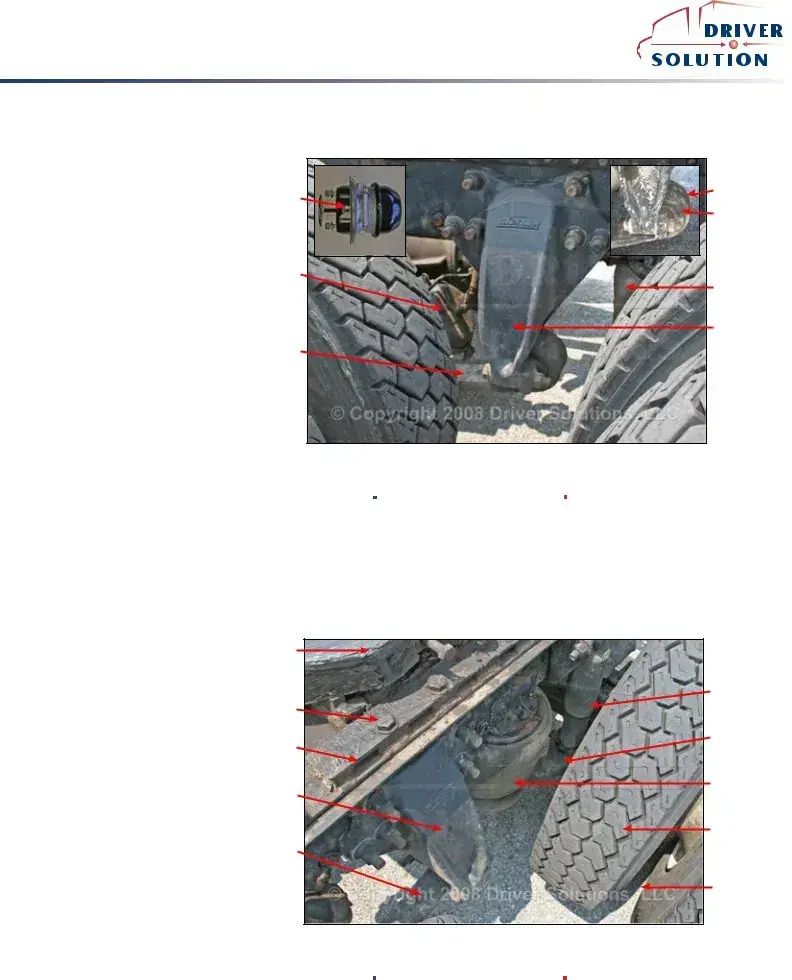
DRIVE AXLE SUSPENSION
CONTROL ARM MOUNT o Mounted securely
o Not bent, broken or damaged
CONTROLARM
oMounted securely – front, back, and
o Not cracked, or broken
SHOCK ABSORBER
o Mounted Securely
oNot bent, dented or leaking
TORSION BAR
oMounted Securely
oNot bent, broken or damaged
AIR BAGS
oMounted Securely
o Not leaking
Spring Brake |
Torsion Bar |
|
|
Chamber |
Control Arm |
|
|
Spring Brake |
|
Chamber |
Air Bag |
|
|
|
Control Arm |
|
Mount |
Control Arm |
|
Reference Items |
DRIVE AXLE SUSPENSION CON’T & FIFTH WHEEL
CONTROL ARM MOUNT o Mounted securely
o Not bent, broken or damaged
CONTROLARM
oMounted securely – front, back, and
o Not cracked, or broken
SHOCK ABSORBER
o Mounted Securely
oNot bent, dented or leaking
TORSION BAR
oMounted Securely
oNot bent, broken or damaged
AIR BAGS
oMounted Securely
o Not leaking
Skid Plate |
|
|
Shock Absorber |
Mounting |
|
Bolts |
|
Locking |
Spring |
|
|
Pins |
|
Control Arm |
Air Bag |
|
|
Mount |
|
|
Tire |
Control Arm |
|
|
Space |
Reference Items |
8
Class A CDL
®
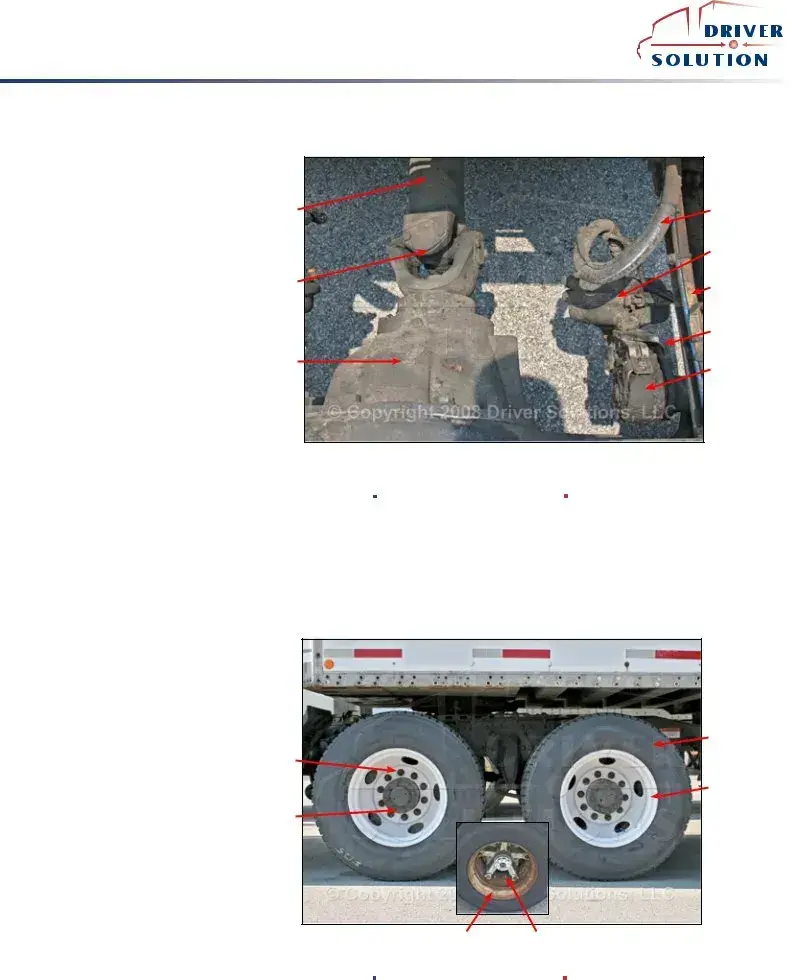
HOSES AND LINES o Mounted securely o Not leaking
o Not cracked or frayed
CHAMBER
o Mounted securely
oNot dented or damaged
oNot leaking
SLACK ADJUSTER
oNo more than 1 inch of free play at the push rod with the brakes released.
oNo bent, broken, loose, or missing parts
DRUMS
oNot cracked, broken or dented
oNo oil leaking from inner oil seal, free of debris
LININGS
oNo cracked, broken or missing parts
oNot less than ¼ inch in thickness
DRIVE BRAKES & DRIVE SHAFT
Drive Shaft
Universal Joint
Differential
Reference Items |
Air Line
Service Brake Chamber
Frame
Brake Chamber Mount
Slack Adjuster
TIRES
oProper inflation - company or manufacturer specification.
o No bulges or cuts, can have retreads o Minimum tread depth of 2/32”
RIMS
oNot bent or cracked
oNo welding repairs
LUG NUTS
oNone missing
oTight – no shinny threads, or rust trails
OUTER AXLE SEAL
oNot leaking, no missing bolts
SPACE OR SPACER
oCheck for objects between wheels
oCheck for proper spacing
Lug Nuts
Outer Axle Seal
DRIVE WHEELS
Tire
Bud Rim
Dayton Rim |
Spacer |
Reference Items |
9
Class A CDL
®
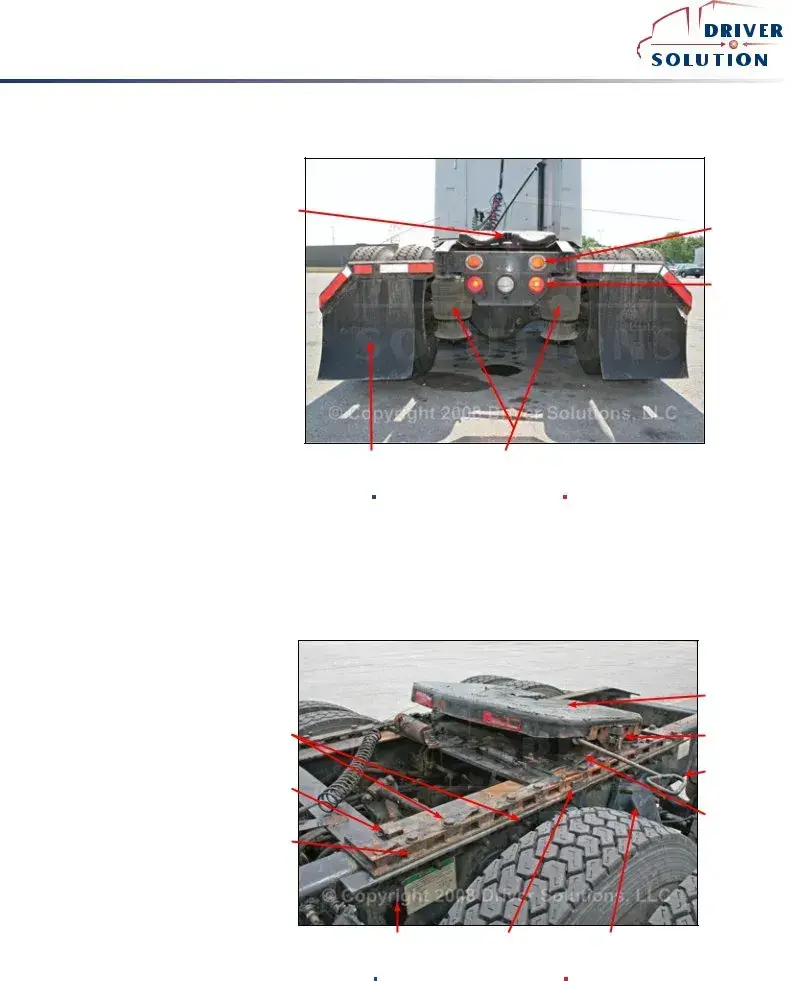
REAR OF TRACTOR
LIGHTS & REFLECTORS o Not cracked, or broken
o Working and proper color
SPLASH GUARDS
oNot missing or torn and properly mounted
Locking Jaws |
|
|
Reflectors |
|
Lights |
Splash Guard |
Air Bags |
Reference Items |
MOUNTING BOLTS
oNone missing or broken
RELEASE ARM
oNot bent, broken, or damaged
oEngaged in the lock position
LOCKING PINS
oNo missing or broken parts
oEngaged and locked
PLATFORM
oSecurely holds skid plate
oNot cracked, or broken
SKID PLATE
oMounted properly on the platform
oProperly greased
oTilting freely
Mounting Bolts
Slide Stops (all 4 corners)
COUPLING SYSTEM
Skid Plate |
Pivot Pin |
Release Arm |
Platform |
KING PIN |
Welds |
oNot broken, bent, or damaged
APRON
oNo bends or damage to visible portions
GAP
oCheck that the trailer apron is lying flat on the fifth wheel skid plate
Frame |
Slide Locking Pin |
Spring Mount |
JAWS |
Reference Items |
|
|
|
|
o Check that the locking jaws are fully |
|
|
closed around the shank of the king pin |
10 |
|
| Fact Name | Description |
|---|---|
| Purpose | The Pre Trip Inspection Checklist is designed to ensure that all vehicle components are functioning properly before a trip, promoting safety and compliance with regulations. |
| Components | This checklist typically includes inspections of brakes, lights, tires, and fluid levels, among other critical vehicle parts. |
| Frequency | Drivers are required to complete the Pre Trip Inspection Checklist before every trip, ensuring ongoing vehicle safety and reliability. |
| Governing Law | In many states, such as California, the requirements for a Pre Trip Inspection are governed by the California Vehicle Code Section 34500, which mandates regular inspections for commercial vehicles. |
Once you have the Pre Trip Inspection Checklist form in front of you, it's time to start filling it out. This checklist is essential for ensuring that your vehicle is safe and ready for the road. Follow the steps below to complete the form accurately.
Once you have filled out the form, keep it for your records. This checklist can help you track your vehicle's maintenance and ensure safety on the road.
What is the Pre Trip Inspection Checklist?
The Pre Trip Inspection Checklist is a document used by drivers to ensure that their vehicle is safe and in good working condition before starting a trip. This checklist helps identify any potential issues that could affect the vehicle's performance or safety.
Why is the Pre Trip Inspection important?
Conducting a Pre Trip Inspection is crucial for safety. It helps prevent accidents caused by mechanical failures. Regular inspections can also prolong the life of the vehicle and reduce maintenance costs over time.
What items are typically included in the checklist?
The checklist usually includes the following items:
How often should the Pre Trip Inspection be conducted?
The Pre Trip Inspection should be conducted before every trip. This practice ensures that any potential issues are identified and addressed before the vehicle is on the road.
Who is responsible for completing the Pre Trip Inspection?
The driver is responsible for completing the Pre Trip Inspection. However, it is also important for fleet managers and maintenance personnel to ensure that drivers are trained and understand the importance of the inspection.
What should a driver do if they find an issue during the inspection?
If a driver finds an issue during the inspection, they should report it immediately. Depending on the severity of the issue, the vehicle may need to be repaired or taken out of service until it is safe to drive.
Is there a specific format for the checklist?
The format of the checklist can vary by company or organization. However, it should be clear and easy to follow, with sections for each vehicle component being inspected. Some companies may provide a digital version, while others may use paper forms.
How can drivers ensure they are thorough in their inspections?
Drivers can be thorough by following the checklist step-by-step and taking their time. Familiarity with the vehicle and its components also helps. Regular training and refreshers on the inspection process can improve thoroughness.
What happens if a driver fails to complete the inspection?
Failure to complete the Pre Trip Inspection can result in disciplinary action from the employer. Additionally, driving a vehicle without an inspection can lead to safety risks and potential legal consequences in the event of an accident.
Can the Pre Trip Inspection Checklist be modified?
Yes, the checklist can be modified to meet specific needs or regulations of a company. However, any changes should still ensure that all critical safety components are inspected to maintain compliance with safety standards.
Completing a Pre Trip Inspection Checklist form is crucial for ensuring vehicle safety and compliance. However, many individuals make common mistakes that can lead to oversights. One prevalent error is rushing through the checklist. When individuals are pressed for time, they may skip important sections or fail to conduct a thorough inspection. This hurried approach can result in overlooking critical safety issues that could compromise both the driver and others on the road.
Another frequent mistake involves neglecting to document findings accurately. It's essential to record any issues or irregularities discovered during the inspection. Some may think that they can remember these details later, but this often leads to forgotten notes or miscommunication. Accurate documentation serves as a vital reference point for maintenance and repairs, ensuring that all concerns are addressed promptly.
Inconsistent inspection practices can also pose a significant problem. Some individuals may not follow the checklist in the prescribed order, leading to confusion and missed items. Sticking to a systematic approach helps ensure that every component is inspected thoroughly. When the checklist is treated as a mere formality rather than a comprehensive guide, the risk of overlooking vital checks increases.
Additionally, failing to check all required components is a common oversight. Each section of the checklist is designed to address specific parts of the vehicle. Individuals may focus on the more visible aspects, such as tires and lights, while neglecting less obvious areas, like fluid levels or brake systems. A complete inspection requires attention to every detail, no matter how minor it may seem.
Another mistake is not using the checklist as a training tool. New drivers or personnel may not fully understand the importance of each inspection item. By treating the checklist as an educational resource, experienced drivers can help newcomers learn the significance of each component. This shared knowledge fosters a culture of safety and diligence within the organization.
Some individuals may also ignore weather conditions when completing their inspections. Weather can significantly impact vehicle performance and safety. For instance, icy conditions may require additional checks on tire tread depth or brake responsiveness. Adapting the inspection process to account for environmental factors is essential for ensuring optimal safety.
Lastly, failing to follow up on identified issues can lead to serious consequences. If a problem is noted during the inspection, it is vital to take immediate action. This may involve scheduling repairs or notifying maintenance personnel. Ignoring these issues can result in unsafe driving conditions and potential accidents, which could have been easily avoided with prompt attention.
The Pre Trip Inspection Checklist is a vital document that ensures vehicles are safe and ready for operation. However, it is often used in conjunction with several other forms and documents that help maintain safety, compliance, and efficiency in transportation. Below is a list of commonly associated documents that complement the Pre Trip Inspection Checklist.
Incorporating these documents into daily operations fosters a culture of safety and accountability. Each form plays a specific role in ensuring that drivers and vehicles operate efficiently and responsibly, ultimately contributing to safer roads for everyone.
When preparing to fill out the Pre Trip Inspection Checklist, it’s important to follow certain guidelines to ensure accuracy and safety. Here are ten things you should and shouldn’t do:
By adhering to these guidelines, you can contribute to a safer driving experience for everyone on the road. Remember, a thorough inspection can prevent accidents and ensure that your vehicle is in optimal condition.
Here are six common misconceptions about the Pre Trip Inspection Checklist form:
Many believe that the Pre Trip Inspection Checklist is not mandatory. In reality, it is a requirement for commercial drivers to ensure vehicle safety before hitting the road.
Some think that only inexperienced drivers should complete the checklist. However, all drivers, regardless of experience, should use it to maintain safety standards.
This misconception overlooks the fact that different types of vehicles have unique requirements. The checklist should be tailored to the specific vehicle being inspected.
While some may feel that the checklist is time-consuming, it is designed to be efficient. A thorough inspection can often be completed in a matter of minutes.
Many assume that the checklist is only for spotting significant problems. In truth, it helps identify both major and minor issues that could affect vehicle performance.
Some drivers believe that the checklist can be discarded after use. In fact, it is important to keep records of inspections for legal and safety reasons.
Filling out and using the Pre Trip Inspection Checklist form is essential for ensuring safety and compliance. Here are key takeaways to keep in mind: