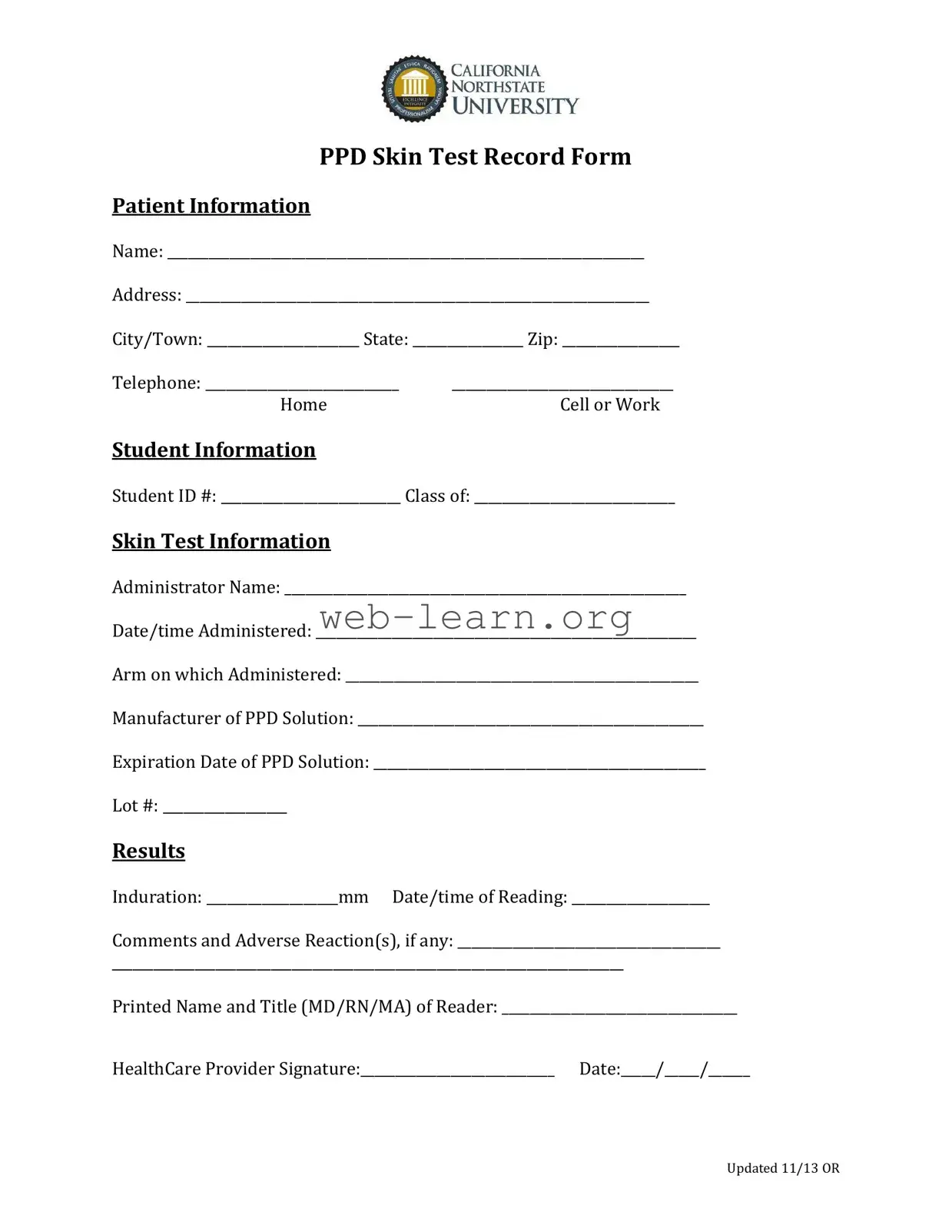
The PPD Skin Test Record Form serves as a crucial document in the process of tuberculosis screening, particularly for individuals who may be at risk or require testing for employment or educational purposes. This form captures essential patient information, including the individual's name, address, and contact details, which ensures accurate identification and follow-up. For students, the form includes a designated section for student identification numbers and class information, linking the test results to their academic records. The skin test administration details are meticulously documented, noting the name of the administrator, the date and time of administration, and the specific arm used for the test. Additionally, the form records important information regarding the PPD solution, such as the manufacturer's name, expiration date, and lot number, which are vital for ensuring the test's validity. The results section is critical, as it records the induration measurement in millimeters, the date and time of reading, and any comments or adverse reactions that may have occurred. Finally, the form requires the printed name and title of the healthcare provider who interprets the results, along with their signature and date, ensuring accountability and proper documentation of the testing process.

PPD SKIN TEST RECORD FORM
PATIENT INFORMATION
Name: _____________________________________________________________________
Address: ___________________________________________________________________
City/Town: ______________________ State: ________________ Zip: _________________
Telephone: ____________________________ |
________________________________ |
Home |
Cell or Work |
STUDENT INFORMATION
Student ID #: __________________________ Class of: _____________________________
SKIN TEST INFORMATION
Administrator Name: __________________________________________________________
Date/time Administered: _______________________________________________________
Arm on which Administered: ___________________________________________________
Manufacturer of PPD Solution: __________________________________________________
Expiration Date of PPD Solution: ________________________________________________
Lot #: __________________
RESULTS
Induration: ___________________mm Date/time of Reading: ____________________
Comments and Adverse Reaction(s), if any: ______________________________________
__________________________________________________________________________
Printed Name and Title (MD/RN/MA) of Reader: __________________________________
HealthCare Provider Signature:____________________________ Date:_____/_____/______
Updated 11/13 OR
| Fact Name | Description |
|---|---|
| Purpose | The PPD Skin Test is used to determine if an individual has been exposed to the bacteria that causes tuberculosis (TB). |
| Patient Information | Essential details include the patient's name, address, and contact information. This information is crucial for follow-up and record-keeping. |
| Student Information | For students, the form requires a Student ID number and class year, which helps in tracking immunization compliance in educational institutions. |
| Administration Details | The form captures the name of the administrator, date and time of administration, and the specific arm used for the test. |
| PPD Solution Information | It is vital to record the manufacturer, expiration date, and lot number of the PPD solution to ensure proper usage and traceability. |
| Results Section | Induration measurement, reading date and time, and any comments or adverse reactions must be documented to assess the test's outcome accurately. |
| Healthcare Provider Details | The printed name and title of the reader, along with their signature and date, validate the test results and ensure accountability. |
| State-Specific Laws | In some states, regulations may require specific documentation for school entry or employment. Check local health department guidelines for compliance. |
Completing the PPD Skin Test form accurately is crucial for proper documentation and follow-up. After filling out the form, the healthcare provider will administer the test and schedule a reading of the results. Ensure that all sections are filled out completely to avoid any delays in processing.
What is a PPD skin test?
The PPD skin test, also known as the tuberculin skin test, is a method used to determine if a person has been exposed to the bacteria that cause tuberculosis (TB). A small amount of purified protein derivative (PPD) is injected just under the skin. After 48 to 72 hours, a healthcare provider examines the injection site for any reaction, which indicates whether the person has been exposed to TB.
How is the PPD skin test administered?
The test is administered by a healthcare professional. They will inject a small amount of PPD solution into the inner forearm. It is crucial that the injection is done correctly to ensure accurate results. After the injection, the patient must return to the healthcare provider within 48 to 72 hours for the reading of the test.
What do the results of the PPD skin test mean?
The results are measured in millimeters of induration (swelling) at the injection site. A positive result typically indicates that the person has been exposed to TB, but it does not confirm an active infection. Further tests, such as a chest X-ray or a sputum test, may be required to determine if TB is active. A negative result means that there is no evidence of TB exposure.
What should I do if I have an adverse reaction?
If you experience any unusual symptoms or reactions after the test, such as excessive swelling, pain, or fever, it is important to contact your healthcare provider immediately. Document any reactions in the comments section of the PPD skin test form, as this information can be helpful for your healthcare provider.
Why is the PPD skin test important for students?
Many educational institutions require students, especially those in healthcare programs, to undergo a PPD skin test. This requirement helps ensure that students do not pose a risk to others and that they are not at risk themselves. It is a part of maintaining public health and safety, particularly in environments where TB exposure is a concern.
Filling out the PPD Skin Test form accurately is crucial for effective health screening. However, many individuals make common mistakes that can lead to complications or delays in processing. One frequent error is leaving the patient information section incomplete. Omitting essential details like the name, address, or telephone number can hinder communication and follow-up.
Another mistake often seen is in the student information section. Students may forget to include their Student ID number or the class year. This information is vital for tracking and ensuring that students receive appropriate care, especially in educational settings.
When it comes to the skin test information, individuals sometimes neglect to write down the administrator's name or the date and time of administration. This oversight can create confusion about who performed the test and when it was done, which is important for evaluating results later.
Additionally, the arm on which the test was administered is often left blank. Without this detail, healthcare providers may struggle to interpret the results accurately, as reactions can vary depending on the location of the test.
Another common error involves the manufacturer and expiration date of the PPD solution. Failing to include this information can lead to questions about the validity of the test results, especially if the solution has expired or is from an unverified source.
In the results section, individuals frequently misreport the induration measurement. Accurate measurement is critical for determining whether the test is positive or negative. Misreading or misrecording this value can lead to incorrect conclusions about a person's health status.
People also often forget to note the date and time of reading. This information is essential for tracking the progression of any potential reaction and ensuring that follow-up actions are timely and appropriate.
Finally, the section for comments and adverse reactions is sometimes overlooked. Documenting any reactions can provide valuable insights for healthcare providers and ensure that individuals receive the necessary care if complications arise.
The PPD skin test is a crucial tool in identifying exposure to tuberculosis. However, it is often accompanied by several other forms and documents that help ensure proper administration, tracking, and follow-up care. Below is a list of commonly used documents that complement the PPD skin test form.
These documents play a vital role in the process surrounding the PPD skin test. They help create a comprehensive approach to patient care, ensuring that all necessary information is collected and communicated effectively. By understanding and utilizing these forms, healthcare providers can enhance the quality of care and support provided to patients undergoing tuberculosis screening.
The PPD Skin Test form shares similarities with several other medical and administrative documents. Each document serves a specific purpose but contains comparable elements related to patient information, testing procedures, and results. Below is a list of six documents that are similar to the PPD Skin Test form:
When filling out the PPD Skin Test form, there are important dos and don'ts to keep in mind. Following these guidelines will help ensure that the process goes smoothly and accurately.
Things You Should Do:
Things You Shouldn't Do:
Misconceptions about the PPD skin test can lead to confusion and misinformation. Here are six common misconceptions explained.
When filling out the PPD Skin Test form, it is important to pay attention to several key details. Here are some takeaways to consider: