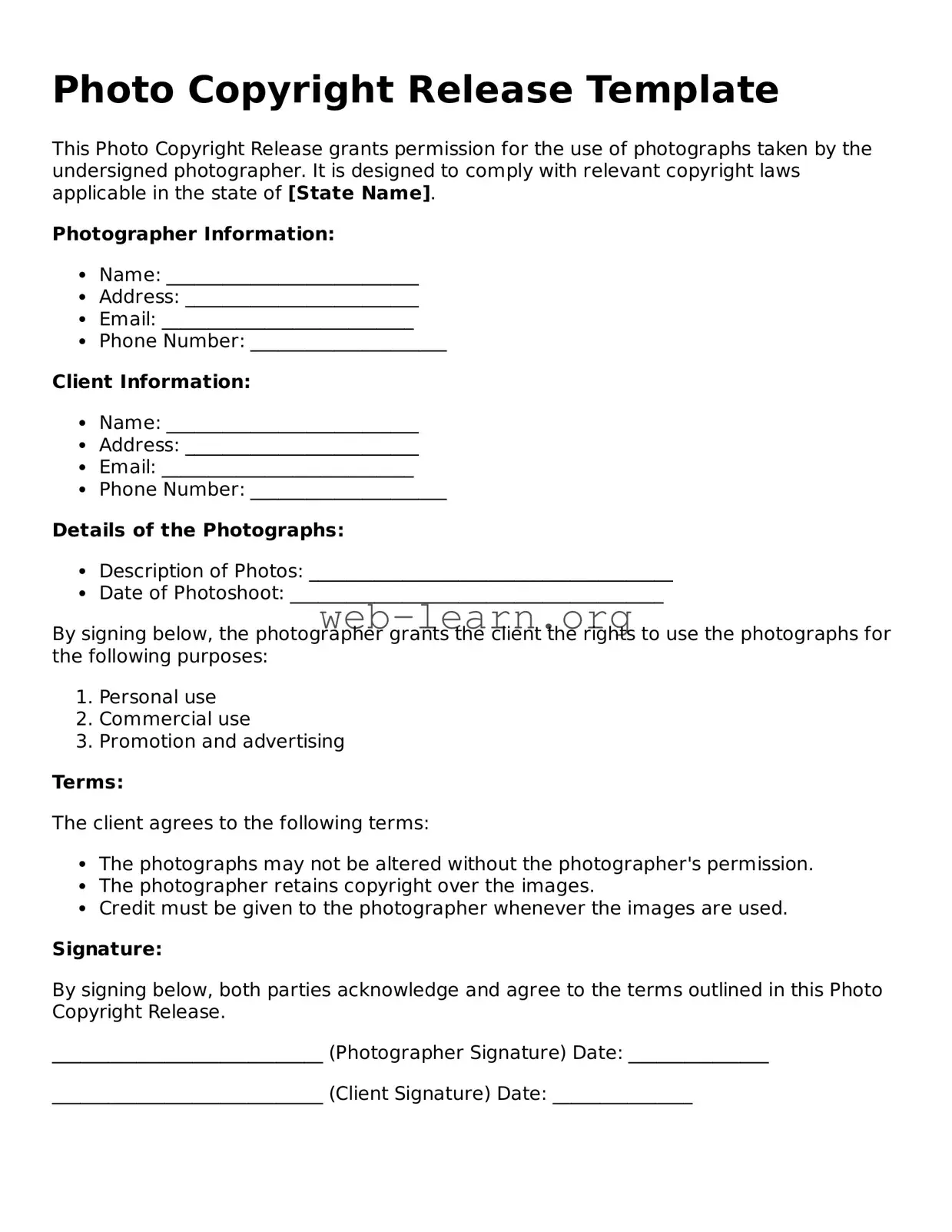
The Photo Copyright Release form is a vital document in the realm of photography and visual media. It serves as a clear agreement between the photographer and the subject, ensuring that both parties understand their rights regarding the use of images. This form outlines the permissions granted by the subject to the photographer, allowing for the reproduction, distribution, and public display of the photographs. It also addresses any potential compensation or royalties, clarifying whether the subject will receive any financial benefits from the use of their image. By signing this form, the subject relinquishes certain rights, enabling the photographer to utilize the images without fear of legal repercussions. Understanding the implications of this form is crucial for both photographers and subjects alike, as it establishes a foundation of trust and transparency in their professional relationship. Additionally, it protects the interests of both parties, ensuring that the creative work can be shared and appreciated without ambiguity.
Photo Copyright Release Template
This Photo Copyright Release grants permission for the use of photographs taken by the undersigned photographer. It is designed to comply with relevant copyright laws applicable in the state of [State Name].
Photographer Information:
Client Information:
Details of the Photographs:
By signing below, the photographer grants the client the rights to use the photographs for the following purposes:
Terms:
The client agrees to the following terms:
Signature:
By signing below, both parties acknowledge and agree to the terms outlined in this Photo Copyright Release.
_____________________________ (Photographer Signature) Date: _______________
_____________________________ (Client Signature) Date: _______________
| Fact Name | Description |
|---|---|
| Purpose | A Photo Copyright Release form allows photographers to transfer copyright ownership of images to another party. |
| Legal Importance | This form protects both the photographer's rights and the rights of the individual or entity receiving the images. |
| State-Specific Forms | Different states may have specific requirements for photo release forms, such as California's Civil Code Section 3344. |
| Consent Requirement | Consent from individuals depicted in the photos is often necessary to avoid legal issues related to privacy rights. |
| Commercial Use | Without a signed release, using photos for commercial purposes can lead to legal disputes. |
| Duration of Rights | The release can specify the duration for which the copyright is transferred, ensuring clarity for both parties. |
| Revocation | Once signed, the release generally cannot be revoked, making it crucial to understand the terms before signing. |
Once you have the Photo Copyright Release form in hand, it’s time to fill it out carefully. This form is essential for granting permission for the use of your photographs. Follow these steps to ensure everything is completed accurately.
After completing the form, review it for any missing information or errors. Once you are satisfied, you can submit it as directed.
What is a Photo Copyright Release form?
A Photo Copyright Release form is a document that allows photographers or individuals to grant permission for the use of their photographs. This form typically outlines the rights being transferred and the specific uses allowed for the images.
Why do I need a Photo Copyright Release form?
If you are using someone else's photographs, obtaining a Photo Copyright Release form protects you from potential legal issues. It ensures that you have the necessary permission to use the images for your intended purpose, whether that be for commercial use, marketing, or personal projects.
Who should sign the Photo Copyright Release form?
The form should be signed by the copyright holder of the photographs. This is usually the photographer or the person who created the images. If the photographs were taken in a professional setting, such as a studio, the company may also hold the rights.
What information is included in a Photo Copyright Release form?
A typical Photo Copyright Release form includes:
Can I modify a Photo Copyright Release form?
What happens if I don't have a Photo Copyright Release form?
Without a Photo Copyright Release form, you may face legal consequences for using someone else's photographs. This could include being required to stop using the images, paying damages, or facing lawsuits. It is always best to obtain proper permissions to avoid these issues.
Filling out a Photo Copyright Release form is a crucial step for anyone looking to use images legally and ethically. However, there are common mistakes that people often make during this process. Being aware of these pitfalls can save time and prevent potential legal issues down the line.
One common mistake is not providing complete information. When filling out the form, it's essential to include all requested details, such as the names of the individuals involved, the date of the photo shoot, and the specific usage rights being granted. Omitting any of this information can lead to confusion and might invalidate the release.
Another frequent error is failing to read the terms carefully. The language in the form may seem straightforward, but it’s important to understand what rights are being transferred. Some people may overlook clauses that specify how the images can be used, leading to unintended consequences later on.
Inaccurate dates can also pose a problem. It's vital to ensure that the date of the photo shoot is correct. An incorrect date might create issues with the validity of the release, particularly if the images are used in a commercial context. Always double-check the dates before submitting the form.
Many individuals neglect to sign the form. A signature is often required to make the release legally binding. Without it, the release may not hold up in a legal setting, which could lead to disputes over image usage. Be sure to sign and date the form where indicated.
Lastly, not keeping a copy of the completed form can be a significant oversight. After filling out the Photo Copyright Release form, it’s wise to retain a copy for personal records. This ensures that you have proof of the agreement, which can be invaluable if questions arise about the usage of the images in the future.
When dealing with photography and copyright, several forms and documents often accompany the Photo Copyright Release form. Each of these documents serves a specific purpose, ensuring clarity and protection for both the photographer and the subject. Here’s a list of commonly used forms that you might encounter.
Understanding these documents can significantly streamline the process of photography and copyright management. Each form plays a vital role in protecting the rights of everyone involved, ensuring that all parties are informed and agreeable to the terms of use.
The Photo Copyright Release form is an important document for photographers and clients. It helps clarify ownership and usage rights of images. Several other documents serve similar purposes. Here’s a list of eight documents that share similarities with the Photo Copyright Release form:
Each of these documents serves to clarify rights and responsibilities, ensuring that all parties involved understand their positions regarding the use of creative works.
When filling out a Photo Copyright Release form, it is important to follow certain guidelines to ensure that the process goes smoothly. Below is a list of things you should and shouldn't do.
Following these guidelines will help ensure that your Photo Copyright Release form is completed correctly and legally. Always prioritize clarity and accuracy when dealing with copyright matters.
Many people have misunderstandings about the Photo Copyright Release form. Here are four common misconceptions:
Filling out and utilizing the Photo Copyright Release form is essential for protecting the rights of both the photographer and the subjects involved. Here are key takeaways to consider: