The Pharmacy Residency Letter of Intent is a crucial document for aspiring pharmacy residents, serving as a personal introduction to residency programs. This letter allows candidates to express their interest in a specific program while highlighting their qualifications, experiences, and career aspirations. It typically includes an overview of the applicant's educational background, relevant work experiences, and specific reasons for choosing that particular residency. Additionally, the letter should convey the applicant's professional goals and how the residency aligns with their future plans. Crafting a compelling letter requires careful consideration of the program's unique features and values, as well as a clear demonstration of the applicant's commitment to the field of pharmacy. Overall, this document plays a significant role in the selection process, providing residency directors with insights into the candidate's personality, motivation, and fit for their program.
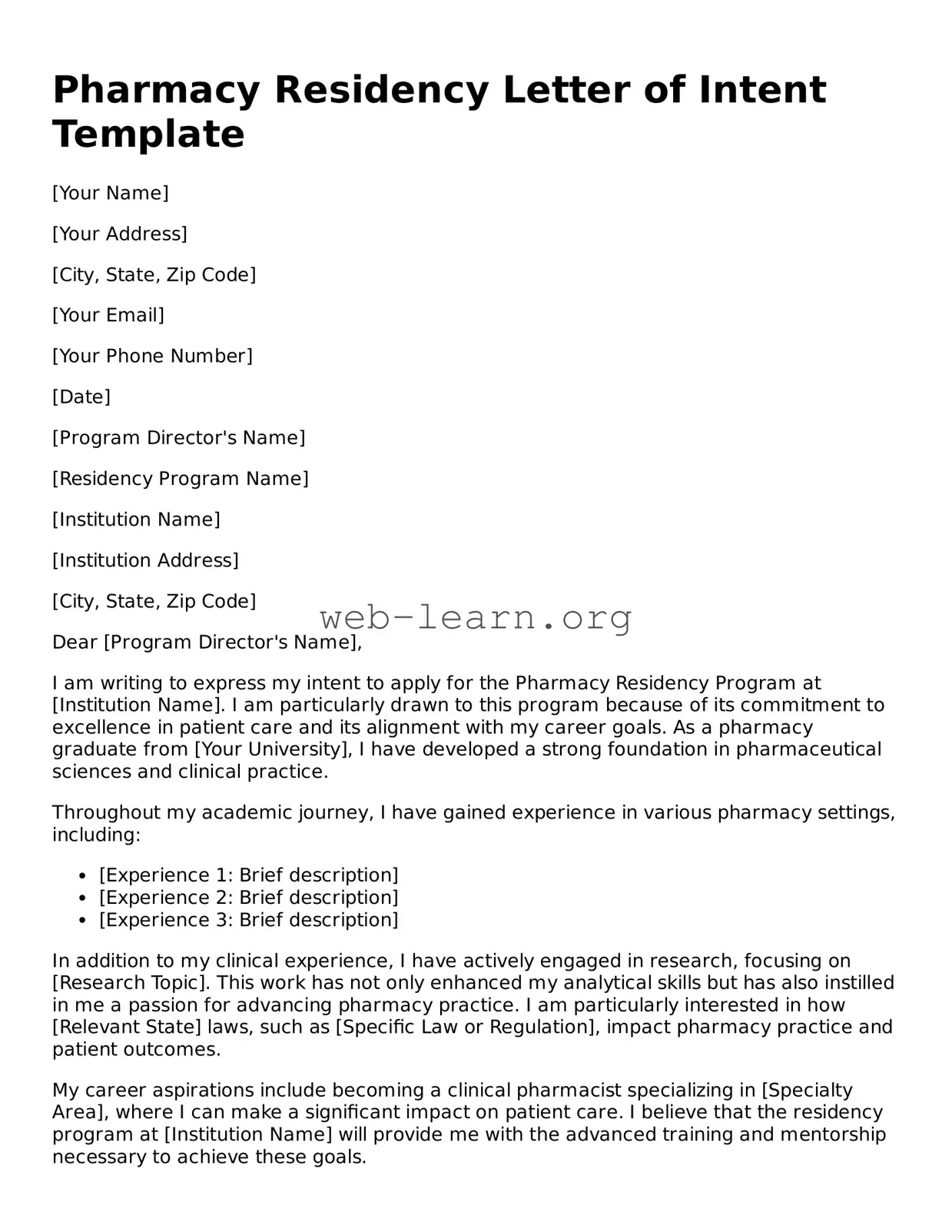
Pharmacy Residency Letter of Intent Template
[Your Name]
[Your Address]
[City, State, Zip Code]
[Your Email]
[Your Phone Number]
[Date]
[Program Director's Name]
[Residency Program Name]
[Institution Name]
[Institution Address]
[City, State, Zip Code]
Dear [Program Director's Name],
I am writing to express my intent to apply for the Pharmacy Residency Program at [Institution Name]. I am particularly drawn to this program because of its commitment to excellence in patient care and its alignment with my career goals. As a pharmacy graduate from [Your University], I have developed a strong foundation in pharmaceutical sciences and clinical practice.
Throughout my academic journey, I have gained experience in various pharmacy settings, including:
In addition to my clinical experience, I have actively engaged in research, focusing on [Research Topic]. This work has not only enhanced my analytical skills but has also instilled in me a passion for advancing pharmacy practice. I am particularly interested in how [Relevant State] laws, such as [Specific Law or Regulation], impact pharmacy practice and patient outcomes.
My career aspirations include becoming a clinical pharmacist specializing in [Specialty Area], where I can make a significant impact on patient care. I believe that the residency program at [Institution Name] will provide me with the advanced training and mentorship necessary to achieve these goals.
Thank you for considering my application. I am excited about the opportunity to contribute to your program and to learn from the esteemed faculty and fellow residents at [Institution Name]. I look forward to the possibility of discussing my application further.
Sincerely,
[Your Name]
| Fact Name | Details |
|---|---|
| Purpose | The Pharmacy Residency Letter of Intent is a formal document expressing an applicant's interest in a specific residency program. |
| Content Requirements | The letter typically includes the applicant's background, career goals, and reasons for choosing the program. |
| Length | Most letters of intent are one to two pages long, ensuring they are concise yet informative. |
| Submission Timeline | Applicants should submit their letters of intent by the program's specified deadline, often aligned with application dates. |
| State-Specific Forms | Some states may have specific guidelines or requirements for residency applications, governed by state pharmacy boards. |
| Governing Laws | In states like California, the California Business and Professions Code outlines regulations related to pharmacy residency programs. |
| Format | The letter should be typed, formatted professionally, and addressed to the program director. |
| Personalization | Each letter should be tailored to the specific program, highlighting unique aspects that attract the applicant. |
| Follow-Up | After submission, it may be appropriate to follow up with the program to express continued interest. |
Once you have the Pharmacy Residency Letter of Intent form ready, you will need to complete it accurately to ensure your application is considered. Follow the steps below to fill out the form correctly.
After submitting the form, you will await further instructions regarding the next steps in the application process. Stay prepared for any follow-up communications.
What is a Pharmacy Residency Letter of Intent?
A Pharmacy Residency Letter of Intent is a formal document that applicants submit to express their interest in a specific pharmacy residency program. This letter outlines your motivations, experiences, and goals, helping the selection committee understand why you are a good fit for their program.
Why is the Letter of Intent important?
The Letter of Intent serves as your opportunity to make a strong first impression. It allows you to showcase your passion for pharmacy, highlight relevant experiences, and articulate your career aspirations. A well-crafted letter can set you apart from other candidates.
What should be included in the Letter of Intent?
Your Letter of Intent should include the following key components:
How long should the Letter of Intent be?
Typically, a Letter of Intent should be concise, ideally one page in length. Aim for clarity and focus. Use paragraphs effectively to convey your message without overwhelming the reader with too much information.
Should I address the Letter of Intent to anyone specific?
Whenever possible, address your Letter of Intent to the program director or the individual overseeing the residency applications. This personal touch shows that you have done your research and are genuinely interested in their program.
How can I make my Letter of Intent stand out?
To make your letter memorable, focus on your unique experiences and insights. Use specific examples to illustrate your points. Additionally, conveying genuine enthusiasm and a clear understanding of the program will help you connect with the reader.
What should I avoid in my Letter of Intent?
Avoid generic statements and clichés. Steer clear of negative language or anything that could be perceived as unprofessional. Additionally, don’t forget to proofread for spelling and grammatical errors, as these can detract from your professionalism.
When is the best time to submit my Letter of Intent?
It’s best to submit your Letter of Intent as early as possible, ideally by the application deadline. This gives the selection committee ample time to review your application. However, ensure that your letter is polished and complete before submission.
Can I use the same Letter of Intent for multiple programs?
While you can use a similar structure for multiple Letters of Intent, it’s crucial to tailor each letter to the specific program. Highlight what attracts you to each residency and how your goals align with their offerings. Personalization shows dedication and interest.
When applying for a pharmacy residency, submitting a well-crafted Letter of Intent (LOI) is crucial. However, many applicants make common mistakes that can hinder their chances of success. Understanding these pitfalls can help candidates present themselves in the best light possible.
One frequent mistake is failing to tailor the letter to the specific residency program. Each program has unique values and goals, and applicants should reflect that understanding in their LOI. Generic letters can come off as impersonal and may not capture the attention of the selection committee.
Another common error is neglecting to proofread. Spelling and grammatical errors can create a negative impression. Attention to detail is vital in the pharmacy field, and mistakes in the LOI may raise concerns about the applicant's professionalism and care in their work.
Some candidates also make the mistake of being overly vague about their experiences and qualifications. Instead of listing generic skills, applicants should provide specific examples that demonstrate their achievements and how those experiences relate to the residency they are applying for. This approach makes the letter more engaging and memorable.
Additionally, applicants sometimes overlook the importance of a strong opening and closing. The first few sentences should grab the reader's attention, while a compelling conclusion can leave a lasting impression. A weak start or finish can diminish the overall impact of the letter.
It is also essential to avoid excessive jargon. While some technical language may be necessary, too much can alienate the reader. The goal is to communicate clearly and effectively, ensuring that the committee understands the applicant's qualifications and enthusiasm for the program.
Another mistake involves not addressing the committee directly. A personal touch can go a long way. Using phrases like "Dear Selection Committee" instead of generic greetings can help establish a connection and show respect for the readers’ roles.
Furthermore, applicants may forget to express genuine interest in the specific residency program. Merely stating a desire to pursue a residency is not enough. Candidates should articulate why they are drawn to that particular program and how it aligns with their career goals.
Lastly, some individuals fail to adhere to formatting guidelines. Each residency program may have specific requirements regarding length, font size, and layout. Ignoring these guidelines can result in an application that appears careless or unprofessional.
By being aware of these common mistakes, applicants can enhance their Letters of Intent and improve their chances of securing a pharmacy residency position. Taking the time to craft a thoughtful, personalized, and polished letter can make a significant difference in the application process.
When applying for a pharmacy residency, candidates often need to submit several important documents alongside their Pharmacy Residency Letter of Intent. Each of these documents serves a unique purpose in showcasing the applicant's qualifications, experiences, and professional aspirations. Below is a list of commonly required forms and documents.
Each of these documents plays a vital role in the residency application process. Together, they help create a well-rounded picture of the candidate, allowing residency programs to make informed decisions about potential residents. Preparing these materials thoughtfully can enhance an applicant's chances of securing a position in a competitive pharmacy residency program.
The Pharmacy Residency Letter of Intent form shares similarities with several other documents often utilized in academic and professional settings. Each document serves a unique purpose but maintains a common goal of conveying intent, qualifications, or interest. Below are eight documents that are similar to the Pharmacy Residency Letter of Intent form:
When completing the Pharmacy Residency Letter of Intent form, it is essential to approach the task with care. Here are some important dos and don'ts to keep in mind:
Understanding the Pharmacy Residency Letter of Intent (LOI) is crucial for applicants. However, several misconceptions can lead to confusion. Here are ten common misconceptions about the LOI:
Addressing these misconceptions can help applicants create a more effective and impactful Pharmacy Residency Letter of Intent.
When it comes to filling out the Pharmacy Residency Letter of Intent form, there are several important aspects to keep in mind. Here are some key takeaways to help you navigate the process effectively:
By keeping these takeaways in mind, you can craft a compelling Letter of Intent that enhances your chances of securing a pharmacy residency position.
Sample Letter of Intent for Promotion Within Company - It is an important step in demonstrating the employee's proactive approach to their career.
Grant Letter of Intent Template - Sets the groundwork for potential follow-up discussions with the grantor.
Intent to Purchase Agreement - Parties often use this document to gauge mutual interest in a transaction.