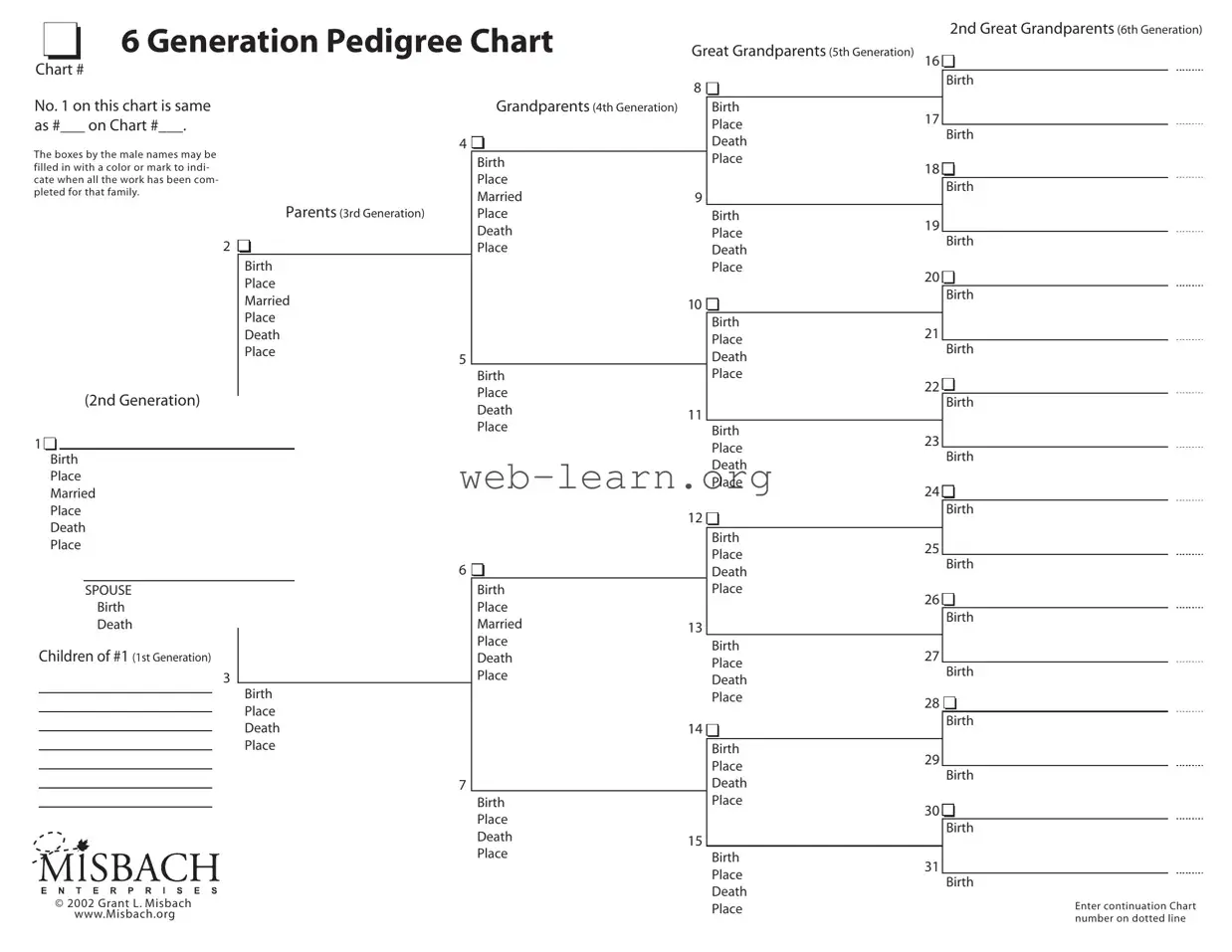
The Pedigree Chart form serves as a vital tool in various fields, including genetics, healthcare, and genealogy, allowing individuals to visually represent family relationships and genetic traits across generations. This chart typically includes symbols that denote different family members, such as squares for males and circles for females, making it easier to trace lineage and identify hereditary patterns. By organizing information about ancestors, descendants, and their connections, the form facilitates a deeper understanding of inherited conditions and family histories. Additionally, it often incorporates details about marriages, divorces, and other significant life events, providing a comprehensive overview of familial ties. The use of this chart not only aids medical professionals in assessing genetic risks but also empowers individuals to explore their heritage and understand their family dynamics more thoroughly.
|
|
|
|
|
6 Generation Pedigree Chart |
Great Grandparents (5th Generation) |
|
|
2nd Great Grandparents (6th Generation) |
||||||||||
|
|
|
|
|
|||||||||||||||
|
|
|
|
|
16 □ |
||||||||||||||
Chart # |
|||||||||||||||||||
|
|
|
|
|
|
|
|
|
|
|
|
Birth |
|
||||||
|
|
□ |
|
|
|
|
|
|
|
|
8 |
□ |
|
|
|||||
No. 1 on this chart is same |
|
|
Grandparents (4th Generation) |
|
|
|
|
||||||||||||
|
|
|
Birth |
17 |
|
|
|
||||||||||||
as #___ on Chart #___. |
|
|
|
|
Place |
|
|
|
|||||||||||
|
|
|
|
|
|
Birth |
|||||||||||||
|
|
|
|
|
|
|
|
|
|
4 |
|
□ |
|
Death |
|
|
|||
The boxes by the male names may be |
|
|
|
|
|
|
|||||||||||||
|
|
Place |
|
|
|
|
|||||||||||||
|
|
Birth |
|
18 |
|
|
|
||||||||||||
filled in with a color or mark to indi- |
|
|
|
|
|
□ |
|
||||||||||||
|
|
Place |
|
|
|
|
|||||||||||||
cate when all the work has been com- |
|
|
|
|
|
|
|||||||||||||
|
|
|
|
|
|||||||||||||||
pleted for that family. |
|
|
Married |
9 |
|
|
|
Birth |
|||||||||||
|
|
|
|
|
|
|
|||||||||||||
|
|
|
|
|
|
|
|
Parents (3rd Generation) |
|
|
|
|
|
|
|
||||
|
|
|
|
|
|
|
|
|
|
Place |
|
Birth |
19 |
|
|
|
|||
|
|
|
|
|
|
|
|
|
|
|
|
Death |
|
Place |
|
|
|
||
|
|
|
|
|
|
2 |
|
□ |
|
|
|
|
|
Birth |
|||||
|
|
|
|
|
|
|
|
|
Place |
|
Death |
|
|
||||||
|
|
|
|
|
|
|
|
|
|
|
|
|
|
||||||
|
|
|
|
|
|
|
|
|
|
|
|
|
|
||||||
|
|
|
|
|
|
|
|
Birth |
|
|
|
|
Place |
20 |
|
□ |
|
||
|
|
|
|
|
|
|
|
Place |
|
|
|
|
|
|
|
||||
|
|
|
|
|
|
|
|
Married |
|
|
|
10 |
□ |
|
|
Birth |
|||
|
|
|
|
|
|
|
|
|
|
|
|
|
|
|
|||||
|
|
|
|
|
|
|
|
Place |
|
|
|
|
|
|
|
||||
|
|
|
|
|
|
|
|
|
|
|
|
Birth |
|
|
|
|
|||
|
|
|
|
|
|
|
|
Death |
|
|
|
|
21 |
|
|
|
|||
|
|
|
|
|
|
|
|
|
|
|
|
Place |
|
|
|
||||
|
|
|
|
|
|
|
|
Place |
|
|
|
|
|
|
Birth |
||||
|
|
|
|
|
|
|
|
5 |
|
|
|
Death |
|
|
|||||
|
|
|
|
|
|
|
|
|
|
|
|
|
|
|
|
|
|||
|
|
|
|
|
|
|
|
|
|
|
|
Birth |
|
Place |
22 |
|
□ |
|
|
|
|
|
|
|
|
|
|
|
|
|
|
Place |
|
|
|
|
|||
|
|
|
|
|
(2nd Generation) |
|
|
|
|
|
Birth |
||||||||
|
|
|
|
|
|
|
Death |
11 |
|
|
|
||||||||
|
|
|
|
|
|
|
|
|
|
|
|
|
|
|
|
|
|||
1 |
|
|
|
|
|
|
|
|
|
|
Place |
|
Birth |
23 |
|
|
|
||
|
|
|
|
|
|
|
|
|
|
|
|
|
|
|
|||||
|
|
|
|
|
|
|
|
|
|
|
|
Place |
|
|
|
||||
□Birth |
|
|
|
|
|
|
|
|
|
|
Birth |
||||||||
|
|
|
|
|
|
|
|
|
|
|
Death |
|
|
||||||
|
|
Place |
|
|
|
|
|
|
|
|
|
|
|
|
|
||||
|
|
|
|
|
|
|
|
|
|
|
Place |
24 |
|
|
|
||||
|
|
Married |
|
|
|
|
|
□ |
|
||||||||||
|
|
|
|
|
|
|
|
|
|||||||||||
|
|
Place |
|
|
|
|
|
|
|
|
12 |
□ |
|
|
Birth |
||||
|
|
Death |
|
|
|
|
|
|
|
||||||||||
|
|
|
|
|
|
|
|
|
|
||||||||||
|
|
Place |
|
|
|
|
|
|
|
|
|
Birth |
25 |
|
|
|
|||
|
|
|
|
|
|
|
|
|
|
|
Place |
|
|
|
|||||
|
|
|
|
|
|
|
|
|
|
6 |
|
□ |
|
|
|
Birth |
|||
|
|
|
|
|
|
|
|
|
|
|
|
Death |
|
|
|||||
|
|
|
|
|
|
|
|
|
|
|
|
|
|
|
|
||||
|
|
|
|
|
|
|
|
|
|
|
|
|
|
|
|
|
|||
|
|
|
|
|
SPOUSE |
|
|
Birth |
|
Place |
26 |
|
□ |
|
|||||
|
|
|
|
|
Birth |
|
|
Place |
|
|
|
|
|||||||
|
|
|
|
|
|
|
|
|
|
||||||||||
|
|
|
|
|
Death |
|
|
|
|
|
Married |
13 |
|
|
|
Birth |
|||
|
|
|
|
|
|
|
|
|
|
|
|
|
|
||||||
Children of #1 (1st Generation) |
|
|
|
|
|
Place |
|
Birth |
27 |
|
|
|
|||||||
|
|
|
|
|
Death |
|
|
|
|
||||||||||
|
|
|
|
|
Place |
|
|
|
|||||||||||
|
|
|
|
|
|
|
Birth |
||||||||||||
|
|
|
|
|
3 |
|
|
|
|
|
Place |
|
|
|
|||||
|
|
|
|
|
|
|
|
|
|
|
Death |
|
|
||||||
|
|
|
|
|
|
|
|
|
|
|
|
|
|
|
|||||
|
|
|
|
|
|
Birth |
|
|
|
|
|
|
|
||||||
|
|
|
|
|
|
|
|
|
|
|
|
Place |
28 |
|
□ |
|
|||
|
|
|
|
|
|
|
|
|
|
|
|||||||||
|
|
|
|
|
|
|
|
Place |
|
|
|
|
|
|
|
||||
|
|
|
|
|
|
|
|
|
|
|
|
|
|
Birth |
|||||
|
|
|
|
|
|
|
|
Death |
|
|
|
14 |
□ |
|
|
||||
|
|
|
|
|
|
|
|
|
|
|
|
|
|
|
|||||
|
|
|
|
|
|
|
|
Place |
|
|
|
|
Birth |
29 |
|
|
|
||
|
|
|
|
|
|
|
|
|
|
|
|
||||||||
|
|
|
|
|
|
|
|
|
|
|
|
|
|
Place |
|
|
|
||
|
|
|
|
|
|
|
|
|
|
|
|
|
|
|
|
Birth |
|||
|
|
|
|
|
|
|
|
|
|
|
|
|
|
|
|||||
|
|
|
|
|
|
|
|
|
|
7 |
|
|
|
Death |
|
|
|||
|
|
|
|
|
|
|
|
|
|
|
|
|
|
|
|
|
|||
|
|
|
|
|
|
|
|
|
|
|
|
|
|
|
|
||||
|
|
|
|
|
|
|
|
|
|
|
|
Birth |
|
Place |
30 |
|
□ |
|
|
|
|
|
|
|
|
|
|
|
|
|
|
Place |
|
|
|
|
|||
|
|
|
|
|
|
|
|
|
|
|
|
|
|
|
Birth |
||||
|
|
|
|
|
|
|
|
|
|
|
|
Death |
15 |
|
|
|
|||
|
|
|
|
|
|
|
|
|
|
|
|
|
|
|
|
|
|||
|
|
|
|
|
|
|
|
|
|
|
|
Place |
|
Birth |
31 |
|
|
|
|
|
|
|
|
|
|
|
|
|
|
|
|
|
|
|
|
|
|||
|
|
|
|
|
|
|
|
|
|
|
|
|
|
Place |
|
|
|
||
|
|
|
|
|
|
|
|
|
|
|
|
|
|
|
|
Birth |
|||
|
ENTERPRISES |
|
|
|
|
Death |
|
|
|||||||||||
|
|
|
|
|
|
|
|
|
|||||||||||
|
|
© 2002 Grant L. Misbach |
|
|
|
|
Place |
|
|
Enter continuation Chart |
|||||||||
|
|
|
www.Misbach.org |
|
|
|
|
|
|
||||||||||
|
|
|
|
|
|
|
|
|
|
number on dotted line |
|||||||||
|
|
|
|
|
|
|
|
|
|
|
|
|
|
|
|
|
|||
| Fact Name | Description |
|---|---|
| Definition | A pedigree chart is a diagram that shows the genetic relationships between individuals in a family, often used in genetics and genealogy. |
| Purpose | It helps to track inheritance patterns of traits and diseases across generations. |
| Structure | Typically, a pedigree chart includes symbols representing individuals, with lines connecting family members to indicate relationships. |
| Symbols | Circles represent females, squares represent males, and shaded shapes indicate affected individuals. |
| State-Specific Forms | Some states may have specific requirements for pedigree charts in legal matters, such as inheritance claims. |
| Governing Laws | In California, for instance, the Family Code governs the use of pedigree charts in family law cases. |
| Usage in Medicine | Medical professionals often use pedigree charts to assess the risk of genetic disorders in families. |
Completing the Pedigree Chart form is an essential step in documenting family lineage. It requires careful attention to detail to ensure accuracy. This form will help you visualize relationships among family members and can be useful for various purposes, including genealogy research or medical history tracking.
What is a Pedigree Chart form?
A Pedigree Chart form is a visual representation of an individual's ancestry. It displays family relationships and can be used to trace lineage over several generations. This tool is often utilized in genetics, genealogy, and medical history to understand hereditary patterns.
How do I fill out a Pedigree Chart form?
To fill out a Pedigree Chart form, start with yourself at the bottom. Include your parents directly above you, and then your grandparents above them. Continue this pattern, adding as many generations as needed. Each individual should be connected by lines to show relationships. Be sure to include relevant information such as names, birth dates, and any significant medical history.
Why is a Pedigree Chart important?
Pedigree Charts are important for several reasons. They help identify genetic disorders within families, allowing individuals to understand potential health risks. Additionally, they serve as valuable tools for genealogists researching family history. This information can also be crucial for medical professionals in assessing hereditary conditions.
Can I use a Pedigree Chart for genetic counseling?
Yes, a Pedigree Chart is often used in genetic counseling. It provides a clear visual of family history, helping counselors assess the risk of inherited conditions. By analyzing the chart, professionals can offer tailored advice and support based on family genetics.
What information should I include in a Pedigree Chart?
Include the following information in your Pedigree Chart:
This data will enhance the usefulness of the chart for both personal and medical purposes.
Is there a specific format for a Pedigree Chart?
While there is no strict format, most Pedigree Charts follow a standard layout. Typically, males are represented by squares and females by circles. Lines connect individuals to show relationships, with horizontal lines indicating marriages and vertical lines indicating offspring. Various software and templates are available to assist in creating these charts.
Where can I find a Pedigree Chart template?
Templates for Pedigree Charts can be found online through genealogy websites, educational resources, or software specifically designed for family tree building. Many of these resources offer free templates that can be downloaded and customized to suit your needs.
Filling out a Pedigree Chart form can be a straightforward task, but several common mistakes often lead to inaccuracies. One frequent error is the omission of important details. Individuals may forget to include specific family members or fail to provide crucial information about their relationships. This can create gaps in the family tree and hinder the chart's overall effectiveness.
Another mistake involves incorrect spelling of names. Spelling errors can cause confusion and may lead to difficulties in tracing lineage. Accurate names are essential for maintaining the integrity of the chart, so double-checking for typos is vital.
Some people neglect to indicate the correct relationships between family members. For instance, failing to specify whether someone is a sibling, cousin, or grandparent can result in misunderstandings. Clear relationship markers are necessary for anyone reviewing the chart to understand the family structure.
Inconsistent formatting is another common issue. Individuals may use different styles for dates or names, which can make the chart look unprofessional and difficult to read. Consistency in formatting helps ensure clarity and enhances the overall presentation of the chart.
Many individuals also fail to include dates of birth and death. These dates are crucial for understanding the timeline of family history. Without them, the chart may lack context, making it harder to grasp the family’s generational progression.
Another mistake is using vague or incomplete information. For example, simply listing "unknown" for a family member's details does not provide helpful information. Providing as much detail as possible helps create a more comprehensive picture of the family tree.
Finally, some individuals do not review their completed chart before submission. Taking the time to double-check for errors and ensure all information is accurate can prevent future complications. A thorough review can help identify and correct mistakes that may have been overlooked during the initial filling process.
A Pedigree Chart is a valuable tool for visualizing family relationships and genetic connections. However, it is often used in conjunction with several other forms and documents that provide additional context and information about family history, health, and genetic traits. Below is a list of some of these related documents.
Each of these documents plays a significant role in piecing together a family's history and understanding the genetic factors that may influence health. Together with the Pedigree Chart, they create a more complete picture of familial relationships and health backgrounds.
The Pedigree Chart form serves an important role in tracing family lineage and relationships. Several other documents share similar purposes in documenting personal and familial information. Below are five such documents:
When filling out the Pedigree Chart form, it is important to follow certain guidelines to ensure accuracy and clarity. Below is a list of things you should and shouldn't do.
Understanding the Pedigree Chart form is essential for accurately representing family relationships and genetic information. However, several misconceptions can lead to confusion. Here are seven common misconceptions:
This is incorrect. While it is often used to illustrate hereditary conditions, a Pedigree Chart can also represent other traits and family relationships.
In reality, a Pedigree Chart can include adopted family members and step-relatives to provide a comprehensive view of family history.
This is not true. Anyone interested in family history, genealogy, or genetic traits can benefit from creating and analyzing a Pedigree Chart.
Even small families can create useful Pedigree Charts. The size of the family does not limit the value of the information presented.
Many user-friendly tools and templates are available, making it accessible for anyone to create a Pedigree Chart without specialized training.
Different symbols represent various relationships and conditions. Understanding these symbols is crucial for accurate interpretation.
On the contrary, it is a living document. As new information about family members is discovered, the chart can and should be updated.
Filling out and using a Pedigree Chart can be a valuable tool for understanding family history and genetic traits. Here are some key takeaways to consider:
Using a Pedigree Chart can enhance your understanding of your family's medical history and genetic risks. It can also foster connections with relatives as you explore your shared background.