In the realm of estate planning, the Oregon Transfer-on-Death Deed (TOD) form serves as a valuable tool for property owners who wish to streamline the transfer of real estate upon their passing. This legal instrument allows individuals to designate beneficiaries who will automatically receive their property without the need for probate, thereby simplifying the process and potentially reducing costs for loved ones. By completing this form, property owners can maintain control over their assets during their lifetime while ensuring a seamless transition to their chosen heirs. The TOD deed is particularly advantageous because it can be revoked or modified at any time, offering flexibility as personal circumstances change. Furthermore, it is important to note that the deed must be properly executed and recorded with the county clerk to be effective. Understanding the nuances of this form can empower individuals to make informed decisions about their estate and provide peace of mind regarding the future of their property.
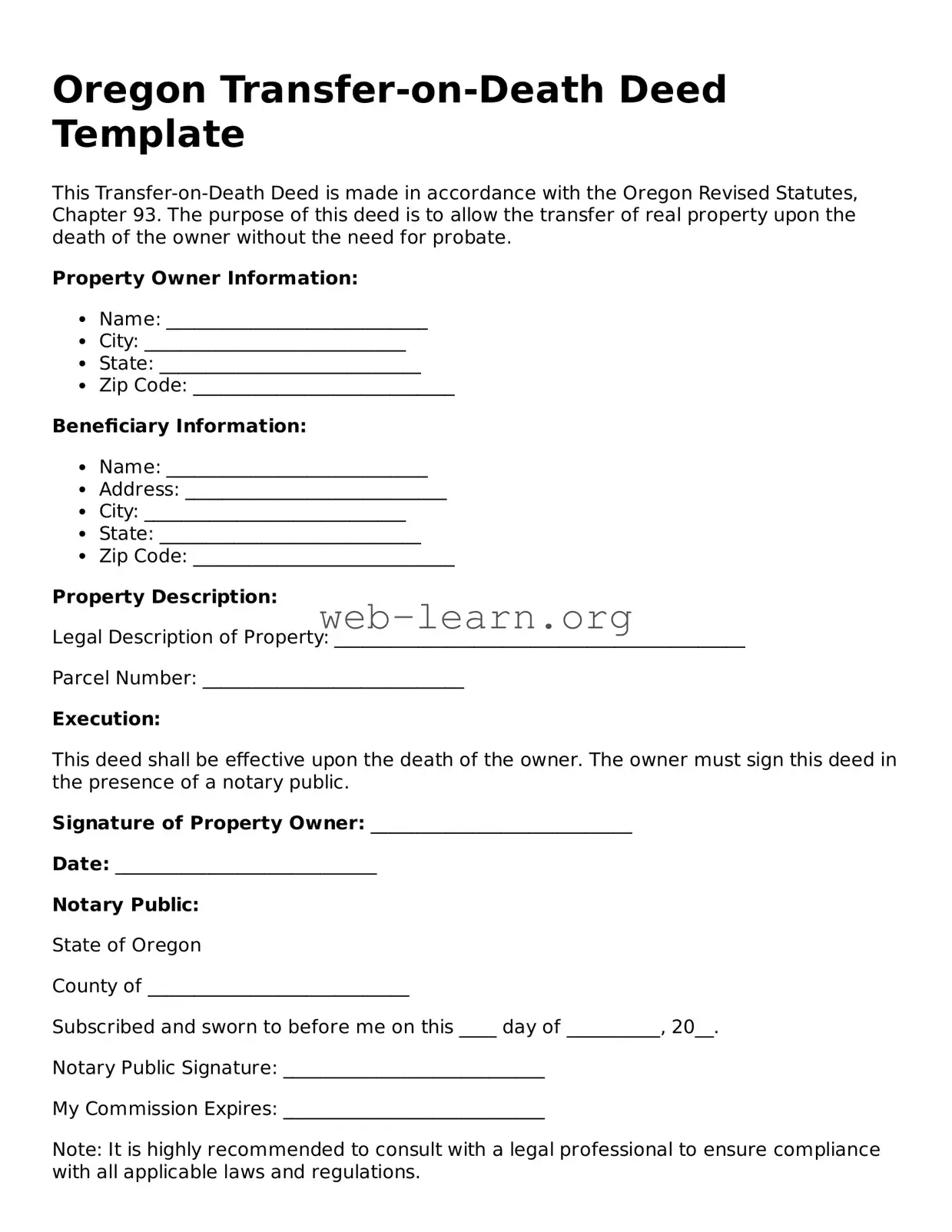
Oregon Transfer-on-Death Deed Template
This Transfer-on-Death Deed is made in accordance with the Oregon Revised Statutes, Chapter 93. The purpose of this deed is to allow the transfer of real property upon the death of the owner without the need for probate.
Property Owner Information:
Beneficiary Information:
Property Description:
Legal Description of Property: ____________________________________________
Parcel Number: ____________________________
Execution:
This deed shall be effective upon the death of the owner. The owner must sign this deed in the presence of a notary public.
Signature of Property Owner: ____________________________
Date: ____________________________
Notary Public:
State of Oregon
County of ____________________________
Subscribed and sworn to before me on this ____ day of __________, 20__.
Notary Public Signature: ____________________________
My Commission Expires: ____________________________
Note: It is highly recommended to consult with a legal professional to ensure compliance with all applicable laws and regulations.
| Fact Name | Description |
|---|---|
| Definition | The Oregon Transfer-on-Death Deed allows property owners to transfer real estate to beneficiaries upon their death without going through probate. |
| Governing Law | This deed is governed by Oregon Revised Statutes (ORS) 93.948 to 93.979. |
| Revocation | The property owner can revoke the deed at any time before their death, ensuring flexibility in estate planning. |
| Beneficiary Requirements | Beneficiaries must be individuals or entities that can legally hold property, such as family members or charities. |
| Filing Process | The completed deed must be recorded with the county clerk in the county where the property is located for it to be valid. |
After obtaining the Oregon Transfer-on-Death Deed form, you will need to carefully fill it out to ensure that it meets the necessary requirements. Once completed, the form should be filed with the county clerk's office where the property is located. This step is crucial for the deed to be legally recognized.
What is a Transfer-on-Death Deed in Oregon?
A Transfer-on-Death Deed (TOD) is a legal document that allows an individual to transfer real estate to a beneficiary upon their death, without going through probate. This deed provides a straightforward way to pass property to heirs while avoiding the complexities and costs associated with probate court.
Who can create a Transfer-on-Death Deed?
Any individual who owns real estate in Oregon can create a Transfer-on-Death Deed. The person creating the deed is known as the grantor, and they can name one or more beneficiaries to receive the property after their death.
What information is required on the Transfer-on-Death Deed?
The deed must include:
It is crucial to ensure that all information is accurate to avoid complications later.
Is it necessary to record the Transfer-on-Death Deed?
Yes, the Transfer-on-Death Deed must be recorded with the county clerk in the county where the property is located. This step is essential to make the deed effective and to inform others of the intended transfer upon the grantor’s death.
Can a Transfer-on-Death Deed be revoked?
Absolutely. A grantor can revoke a Transfer-on-Death Deed at any time before their death. This can be done by executing a new deed that explicitly revokes the previous one, or by recording a statement of revocation with the county clerk.
What happens if the beneficiary predeceases the grantor?
If a beneficiary dies before the grantor, the property will not transfer to that beneficiary. Instead, the grantor can choose to name a new beneficiary or allow the property to pass according to their will or the laws of intestacy if no will exists.
Are there any tax implications with a Transfer-on-Death Deed?
Generally, there are no immediate tax implications for the grantor when executing a Transfer-on-Death Deed. However, beneficiaries may be subject to property taxes and potential capital gains taxes when they sell the property. Consulting a tax professional is advisable to understand any specific tax consequences.
When filling out the Oregon Transfer-on-Death Deed form, individuals may encounter several common mistakes that can lead to complications. One frequent error is failing to provide accurate property descriptions. The property must be clearly identified, including its address and legal description. Omitting this information can result in confusion and potential disputes over the intended property transfer.
Another mistake is not properly signing the document. All required parties must sign the deed in the presence of a notary public. If any signatures are missing or not properly notarized, the deed may be deemed invalid. It is essential to ensure that every necessary signature is present before submitting the form.
Many people overlook the need to include the names of beneficiaries. The deed should specify who will receive the property upon the owner’s death. Failing to name beneficiaries can lead to unintended consequences, such as the property being distributed according to intestate succession laws rather than the owner’s wishes.
Some individuals may also forget to record the deed with the county clerk’s office. Recording the Transfer-on-Death Deed is crucial for it to be effective. Without proper recording, the deed may not be recognized, and the property could be treated as if no transfer had been made.
Another common mistake involves not updating the deed after changes in circumstances. If a beneficiary passes away or if the owner decides to change beneficiaries, it is important to update the deed accordingly. Failing to do so can create complications during the transfer process.
People often neglect to check for existing liens or encumbrances on the property. If there are outstanding debts tied to the property, these may affect the transfer. It is advisable to resolve any issues related to liens before completing the deed.
Some individuals may not understand the implications of the Transfer-on-Death Deed. It is important to recognize that this deed does not transfer ownership until the owner’s death. Misunderstanding this concept can lead to confusion about the rights of the beneficiaries during the owner’s lifetime.
Additionally, individuals may fail to seek legal advice when necessary. While the form is designed for self-preparation, consulting with a legal professional can help clarify any uncertainties and ensure compliance with state laws.
Another mistake involves using outdated forms. Laws and requirements can change, and it is crucial to use the most current version of the Oregon Transfer-on-Death Deed form. Using an outdated form may result in invalidation of the deed.
Lastly, some people may not keep copies of the completed deed. Retaining a copy is important for personal records and for the beneficiaries to have access to the document when needed. Without a copy, the transfer process may become more complicated for the heirs.
The Oregon Transfer-on-Death Deed is a useful tool for property owners looking to transfer real estate upon their death without going through probate. However, several other forms and documents often accompany this deed to ensure a smooth transfer process and address various legal considerations. Below is a list of these documents, each serving a specific purpose in the estate planning and property transfer process.
Understanding these additional forms and documents can help ensure that your estate planning is comprehensive and effective. Proper preparation can ease the burden on your loved ones and facilitate a smoother transition of your assets.
The Transfer-on-Death Deed (TODD) is a unique legal document that allows an individual to transfer property to a beneficiary upon their death without going through probate. However, there are other documents that serve similar purposes or functions in estate planning and property transfer. Here are six such documents:
Each of these documents plays a vital role in ensuring that assets are transferred according to an individual's wishes while minimizing the complications that can arise after death. Understanding these options can provide peace of mind and clarity in estate planning.
When filling out the Oregon Transfer-on-Death Deed form, it is essential to approach the process carefully. Below are five important do's and don'ts to consider.
The Oregon Transfer-on-Death Deed (TOD) form is a valuable tool for estate planning, yet several misconceptions surround its use. Understanding these misconceptions can help individuals make informed decisions about their property and estate. Here are five common misconceptions:
Understanding these misconceptions can empower individuals to utilize the Oregon Transfer-on-Death Deed effectively as part of their estate planning strategy.
Filling out and using the Oregon Transfer-on-Death Deed form can be a straightforward process if you keep a few important points in mind. Here are some key takeaways to help you navigate this form effectively:
By understanding these key points, you can effectively utilize the Oregon Transfer-on-Death Deed form to ensure your property is passed on according to your wishes.
How to Avoid Probate in Illinois - In some cases, a Transfer-on-Death Deed may be used alongside a will for comprehensive planning.
Problems With Transfer on Death Deeds California - This deed helps avoid probate, making the transfer of property simpler and quicker.
Transfer on Death Deed Kansas - Using this deed can help ensure your property is handled as you wish.