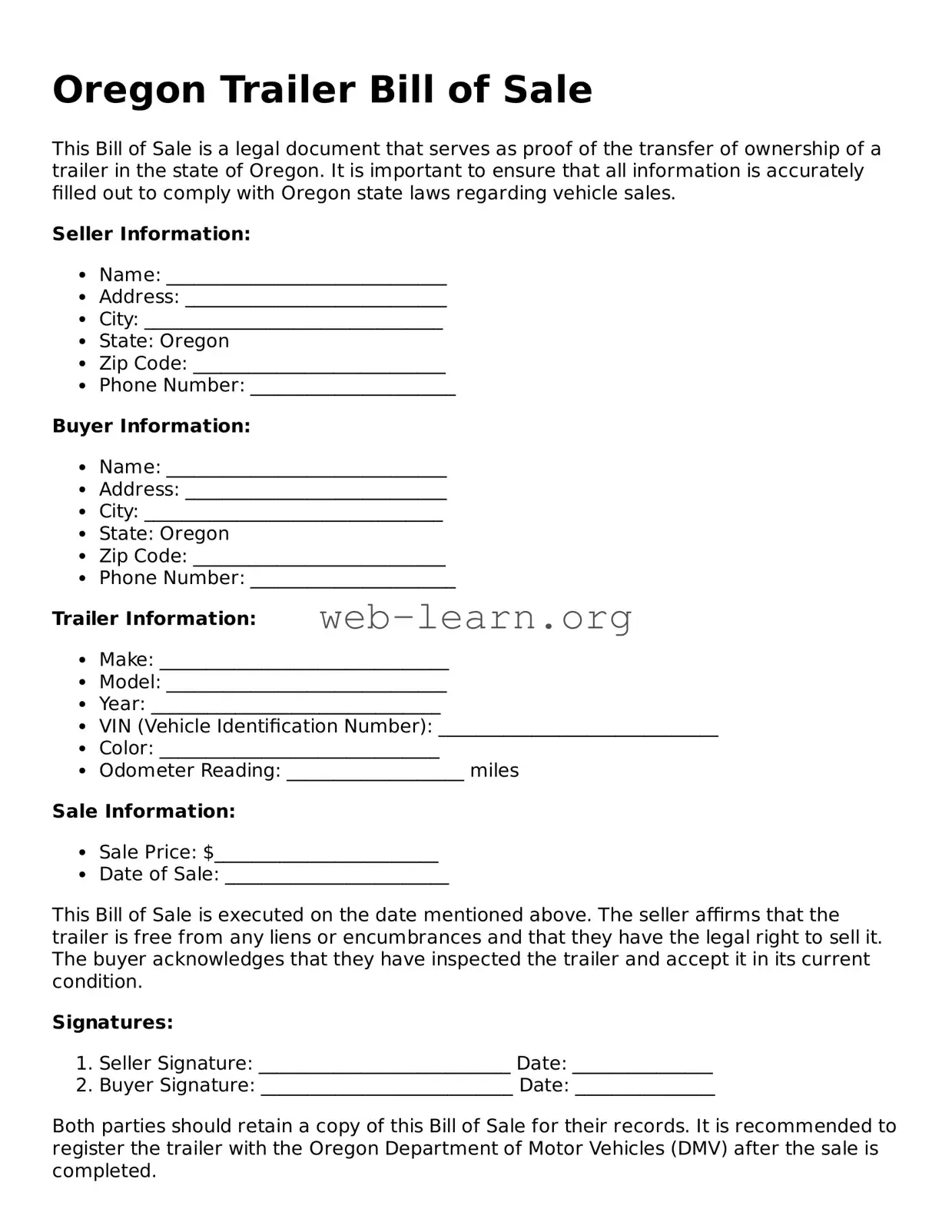
When it comes to buying or selling a trailer in Oregon, having the right documentation is crucial for a smooth transaction. The Oregon Trailer Bill of Sale form serves as an essential tool in this process, providing a clear record of the transfer of ownership between the seller and the buyer. This form typically includes important details such as the names and addresses of both parties, a description of the trailer—including its make, model, year, and Vehicle Identification Number (VIN)—and the sale price. Additionally, it often requires the signatures of both the seller and buyer, ensuring that both parties acknowledge the transaction. By completing this form, individuals not only protect their interests but also comply with state regulations regarding vehicle ownership transfer. Understanding the significance of this document can help facilitate a hassle-free experience when navigating the sometimes complex world of trailer sales in Oregon.
Oregon Trailer Bill of Sale
This Bill of Sale is a legal document that serves as proof of the transfer of ownership of a trailer in the state of Oregon. It is important to ensure that all information is accurately filled out to comply with Oregon state laws regarding vehicle sales.
Seller Information:
Buyer Information:
Trailer Information:
Sale Information:
This Bill of Sale is executed on the date mentioned above. The seller affirms that the trailer is free from any liens or encumbrances and that they have the legal right to sell it. The buyer acknowledges that they have inspected the trailer and accept it in its current condition.
Signatures:
Both parties should retain a copy of this Bill of Sale for their records. It is recommended to register the trailer with the Oregon Department of Motor Vehicles (DMV) after the sale is completed.
| Fact Name | Description |
|---|---|
| Purpose | The Oregon Trailer Bill of Sale form is used to document the sale or transfer of ownership of a trailer in the state of Oregon. |
| Governing Law | This form is governed by Oregon state laws, specifically ORS 803.100 regarding vehicle registration and transfer of ownership. |
| Required Information | Key details such as the seller's and buyer's names, addresses, trailer description, and sale price must be included in the form. |
| Signatures | Both the seller and buyer must sign the form to validate the transaction and confirm the transfer of ownership. |
| Record Keeping | It is advisable for both parties to keep a copy of the completed bill of sale for their records, as it serves as proof of the transaction. |
After obtaining the Oregon Trailer Bill of Sale form, you will need to complete it with accurate information. This document serves as a record of the sale and is important for both the buyer and seller. Follow the steps below to ensure you fill out the form correctly.
Once the form is completed, keep a copy for your records. The buyer may need to present this document when registering the trailer with the state.
A Trailer Bill of Sale is a legal document that records the transfer of ownership of a trailer from one party to another in the state of Oregon. This form provides essential details about the trailer, the buyer, and the seller, ensuring that both parties have a record of the transaction.
The Trailer Bill of Sale serves multiple purposes. It protects both the buyer and the seller by providing proof of the sale. This document can be used to register the trailer with the state, obtain a title, and resolve any disputes that may arise regarding ownership. Additionally, it can help establish the sale price for tax purposes.
The form typically requires the following information:
Yes, the Trailer Bill of Sale form can often be found on various state and legal websites. Many resources offer templates that can be filled out and printed. It is important to ensure that the form complies with Oregon state requirements.
In Oregon, notarization is not typically required for a Trailer Bill of Sale. However, having the document notarized can provide an additional layer of verification and may be beneficial in case of disputes or issues with the transaction.
Yes, a Trailer Bill of Sale can be used for homemade trailers. The seller should provide as much detail as possible about the trailer's construction and any materials used. Additionally, the buyer may need to check with the Oregon Department of Motor Vehicles (DMV) for any specific requirements regarding homemade trailers.
After completing the Trailer Bill of Sale, both parties should retain a copy for their records. The buyer should take the signed document to the DMV to register the trailer and obtain a title, if applicable. It is advisable to complete this process promptly to ensure legal ownership is established.
If issues arise after the sale, such as disputes over ownership or condition of the trailer, the Trailer Bill of Sale can serve as evidence of the transaction. It is recommended to keep all communication related to the sale and consult with a legal professional if necessary.
When completing the Oregon Trailer Bill of Sale form, it’s easy to overlook key details. One common mistake is failing to provide accurate information about the trailer. This includes the Vehicle Identification Number (VIN), make, model, and year. Each of these details is crucial for proper registration and identification of the trailer. An incorrect VIN can lead to significant complications down the line.
Another frequent error is not including the correct sale price. The sale price should reflect the actual amount paid for the trailer. If this figure is too low or inaccurately reported, it can raise red flags with the Department of Motor Vehicles (DMV) and may lead to penalties. Always ensure that the price matches what was agreed upon by both the buyer and seller.
Many people also forget to sign the form. Both the seller and buyer must provide their signatures to validate the transaction. Without these signatures, the bill of sale is incomplete and may not be recognized as a legitimate document. It’s a simple step that can easily be overlooked but is vital for the transaction’s legality.
Additionally, neglecting to date the form is another mistake that can cause issues. The date of sale is important for record-keeping and establishes when the ownership of the trailer officially changes hands. A missing date can lead to confusion regarding liability and ownership.
Another common oversight involves not providing contact information for both parties. Including full names, addresses, and phone numbers helps ensure that both the buyer and seller can be reached if any issues arise after the sale. This information is also useful for the DMV during the registration process.
Lastly, individuals often forget to keep a copy of the completed bill of sale for their records. This document serves as proof of the transaction and may be needed for future reference. Keeping a copy can help resolve any disputes or questions that may come up later. Remember, the bill of sale is not just a form; it’s an important document that protects both parties involved in the transaction.
When buying or selling a trailer in Oregon, the Trailer Bill of Sale form is essential. However, several other documents can complement this form, ensuring a smooth transaction and proper documentation. Here’s a look at some of the key forms you might encounter.
Having these documents on hand can streamline the buying or selling process and provide peace of mind. Proper documentation not only protects both parties but also ensures compliance with state regulations. Always consider consulting with a professional if you have questions about any of these forms.
The Trailer Bill of Sale form shares similarities with several other documents. Here are four of them:
When filling out the Oregon Trailer Bill of Sale form, it's important to follow certain guidelines to ensure accuracy and compliance. Here’s a list of things you should and shouldn’t do:
When it comes to the Oregon Trailer Bill of Sale form, there are several misconceptions that can lead to confusion. Here are five common misunderstandings:
When filling out and using the Oregon Trailer Bill of Sale form, consider the following key points:
Example of Bill of Sale for Trailer - May include information on any liens or encumbrances on the trailer.
Bull of Sale - It helps create a formal record of the sale that can be referenced later.
Hawaii Bill of Sale for a Trailer - Serves as proof of the transaction for both the buyer and seller.
Bill of Sale for Car Colorado Template - Encourages transparency between the buyer and seller.