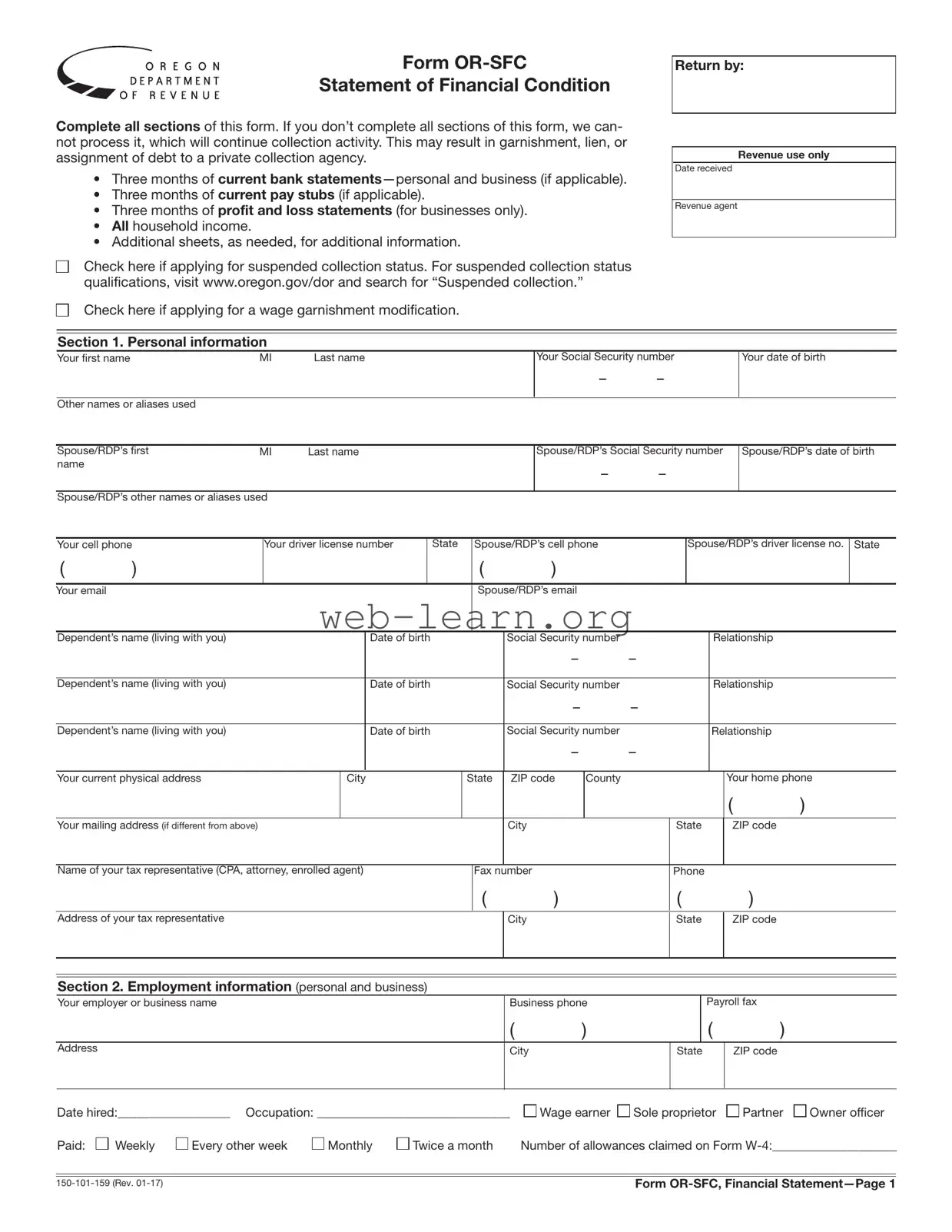
The Oregon Statement form, officially known as Form OR-SFC, is an essential tool for individuals and businesses navigating their financial obligations in the state. This comprehensive document requires users to provide detailed information about their financial condition, including personal and household income, employment details, and a thorough account of assets and liabilities. Completing all sections is crucial; failure to do so can result in ongoing collection activities, which may lead to garnishments or liens. The form also requests supporting documentation, such as three months of bank statements, pay stubs, and profit and loss statements for businesses. Furthermore, applicants can indicate if they are seeking suspended collection status or modifications to wage garnishments. Sections of the form cover personal information, employment details, and general financial information, ensuring a complete picture of the applicant's financial situation. Understanding the intricacies of this form can significantly impact one's financial management and obligations in Oregon.
Form
Statement of Financial Condition
Return by:
Complete all sections of this form. If you don’t complete all sections of this form, we can- not process it, which will continue collection activity. This may result in garnishment, lien, or assignment of debt to a private collection agency.
Three months of current bank
Three months of profit and loss statements (for businesses only).
•All household income.
Additional sheets, as needed, for additional information.
Check here if applying for suspended collection status. For suspended collection status qualifications, visit www.oregon.gov/dor and search for “Suspended collection.”
Check here if applying for a wage garnishment modification.
Revenue use only
Date received
Revenue agent
Section 1. Personal information
Your irst name |
MI |
Last name |
Your Social Security number
– –
Your date of birth
Other names or aliases used
Spouse/RDP’s irst |
MI |
Last name |
|
|
|
Spouse/RDP’s Social Security number |
Spouse/RDP’s date of birth |
|||||||
name |
|
|
|
|
|
|
|
|
|
– |
– |
|
|
|
|
|
|
|
|
|
|
|
|
|
|
|
|||
|
|
|
|
|
|
|
|
|
|
|
|
|
||
Spouse/RDP’s other names or aliases used |
|
|
|
|
|
|
|
|
|
|
|
|||
|
|
|
|
|
|
|
|
|
|
|
|
|||
Your cell phone |
|
Your driver license number |
|
State |
Spouse/RDP’s cell phone |
|
Spouse/RDP’s driver license no. |
State |
||||||
( |
) |
|
|
|
|
|
|
( |
) |
|
|
|
|
|
|
|
|
|
|
|
|
|
|
|
|
|
|
||
Your email |
|
|
|
|
|
|
|
Spouse/RDP’s email |
|
|
|
|
||
|
|
|
|
|
|
|
|
|
|
|
|
|
|
|
Dependent’s name (living with you) |
|
|
|
Date of birth |
|
|
Social Security number |
|
Relationship |
|||||
|
|
|
|
|
|
|
|
|
|
– |
– |
|
|
|
|
|
|
|
|
|
|
|
|
|
|
|
|
|
|
Dependent’s name (living with you) |
|
|
|
Date of birth |
|
|
Social Security number |
|
Relationship |
|||||
|
|
|
|
|
|
|
|
|
|
– |
– |
|
|
|
|
|
|
|
|
|
|
|
|
|
|
|
|
|
|
Dependent’s name (living with you) |
|
|
|
Date of birth |
|
|
Social Security number |
|
Relationship |
|||||
|
|
|
|
|
|
|
|
|
|
– |
– |
|
|
|
|
|
|
|
|
|
|
|
|
|
|
|
|
|
|
Your current physical address
City
State
ZIP code
County
Your home phone
()
Your mailing address (if different from above) |
|
City |
|
State |
ZIP code |
|
|
|
|
|
|
Name of your tax representative (CPA, attorney, enrolled agent) |
Fax number |
|
Phone |
|
|
|
( |
|
) |
( |
) |
Address of your tax representative
City
State
ZIP code
Section 2. Employment information (personal and business)
Your employer or business name |
Business phone |
Payroll fax |
|
( |
) |
( |
) |
|
|
Address |
City |
|
|
State |
ZIP code |
|
|
|
|
|
|
|
|
Date hired:____________________ |
Occupation: _______________________________ |
Wage earner |
Sole proprietor |
Partner |
Owner oficer |
|
Paid:
Weekly |
Every other week |
Monthly |
Twice a month |
Number of allowances claimed on Form |
Form |

Section 2. (continued) Employment information (personal and business)
Spouse/RDP’s employer or business name |
Business phone |
Payroll fax |
|
( |
) |
( |
) |
|
|
|
|
|
|
|
|
|
Address |
City |
|
|
State |
ZIP code |
|
|
|
|
|
|
|
|
Date hired:____________________ |
Occupation: _______________________________ |
Wage earner |
Sole proprietor |
Partner |
Owner oficer |
|
Paid:
Weekly |
Every other week |
Monthly |
Twice a month |
Number of allowances claimed on Form |
If
Identify the major responsibilities of each by circling the codes that apply: 1 = Files returns; 2 = Pays taxes; 3 = Prefers creditors; 4 = Hires and ires
|
Name and title |
Effective date |
Home address |
Home phone |
SSN |
Code |
|
|
|
|
|
|
|
|
|
|
|
|
|
|
|
|
|
|
|
|
|
1 |
2 |
3 |
4 |
|
|
|
|
|
|
|
|
|
|
|
|
|
|
|
|
|
|
1 |
2 |
3 |
4 |
|
|
|
|
|
|
|
|
|
|
|
|
|
|
|
|
|
|
1 |
2 |
3 |
4 |
|
|
|
|
|
|
|
|
|
|
|
|
|
|
|
|
|
|
|
|
|
|
|
|
|
|
|
|
|
|
|
|
|
|
Section 3. General inancial information (personal and business)
Bank accounts. Include IRA and retirement plans certiicates of deposit, etc. For all accounts, attach copies of your last three bank statements. Attach additional pages as needed.
Name of institution
Address
Type
Date opened
Account number
Balance
Total. Enter this amount on line 2, Section 4 (asset and liability analysis)........................
$
Safe deposit boxes (rented or accessed). Include location, box number, and contents. Attach additional pages as needed.
Name of institution
Address
Box identiication
Current value of assets
Total. Enter this amount on line 3, Section 4 (asset and liability analysis)........................
$
Vehicles. Attach supporting documentation of current payoff. Attach additional pages as needed, and vehicles paid in full.
Year, make, model, license number
Lender/lien holder
Current market value
Current payoff
Available equity
(cannot be less than
Total. Enter this amount on line 4, section 4 (asset and liability analysis) ........................
$
Form |

Section 3. (continued) General inancial information (personal and business)
Personal property. Include water craft, RVs, air craft, business equipment, and/or machinery. Attach additional pages as needed.
Year, make, model, license number
Lender/lien holder
Current market value
Current payoff
Available equity
(cannot be less than
Total. Enter this amount on line 6, section 4 (asset and liability analysis) ........................
$
Life insurance. Attach additional pages as needed.
Name of insurance company
Agent’s name and phone
Policy number |
Type |
|
|
Face amount
Loan/cash
surrender value
Total. Enter this amount on line 7, section 4 (asset and liability analysis) ........................
$
Securities. Include stocks, bonds, mutual funds, money market funds, securities, 401(k), etc. Attach additional pages as needed.
Type
Where located
Owner of record
Quantity or denomination
Current value
Total. Enter this amount on line 8, section 4 (asset and liability analysis) ........................
$
Real property. Include a copy of the deed and a copy of homeowners/rental insurance policy with riders and supporting documentation of loan balance. Attach additional pages as needed.
A. Physical address
Type
(single- or
lot, rental, etc.)
Mortgage lender’s name and address
Parcel number:_______________
How is title held:______________________________________ Purchase price: _________________ Purchase date: __________________
Current market value: _______________________Mortgage balance: ___________________________ Equity: ___________________________
B. Physical address
Type
(single- or
lot, rental, etc.)
Mortgage lender’s name and address
Parcel number:_______________
How is title held:______________________________________ Purchase price: _________________ Purchase date: __________________
Current market value: _______________________Mortgage balance: ___________________________ Equity: ___________________________
C. Physical address
Type
(single- or
lot, rental, etc.)
Mortgage lender’s name and address
Parcel number:_______________
How is title held:______________________________________ Purchase price: _________________ Purchase date: __________________
Current market value: _______________________Mortgage balance: ___________________________ Equity: ___________________________
Form |
Section 3. (continued) General inancial information (personal and business)
D. Physical address
Type
(single- or
lot, rental, etc.)
Mortgage lender’s name and address
Parcel number:_______________
How is title held:______________________________________ Purchase price: _________________ Purchase date: __________________
Current market value: _______________________Mortgage balance: ___________________________ Equity: ___________________________
Total Equity. Enter this amount on line 9, Section 4 (asset and liability analysis) . . . . . . . . .
$
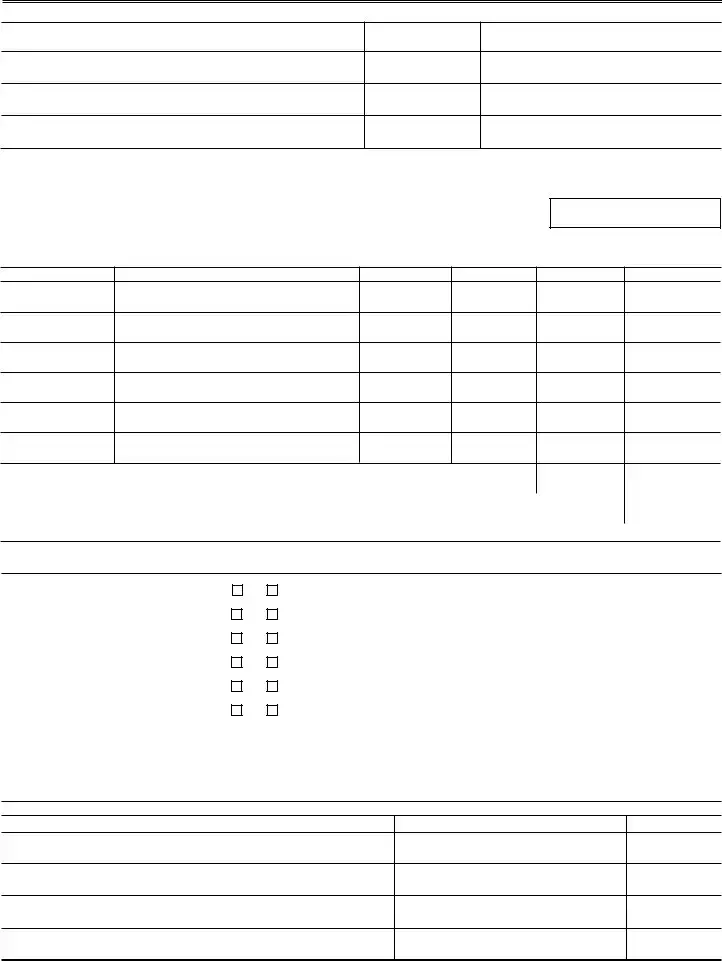
Credit cards and lines of credit. Credit cards and unsecured lines of credit may only be allowed with three months of statements showing they are used for living expenses.
Type of account
Name and address of creditor
Monthly payment |
Credit limit |
Credit available
Amount owed
Total $ |
|
||
|
|
|
|
Total. Enter this amount on line 28, Section 4 (asset and liability analysis) |
|
$ |
|
|
|
||
Other inancial information. Please provide the following information relating to your inancial conditions. If you check “Yes” in any box, provide dates, an explanation, and documentation. Attach additional pages as needed.
Court proceedings |
No |
Yes _______________________________________________________________________________ |
Repossessions |
No |
Yes _______________________________________________________________________________ |
Anticipated increase in income |
No |
Yes _______________________________________________________________________________ |
Bankruptcies/receiverships |
No |
Yes _______________________________________________________________________________ |
Recent transfer of assets |
No |
Yes _______________________________________________________________________________ |
Beneiciary to trust, estate, proit sharing, etc. ... |
No |
Yes _______________________________________________________________________________ |
Last Oregon income tax return iled |
Year:_______ _______________________________________________________________________________ |
|
Total number of exemptions claimed |
___________ ________________________________________________________________________________ |
|
Adjusted gross income from return |
$__________ ________________________________________________________________________________ |
|
List any vehicles, equipment, or property sold, given away, or repossessed during the past three years. Attach additional pages as needed.
Year, make, model of vehicle, or property address
Who took possession
Value
Form |

Section 4. Assets and liability analysis
Immediate assets. |
Totals |
1.Cash
2.Bank accounts / balance (from section 3)
3.Safe deposit box value of contents (from section 3)
4.Enter vehicles equity (from section 3)
5.Vehicle equity formula (line 4 - $3000, if less than
6.Personal property (from section 3)
7.Loan / cash surrender value for life insurance (from section 3)
8.Securities (from section 3)
9.Current real estate equity (from section 3)
10.Notes
11.Accounts receivable
12.Judgements / settlements received or pending
13. Interest in trusts
14. Interest in estates
15. Partnership interests
16. Major machinery / equipment, etc.
17. Business inventory
18. Other assets: (specify): (Example: $1,000 guns / $200 jewelry / $800 gold)
19. Other assets (specify):
20. Total assests |
$ |
Real property equity. From Section 3. Liens or cost of sale don’t reduce equity (can’t be less than
|
Address or location |
RMV from property tax statement |
Mortgage payoff amount |
Equity |
Totals |
21. |
Property 1: |
|
|
|
|
22. |
Property 2: |
|
|
|
|
23. |
Property 3: |
|
|
|
|
24. Total equity from properties listed on additional sheet (if applicable) |
|
|
|
|
|
25. |
Total of all real property equity (add the Equity column from lines 21 thru 24) |
|
|
||
|
|
|
|
|
|
26. Enter dollar amount from line 20 |
|
|
|
|
|
|
|
|
|
|
|
|
27. Total value of all immediate assets and real property equity (line 25 plus line 26) |
|
$ |
||
|
|
|
|||
Current liabilities. Include judgements, notes, and other charge accounts. Do not include vehicle or home loans.
28.Amount owed to credit cards and lines of credit (from Section 3)
29.Taxes owed to IRS (provide a copy of recent notices)
30.Other liabilities (specify):
31.Other liabilities (specify):
32.Other liabilities (specify):
33. Total liabilities |
$ |
Form |

Section 5. Monthly income and expense analysis
Income. Attach copies of all income sources that contribute to household expenses (minimum three months).
List Net Income |
|
|
Totals |
|
34. |
Wages / salaries / tips (yours) |
|
|
|
|
|
|
|
|
35. Social Security income (yours) |
|
|
|
|
|
|
|
|
|
36. |
Pension / annuities (yours) |
pension |
annuities |
both |
|
|
|
|
|
37. |
Disability (yours) |
|
|
|
|
|
|
||
38. Wages / salaries / tips (spouse/RDP’s) |
|
|
||
39.Social Security income (spouse/RDP’s)
40.Pension / annuities (spouse/RDP’s) pension annuities both
41.Disability (spouse/RDP’s)
42.Interest / dividends / royalties (average monthly)
43.Payments from trust / partnerships / entities
44.Unemployment
45.Other income (specify)
46.Other income (specify)
47.Other income (specify)
List Gross Income
48. Business income (yours)
49.Business income (spouse/RDP’s)
50.Rental income
51.Child support
52.Alimony
53.Seller carried contracts / sales
54. Total income |
$ |
Personal expenses (actually paid). (May be limited by federal standards.)
55. Rent / mortgage / real estate secured line(s) of credit
If
Amount
56. |
Real estate taxes |
(Is this included in your mortgage payment? |
No |
Yes) |
|
||
57. Personal home owners / renters insurance: ( |
|
) Assoc. fees: ( |
|
) |
|||
58. Personal utilities: |
Electric: ( |
) |
|
|
|
|
|
|
Natural gas / oil: ( |
) |
Phone, internet, & cable: ( |
) |
|||
|
|
Garbage: ( |
) |
|
Water / sewer: ( |
) |
|
59. |
Food / clothing / other Items: No. of people: ( |
) |
Their ages: ( |
|
) |
||
60. Auto payments / lease |
|
|
|
|
|
||
61. |
Auto insurance |
|
|
|
|
|
|
62. Auto maintenance / fuel / other transportation |
|
|
|
|
|
||
63.Medical payments (not covered by insurance) (provide proof)
64.Estimated tax payments (provide proof)
65.Court ordered payments (alimony, child support, restitution, not deducted from your paycheck)
Form |
Section 5. (continued) Monthly income and expense analysis
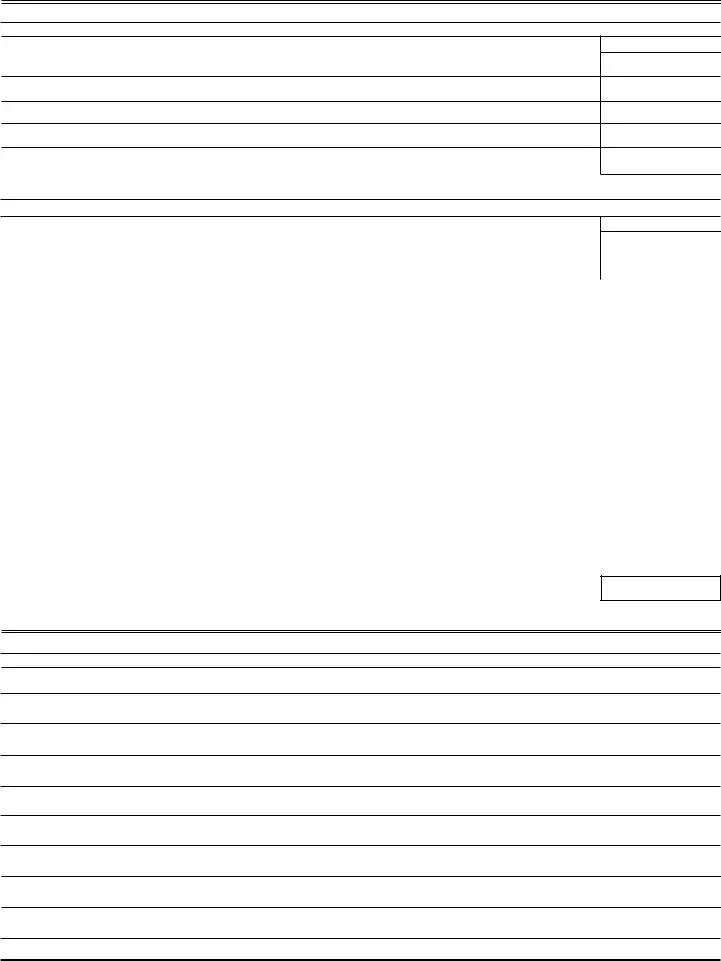
Personal expenses (actually paid). (continued) (May be limited by federal standards.)
Amount
66.Garnishments (specify)
67.Delinquent tax payments (other than Oregon state taxes, IRS, etc.)
68.Work related child care expenses
69. Other expenses (do not include unsecured debt) (specify)
70. Total personal expenses |
$ |
Business expenses (actually paid). Provide current general ledger and proit / loss.
Amount
71. Materials purchased (specify) |
|
|
|
|
|
|
|
|
|
|
|
72. |
Supplies (specify) |
|
|
|
|
|
|
|
|
|
|
73. Installment payments (specify) |
|
|
|
|
|
|
|
|
|
|
|
74. |
Monthly payments (specify) |
|
|
|
|
|
|
|
|
|
|
75. Rent / mortgage |
|
|
|
|
|
|
|
|
|
|
|
If |
|
|
|
|
|
|
|
|
|
|
|
76. |
Insurance |
|
|
|
|
|
|
|
|
|
|
77. Business utilities: Electric: ( |
) |
|
|
|
|
|
|
|
|
|
|
|
Natural gas / oil: ( |
) |
Phone, internet, & cable: ( |
) |
|
|
|
|
|
|
|
|
Garbage: ( |
) |
Water / sewer: ( |
) |
|
|
|
|
|
|
|
78. |
Net wages and salaries paid to employees |
|
|
|
|
|
|
|
|
|
|
79. Current taxes (payroll / business) |
|
|
|
|
|
|
|
|
|
|
|
80. Other: Specify: (do not include unsecured debt) |
|
|
|
|
|
|
|
|
|
|
|
81. |
Total business expenses |
|
|
$ |
|
|
|
|
|
|
|
82. Net disposable income (line 54 minus lines 70 and 81)........................................................................................................
$
Section 6. Additional information
Please provide any additional information not already included. Attach additional pages as needed. All household income must be included.
Form |

Section 6. (continued) Additional information
Please provide any additional information not already included. Attach additional pages as needed. All household income must be included.
Your proposed monthly payment.....................................................................................................................
$
Your proposed payment date...........................................................................................................................................
Section 7. Authorization to disclose
Under penalties of perjury, I declare that I have examined this statement of assets, liabilities, and other information, and to the best of my knowledge and belief, it is true, correct, and complete. I (we) authorize the Oregon Department of Revenue to verify any information on this inancial statement which may include credit reports.
Sign here
X
Your signatureDate
X
Spouse’s signature (if applying jointly, both must sign even if only one had income) |
Date |
Return your completed form to: Oregon Department of Revenue
PO Box 14725
Salem OR
Form |
| Fact Name | Description |
|---|---|
| Purpose | The Oregon Statement of Financial Condition (Form OR-SFC) is used to provide a comprehensive overview of an individual's or business's financial status. |
| Required Documents | Applicants must submit three months of current bank statements, pay stubs, and profit and loss statements (if applicable) along with the form. |
| Collection Activity | If the form is incomplete, processing will be halted, potentially leading to garnishment or assignment of debt to a collection agency. |
| Suspended Collection Status | Applicants can check a box to apply for suspended collection status, which may provide temporary relief from collection actions. |
| Governing Law | The form is governed by Oregon state law, specifically under the Oregon Department of Revenue regulations. |
| Contact Information | Individuals must provide personal information, including names, Social Security numbers, and contact details for themselves and their spouse or domestic partner. |
Completing the Oregon Statement form is a crucial step in addressing your financial situation. This form requires detailed information about your personal and financial circumstances. Properly filling it out can help you avoid potential collection actions, such as garnishments or liens. Follow the steps below carefully to ensure your submission is complete and accurate.
Once you have completed the form, submit it as instructed. Keep a copy for your records. If you have questions about any section, consider seeking assistance from a tax professional or legal advisor. Taking prompt action can significantly impact your financial situation.
What is the Oregon Statement form?
The Oregon Statement form, also known as Form OR-SFC, is a document that individuals must complete to provide a comprehensive overview of their financial condition. This form is crucial for those who are facing collection activities, as it allows the state to assess their financial situation. Completing all sections of this form is necessary; otherwise, processing cannot occur, which may lead to further collection actions.
Why is it important to complete all sections of the form?
Completing all sections of the Oregon Statement form is essential because incomplete forms cannot be processed. If the form is not fully filled out, it may result in continued collection activities, including garnishments, liens, or the assignment of debt to a private collection agency. This can have significant financial consequences for the individual.
What documents do I need to attach to the form?
When submitting the Oregon Statement form, you must attach several documents, including:
These documents help provide a clearer picture of your financial status.
What happens if I apply for suspended collection status?
If you check the box indicating that you are applying for suspended collection status, you may be eligible for a pause in collection activities. However, it is essential to meet the qualifications for this status. Detailed information about the qualifications can be found by visiting the Oregon Department of Revenue's website and searching for "Suspended collection."
How do I apply for a wage garnishment modification?
To apply for a wage garnishment modification, you should check the appropriate box on the Oregon Statement form. This indicates your intention to modify existing wage garnishments. Be prepared to provide supporting documentation and details regarding your current financial situation to support your request.
What types of financial information are required?
The form requires a comprehensive overview of both personal and business financial information. This includes:
All this information is necessary for an accurate assessment of your financial condition.
What if I have additional financial information to provide?
If you have more financial information that does not fit within the confines of the form, you can attach additional sheets as needed. This may include explanations for any unusual financial circumstances or documentation related to court proceedings or other liabilities.
How is the information on the form used?
The information provided on the Oregon Statement form is used by state revenue agents to evaluate your financial condition. This assessment helps determine the appropriate course of action regarding your debts and any collection activities. Accurate and complete information is crucial for fair evaluation.
Filling out the Oregon Statement form can be a straightforward process, but many people make common mistakes that can delay the processing of their application. One frequent error is failing to complete all sections of the form. Each section is important, and omitting any part can lead to processing delays or even rejection. It's crucial to ensure that every section is filled out accurately before submitting.
Another mistake often made is not including the necessary supporting documentation. Applicants are required to submit three months of current bank statements, pay stubs, and profit and loss statements if applicable. Missing these documents can halt the processing of the application. Always double-check to ensure all required documents are attached.
Inaccuracies in personal information are also a common issue. This includes errors in names, Social Security numbers, or dates of birth. Such mistakes can create significant complications and may require additional steps to correct. It's advisable to verify all personal details before submission to avoid any discrepancies.
Some individuals neglect to provide complete information about their dependents. The form requires details for each dependent living with the applicant, including their Social Security numbers and relationships. Omitting this information can result in incomplete applications, leading to further delays.
Additionally, applicants sometimes forget to check the appropriate boxes for specific statuses, such as applying for suspended collection status or a wage garnishment modification. These choices can impact how the application is processed, so it's essential to review this section carefully.
Lastly, many people overlook the importance of providing accurate financial information. This includes correctly reporting income, assets, and liabilities. Inaccurate figures can lead to misunderstandings and may affect the outcome of the application. Taking the time to gather and review financial information can prevent future issues.
The Oregon Statement form is an essential document for individuals dealing with financial assessments and potential collection actions. Along with this form, there are several other documents that may be necessary to provide a comprehensive view of one's financial situation. Below is a list of commonly used forms and documents that complement the Oregon Statement form.
Gathering these documents along with the Oregon Statement form can provide a clearer picture of one’s financial condition. This comprehensive approach helps in addressing any collection actions and can facilitate discussions regarding potential modifications or relief options.
When filling out the Oregon Statement form, it is essential to follow specific guidelines to ensure accuracy and completeness. Here are five things you should and shouldn't do:
This form is required. If you don’t complete it, the processing of your financial situation cannot proceed. This may lead to further collection actions.
You must report all household income. This includes income from various sources, not just your job. Make sure to include everything.
This form is for anyone dealing with financial conditions, regardless of the amount of debt. It helps clarify your financial situation.
Every section must be completed. If a section doesn’t apply, indicate that it is not applicable. Leaving sections blank can delay processing.
Filing the form does not automatically halt collection actions. You must meet specific qualifications for suspended collection status, which you can find on the Oregon government website.
Filling out the Oregon Statement form is an important step in managing your financial condition. Here are key takeaways to keep in mind:
Being thorough and accurate when completing the Oregon Statement form can help avoid complications in your financial dealings. Take your time to ensure all information is correct and complete.