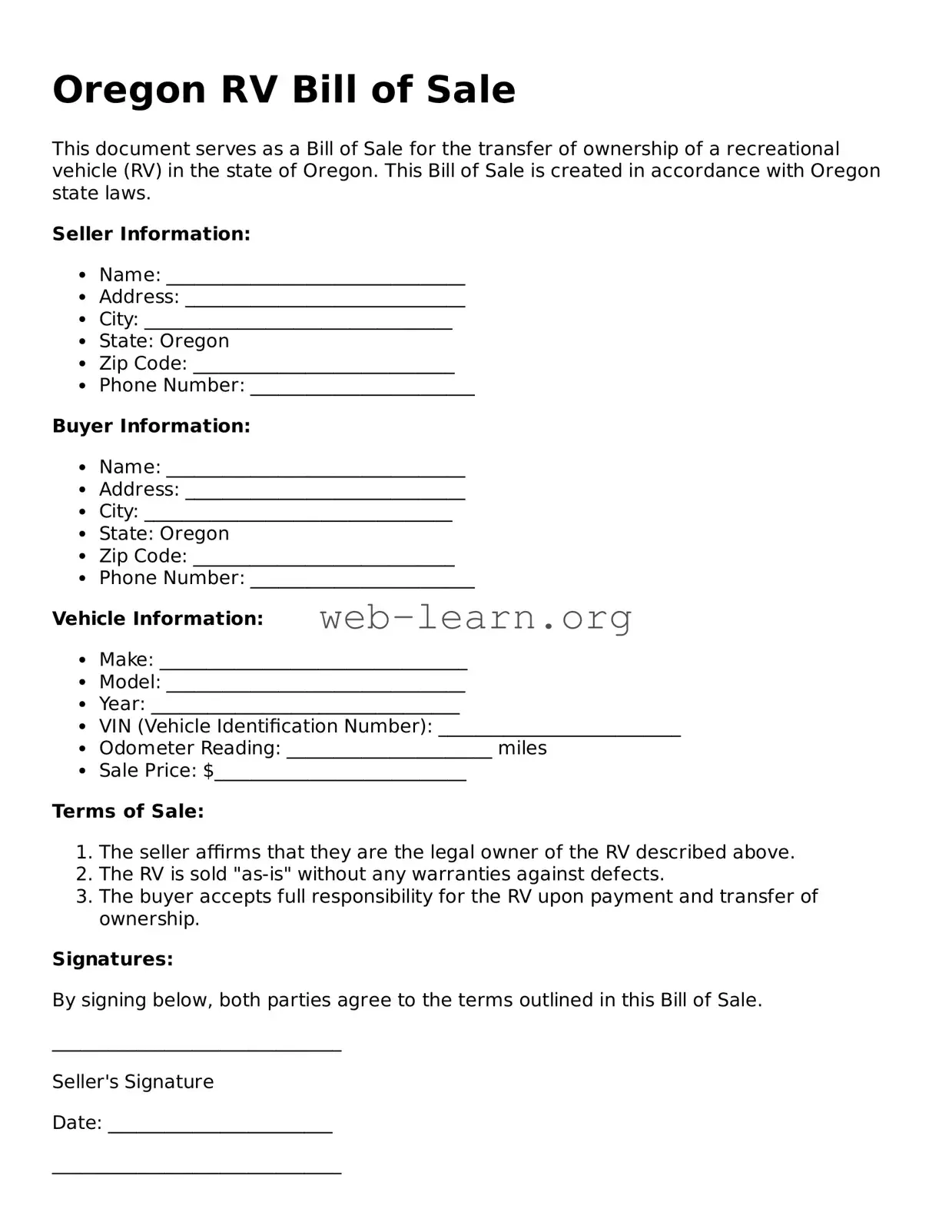
When purchasing or selling a recreational vehicle (RV) in Oregon, having a proper RV Bill of Sale form is essential to ensure a smooth transaction. This document serves as a legal record of the sale, providing important details about the RV, such as its make, model, year, and vehicle identification number (VIN). Additionally, the form includes information about the buyer and seller, including their names, addresses, and contact information. By clearly outlining the sale price and any terms or conditions agreed upon, the RV Bill of Sale helps protect both parties involved in the transaction. Furthermore, this document can be useful for registration purposes and may be required by the Department of Motor Vehicles (DMV) when transferring ownership. Understanding the key components of the RV Bill of Sale can help facilitate a hassle-free buying or selling experience, ensuring that all necessary information is documented accurately.
Oregon RV Bill of Sale
This document serves as a Bill of Sale for the transfer of ownership of a recreational vehicle (RV) in the state of Oregon. This Bill of Sale is created in accordance with Oregon state laws.
Seller Information:
Buyer Information:
Vehicle Information:
Terms of Sale:
Signatures:
By signing below, both parties agree to the terms outlined in this Bill of Sale.
_______________________________
Seller's Signature
Date: ________________________
_______________________________
Buyer's Signature
Date: ________________________
This document should be kept for your records.
| Fact Name | Description |
|---|---|
| Purpose | The Oregon RV Bill of Sale form is used to document the sale of a recreational vehicle in Oregon. |
| Governing Law | This form is governed by the Oregon Revised Statutes, specifically ORS 803.095. |
| Required Information | Buyers and sellers must provide details such as names, addresses, and vehicle information. |
| Signature Requirement | Both the buyer and seller must sign the document to make it legally binding. |
| Transfer of Ownership | The completed form serves as proof of ownership transfer from the seller to the buyer. |
Once you have the Oregon RV Bill of Sale form in front of you, it is essential to complete it accurately. This document will facilitate the transfer of ownership of the RV from the seller to the buyer. Following the steps below will help ensure that all necessary information is included, making the process smoother for both parties.
After completing the form, both parties should retain a copy for their records. This documentation is crucial for future reference and can assist in any potential disputes that may arise regarding the sale.
What is the Oregon RV Bill of Sale form?
The Oregon RV Bill of Sale form is a legal document that records the sale of a recreational vehicle (RV) in the state of Oregon. This form serves as proof of ownership transfer from the seller to the buyer. It includes essential details about the RV, the parties involved, and the terms of the sale.
What information is required on the form?
The form typically requires the following information:
Is the RV Bill of Sale required in Oregon?
While it is not legally required to have a Bill of Sale for every RV transaction in Oregon, it is highly recommended. This document provides a clear record of the transaction, which can be useful for both the buyer and seller in the event of disputes or for future registration purposes.
How can I obtain an Oregon RV Bill of Sale form?
The form can be obtained from various sources, including:
Does the Bill of Sale need to be notarized?
In Oregon, notarization is not a requirement for the RV Bill of Sale. However, having the document notarized can provide an additional layer of security and authenticity, which may be beneficial in certain situations.
What should I do after completing the Bill of Sale?
Once the Bill of Sale is completed and signed by both parties, the buyer should keep a copy for their records. The seller may also want to retain a copy. Additionally, the buyer should take the Bill of Sale to the local DMV to register the RV in their name and pay any applicable fees.
Can I use a Bill of Sale from another state?
While you may use a Bill of Sale from another state, it is advisable to use the Oregon-specific form to ensure compliance with local laws. Each state may have different requirements, and using the appropriate form can help avoid potential issues during registration.
What if there are errors on the Bill of Sale?
If there are errors on the Bill of Sale, it is important to correct them as soon as possible. Both parties should agree on the changes and initial the corrections. If significant changes are needed, it may be best to create a new Bill of Sale to avoid confusion.
What happens if the seller does not provide a Bill of Sale?
If the seller does not provide a Bill of Sale, the buyer may still proceed with the purchase, but it is not recommended. Without this document, the buyer may face challenges in proving ownership or registering the RV. It is best to request a Bill of Sale to ensure a smooth transaction.
Filling out the Oregon RV Bill of Sale form can seem straightforward, but many people make common mistakes that can lead to complications down the road. Understanding these pitfalls can help ensure a smooth transaction. One frequent error is failing to provide complete information about the RV. Sellers should include the vehicle identification number (VIN), make, model, and year. Missing even one detail can create confusion and may delay the registration process.
Another mistake often made is neglecting to include the sale price. This information is crucial, as it not only reflects the agreed-upon amount but also serves as a reference for any potential taxes. If the price is left blank or inaccurately stated, it could lead to issues with the Department of Motor Vehicles (DMV) when the new owner tries to register the RV.
People sometimes forget to sign the form. This may seem trivial, but without a signature, the document is not legally binding. Both the seller and buyer should ensure that they sign and date the form. It’s also a good practice to have a witness sign, which can provide additional verification of the transaction.
Another common oversight is not providing the buyer's information. The form should clearly state the buyer’s name, address, and contact details. Without this information, the DMV may have trouble processing the registration, which can lead to delays and frustration for the new owner.
Additionally, some individuals overlook the importance of providing a bill of sale copy to the buyer. A bill of sale serves as proof of purchase and can be crucial for future reference, especially if there are any disputes or questions about the transaction. Ensuring that both parties have a copy can save a lot of hassle later on.
Lastly, failing to double-check the information before submitting the form can lead to mistakes. It’s always wise to review everything carefully. A simple typo can result in significant issues, from registration problems to complications with insurance. Taking the time to verify all details can prevent headaches and ensure a seamless transfer of ownership.
When purchasing or selling a recreational vehicle (RV) in Oregon, several documents may accompany the RV Bill of Sale. Each of these forms serves a specific purpose, ensuring that the transaction is smooth and legally sound. Here is a list of commonly used forms and documents that you might need:
Gathering these documents not only facilitates a successful transaction but also helps protect the rights of both the buyer and the seller. Ensuring that all necessary paperwork is completed accurately can prevent future disputes and complications.
The RV Bill of Sale form is an important document for transferring ownership of a recreational vehicle. It shares similarities with several other documents used in various transactions. Here are seven documents that are comparable to the RV Bill of Sale:
Each of these documents plays a crucial role in ensuring that ownership transfers are documented clearly and legally, just like the RV Bill of Sale.
When filling out the Oregon RV Bill of Sale form, it's important to be thorough and accurate. Here are some essential dos and don’ts to keep in mind:
By following these guidelines, you can help ensure a smooth transaction when buying or selling an RV in Oregon.
When dealing with the Oregon RV Bill of Sale form, several misconceptions can lead to confusion. Understanding these misconceptions can help ensure a smoother transaction process. Here are nine common misunderstandings:
By clarifying these misconceptions, individuals can navigate the process of buying or selling an RV in Oregon with greater confidence and understanding.
When it comes to buying or selling a recreational vehicle (RV) in Oregon, using the RV Bill of Sale form is essential. Here are some key takeaways to keep in mind:
Filling out the RV Bill of Sale form accurately can help ensure a smooth transaction and protect both parties involved. Always double-check the information before finalizing the document.
Travel Trailer Bill of Sale - May include odometer readings to confirm mileage at the time of sale.
Trailer Bill of Sale Colorado - It can also be used for tax purposes to report the sale transaction.