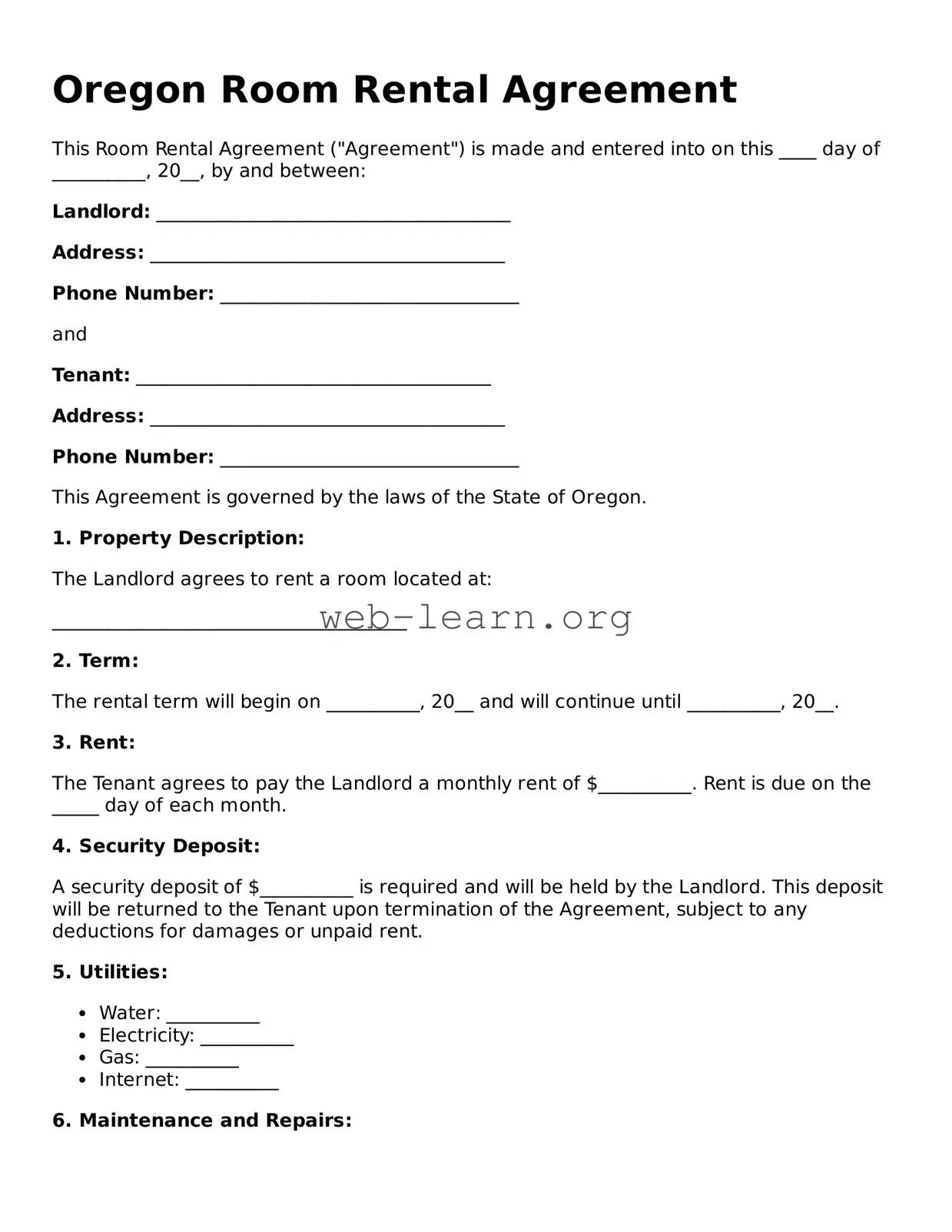
The Oregon Room Rental Agreement form serves as a vital document for both landlords and tenants, establishing clear expectations and responsibilities in a rental arrangement. This agreement outlines essential terms such as the duration of the lease, rental payment details, and the security deposit requirements. It also specifies the rights and obligations of both parties, including maintenance responsibilities and rules regarding pets or guests. By detailing procedures for terminating the agreement, it helps prevent misunderstandings that could lead to disputes. Additionally, the form addresses important legal considerations, ensuring compliance with state laws. Overall, the Oregon Room Rental Agreement is designed to protect the interests of both the landlord and the tenant, fostering a transparent and respectful rental relationship.
Oregon Room Rental Agreement
This Room Rental Agreement ("Agreement") is made and entered into on this ____ day of __________, 20__, by and between:
Landlord: ______________________________________
Address: ______________________________________
Phone Number: ________________________________
and
Tenant: ______________________________________
Address: ______________________________________
Phone Number: ________________________________
This Agreement is governed by the laws of the State of Oregon.
1. Property Description:
The Landlord agrees to rent a room located at:
______________________________________
2. Term:
The rental term will begin on __________, 20__ and will continue until __________, 20__.
3. Rent:
The Tenant agrees to pay the Landlord a monthly rent of $__________. Rent is due on the _____ day of each month.
4. Security Deposit:
A security deposit of $__________ is required and will be held by the Landlord. This deposit will be returned to the Tenant upon termination of the Agreement, subject to any deductions for damages or unpaid rent.
5. Utilities:
6. Maintenance and Repairs:
The Tenant agrees to keep the room clean and in good condition. Any maintenance or repair needs should be reported to the Landlord promptly.
7. Termination:
Either party may terminate this Agreement by providing a written notice of _____ days prior to the intended termination date.
8. Governing Law:
This Agreement shall be governed by the laws of the State of Oregon.
9. Signatures:
By signing below, both parties agree to the terms outlined in this Room Rental Agreement.
Landlord Signature: ___________________________ Date: ___________
Tenant Signature: ____________________________ Date: ___________
| Fact Name | Details |
|---|---|
| Purpose | The Oregon Room Rental Agreement outlines the terms for renting a room in a residential property. |
| Governing Law | This agreement is governed by Oregon state laws, particularly the Oregon Residential Landlord and Tenant Act. |
| Parties Involved | The agreement typically involves the landlord (property owner) and the tenant (individual renting the room). |
| Duration | The rental term can be specified as either a fixed term or a month-to-month arrangement. |
| Security Deposit | The form allows for a security deposit, which is usually one month's rent, to cover potential damages. |
| Payment Terms | Details about the rent amount, due date, and acceptable payment methods must be included. |
| Utilities | The agreement should specify who is responsible for paying utilities such as water, gas, and electricity. |
| Termination Notice | Notice periods for terminating the agreement must be clearly stated, usually 30 days for month-to-month rentals. |
| Legal Recourse | Both parties have legal rights and obligations; failure to comply may lead to eviction or other legal actions. |
Filling out the Oregon Room Rental Agreement form is a straightforward process that requires careful attention to detail. By providing accurate information, both landlords and tenants can ensure clarity in their rental arrangements.
After completing the form, review all entries for accuracy. Both parties should keep a signed copy for their records.
The Oregon Room Rental Agreement form is a legal document that outlines the terms and conditions for renting a room in Oregon. It serves as a contract between the landlord and the tenant, detailing responsibilities, payment terms, and other important aspects of the rental arrangement.
This form is intended for landlords and tenants in Oregon who are entering into a rental agreement for a room. It is suitable for individual room rentals in shared living spaces, such as apartments or houses.
The agreement typically includes:
Yes, landlords may require a security deposit as part of the rental agreement. The amount is typically specified in the agreement and must comply with Oregon's laws regarding security deposits. The deposit protects the landlord against damages or unpaid rent.
The duration of the rental agreement varies based on what the landlord and tenant agree upon. It can be a fixed term, such as six months or one year, or it can be a month-to-month arrangement. This should be clearly stated in the agreement.
Yes, modifications can be made, but both parties must agree to any changes. It is best to document any changes in writing and have both parties sign the updated agreement to avoid misunderstandings.
If a tenant wishes to terminate the agreement early, they should refer to the termination clause in the rental agreement. This section outlines the notice period required and any penalties for early termination.
Yes, Oregon has specific laws regarding rental agreements, including rules about security deposits, eviction processes, and tenant rights. It is important for both landlords and tenants to be aware of these laws to ensure compliance.
The Oregon Room Rental Agreement form can be obtained from various sources, including legal websites, real estate offices, or local government offices. It is advisable to use a form that is up-to-date and compliant with current Oregon laws.
When filling out the Oregon Room Rental Agreement form, many individuals encounter common pitfalls that can lead to misunderstandings or disputes later on. Recognizing these mistakes can help ensure a smoother rental experience for both landlords and tenants.
One frequent error is failing to provide accurate personal information. Tenants often neglect to double-check their names, addresses, and contact details. Inaccurate information can create complications when it comes time to communicate or enforce the agreement.
Another mistake involves overlooking the rental amount. Some individuals may misread the rental terms or forget to specify the payment frequency. This can lead to confusion about when and how much rent is due, potentially resulting in late fees or disputes.
Not including the security deposit amount is also a common oversight. Tenants might assume it is understood or forget to document it entirely. Clearly stating the security deposit helps protect both parties and clarifies expectations regarding its return.
People often forget to outline the duration of the rental agreement. Whether it’s a month-to-month arrangement or a fixed-term lease, failing to specify this detail can lead to misunderstandings about the rental period and notice requirements for termination.
Another mistake involves neglecting to list all included utilities. If utilities such as water, electricity, or internet are part of the rental agreement, they should be clearly stated. This prevents confusion about what is covered and what is not.
Many individuals also fail to read the fine print regarding maintenance responsibilities. It’s crucial to clarify who is responsible for repairs and upkeep. This helps avoid disputes over maintenance issues that may arise during the rental period.
Some tenants do not take the time to understand the pet policy. If pets are allowed, the agreement should specify any associated fees or restrictions. Conversely, if pets are prohibited, this should be clearly stated to avoid future conflicts.
Another common error is neglecting to include the signatures of all parties involved. An unsigned agreement may not be legally binding, leaving both parties vulnerable to potential disputes. It is essential to ensure that everyone involved has signed the document.
Lastly, individuals may forget to keep a copy of the completed agreement. Retaining a copy is vital for reference and can serve as protection if disagreements arise. Both parties should have access to the signed document for clarity and accountability.
The Oregon Room Rental Agreement is a key document for establishing the terms of a rental arrangement. However, several other forms and documents are often used in conjunction with this agreement to ensure clarity and legal compliance. Below is a list of these additional documents.
These documents collectively support the rental process, providing clarity and protection for both landlords and tenants. Utilizing them effectively can help prevent misunderstandings and ensure compliance with Oregon rental laws.
When filling out the Oregon Room Rental Agreement form, it is crucial to approach the task with care. This document outlines the terms of your rental arrangement and protects both parties involved. Here are some essential dos and don'ts to keep in mind:
By following these guidelines, you can help ensure a smoother rental experience. Taking the time to understand the agreement will benefit you in the long run.
Understanding the Oregon Room Rental Agreement form can be challenging. Here are eight common misconceptions about this document:
When filling out and using the Oregon Room Rental Agreement form, several key points should be kept in mind to ensure clarity and legal compliance. Here are ten essential takeaways:
By following these guidelines, both landlords and tenants can foster a clearer understanding of their rights and responsibilities, leading to a smoother rental experience.
Free California Rental Agreement - Includes information on how to handle changes in rental rates during the term.
Renting Room Lease Agreement - It includes details such as the monthly rent amount and due date for payments.
Room Rental Agreement Arizona - Terms for subletting the room may be included.
Room Rental Agreement Florida - This form can be customized to fit specific rental situations and needs.