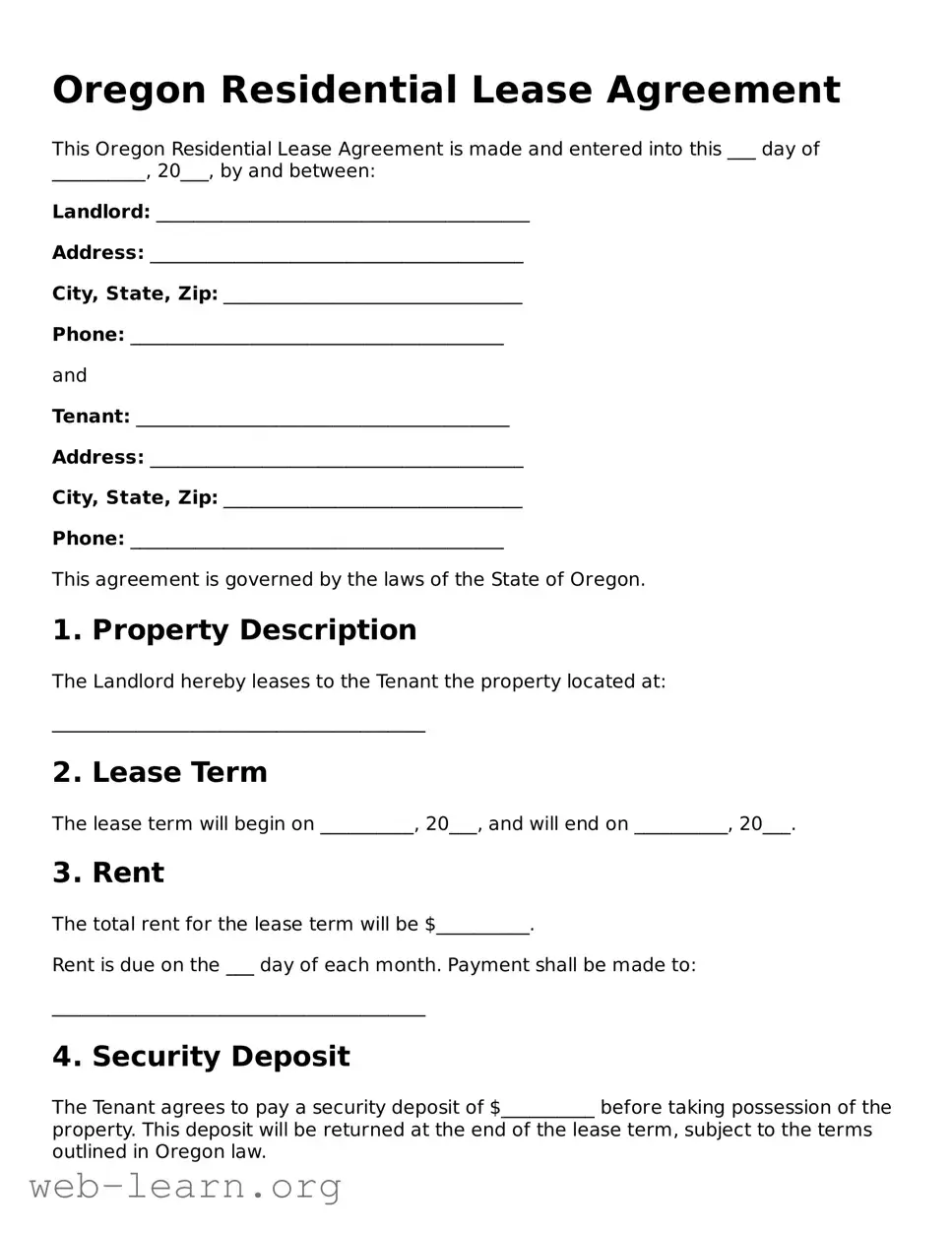
The Oregon Residential Lease Agreement form is a crucial document for both landlords and tenants in the state of Oregon. This form outlines the terms and conditions of renting a residential property, ensuring that both parties understand their rights and responsibilities. Key aspects include the rental amount, payment schedule, and security deposit details. It also specifies the duration of the lease, whether it is a fixed-term or month-to-month agreement. Additionally, the form covers maintenance responsibilities, rules regarding pets, and procedures for terminating the lease. By clearly defining these elements, the Oregon Residential Lease Agreement helps prevent disputes and fosters a positive rental experience for everyone involved.
Oregon Residential Lease Agreement
This Oregon Residential Lease Agreement is made and entered into this ___ day of __________, 20___, by and between:
Landlord: ________________________________________
Address: ________________________________________
City, State, Zip: ________________________________
Phone: ________________________________________
and
Tenant: ________________________________________
Address: ________________________________________
City, State, Zip: ________________________________
Phone: ________________________________________
This agreement is governed by the laws of the State of Oregon.
1. Property Description
The Landlord hereby leases to the Tenant the property located at:
________________________________________
2. Lease Term
The lease term will begin on __________, 20___, and will end on __________, 20___.
3. Rent
The total rent for the lease term will be $__________.
Rent is due on the ___ day of each month. Payment shall be made to:
________________________________________
4. Security Deposit
The Tenant agrees to pay a security deposit of $__________ before taking possession of the property. This deposit will be returned at the end of the lease term, subject to the terms outlined in Oregon law.
5. Utilities
The following utilities will be the responsibility of the:
6. Maintenance and Repairs
The Tenant agrees to keep the property clean and in good condition. Any repairs needed must be reported to the Landlord promptly.
7. Pets
Pets are allowed / not allowed on the premises. If allowed, a pet deposit of $__________ will be required.
8. Termination
Either party may terminate this lease by providing a written notice of ___ days to the other party.
9. Governing Law
This lease agreement will be governed by the laws of the State of Oregon.
IN WITNESS WHEREOF, the parties hereto have executed this Oregon Residential Lease Agreement on the date first above written.
Landlord Signature: ___________________________
Date: ______________________________________
Tenant Signature: ___________________________
Date: ______________________________________
| Fact Name | Description |
|---|---|
| Governing Law | The Oregon Residential Lease Agreement is governed by Oregon Revised Statutes, specifically ORS Chapter 90. |
| Parties Involved | The agreement must clearly identify the landlord and tenant, including their full names and contact information. |
| Property Description | A detailed description of the rental property, including the address and unit number, must be included. |
| Lease Term | The lease should specify the duration, whether it is a fixed-term lease or a month-to-month arrangement. |
| Rent Amount | The agreement must state the monthly rent amount and the due date for payment. |
| Security Deposit | Oregon law limits security deposits to one month's rent, and the lease should outline the terms for its return. |
| Maintenance Responsibilities | Both parties' responsibilities for property maintenance and repairs should be clearly defined. |
| Termination Notice | The lease must outline the notice period required for termination by either party, typically 30 days for month-to-month leases. |
| Dispute Resolution | The agreement may include provisions for resolving disputes, such as mediation or arbitration, in accordance with state laws. |
Completing the Oregon Residential Lease Agreement form is an important step in establishing a rental relationship. By carefully filling out this form, both landlords and tenants can ensure that their rights and responsibilities are clearly defined. Follow these steps to complete the form accurately.
After completing the form, make copies for all parties involved. This ensures that everyone has a record of the agreement. Review the document carefully to confirm that all information is accurate and complete before signing.
The Oregon Residential Lease Agreement is a legal document that outlines the terms and conditions between a landlord and a tenant for renting a residential property in Oregon. This agreement specifies details such as the duration of the lease, rental payment amounts, security deposits, maintenance responsibilities, and rules for the property.
A comprehensive lease agreement typically includes:
In Oregon, lease terms can vary widely. Most residential leases are typically one year, but they can also be month-to-month or for a shorter duration. It is essential for both parties to agree on the lease length and document it in the agreement.
If a tenant needs to break the lease early, they should review the lease agreement for any specific terms regarding early termination. Generally, tenants may be responsible for paying rent until a new tenant is found or until the lease term ends. Open communication with the landlord is crucial in these situations.
Yes, Oregon has specific laws that govern residential leases. The Oregon Residential Landlord and Tenant Act outlines the rights and responsibilities of both landlords and tenants. Important aspects include rules about security deposits, notice periods for terminating leases, and eviction processes. Familiarity with these laws can help both parties avoid disputes.
Typically, a landlord cannot raise the rent during a fixed-term lease unless the lease agreement explicitly allows for it. For month-to-month leases, landlords must provide written notice to tenants before increasing rent. In Oregon, the notice period is usually 90 days for rent increases.
If a tenant encounters a dispute with their landlord, the first step is to communicate directly with the landlord to resolve the issue. If that does not work, tenants can seek mediation services or contact local housing authorities for assistance. In some cases, legal action may be necessary, but it is often best to explore other options first.
Filling out the Oregon Residential Lease Agreement can be a straightforward process, but many individuals make common mistakes that can lead to complications down the line. One significant error is failing to provide accurate personal information. When tenants or landlords omit or misstate names, addresses, or contact details, it can create confusion and hinder communication. Ensuring that all information is correct and up-to-date is essential.
Another frequent mistake is neglecting to specify the lease term. A lease agreement should clearly outline the start and end dates. Without this crucial detail, both parties may have different expectations regarding the duration of the tenancy. This oversight can lead to misunderstandings and potential disputes.
People often overlook the importance of detailing rent payment terms. It is vital to specify the amount of rent, the due date, and acceptable payment methods. Leaving these terms vague can result in late payments or disagreements about what constitutes acceptable payment practices. Clarity in this area protects both landlords and tenants.
Additionally, some individuals fail to include information about security deposits. The agreement should state the amount of the deposit, the conditions under which it may be withheld, and the timeline for its return. Not addressing this can lead to disputes when the lease ends, leaving tenants unsure of their rights regarding their deposits.
Another mistake involves skipping the inclusion of maintenance responsibilities. The lease should clearly outline who is responsible for repairs and maintenance. If this section is left blank, it may lead to confusion about who handles issues like plumbing or electrical problems, potentially resulting in costly delays.
Some people also forget to address the rules regarding pets. If the lease does not specify whether pets are allowed or any associated fees, it can lead to conflicts later. Both parties need to understand the pet policy to avoid misunderstandings that could affect the living situation.
Finally, many fail to read the entire agreement thoroughly before signing. This oversight can result in agreeing to terms that one party may not fully understand or accept. It is crucial to review all sections of the lease carefully and seek clarification on any unclear terms. Taking the time to do this can prevent future legal issues and ensure a smoother rental experience.
When entering into a rental agreement in Oregon, several other forms and documents may accompany the Oregon Residential Lease Agreement. Each of these documents serves a specific purpose and helps clarify the responsibilities and rights of both landlords and tenants. Below is a brief overview of commonly used documents.
These documents play a vital role in ensuring a smooth landlord-tenant relationship. By providing clarity and transparency, they help both parties understand their rights and obligations, fostering a respectful and cooperative living environment.
When filling out the Oregon Residential Lease Agreement form, it's important to approach the process with care. Here’s a helpful list of things you should and shouldn’t do:
Understanding the Oregon Residential Lease Agreement form is crucial for both landlords and tenants. However, several misconceptions often arise about this important document. Here are five common misunderstandings:
It is a one-size-fits-all document. Many people believe that the Oregon Residential Lease Agreement is the same for every rental situation. In reality, landlords can customize the agreement to fit their specific property and rental terms, as long as they comply with state laws.
Oral agreements are just as binding. Some tenants think that verbal agreements can replace a written lease. However, in Oregon, a written lease is essential for clarity and legal protection. Oral agreements can lead to misunderstandings and disputes.
Security deposits are unlimited. A common belief is that landlords can charge any amount for a security deposit. In Oregon, there are limits on how much can be charged, typically no more than one month's rent for most residential leases.
Landlords can enter the property anytime. Many tenants assume that landlords have unrestricted access to their rental units. However, Oregon law requires landlords to provide reasonable notice—usually 24 hours—before entering the property, except in emergencies.
Lease agreements are permanent. Some people think that once a lease is signed, it cannot be changed or terminated. In fact, leases can often be negotiated or modified by mutual agreement, and tenants may have rights to terminate leases under certain conditions.
Being informed about these misconceptions can help both landlords and tenants navigate their rights and responsibilities more effectively.
When filling out and using the Oregon Residential Lease Agreement form, it's important to keep several key points in mind. Understanding these aspects can help ensure a smoother rental experience for both landlords and tenants.
By paying attention to these key takeaways, both landlords and tenants can create a clear and effective lease agreement that meets their needs.