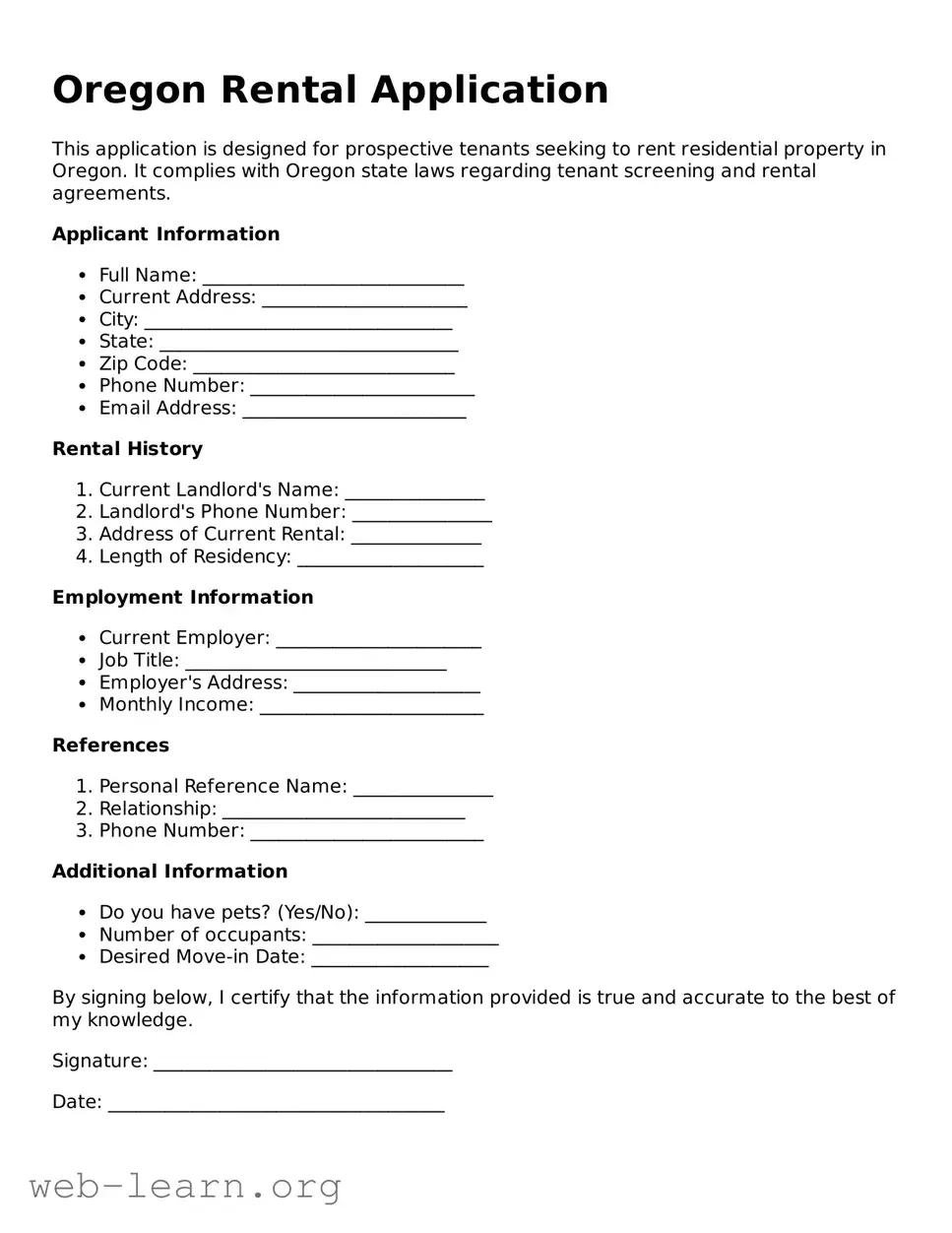
The Oregon Rental Application form is a crucial document for both landlords and prospective tenants. This form serves as a comprehensive tool to gather essential information about potential renters, ensuring a transparent and fair leasing process. Key aspects of the form include personal identification details, employment history, and rental history, which help landlords assess the reliability and suitability of applicants. Additionally, the application often requires consent for background checks, including credit history and criminal records, allowing landlords to make informed decisions. Understanding the nuances of this form is vital for both parties, as it sets the foundation for a successful rental agreement and fosters a respectful landlord-tenant relationship. By adhering to Oregon's specific guidelines and requirements, landlords can protect their interests while providing a fair opportunity for tenants seeking a new home.
Oregon Rental Application
This application is designed for prospective tenants seeking to rent residential property in Oregon. It complies with Oregon state laws regarding tenant screening and rental agreements.
Applicant Information
Rental History
Employment Information
References
Additional Information
By signing below, I certify that the information provided is true and accurate to the best of my knowledge.
Signature: ________________________________
Date: ____________________________________
| Fact Name | Details |
|---|---|
| Purpose | The Oregon Rental Application form is used by landlords to screen potential tenants. |
| Governing Law | Oregon Revised Statutes (ORS) Chapter 90 governs rental agreements and applications. |
| Information Required | The form typically requires personal information, rental history, and employment details. |
| Application Fee | Landlords may charge an application fee, which must be reasonable and disclosed upfront. |
| Screening Criteria | Landlords must provide clear criteria for tenant selection, which may include credit checks and background checks. |
| Fair Housing Compliance | The application process must comply with federal and state fair housing laws, ensuring no discrimination. |
| Disclosure of Information | Landlords must inform applicants if they will conduct a background or credit check. |
| Response Time | Landlords should respond to rental applications in a timely manner, typically within a few days. |
| Tenant Rights | Applicants have the right to request a copy of any reports used in the screening process. |
| Record Keeping | Landlords are advised to keep records of all applications and screening results for a specified period. |
Completing the Oregon Rental Application form is an important step in securing a rental property. By accurately filling out the application, you provide the landlord or property manager with the necessary information to consider your request. Below are the steps to guide you through the process.
Once you have submitted your application, the landlord or property manager will review your information. They may contact you for further details or to schedule an interview. Be prepared to provide any additional documentation they might request.
The Oregon Rental Application form is a document used by landlords and property managers to collect information from potential tenants. This form typically includes personal details, rental history, employment information, and references. It helps landlords assess whether an applicant is a suitable tenant for their property.
Applicants are usually asked to provide:
Some landlords may also request additional information, such as a credit report or background check consent.
Yes, many landlords charge an application fee. This fee typically covers the cost of processing the application, which may include background checks and credit reports. The amount can vary, so it’s important to ask the landlord about any fees before submitting your application.
The processing time can vary based on the landlord’s policies and the volume of applications they receive. Generally, it can take anywhere from a few hours to several days. If you haven’t heard back within a week, it’s a good idea to follow up with the landlord or property manager.
If your application is denied, the landlord is required to provide you with a reason. This could be due to insufficient income, poor rental history, or negative credit reports. You can request a copy of the report that led to the denial. If you believe the decision was made in error, you may want to address any inaccuracies or consider applying for other rental opportunities.
While there is no formal appeal process required by law, you can certainly reach out to the landlord to discuss the denial. If you feel there were extenuating circumstances or inaccuracies in your application, explain your situation. Some landlords may reconsider their decision based on new information or clarification.
Filling out a rental application in Oregon can seem straightforward, but many people make common mistakes that can hinder their chances of securing a rental property. One frequent error is providing incomplete information. Landlords require specific details to assess your application effectively. Missing sections, such as employment history or references, may raise red flags.
Another mistake is failing to disclose all income sources. Applicants often forget to include part-time jobs, freelance work, or other income streams. This oversight can lead to an inaccurate portrayal of financial stability. Always ensure that you list all relevant income to give landlords a complete picture of your financial situation.
Some applicants neglect to check their credit history before submitting the application. A poor credit score can significantly affect a landlord's decision. It’s advisable to review your credit report beforehand, address any discrepancies, and be prepared to explain any issues that may arise.
Additionally, many people underestimate the importance of providing accurate contact information. An incorrect phone number or email address can lead to missed communication from landlords. Always double-check that your contact details are current and clearly written.
Another common oversight is not having the necessary documentation ready. Many landlords request proof of income, rental history, and identification. Failing to provide these documents can delay the application process or result in rejection. Gather all required paperwork in advance to streamline your application.
Lastly, applicants sometimes forget to tailor their applications to the specific property. Each rental may have unique requirements or preferences. Take the time to read the listing carefully and address any specific requests or criteria mentioned by the landlord. Customizing your application can enhance your chances of being selected.
When renting a property in Oregon, several forms and documents are commonly used alongside the Oregon Rental Application form. These documents help establish the terms of the rental agreement and ensure that both the landlord and tenant have a clear understanding of their rights and responsibilities. Below is a list of five important forms that may accompany the rental application.
Having these forms ready can streamline the rental process and help prevent misunderstandings between landlords and tenants. Each document plays a crucial role in establishing a positive rental experience for both parties.
Lease Agreement: A lease agreement outlines the terms and conditions of renting a property. Like the rental application, it requires personal information and details about the tenant's ability to pay rent, ensuring that both parties understand their rights and obligations.
Credit Application: A credit application is similar in that it collects financial information to assess an individual's creditworthiness. Both documents aim to evaluate the applicant's financial stability and reliability, which is crucial for landlords when selecting tenants.
Employment Verification Form: This form is used to confirm an applicant's employment status and income. It parallels the rental application by gathering essential details that help landlords determine if a tenant can afford the rent.
Background Check Authorization: This document allows landlords to perform a background check on potential tenants. It shares similarities with the rental application by requesting personal information and consent to verify the applicant’s history, which is vital for ensuring a safe living environment.
Tenant Screening Report: A tenant screening report compiles various aspects of an applicant's history, including credit, criminal, and rental history. Like the rental application, it serves as a tool for landlords to make informed decisions about who they allow to rent their property.
When filling out the Oregon Rental Application form, it is crucial to approach the process with care. Here are some important dos and don'ts to keep in mind:
By following these guidelines, you can enhance your chances of securing your desired rental property in Oregon.
Understanding the Oregon Rental Application form is crucial for both landlords and tenants. However, several misconceptions can lead to confusion and missteps. Here are ten common misunderstandings about this important document.
By understanding these misconceptions, both landlords and tenants can navigate the rental application process more effectively, ensuring a smoother experience for everyone involved.
When filling out and using the Oregon Rental Application form, keep these key takeaways in mind: