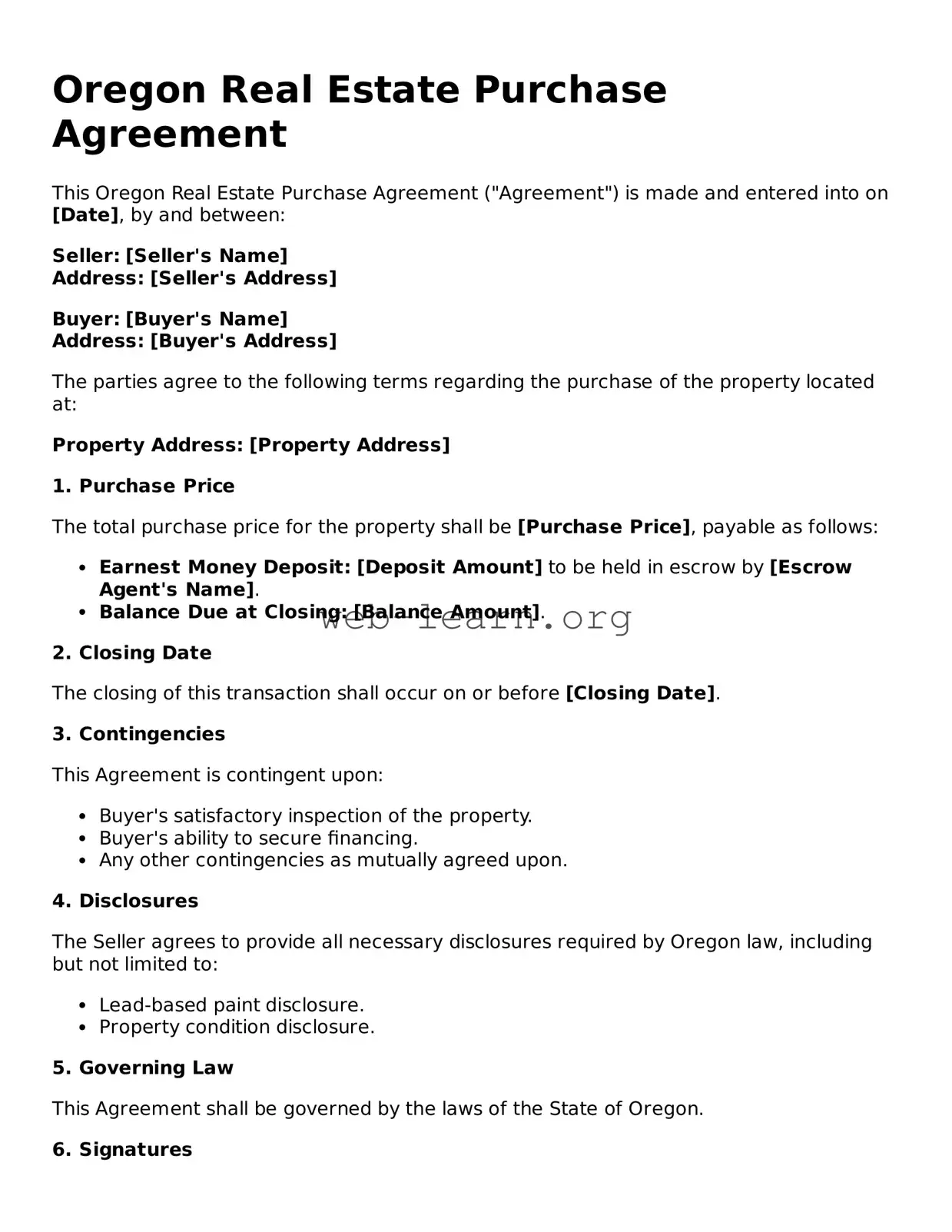
When navigating the complexities of buying or selling a home in Oregon, understanding the Oregon Real Estate Purchase Agreement form is essential. This document serves as the foundation for the transaction, outlining the terms and conditions agreed upon by both the buyer and the seller. Key elements of the form include the purchase price, financing details, and the closing date, which collectively establish a clear timeline for the transaction. Additionally, the agreement addresses contingencies, such as inspections and appraisals, ensuring that both parties are protected should unforeseen issues arise. The form also specifies the responsibilities of each party, including disclosures and any repairs that may be required. By familiarizing oneself with these major aspects, individuals can approach the home buying or selling process with greater confidence and clarity.
Oregon Real Estate Purchase Agreement
This Oregon Real Estate Purchase Agreement ("Agreement") is made and entered into on [Date], by and between:
Seller: [Seller's Name]
Address: [Seller's Address]
Buyer: [Buyer's Name]
Address: [Buyer's Address]
The parties agree to the following terms regarding the purchase of the property located at:
Property Address: [Property Address]
1. Purchase Price
The total purchase price for the property shall be [Purchase Price], payable as follows:
2. Closing Date
The closing of this transaction shall occur on or before [Closing Date].
3. Contingencies
This Agreement is contingent upon:
4. Disclosures
The Seller agrees to provide all necessary disclosures required by Oregon law, including but not limited to:
5. Governing Law
This Agreement shall be governed by the laws of the State of Oregon.
6. Signatures
By signing below, both parties agree to the terms outlined in this Agreement.
_____________________________
Seller's Signature [Date]
_____________________________
Buyer's Signature [Date]
This document serves as a binding contract between the parties involved. It is advisable to seek legal counsel before signing.
| Fact Name | Description |
|---|---|
| Governing Law | The Oregon Real Estate Purchase Agreement is governed by Oregon state law. |
| Purpose | This form is used to outline the terms and conditions of a real estate transaction in Oregon. |
| Parties Involved | The agreement includes the buyer(s) and seller(s) of the property. |
| Property Description | A detailed description of the property being sold must be included. |
| Purchase Price | The total purchase price of the property is clearly stated in the agreement. |
| Earnest Money | The agreement specifies the amount of earnest money to be deposited by the buyer. |
| Contingencies | Common contingencies, such as financing and inspections, are included to protect both parties. |
| Closing Date | The agreement sets a specific closing date for the transaction to be finalized. |
| Disclosures | Oregon law requires certain disclosures to be made by the seller, which are referenced in the agreement. |
| Signatures | Both parties must sign the agreement for it to be legally binding. |
After obtaining the Oregon Real Estate Purchase Agreement form, you are ready to fill it out. This form is essential for documenting the terms of a real estate transaction between a buyer and a seller. Completing it accurately ensures that both parties understand their obligations and rights.
Once the form is completed, it should be reviewed carefully by both parties. Ensure that all information is accurate and that both parties understand the terms before proceeding with the next steps in the real estate transaction.
What is the Oregon Real Estate Purchase Agreement?
The Oregon Real Estate Purchase Agreement is a legal document used in real estate transactions within the state of Oregon. It outlines the terms and conditions under which a buyer agrees to purchase a property from a seller. This document serves to protect the interests of both parties and provides a clear framework for the sale process.
What key elements are included in the agreement?
The agreement typically includes the following key elements:
Are there any contingencies that can be included?
Yes, contingencies are an important part of the agreement. They allow the buyer to back out of the deal under certain conditions. Common contingencies include:
What happens if either party wants to back out of the agreement?
If either party wishes to back out, they must refer to the terms outlined in the agreement. If a contingency is not met, the buyer may have the right to withdraw without penalty. However, if a party backs out without a valid reason as specified in the agreement, they may face legal consequences or lose their earnest money deposit.
Is it necessary to have a real estate agent when using this agreement?
While it is not required to have a real estate agent, it is highly recommended. A real estate agent can provide valuable guidance, help navigate the complexities of the agreement, and ensure that all legal requirements are met. Their expertise can be particularly beneficial for first-time buyers or sellers.
How is the purchase price determined?
The purchase price is typically negotiated between the buyer and seller. Factors that influence this price include the current market conditions, property condition, location, and comparable sales in the area. Both parties may need to engage in discussions and possibly adjustments before reaching an agreement.
What should I do if I have questions about the agreement?
If you have questions about the Oregon Real Estate Purchase Agreement, it is advisable to consult with a qualified real estate attorney or a licensed real estate professional. They can provide personalized advice based on your specific situation and help clarify any uncertainties you may have regarding the document.
Filling out the Oregon Real Estate Purchase Agreement form can be a straightforward process, but many individuals make common mistakes that can lead to complications down the line. One frequent error is failing to provide accurate property details. Buyers and sellers must ensure that the legal description, including the address and parcel number, is correct. Inaccuracies can cause disputes and delays in the transaction.
Another common mistake involves not clearly defining the terms of the sale. This includes the purchase price, financing details, and any contingencies. Without clear terms, misunderstandings can arise, leading to frustration for both parties. It is crucial to be specific about what is included in the sale, such as appliances or fixtures.
People often overlook the importance of signatures and dates. The agreement must be signed by all parties involved, and each signature should be accompanied by the date. Missing signatures or dates can render the agreement invalid. Always double-check to ensure that everything is complete before submitting the form.
Additionally, some individuals neglect to consider the implications of contingencies. Common contingencies include home inspections, financing, and appraisal. Failing to include these can expose buyers to unexpected costs or complications. It is essential to outline these conditions clearly to protect all parties involved.
Another mistake is misinterpreting the timeline for the transaction. The agreement should specify important dates, including the closing date and any deadlines for contingencies. Without clear timelines, delays can occur, which may lead to frustration or even the loss of the deal.
People sometimes forget to address the earnest money deposit. This deposit shows the buyer's commitment to the transaction. Not specifying the amount or the conditions for its return can create issues later. It is important to clarify how much earnest money is required and under what circumstances it may be forfeited.
Miscommunication regarding repairs is also a common pitfall. Buyers often assume that repairs will be made without explicitly stating this in the agreement. Sellers may not be aware of their responsibilities unless clearly outlined. Including repair expectations in the agreement can prevent disputes after the sale.
Some individuals fail to consult with professionals. While it may be tempting to fill out the form independently, seeking advice from a real estate agent or attorney can provide valuable insights. Professionals can help identify potential issues and ensure that the agreement complies with all legal requirements.
Finally, people often neglect to read the entire agreement thoroughly. Skimming through the document can lead to overlooking important clauses or conditions. Taking the time to read and understand every section of the agreement is essential for making informed decisions.
In conclusion, avoiding these common mistakes can streamline the process of filling out the Oregon Real Estate Purchase Agreement form. Attention to detail, clear communication, and professional guidance can lead to a smoother transaction for everyone involved.
When engaging in a real estate transaction in Oregon, several documents accompany the Real Estate Purchase Agreement. Each document plays a vital role in ensuring that the transaction proceeds smoothly and legally. Below is a list of common forms used alongside the purchase agreement.
These documents are essential in the real estate process. They help protect both buyers and sellers by providing transparency and clarity throughout the transaction. Understanding each form can lead to a smoother experience when buying or selling property in Oregon.
When filling out the Oregon Real Estate Purchase Agreement form, attention to detail is crucial. Here are some important dos and don'ts to keep in mind:
By following these guidelines, you can help ensure that your Real Estate Purchase Agreement is completed correctly and effectively. This attention to detail can make a significant difference in your real estate transaction.
When it comes to the Oregon Real Estate Purchase Agreement form, there are several misconceptions that can lead to confusion. Here are four common misunderstandings:
Many people think the Oregon Real Estate Purchase Agreement is the same for every transaction. In reality, it can be customized to fit specific needs and conditions of the sale. Each agreement should reflect the unique aspects of the property and the terms agreed upon by the buyer and seller.
Some assume that because the form is standardized, it doesn’t need to be reviewed by a lawyer. However, having a legal professional look over the agreement can help ensure that all terms are clear and protect your interests.
Many believe that once both parties sign the agreement, everything is finalized. This is not true. There are still steps to take, such as inspections, financing, and closing, that must be completed before the sale is officially done.
While real estate agents often assist in filling out the form, buyers and sellers can also complete it themselves. It’s important, though, to understand all the terms and conditions before doing so.
When filling out and using the Oregon Real Estate Purchase Agreement form, consider the following key takeaways:
For Sale by Owner Contract Arkansas - Can include terms for the property's occupancy status at closing.
How to Make a Purchase Agreement - Specifies any restrictions on the use of the property post-sale.