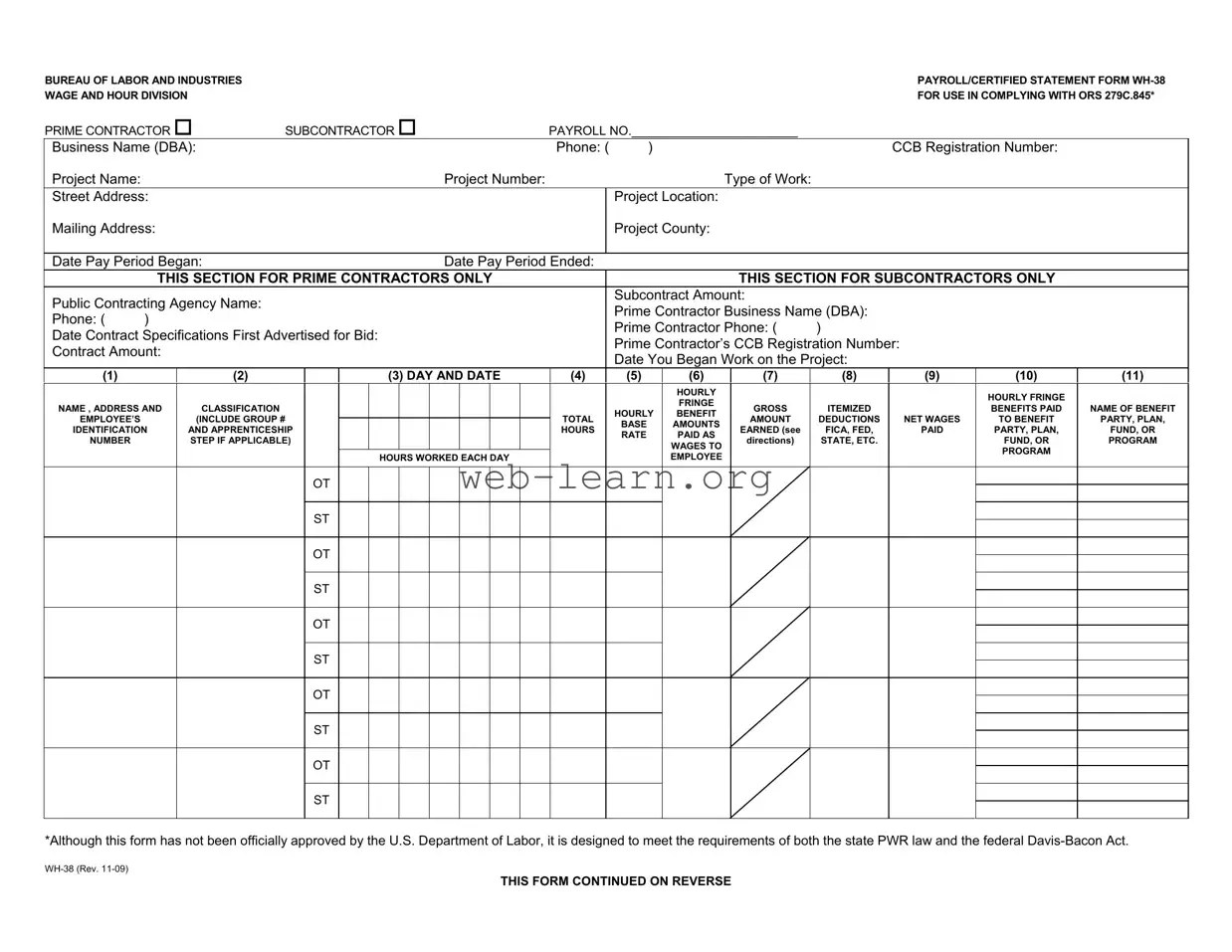
The Oregon Payroll WH-38 form plays a crucial role in ensuring compliance with state and federal labor laws, particularly for contractors and subcontractors engaged in public works projects. This form is designed to document the wages paid to workers, detailing their hours worked, classifications, and any fringe benefits provided. By collecting essential information such as the business name, project details, and pay period dates, the WH-38 form helps maintain transparency and accountability in payroll practices. It requires contractors to certify that all employees have received their full wages without unauthorized deductions, adhering to both the Oregon Prevailing Wage Rate law and the federal Davis-Bacon Act. The form also emphasizes the importance of proper classification of workers and the registration of apprentices in recognized programs. Accurate completion of the WH-38 is not just a regulatory requirement; it safeguards the rights of workers and ensures fair compensation for their labor. By filing this form with the relevant public agency, contractors affirm their commitment to lawful employment practices and contribute to a fair working environment in Oregon.
BUREAU OF LABOR AND INDUSTRIES |
|
|
|
PAYROLL/CERTIFIED STATEMENT FORM |
WAGE AND HOUR DIVISION |
|
|
|
FOR USE IN COMPLYING WITH ORS 279C.845* |
PRIME CONTRACTOR |
SUBCONTRACTOR |
PAYROLL NO.________________________ |
||
Business Name (DBA): |
|
Phone: ( |
) |
CCB Registration Number: |
Project Name: |
|
Project Number: |
|
Type of Work: |
Street Address: |
|
|
Project Location: |
|
Mailing Address:
Project County:
Date Pay Period Began: |
|
|
Date Pay Period Ended: |
|
|
|
|
|
|
|
||||||||
|
THIS SECTION FOR PRIME CONTRACTORS ONLY |
|
|
|
THIS SECTION FOR SUBCONTRACTORS ONLY |
|
||||||||||||
Public Contracting Agency Name: |
|
|
|
|
|
|
|
Subcontract Amount: |
|
|
|
|
||||||
|
|
|
|
|
|
|
Prime Contractor Business Name (DBA): |
|
|
|
||||||||
Phone: ( |
) |
|
|
|
|
|
|
|
|
|
|
|
|
|
||||
|
|
|
|
|
|
|
|
|
|
Prime Contractor Phone: ( |
) |
|
|
|
||||
Date Contract Specifications First Advertised for Bid: |
|
|
|
|
|
|
|
|
|
|
||||||||
|
|
|
|
|
|
|
Prime Contractor’s CCB Registration Number: |
|
|
|
||||||||
Contract Amount: |
|
|
|
|
|
|
|
|
|
|
|
|
|
|||||
|
|
|
|
|
|
|
|
|
|
Date You Began Work on the Project: |
|
|
|
|||||
|
|
|
|
|
|
|
|
|
|
|
|
|
|
|
||||
(1) |
|
(2) |
|
|
(3) DAY AND DATE |
(4) |
(5) |
(6) |
(7) |
(8) |
(9) |
(10) |
(11) |
|||||
|
|
|
|
|
|
|
|
|
|
|
|
|
HOURLY |
|
|
|
HOURLY FRINGE |
|
|
|
|
|
|
|
|
|
|
|
|
|
|
FRINGE |
|
|
|
|
|
NAME , ADDRESS AND |
CLASSIFICATION |
|
|
|
|
|
|
|
|
|
GROSS |
ITEMIZED |
|
BENEFITS PAID |
NAME OF BENEFIT |
|||
|
|
|
|
|
|
|
|
HOURLY |
BENEFIT |
|
||||||||
EMPLOYEE’S |
|
(INCLUDE GROUP # |
|
|
|
|
|
|
|
|
TOTAL |
AMOUNT |
DEDUCTIONS |
NET WAGES |
TO BENEFIT |
PARTY, PLAN, |
||
|
|
|
|
|
|
|
|
|
BASE |
AMOUNTS |
||||||||
IDENTIFICATION |
AND APPRENTICESHIP |
|
|
|
|
|
|
|
HOURS |
EARNED (see |
FICA, FED, |
PAID |
PARTY, PLAN, |
FUND, OR |
||||
|
|
|
|
|
|
|
RATE |
PAID AS |
||||||||||
NUMBER |
|
STEP IF APPLICABLE) |
|
|
|
|
|
|
|
|
directions) |
STATE, ETC. |
|
FUND, OR |
PROGRAM |
|||
|
|
|
|
|
|
|
|
|
|
WAGES TO |
|
|||||||
|
|
|
|
|
|
|
|
|
|
|
|
|
|
|
|
PROGRAM |
|
|
|
|
|
|
|
HOURS WORKED EACH DAY |
|
|
EMPLOYEE |
|
|
|
|
||||||
|
|
|
|
|
|
|
|
|
|
|
|
|||||||
OT
ST
OT
ST
OT
ST
OT
ST
OT
ST
*Although this form has not been officially approved by the U.S. Department of Labor, it is designed to meet the requirements of both the state PWR law and the federal
THIS FORM CONTINUED ON REVERSE
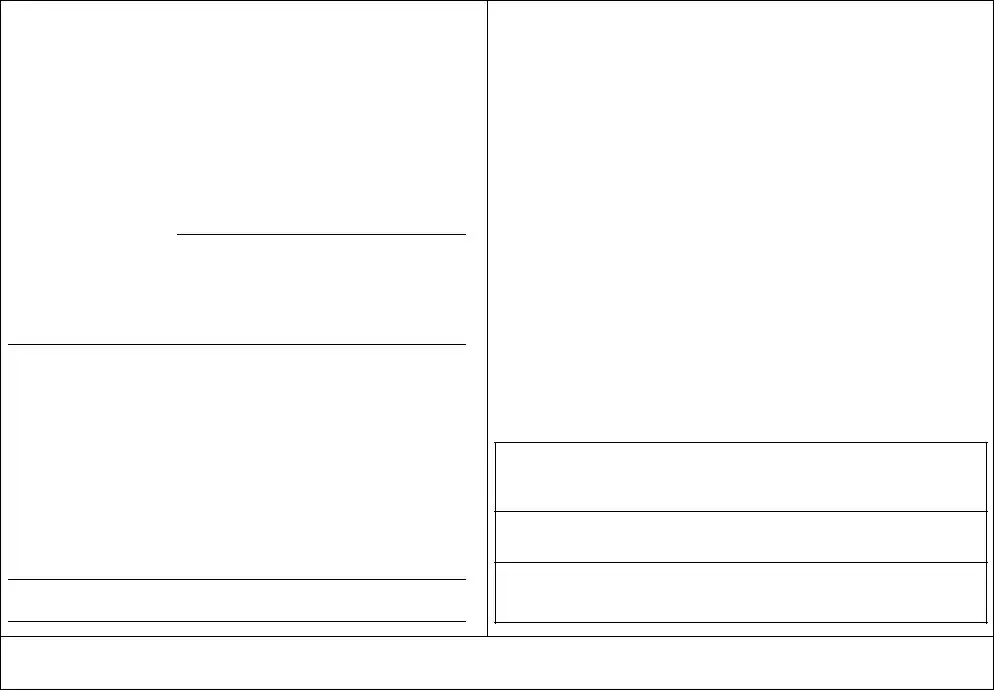
CERTIFIED STATEMENT
Date: |
|
|
|
|
|
|
|
|
|
|
|
|
|
|
|||
I, |
|
|
|
|
, |
|
|
|
|
|
|
||||||
|
|
(NAME OF SIGNATORY PARTY) |
|
|
(TITLE) |
|
|
||||||||||
do hereby state: |
|
|
|
|
|
|
|
|
|
|
|
|
|
||||
(1) That I pay or supervise the payment of the persons employed by: |
|
|
|||||||||||||||
|
|
|
|
|
|
|
|
|
|
|
|
||||||
|
|
|
|
(CONTRACTOR, SUBCONTRACTOR OR SURETY) |
|
|
|||||||||||
on the |
|
|
|
|
|
|
|
|
|
; that during the payroll period |
|||||||
|
|
|
|
(BUILDING OR WORK) |
|
|
|
|
|
|
|||||||
commencing on the |
|
day of |
|
, |
|
|
, and ending the |
|
day |
||||||||
|
|
|
|
|
|
|
|
|
|
(MONTH) |
|
(YEAR) |
|
|
|||
of |
|
, |
|
|
, all persons employed on said project have been paid the |
||||||||||||
|
|
(MONTH) |
|
(YEAR) |
|
|
|
|
|
|
|||||||
full weekly wages earned, that no rebates have been or will be made either directly or indirectly to or on behalf of said
(CONTRACTOR, SUBCONTRACTOR OR SURETY)
from the full weekly wages earned by any person, and that no deductions have been made either directly or indirectly from the full wages earned by any person, other than permissible deductions as specified in ORS 652.610, and as defined in Regulations, Part 3 (29 CFR Subtitle A), issued by the Secretary of Labor under the Copeland Act, as amended (48 Stat. 948, 63 Stat. 108, 72 Stat. 967; 76 Stat. 357; 40 U.S.C. 276c), and described below:
(2)That any payrolls otherwise under this contract required to be submitted for the above period are correct and complete; that the wage rates for workers contained therein are not less than the applicable wage rates contained in any wage determination incorporated into the contract; that the classifications set forth therein for each worker conform with work performed.
(3)That any apprentices employed in the above period are duly registered in a bona fide apprenticeship program registered with a state apprenticeship agency recognized by the Bureau of Apprenticeship and Training, United States Department of Labor, or if no such recognized agency exists in a state, are registered with the Bureau of Apprenticeship and Training, United States Department of Labor.
I HAVE READ THIS CERTIFIED STATEMENT, KNOW THE CONTENTS THEREOF AND IT IS TRUE TO MY KNOWLEDGE:
(NAME AND TITLE)
(SIGNATURE AND DATE)
In addition to completing sections (1) - (3), if your project is subject to the federal
(4) That:
(a)WHERE FRINGE BENEFITS ARE PAID TO APPROVED PLANS, FUNDS OR PROGRAMS
-In addition to the basic hourly wage rates paid to each laborer or mechanic listed in the above referenced payroll, payments of fringe benefits as listed in the contract have been or will be made to appropriate programs for the benefit of such employees, except as noted in Section 4(c) below.
(b)WHERE FRINGE BENEFITS ARE PAID IN CASH
-Each laborer or mechanic listed in the above referenced payroll has been paid, as indicated on the payroll, an amount not less than the sum of the applicable basic hourly wage rate plus the amount of the required fringe benefits as listed in the contract, except as noted in Section 4(c) below.
(c) EXCEPTIONS:
EXCEPTION (CRAFT) |
EXPLANATION |
|
|
|
|
|
|
|
|
|
|
|
|
|
|
|
|
REMARKS:
NAME AND TITLE |
SIGNATURE |
THE WILLFUL FALSIFICATION OF ANY OF THE ABOVE STATEMENTS MAY SUBJECT THE CONTRACTOR OR SUBCONTRACTOR TO CIVIL OR CRIMINAL PROSECUTION. SEE SECTION 1001 OF TITLE 18 AND SECTION 231 OF TITLE 31 OF THE UNITED STATES CODE.
FILE THIS FORM WITH THE PUBLIC AGENCY ASSOCIATED WITH THE PROJECT
NOTE TO CONTRACTORS: YOU MUST ATTACH COPIES OF THIS FORM TO EACH OF YOUR PAYROLL SUBMISSIONS ON THIS PROJECT.
INSTRUCTIONS AND ADDITIONAL FORMS ARE AVAILABLE ON OUR WEBSITE: WWW.OREGON.GOV/BOLI.
| Fact Name | Details |
|---|---|
| Form Purpose | The WH-38 form is used to comply with Oregon's prevailing wage laws. |
| Governing Law | This form is governed by ORS 279C.845, which pertains to public contracts. |
| Who Uses It | Both prime contractors and subcontractors must complete this form. |
| Information Required | Details such as business name, project name, and pay period dates are necessary. |
| Wage Reporting | Employers must report gross wages, deductions, and net wages for each employee. |
| Fringe Benefits | Employers must also detail any fringe benefits provided to employees. |
| Signature Requirement | A certified statement must be signed by the individual responsible for payroll. |
| Submission | This form must be submitted to the public agency associated with the project. |
| Compliance | Failure to comply can lead to civil or criminal prosecution under federal law. |
| Additional Resources | Instructions and additional forms are available on the Oregon Bureau of Labor and Industries website. |
Filling out the Oregon Payroll WH-38 form requires attention to detail. This form helps ensure compliance with state and federal labor laws. Follow these steps carefully to complete the form accurately.
The Oregon Payroll WH-38 form is used to comply with state and federal labor laws regarding wage payments on public works projects. It ensures that all workers are paid fairly and according to the established wage rates. This form is essential for both prime contractors and subcontractors to document wages, hours worked, and any benefits paid to employees.
Both prime contractors and subcontractors involved in public works projects must complete the WH-38 form. Each party is responsible for reporting their employees' wages and hours worked. This helps maintain transparency and compliance with labor laws.
The WH-38 form requires various details, including:
Accurate completion of this information is crucial for compliance and to avoid any potential legal issues.
Providing false information on the WH-38 form can lead to serious consequences. It may result in civil or criminal prosecution under federal law. Therefore, it is essential to ensure that all details are accurate and truthful. If errors are discovered after submission, they should be corrected immediately to avoid penalties.
Completing the Oregon Payroll WH-38 form accurately is essential for compliance with state labor laws. However, many individuals make common mistakes that can lead to complications. One frequent error is failing to include the correct business name. This information must match the name registered with the state. Inaccuracies can create confusion and delay the processing of payroll submissions.
Another common mistake involves neglecting to provide a valid phone number. A missing or incorrect phone number can hinder communication between the contractor and the public contracting agency. This oversight may result in missed opportunities to address questions or resolve issues promptly.
Additionally, individuals often forget to fill in the CCB registration number. This number is crucial as it verifies that the contractor is licensed to operate in Oregon. Omitting this information can lead to complications during audits or inspections.
Errors can also occur when indicating the project name and number. Providing incorrect or incomplete details can complicate the tracking of payroll records and compliance with specific project requirements. It is vital to ensure that these details are accurate and clearly stated.
Furthermore, many people overlook the importance of accurately reporting hours worked each day. Misreporting hours can lead to wage disputes and potential legal issues. It is essential to maintain precise records of hours worked to avoid discrepancies.
Another mistake is failing to include all deductions that may apply. The form requires a detailed account of any deductions made from employee wages. Incomplete or incorrect reporting can lead to penalties and issues with compliance.
Some individuals may not be aware of the requirement to report fringe benefits correctly. This includes payments made to approved plans, funds, or programs. Inaccuracies in reporting these benefits can lead to significant repercussions, including financial penalties.
Additionally, individuals sometimes do not verify that all apprentices are registered in a bona fide program. This is a critical requirement, and failing to comply can result in severe consequences for the contractor or subcontractor.
Finally, a common oversight is neglecting to sign and date the certified statement section of the form. This signature is not just a formality; it serves as an affirmation of the truthfulness of the information provided. Omitting this can invalidate the submission and lead to legal issues.
The Oregon Payroll WH 38 form is a crucial document for contractors and subcontractors working on public projects. To ensure compliance with state and federal labor laws, several other forms and documents are often used alongside it. Here’s a brief overview of those documents.
Using these documents in conjunction with the Oregon Payroll WH 38 form helps ensure compliance with labor laws and protects the rights of workers. Proper documentation is vital for maintaining transparency and accountability in public works projects.
The Oregon Payroll WH 38 form is essential for contractors and subcontractors to report payroll information for public works projects. Several other forms serve similar purposes in different contexts or jurisdictions. Here are six documents that share similarities with the Oregon Payroll WH 38 form:
When filling out the Oregon Payroll WH-38 form, it is crucial to ensure accuracy and compliance. Here are six essential do's and don'ts to guide you:
The Oregon Payroll WH-38 form is essential for compliance with state and federal labor laws, yet several misconceptions surround its use. Below are ten common misunderstandings:
Understanding these misconceptions can help ensure that all parties involved in public contracts in Oregon remain compliant with labor laws and regulations.
When filling out the Oregon Payroll WH-38 form, there are several important points to keep in mind:
By following these guidelines, you can ensure that your use of the Oregon Payroll WH-38 form is smooth and compliant with state regulations.