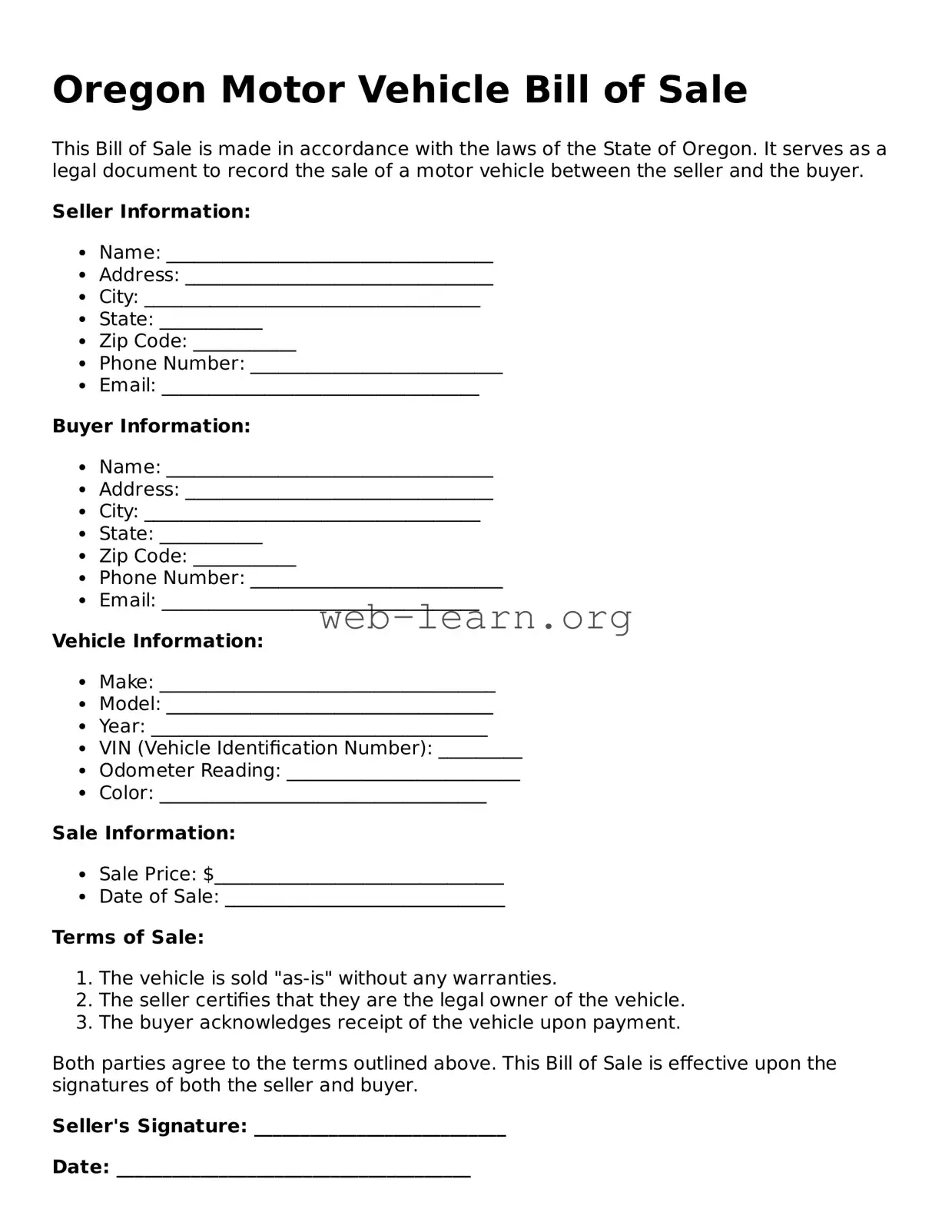
The Oregon Motor Vehicle Bill of Sale form is an essential document for anyone involved in the buying or selling of a vehicle in the state. This form serves as proof of the transaction and includes important details such as the vehicle's make, model, year, and Vehicle Identification Number (VIN). It also captures the names and addresses of both the buyer and the seller, ensuring that all parties are clearly identified. Additionally, the form outlines the sale price and any terms related to the transaction, such as whether the sale is as-is or if any warranties are included. Completing this form is crucial for transferring ownership legally and can help prevent disputes in the future. Understanding its components can simplify the process and provide peace of mind for both buyers and sellers.
Oregon Motor Vehicle Bill of Sale
This Bill of Sale is made in accordance with the laws of the State of Oregon. It serves as a legal document to record the sale of a motor vehicle between the seller and the buyer.
Seller Information:
Buyer Information:
Vehicle Information:
Sale Information:
Terms of Sale:
Both parties agree to the terms outlined above. This Bill of Sale is effective upon the signatures of both the seller and buyer.
Seller's Signature: ___________________________
Date: ______________________________________
Buyer's Signature: ___________________________
Date: ______________________________________
| Fact Name | Description |
|---|---|
| Purpose | The Oregon Motor Vehicle Bill of Sale form is used to document the sale of a vehicle between a buyer and a seller, providing proof of the transaction. |
| Governing Law | This form is governed by the Oregon Revised Statutes, specifically ORS 803.100, which outlines the requirements for vehicle transfers. |
| Required Information | Essential details must be included, such as the vehicle's make, model, year, VIN (Vehicle Identification Number), and the names and addresses of both the buyer and seller. |
| Notarization | While notarization is not required for the bill of sale in Oregon, it is recommended to enhance the document's credibility and provide additional protection. |
| Usage | The completed form serves as a legal document that can be presented to the DMV for vehicle registration and title transfer, ensuring a smooth transition of ownership. |
Filling out the Oregon Motor Vehicle Bill of Sale form is a straightforward process that requires careful attention to detail. Once completed, this form serves as a legal record of the transaction between the buyer and seller. It’s important to ensure all information is accurate to avoid any issues later on.
What is the purpose of the Oregon Motor Vehicle Bill of Sale?
The Oregon Motor Vehicle Bill of Sale serves as a legal document that records the sale of a motor vehicle between a buyer and a seller. This form is essential for several reasons. First, it provides proof of the transaction, which can be important for both parties in case of disputes. Second, it helps to establish the transfer of ownership, ensuring that the buyer can register the vehicle in their name. Lastly, it may be required by the Oregon Department of Transportation when applying for a new title or registration.
What information is typically included in the Bill of Sale?
A comprehensive Oregon Motor Vehicle Bill of Sale usually includes the following details:
Including all this information is crucial for ensuring that the document is legally binding and can be used for future reference.
Is the Bill of Sale required to register a vehicle in Oregon?
While the Oregon Department of Transportation does not require a Bill of Sale for every vehicle registration, it is highly recommended. If the vehicle is purchased from a private seller, having this document can simplify the registration process. It serves as proof of ownership and can help resolve any potential issues regarding the vehicle's history. In some cases, especially if the title is lost or not available, a Bill of Sale may be necessary to complete the registration.
Can I create my own Bill of Sale, or do I need a specific form?
You can create your own Bill of Sale as long as it contains all the necessary information mentioned earlier. However, using a standardized form can help ensure that you don't miss any critical details. Many online resources provide templates specifically designed for Oregon residents. These templates are often easy to fill out and ensure compliance with state requirements, making the transaction smoother for both parties.
Filling out the Oregon Motor Vehicle Bill of Sale form can seem straightforward, but many people make common mistakes that can lead to complications down the road. One significant error occurs when individuals forget to include all necessary details about the vehicle. Essential information such as the vehicle identification number (VIN), make, model, and year must be accurately recorded. Omitting any of these details can result in delays during the registration process.
Another frequent mistake is failing to provide the correct date of the sale. This date is crucial for establishing the timeline of ownership and ensuring that all legal requirements are met. If the date is left blank or incorrectly filled out, it could lead to disputes regarding ownership and liability.
Many individuals also overlook the importance of signatures. Both the seller and the buyer must sign the form for it to be valid. Without the necessary signatures, the document may not be recognized by the Department of Motor Vehicles (DMV). This can create issues when trying to transfer ownership or register the vehicle.
In addition, people often neglect to include the sale price of the vehicle. This information is vital for tax purposes and can affect the buyer's registration fees. If the sale price is not listed, the DMV may impose penalties or additional fees, complicating the transaction further.
Another common oversight is not providing the correct contact information for both parties. Clear communication is essential, especially if any issues arise after the sale. If contact information is incomplete or inaccurate, it can hinder the ability to resolve any disputes or questions that may come up later.
Lastly, some individuals fail to keep a copy of the completed Bill of Sale for their records. Having a copy serves as proof of the transaction and can be invaluable if any legal questions arise in the future. Without this documentation, both the buyer and seller may find themselves in a difficult position should any issues occur after the sale.
When buying or selling a vehicle in Oregon, several documents often accompany the Motor Vehicle Bill of Sale. Each document serves a specific purpose in the transaction process, ensuring both parties are protected and the transfer is legally binding. Here are some essential forms and documents you may need:
Each of these documents plays a vital role in the sale and transfer of a vehicle. Ensuring that all necessary forms are completed accurately can help prevent future disputes and streamline the registration process.
When filling out the Oregon Motor Vehicle Bill of Sale form, there are important guidelines to follow. Here is a list of things to do and avoid:
When it comes to the Oregon Motor Vehicle Bill of Sale form, several misconceptions can lead to confusion. Here are nine common myths, along with clarifications to help you understand the form better.
This is false. A Bill of Sale is important for documenting the transfer of ownership and may be required for registration purposes.
In Oregon, notarization is not required for the Bill of Sale, although it can add an extra layer of authenticity.
A verbal agreement may lead to disputes later on. A written Bill of Sale provides clear evidence of the transaction.
Typically, vehicles are sold "as is" unless the seller explicitly states otherwise in the Bill of Sale.
While you can find various templates, using the official Oregon form ensures compliance with state requirements.
Both private and dealer sales can utilize the Bill of Sale to document the transaction.
Incomplete forms can lead to issues with registration. All relevant information should be filled out accurately.
Even if a vehicle is given as a gift, a Bill of Sale is advisable to document the transfer for tax and registration purposes.
The Bill of Sale should be completed and exchanged at the time of the sale to ensure both parties have a record of the transaction.
Understanding these misconceptions can help ensure a smooth transaction when buying or selling a vehicle in Oregon. Always refer to the official guidelines for the most accurate information.
When filling out and using the Oregon Motor Vehicle Bill of Sale form, consider the following key takeaways:
Dmv Forms Colorado - This document can also include information about any warranties or guarantees provided by the seller.
Free Printable Bill of Sale Kansas - Serves as a receipt for the buyer after purchasing a vehicle.